Bearing witness on Spirit Bear Day, in memory of Jordan River Anderson
Why child and family advocates are asking Canadians to #BearWitness on May 10.

Today is Bear Witness Day and advocates are asking Canadians to “bear witness” to ongoing discrimination against First Nations children across the country.
Five years ago, in a landmark ruling, the Canadian Human Rights Tribunal (CHRT) found that the federal government had been discriminating against First Nations children in its delivery of child and family services.
Three months later, in April 2016, the CHRT issued the first of many non-compliance orders — ordering the federal government to implement policy changes outlined in Jordan’s Principle by May 10, 2016.
Jordan’s Principle is a child-first initiative that calls on the federal, provincial and territorial governments to ensure First Nations children have equitable access to the “services they need, when they need them,” according to the First Nations Child and Family Caring Society of Canada (the Caring Society).
The principle is in honour of Jordan River Anderson, a child from the Norway House Cree Nation who was born with complex medical needs. Anderson died at the age of five after spending two years in the hospital while the governments of Canada and Manitoba fought over who should foot the bill for his home care.
Cindy Blackstock is the executive director of the Caring Society, and a renowned advocate for First Nations children. The Caring Society co-led the nine-year battle against the federal government with the Assembly of First Nations (AFN).
“Families really deserve culturally-based equity and services across the board in order to build healthy families and healthy children,” Blackstock said at an AFN virtual leadership gathering on First Nations child welfare earlier this year.
“I’m hoping all of you will join Huckleberry [the Bear] and I on May 10. You can bring out your teddy bear, say a prayer for Jordan, do a ceremony for all the children lost to this discrimination, and educate everybody about Jordan’s Principle and the Spirit Bear Plan. We’ve seen too many generations of children lost. We can do better.”
Spirit Bear has become a symbol for children like Anderson, and Blackstock’s asking people to help raise awareness by tweeting #BearWitnessDay on Twitter today.


In March, the federal government applied for judicial review of CHRT rulings “which relate to compensation and the definition of a First Nations child for the purposes of Jordan’s Principle eligibility.”
“Deciding who belongs to a First Nation community is complex,” wrote Marc Miller, minister of Indigenous Services Canada, and David Lametti, minister of justice and Canada’s attorney general, in a joint statement published March 13.
“We maintain that further engagement is required directly with First Nations on the important questions of community acceptance and second generation eligibility.”
In an interview with IndigiNews on April 23, Miller said the question of compensation is best resolved through direct conversations between First Nations and the federal government.
“This is a broken system that will cost billions to fix,” he says. “We are invested in it, but it has to be done in partnership with our nation-to-nation partners and that is something no court case can fix.”
Author
We live in a media ecosystem that thrives on misinformation. Big Tech and AI companies are consuming the work of real human beings and Canadian news has been banned on Facebook and Instagram.

And yet, I have hope for journalism because of the work we’re doing at IndigiNews.
At IndigiNews, we embody tâpwêwin — the Cree value of integrity and responsibility in truth-telling. We are committed to our independent, Indigenous-led newsroom rooted in community, accountability, and relationality. We believe storytelling is a sacred fire that connects our pasts, presents, and futures through the storytellers in our Storytelling Lodge. IndigiNews creates space for Indigenous journalists, storytellers, Knowledge Keepers, and communities to gather, learn, and share stories that matter.
As a registered charity, we are building a fire that allows our work not just to ignite but to thrive. Rather than relying on advertising or corporate acquisition, IndigiNews is sustained by people like you who believe Indigenous stories are important for the future of our communities.
Your support is making a real difference.
Our community of supporters, our Firekeepers, make it possible to grow our newsroom, publish award-winning journalism, train emerging Indigenous journalists through initiatives like the ReFocus Photojournalism Fellowship, and publish trustworthy stories that serve our communities across the country. Every story we publish helps fill in gaps left by mainstream media and ensures Indigenous perspectives are represented with care, accuracy and respect.
But there is still more work to do.
As the media landscape becomes more and more uncertain, community support is as necessary and essential as it’s ever been. Every new Firekeeper helps protect the independence of our newsroom and strengthens journalism that is accountable to our many and varied communities over corporations.
That’s why we’re inviting you to become a Firekeeper.
Firekeepers tend to and protect the sacred fire. Your monthly contributions directly support IndigiNews’s Storytelling Lodge, helps sustain our independent, Indigenous-led newsroom, and ensures future generations of Indigenous storytellers have the resources they need to do the work.
As a registered Canadian charity, all eligible donations receive a charitable tax receipt.
If you believe Indigenous stories matter, if you value independent journalism, and if you want to help build a strong future for Indigenous media, we invite you to join our circle of Firekeepers today.
Together, we can keep the fire burning.
— Eden Fineday, Publisher, IndigiNews
Support us nowLatest Stories
-
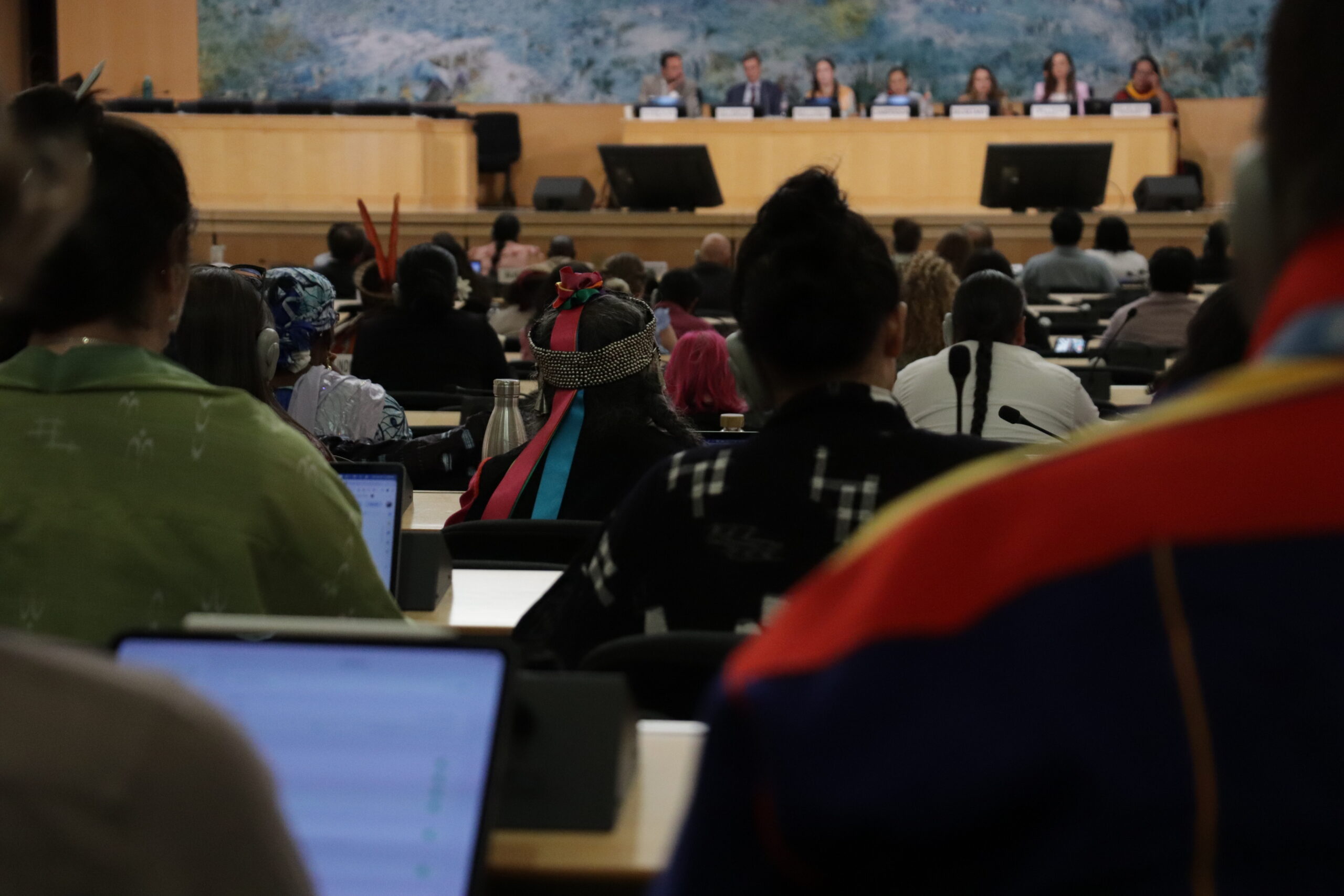
Indigenous leaders give the UN a roadmap for protecting their peoples
Amidst prayers and vows of solidarity, UN Expert Mechanism on the Rights of Indigenous Peoples ends annual meetings with demands for ‘action we’re not seeing globally’
-
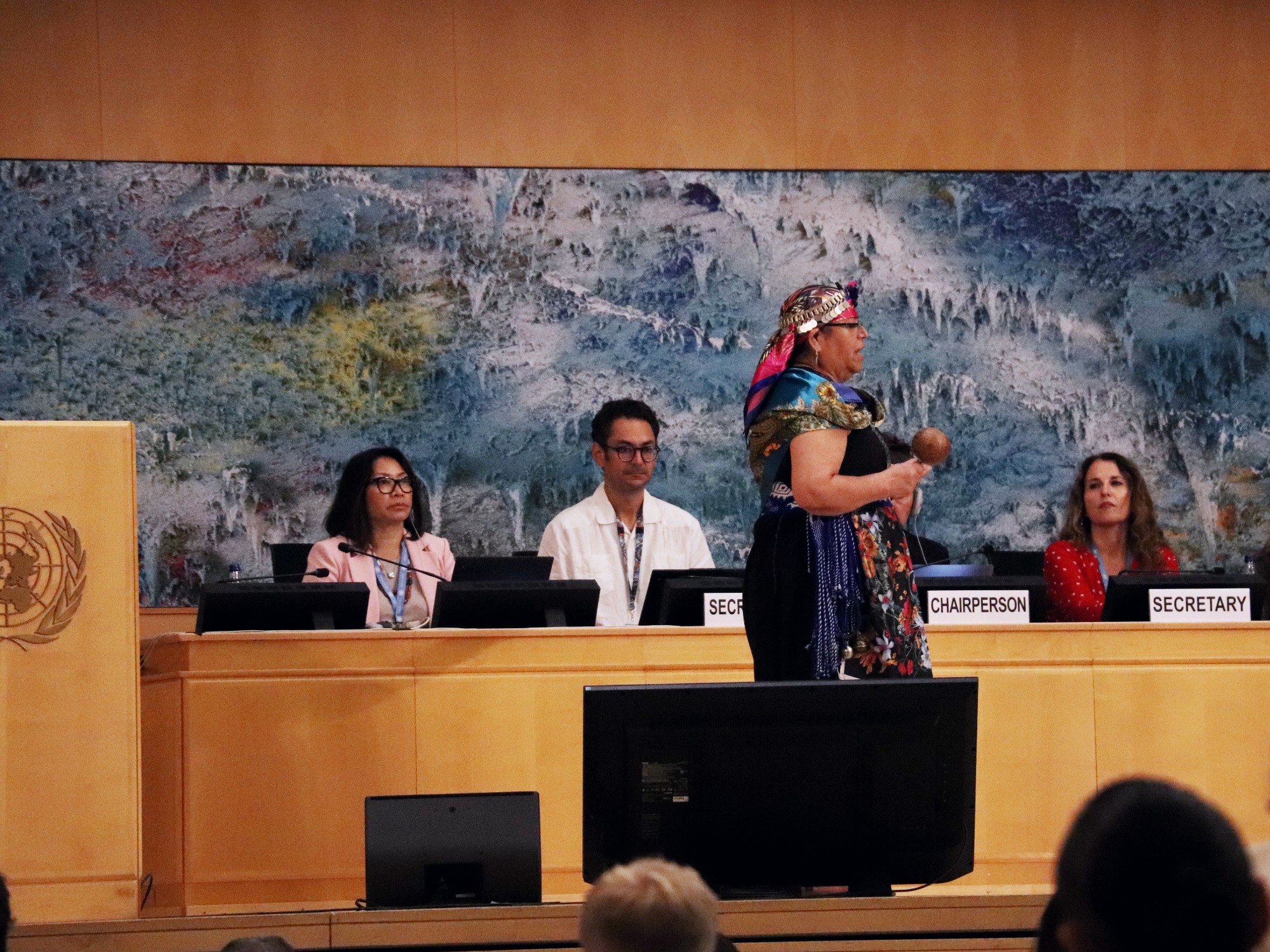
Indigenous people demand more say at the UN, as new crises hit their homelands
Indigenous nations live ‘on the frontlines’ of climate, conflict and new tech. But their voices remain sidelined in the global halls of power.