Community rallies around Okanagan fishermen in dispute over land rights
People gathered to march for their inherent fishing rights, and celebrate the removal of the fence blocking river access.

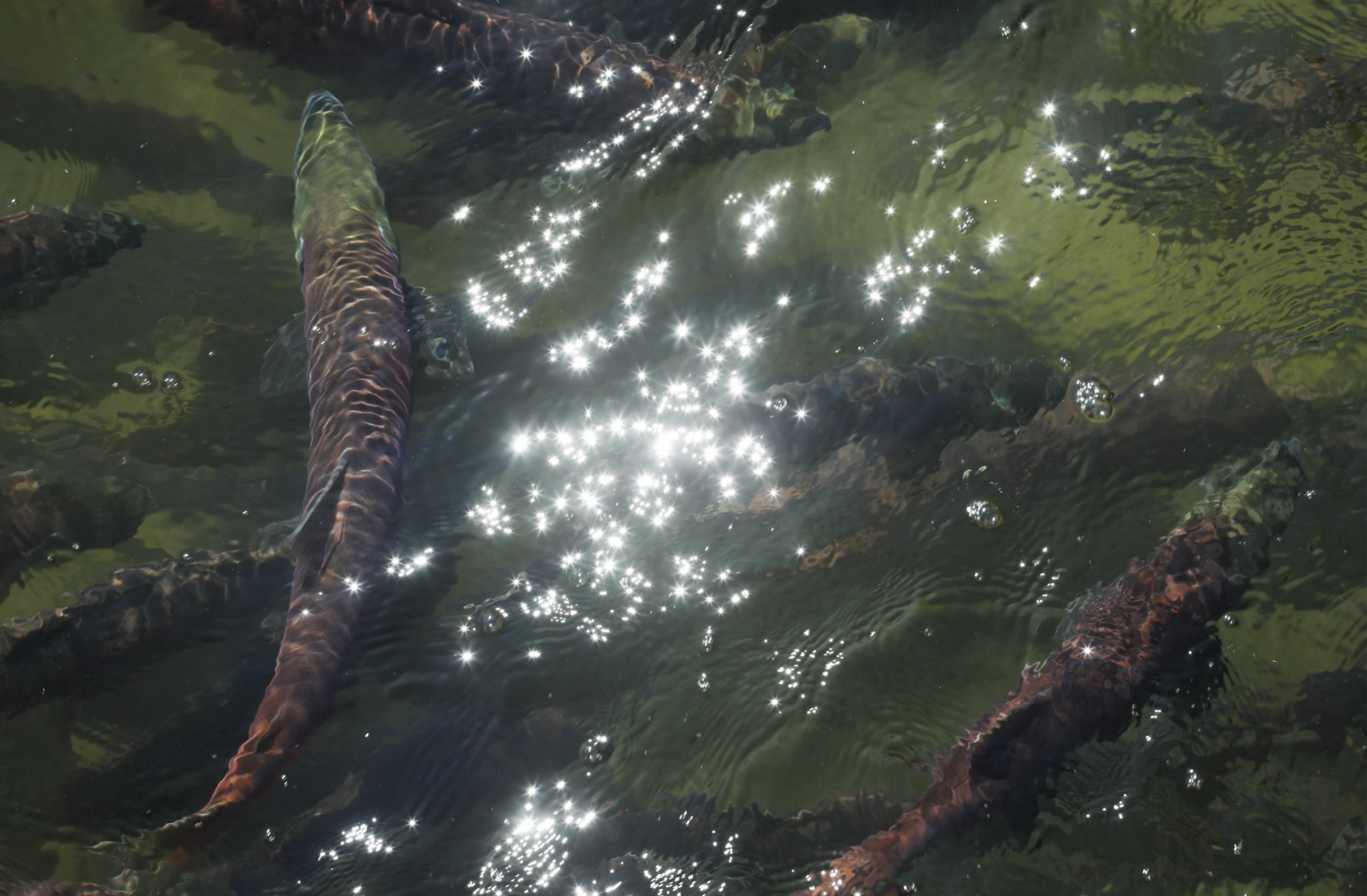
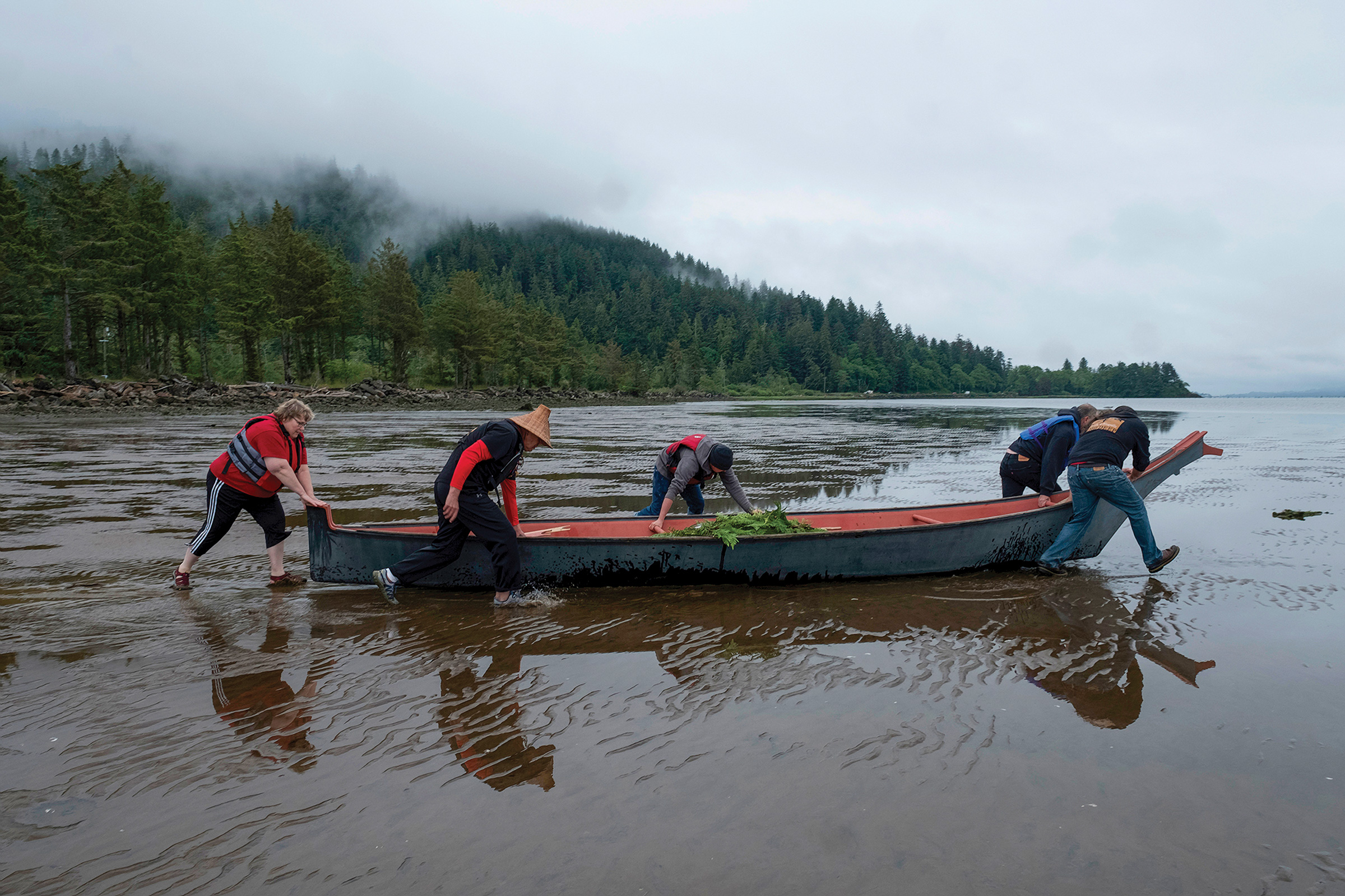
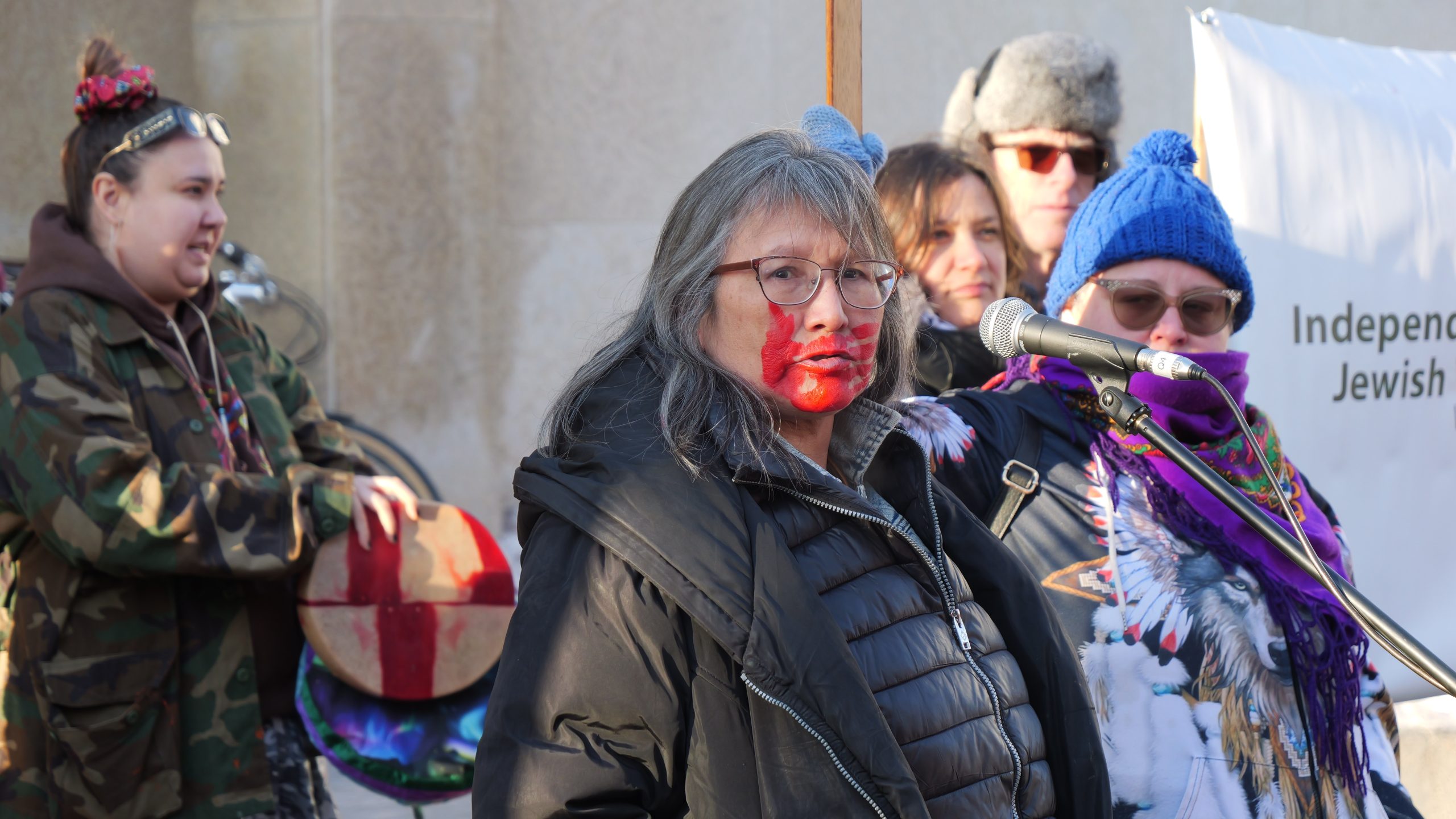
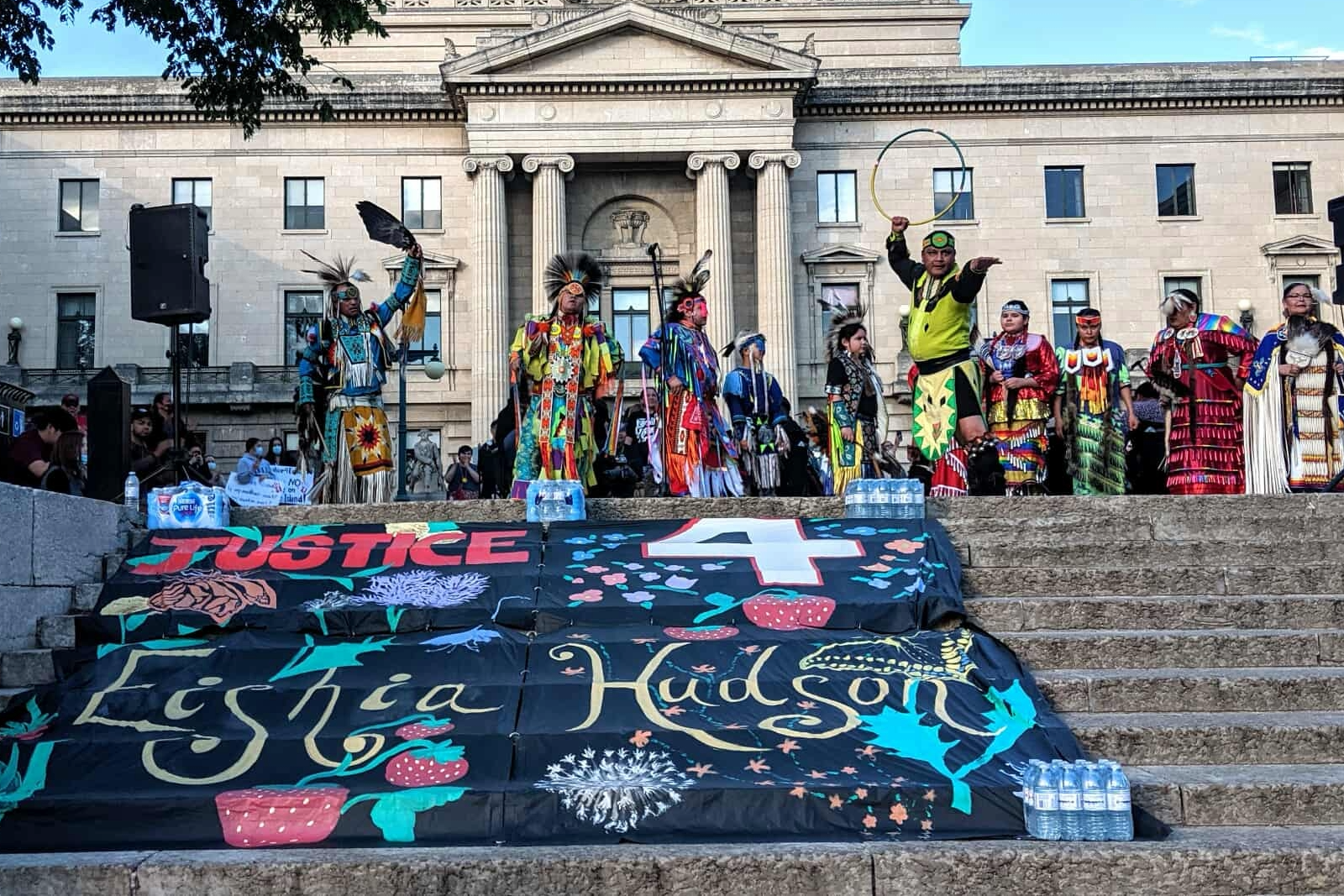
Okanagan community members gathered together on Tuesday at Kenyon Park and marched to Okanagan Falls to stand in solidarity with the local Indigenous fishermen who say they have been blocked safe access to their traditional fishing spot for over four years.
Charlene Roberds, an Okanagan Nation member and spokesperson, opened Tuesday’s rally, “To celebrate a small win with that fence being removed. We, as women, take it very seriously when it comes to the safety of our fishers, to the safety of our children and Elders who want to go to the river and practice our inherent right to gather fish for our food. That’s what we’re here to do, and to celebrate open access to the river.”

“We’ve worked on getting the salmon back here, the Okanagan Tribal Council, the ONA, for decades,” said Osoyoos Indian Band Chief Clarence Louie.
“Now we’ve got them back this far, we just can’t believe we’re having to hassle with a landowner, but that’s not the story here. The story here is that we do have fishing rights there, we will continue to practice those fishing rights, and our families depend on the salmon.”
“We are salmon people, so it’s only right that we are here to advocate and to push our inherent right to fish the Okanagan salmon here,” he added.
Tensions began to particularly rise in recent weeks between Melody Walker, whose family owns the property, and local fisherman and former Penticton Indian Band Chief John Kruger. He believes the family placed cacti on the fence surrounding the fishing spot to keep him and other fishermen away. They typically jump over this fence to be able to reach the river and fish. The dispute led to the removal of the fence on July 20, overseen by the federal Department of Fisheries and Oceans (DFO).
In prior statements to IndigiNews, Walker claimed her family’s property reaches the water line. She added that the Okanagan fishermen are “trespassers.” Walker stated that she does not want anyone accessing what she claims is her property due to concerns of litter, vehicle traffic and plant damage, along with safety reasons.
B.C. Ministry of Forests, Lands, Natural Resource Operations and Rural Development (FLNRORD) stated, in an email to IndigiNews, “The Ministry asserts that any form of fish collection or fishing that ONA members undertake at the site is consistent with the rights outlined in Section 35 of the Canadian Constitution.”
So although the fence removal does not resolve the land dispute, it is a start.

When asked at the rally how he felt about his community standing in solidarity with him, Kruger said with a smile, “Grateful.”
“To see all the support come out, it picked me up,” he said. “The DFO and the province, working with the Okanagan Nation, this is just a small step right now and there is going to be more things to come, I believe that.”
For a detailed report on the dispute and the events leading up to the removal of the fence, check out Kelsie Kilawna’s story here.
Author
We live in a media ecosystem that thrives on misinformation. Big Tech and AI companies are consuming the work of real human beings and Canadian news has been banned on Facebook and Instagram.
And yet, I have hope for journalism because of the work we’re doing at IndigiNews.
At IndigiNews, we embody tâpwêwin — the Cree value of integrity and responsibility in truth-telling. We are committed to our independent, Indigenous-led newsroom rooted in community, accountability, and relationality. We believe storytelling is a sacred fire that connects our pasts, presents, and futures through the storytellers in our Storytelling Lodge. IndigiNews creates space for Indigenous journalists, storytellers, Knowledge Keepers, and communities to gather, learn, and share stories that matter.
As a registered charity, we are building a fire that allows our work not just to ignite but to thrive. Rather than relying on advertising or corporate acquisition, IndigiNews is sustained by people like you who believe Indigenous stories are important for the future of our communities.
Your support is making a real difference.
Our community of supporters, our Firekeepers, make it possible to grow our newsroom, publish award-winning journalism, train emerging Indigenous journalists through initiatives like the ReFocus Photojournalism Fellowship, and publish trustworthy stories that serve our communities across the country. Every story we publish helps fill in gaps left by mainstream media and ensures Indigenous perspectives are represented with care, accuracy and respect.
But there is still more work to do.
As the media landscape becomes more and more uncertain, community support is as necessary and essential as it’s ever been. Every new Firekeeper helps protect the independence of our newsroom and strengthens journalism that is accountable to our many and varied communities over corporations.
That’s why we’re inviting you to become a Firekeeper.
Firekeepers tend to and protect the sacred fire. Your monthly contributions directly support IndigiNews’s Storytelling Lodge, helps sustain our independent, Indigenous-led newsroom, and ensures future generations of Indigenous storytellers have the resources they need to do the work.
As a registered Canadian charity, all eligible donations receive a charitable tax receipt.
If you believe Indigenous stories matter, if you value independent journalism, and if you want to help build a strong future for Indigenous media, we invite you to join our circle of Firekeepers today.
Together, we can keep the fire burning.
— Eden Fineday, Publisher, IndigiNews
Support us nowLatest Stories
-
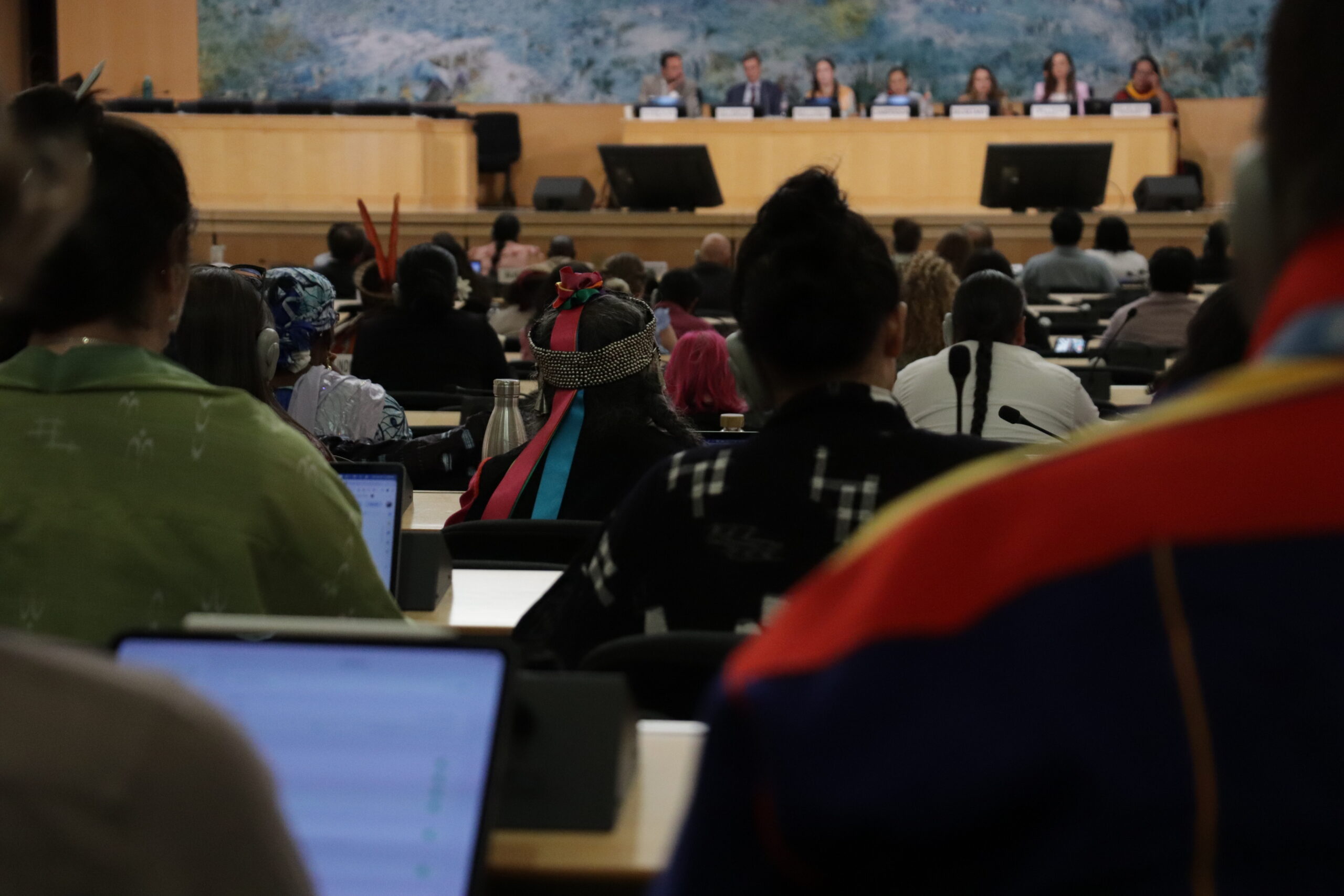
Indigenous leaders give the UN a roadmap for protecting their peoples
Amidst prayers and vows of solidarity, UN Expert Mechanism on the Rights of Indigenous Peoples ends annual meetings with demands for ‘action we’re not seeing globally’
-
Indigenous people demand more say at the UN, as new crises hit their homelands
Indigenous nations live ‘on the frontlines’ of climate, conflict and new tech. But their voices remain sidelined in the global halls of power.