Clean-water legislation gets lukewarm reception from Indigenous leaders
Dozens of reserves are still under drinking-water advisories — most in ‘Ontario’ — as feds reintroduce First Nations Clean Water Act. But First Nations’ reactions have been mixed
This story was originally published by NWOnewswatch, and appears here with minor edits and added context from ‘B.C.’ and the Assembly of First Nations.
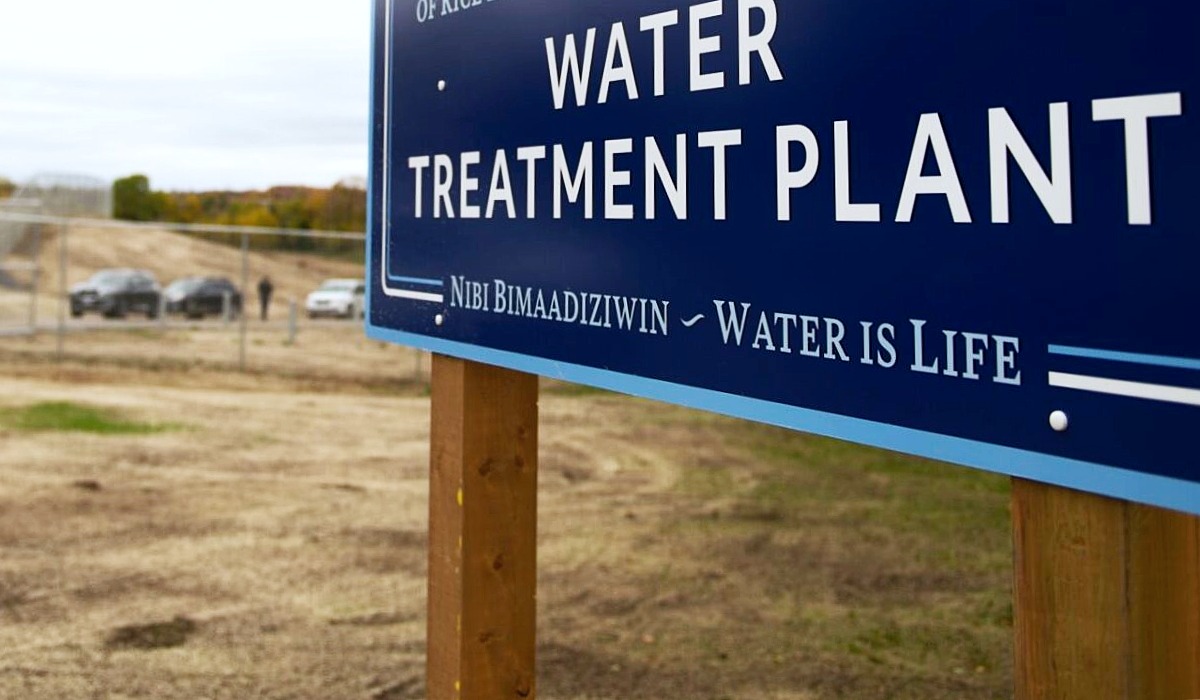
Long-awaited federal legislation on clean drinking water for reserves is getting a lukewarm reaction from First Nations leaders.
Mandy Gull-Masty, the minister of Indigenous Services Canada (ISC), put forward the First Nations Clean Water Act (Bill C-37) on Tuesday, the second time it’s been introduced after it ran out of time in the previous legislative session.
But the Assembly of First Nations — which has long campaigned for a law protecting the right to clean water on reserves — said the legislation “must be improved through direct engagement with First Nations.”
“The legislation put forward today is missing some essential elements,” said National Chief Cindy Woodhouse Nepinak in a statement Tuesday.
“Clean drinking water is a human right, and it is an obligation for governments to honour that right for everyone.”
In particular, the AFN said the bill falls short of explicitly “recognizing First Nations’ rights to clean water,” as leaders had demanded, and offers “weak source-water protection, ambiguity around the definition of First Nations lands, and a lack of sustainable funding.”
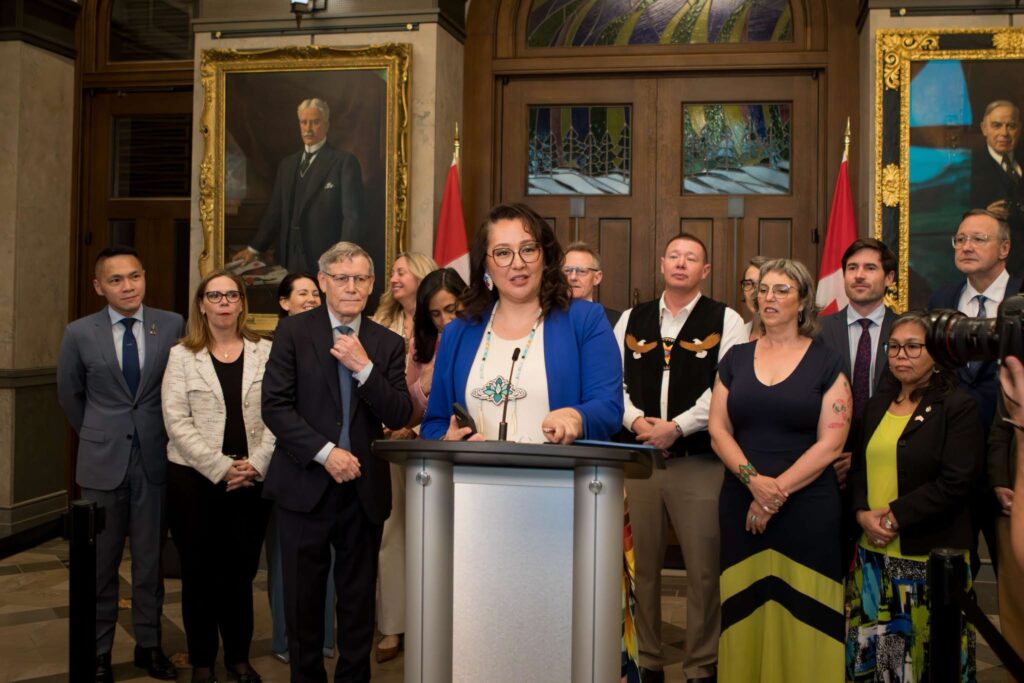
Gull-Masty said federal funding is in fact being ramped up, including the “single largest funding commitment ever made for First Nations,” amounting to $0.9 billion a year for five years, in addition to previous budgets.
“Across Canada there are laws and regulations that set minimum standards for drinking water,” the minister said in a statement. “But in First Nation communities, there are not.
“This legislative gap that impacts only First Nation people is unacceptable and must be addressed.”
The federal government lists 36 First Nations with ISC-funded water systems under drinking-water advisories longer than a year.
(In “B.C.,” an additional seven First Nations still have long-term advisories for federally funded water systems, but those are overseen by the First Nations Health Authority).
“We know that is 36 too many,” said Gull-Masty, a member of Waswanipi Cree Nation in northern “Quebec.”
A majority of the federal long-term drinking advisories are in northwest “Ontario.”
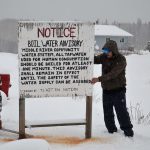
One of them, Neskantaga First Nation, has been under a boil water advisory for 31 years. It’s the longest such advisory in the country’s history.
‘Without broad or meaningful input’
The proposed bill replaces the former Bill C-61 which bore the same name, but did not pass into law last year because Parliament was prorogued — or officially adjourned — cancelling all unfinished business.
It will offer investments in infrastructure, support for water treatment plant operators and source water protection, according to Gull-Masty.
For water sources adjacent to First Nations lands, the bill also “creates a regulatory pathway” for First Nations to sign voluntary agreements with federal, provincial and territorial governments on how to “protect those sources of water beyond reserve lines,” said the federal statement.

Linda Debassige, Anishinabek Nation Grand Council Chief said that they are “cautiously optimistic,” and look forward to working to strengthen this legislation that will meet their Nation’s needs.
However, she pointed out, “When we look at the comparisons between the former Bill C-61 and this new version, there are striking differences.”
She called Bill C-37 a “significant departure from the collaborative approach” of its predecessor.
“Unlike previous legislative efforts, which were developed through meaningful dialogue and partnership with First Nations … C-37 was introduced without broad or meaningful input by First Nations,” Debassige said.
“Former Bill C-61 was a result of two years of co-development and over two decades of advocacy.”

‘An inherent right’
Gull-Masty, in her announcement, said her proposed legislation “reflects more than six years of engagement and consultation with First Nations,” as “First Nations have an inherent right to self-governance over water.”
She also said that she has had important conversations with First Nations leaders over the past year.
Debassige said that their letters of advocacy have been met with “deafening silence.”
“We don’t have access to parliamentary privileged dialogue or cabinet discussions in relation to this,” she added.
“Not including or engaging with these critical figures undermines the principals of self-determination and respect for First Nation sovereignty.”
She said it’s particularly concerning for legislation addressing “First Nations’ constitutionally protected right to self-government.”
Meanwhile Alvin Fiddler, Grand Chief of Nishnawbe Aski Nation, said they received consultation on the bill only late last week.
“We need to be involved in how the bill and the legislation will be implemented in our communities,” he said.
That’s needed so that “there are adequate resources dedicated to our communities,” Fiddler added, “for them to actually create that capacity to rebuild or replace the water treatment plants, to have trained staff, to have everything that they need in their community to run it in a way that they don’t go back to that boil-water advisory list.”

Wording changed on the right to water
There was also concern raised by multiple people about a change in wording from Bill C-61 to Bill C-37.
In the text of the original bill, it reads: “It is recognized and affirmed that it is a human right of every individual on First Nations land to have access to clean and safe drinking water.”
In the text of the new proposed bill, the same section reads, “It is declared to be the policy of the Government of Canada to further the progressive realization, for individuals on First Nation lands, of the human right to safe drinking water.”
Debassige responded, “It’s been a progressive realization for decades … Our nations have this right, right now.”
When questioned about the amendment, Gull-Masty replied that “progressive realization” refers to Indigenous Services Canada “knowing and understanding that in all the First Nations across Canada, not everybody is starting in the same place.”
“And we are acknowledging that we support communities from wherever their start line is,” she said.
Regional Chief Abram Benedict, with the Chiefs of Ontario, said they are “encouraged to see that this legislation has a recognition of source water, and acknowledgement of cultural and spiritual importance of water.”
Author
We live in a media ecosystem that thrives on misinformation. Big Tech and AI companies are consuming the work of real human beings and Canadian news has been banned on Facebook and Instagram.

And yet, I have hope for journalism because of the work we’re doing at IndigiNews.
At IndigiNews, we embody tâpwêwin — the Cree value of integrity and responsibility in truth-telling. We are committed to our independent, Indigenous-led newsroom rooted in community, accountability, and relationality. We believe storytelling is a sacred fire that connects our pasts, presents, and futures through the storytellers in our Storytelling Lodge. IndigiNews creates space for Indigenous journalists, storytellers, Knowledge Keepers, and communities to gather, learn, and share stories that matter.
As a registered charity, we are building a fire that allows our work not just to ignite but to thrive. Rather than relying on advertising or corporate acquisition, IndigiNews is sustained by people like you who believe Indigenous stories are important for the future of our communities.
Your support is making a real difference.
Our community of supporters, our Firekeepers, make it possible to grow our newsroom, publish award-winning journalism, train emerging Indigenous journalists through initiatives like the ReFocus Photojournalism Fellowship, and publish trustworthy stories that serve our communities across the country. Every story we publish helps fill in gaps left by mainstream media and ensures Indigenous perspectives are represented with care, accuracy and respect.
But there is still more work to do.
As the media landscape becomes more and more uncertain, community support is as necessary and essential as it’s ever been. Every new Firekeeper helps protect the independence of our newsroom and strengthens journalism that is accountable to our many and varied communities over corporations.
That’s why we’re inviting you to become a Firekeeper.
Firekeepers tend to and protect the sacred fire. Your monthly contributions directly support IndigiNews’s Storytelling Lodge, helps sustain our independent, Indigenous-led newsroom, and ensures future generations of Indigenous storytellers have the resources they need to do the work.
As a registered Canadian charity, all eligible donations receive a charitable tax receipt.
If you believe Indigenous stories matter, if you value independent journalism, and if you want to help build a strong future for Indigenous media, we invite you to join our circle of Firekeepers today.
Together, we can keep the fire burning.
— Eden Fineday, Publisher, IndigiNews
Support us nowLatest Stories
-
Indigenous people demand more say at the UN, as new crises hit their homelands
Indigenous nations live ‘on the frontlines’ of climate, conflict and new tech. But their voices remain sidelined in the global halls of power.
-
Through their lenses: Showcasing the work of our 2026 ReFocus fellows
Get to know our photojournalism training cohort through a series of portraits shot during a week in Kjipuktuk (Halifax)