‘Igniting their spirit:’ Lise Haddock fights for Indigenous youth in Cowichan Valley
Haddock is the first Indigenous executive director of the Canadian Mental Health Association’s Cowichan Valley branch.
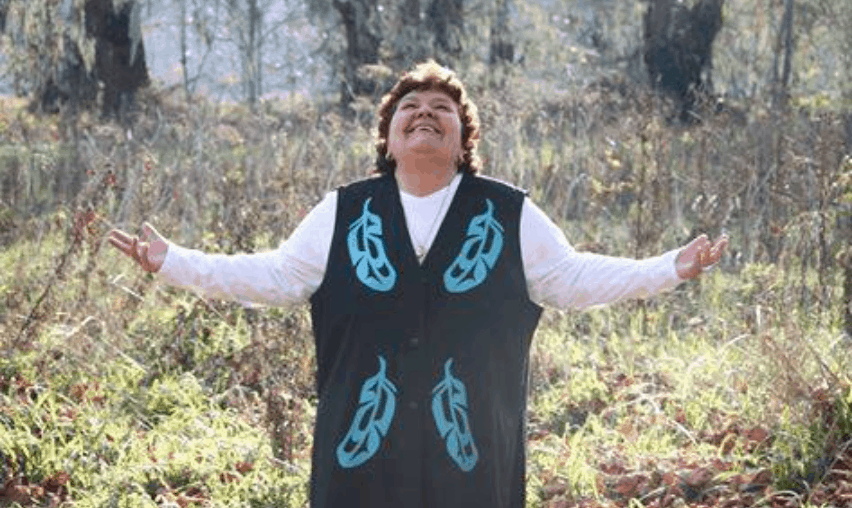
Lise Haddock was driving in downtown Duncan this summer when a group of Indigenous youth prompted her to change direction.
She says she knew the youth from her work in the child welfare space, and she pulled over to chat with them.
“I recognized them as youth that had been in care of either a Delegated Aboriginal Agency or the [Ministry of Children and Family Development],” Haddock says.
“As I listened to their stories, I heard that they had basically graduated from the foster care system into the homeless system… that sense of identity and belongingness they were now finding on the street, instead of with their family and community.”
It was this encounter that inspired Haddock to accept a position with the Canadian Mental Health Association’s (CMHA) Cowichan Valley Branch — as its first Indigenous executive director.
Founded in 1918, the CMHA has a mandate to support folks with all aspects of mental health and illness. The Cowichan Valley Branch was incorporated in 1992 and offers programs and services for those experiencing homelessness, including transitional housing.
“We need to recognize that there is such a high representation of Indigenous people in the mental health sector, the justice sector, and in the foster system,” says Haddock. “And we need to look at working together to develop programs that are culturally appropriate, culturally safe.”
Youth who have been in the child welfare system are disproportionately at risk of homelessness. According to the 2018 Report on Homeless Counts in B.C., 29 per cent of folks surveyed during one of two dozen homeless counts conducted around B.C. said they had experience in foster care, a youth group home, or had been on a youth agreement. Of the same group of respondents, 38 per cent identified as Indigenous.
Coming full circle
Originally from Manitoba, Haddock identifies as Métis. She says she is honoured to have been a guest on the unceded territory of the Cowichan people for the last 30 years.
While she has worked as a child and youth care worker, a social worker, a social worker instructor, and a consultant, she says she felt that there were greater opportunities to create systemic change at a managerial level.
Between 1993 and 2013, she served as the executive director of Lalum’utul’ Smun’eem Child and Family Services, a Delegated Aboriginal Agency with a mandate to serve the Cowichan Tribes.
Haddock says she has “a ton of respect for front line workers and the love and compassion and kindness and wisdom that they bring into their practice,”.
“That work is so relational — it’s very difficult for the social worker to be holding families up and advocating for systemic change at the same time,” she says. “Even the delegated agencies that work with the nations, they’re basically based on a provincial model, not an Indigenous model.”
Haddock is hopeful that will change with Bill C-92, a federal bill that was “co-developed with Indigenous, provincial, and territorial partners with the goal of keeping Indigenous children and youth connected to their families, communities, and culture”.
After working at Lalum’utul’ Smuneem Child and Family Services, Haddock worked with the Office of the Representative for Children and Youth (RCY) as the director of aboriginal initiatives. The RCY is an advocacy organization that supports children and families involved in the child welfare system in B.C.
Under the leadership of Mary Ellen Turpel-Lafond, who was the RCY at the time, Haddock says she recognized the importance of using her voice to impact change through a more relational and grassroots approach, rather than through bureaucratic processes.
“Our role [at the RCY] was to hold young people up, to empower people, and to support them in igniting their spirit,” says Haddock. “We really need to keep our eyes on the ground and to be connected to people who have the lived experience of dealing with intergenerational trauma.”
Now, as the first Indigenous executive director of the CMHA Cowichan Valley Branch, she aims to serve people in a good way.
“My journey has taken me to positions and tables where I have been given the space to have a voice, and hopefully I have used that voice to support our people, to be an advocate for change, but also to engage in difficult discussions.”
Cultivating Change
In May 2020, the Cowichan Valley branch was put under probation for one year after an external investigation report found that there were problems with the branch’s housing practices and policies, including the discriminatory treatment of a tenant.
The report recommended a number of steps, including “organization-wide training focused on a meaningful commitment to Indigenous reconciliation, including training on cultural safety, humility and trauma-informed care.”
“We need to look at the [anti-Indigenous] racism in this organization and how that has been transferred to practice,” says Haddock, who began working at the branch just over a month ago, in September. “Perpetrators of racism will not be welcome in this organization.”
According to Haddock the branch is in the process of implementing strategic change, and is working to strengthen partnerships with the Cowichan Tribes, the Malahat Nation, and the Ts’uubaa-asatx Nation (formerly the Lake Cowichan First Nation).
“Government does not need to lead,” she says. “Indigenous governance and organizations need to lead the way.”
Every month, IndigiNews will be featuring a child welfare game-changer on Vancouver Island. If you would like to nominate a game-changer, please email anna@indiginews.com.
Author
We live in a media ecosystem that thrives on misinformation. Big Tech and AI companies are consuming the work of real human beings and Canadian news has been banned on Facebook and Instagram.
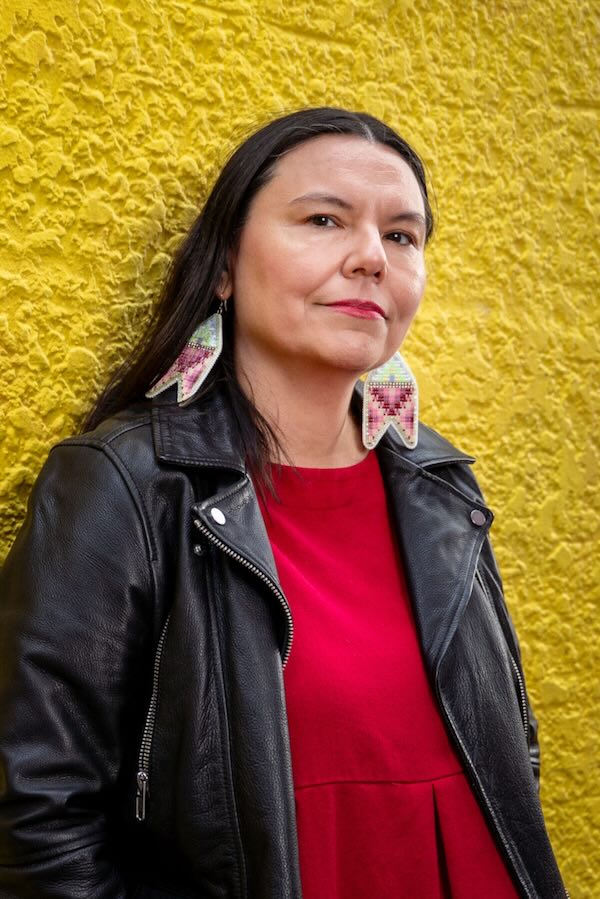
And yet, I have hope for journalism because of the work we’re doing at IndigiNews.
At IndigiNews, we embody tâpwêwin — the Cree value of integrity and responsibility in truth-telling. We are committed to our independent, Indigenous-led newsroom rooted in community, accountability, and relationality. We believe storytelling is a sacred fire that connects our pasts, presents, and futures through the storytellers in our Storytelling Lodge. IndigiNews creates space for Indigenous journalists, storytellers, Knowledge Keepers, and communities to gather, learn, and share stories that matter.
As a registered charity, we are building a fire that allows our work not just to ignite but to thrive. Rather than relying on advertising or corporate acquisition, IndigiNews is sustained by people like you who believe Indigenous stories are important for the future of our communities.
Your support is making a real difference.
Our community of supporters, our Firekeepers, make it possible to grow our newsroom, publish award-winning journalism, train emerging Indigenous journalists through initiatives like the ReFocus Photojournalism Fellowship, and publish trustworthy stories that serve our communities across the country. Every story we publish helps fill in gaps left by mainstream media and ensures Indigenous perspectives are represented with care, accuracy and respect.
But there is still more work to do.
As the media landscape becomes more and more uncertain, community support is as necessary and essential as it’s ever been. Every new Firekeeper helps protect the independence of our newsroom and strengthens journalism that is accountable to our many and varied communities over corporations.
That’s why we’re inviting you to become a Firekeeper.
Firekeepers tend to and protect the sacred fire. Your monthly contributions directly support IndigiNews’s Storytelling Lodge, helps sustain our independent, Indigenous-led newsroom, and ensures future generations of Indigenous storytellers have the resources they need to do the work.
As a registered Canadian charity, all eligible donations receive a charitable tax receipt.
If you believe Indigenous stories matter, if you value independent journalism, and if you want to help build a strong future for Indigenous media, we invite you to join our circle of Firekeepers today.
Together, we can keep the fire burning.
— Eden Fineday, Publisher, IndigiNews
Support us nowLatest Stories
-
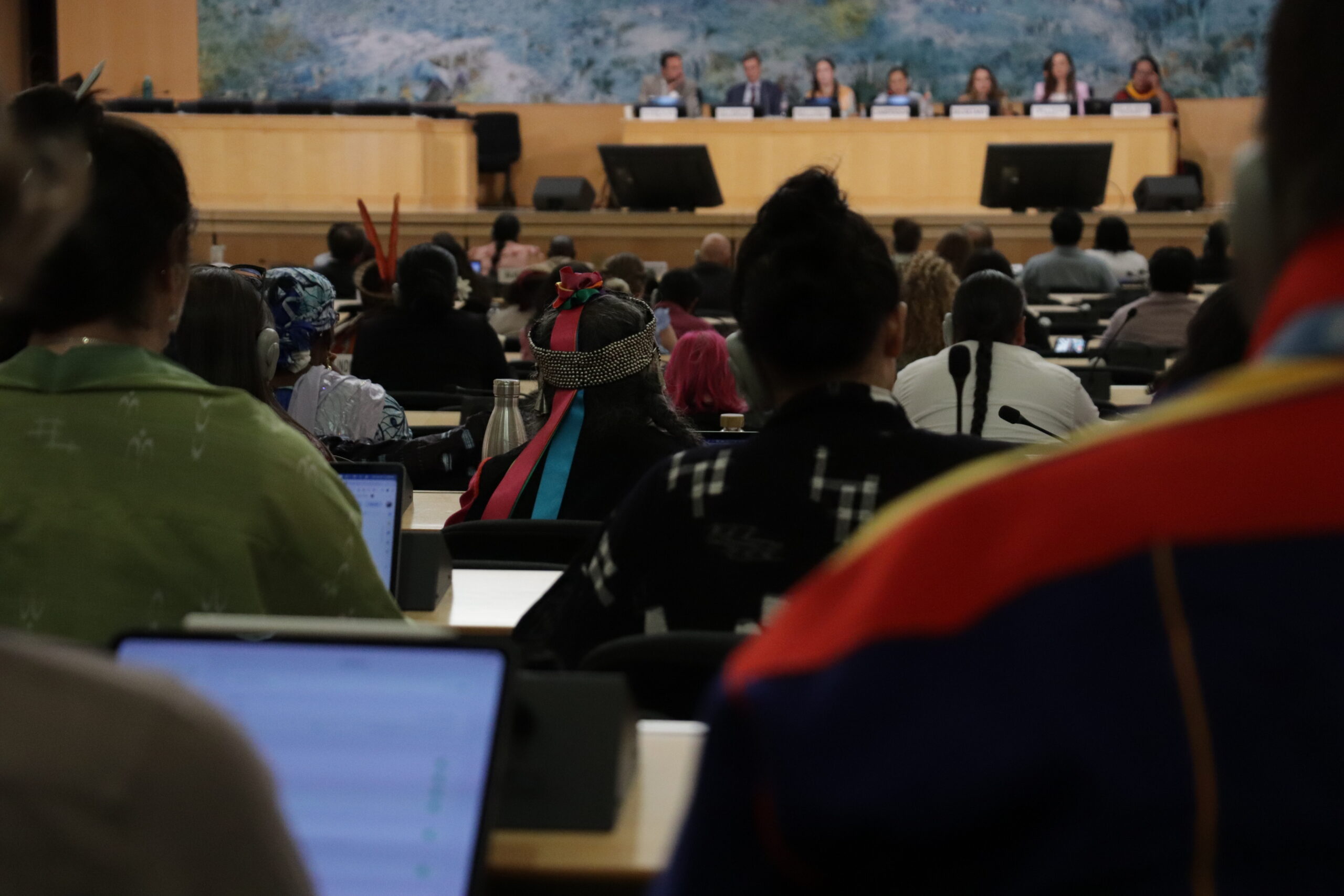
Indigenous leaders give the UN a roadmap for protecting their peoples
Amidst prayers and vows of solidarity, UN Expert Mechanism on the Rights of Indigenous Peoples ends annual meetings with demands for ‘action we’re not seeing globally’
-
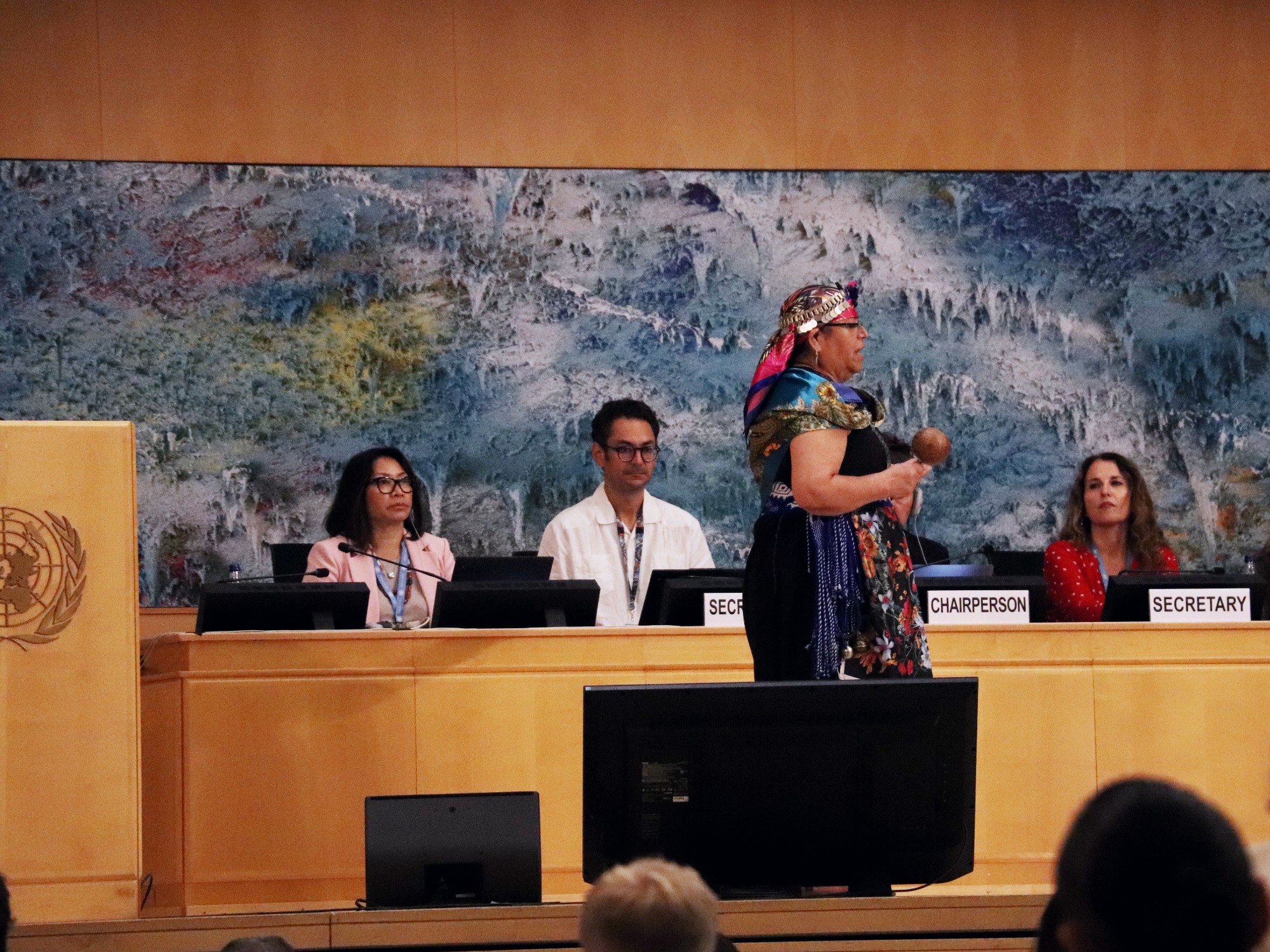
Indigenous people demand more say at the UN, as new crises hit their homelands
Indigenous nations live ‘on the frontlines’ of climate, conflict and new tech. But their voices remain sidelined in the global halls of power.