On the DTES, thousands gather to remember MMIWG2S+, call for justice: ‘Our hearts beat as one’
In photos: The 34th annual Women’s Memorial March brought many families together for a day of grieving, solidarity and advocacy


Content warning: This story contains details about “Canada’s” genocidal epidemic of MMIWG2S+. Please look after your spirit and read with care.
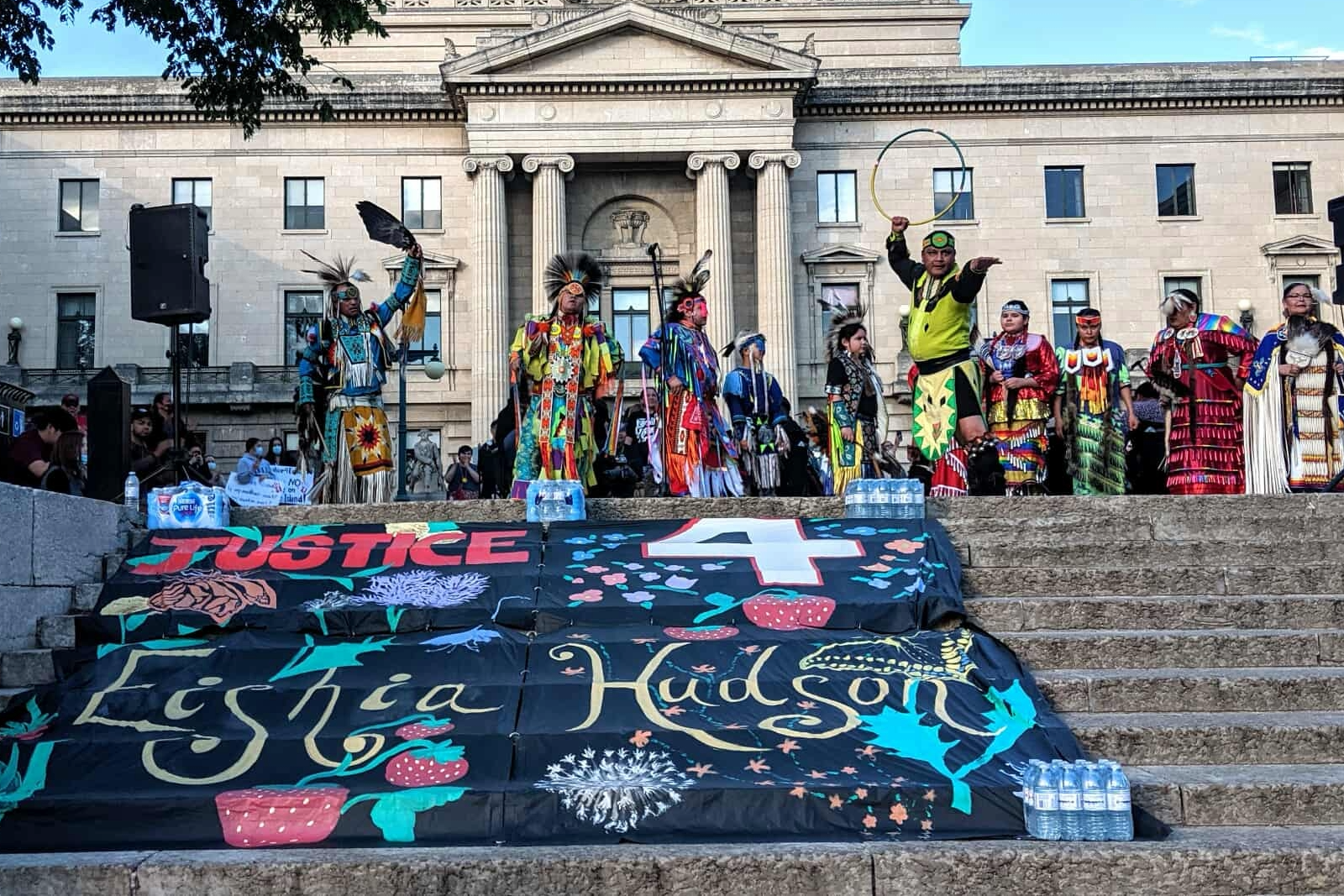
As families gathered for the 34th annual Women’s Memorial March, an air of quiet reverence settled over Main and Hastings in xʷməθkʷəy̓əm, Sḵwx̱wú7mesh and səlilwətaɬ territories.
Beneath the growing warmth of the morning sun, loved ones clutched signs, photos, and each other. Through the hush, family members rose to the mic — sharing stories of loss, resilience, and a deep, unbroken love for the missing and murdered women, girls, LGBTQ, and Two-Spirit people (MMIWG2S+) they were in attendance to honour.
“Today, our hearts beat as one,” said Marlene Thistle of the Gitxsan Nation, whose daughter Janice Nicole Bryant was shot outside her “Vancouver” home in May 2017. Her killer has not yet been found.
“I appreciate you all coming and doing this march together each year.”
The Women’s Memorial March happens annually on Feb. 14 — it began in “Vancouver” as a memorial for a murdered community member, Cheryl Ann Joe, and grew to become a larger event for all MMIWG2S+. It now happens in cities across “Canada.”

By midday, thousands had congregated to listen to families’ stories, and march in solidarity.
“I never thought I’d be doing this for my sister — walking and advocating,” said Candace West, who is Babine and a member of the frog clan.
“We have to stand together, be together, and support each other as we do now.”
West said her sister, Christian West, was found dead in her apartment in August 2021 after reporting stalking and harassment several times to the police.
“The police did nothing,” said West. “I always feel like I have to spread and raise awareness for missing and murdered Indigenous women.”


Diamond Poorman, meanwhile, spoke on behalf of her sister Chelsea Poorman “and the rest of the girls and families” to say that she “really hopes for change.”
Chelsea, whose body was found behind a Shaughnessy mansion one year after she went missing, was 24 when she died.

“Police officers have told me to go screw myself and that she wasn’t important,” said Diamond, as tension among the crowd reached a new peak.
The Office of the Police Complaints Commissioner recently announced it will oversee an investigation into the conduct of several Vancouver Police Department officers in relation to Chelsea’s disappearance and death.


“I just want to bring our family home,” said Marlene Jack, whose sister Doreen, brother-in-law Ronnie and two nephews Russell and Ryan disappeared from Prince George 36 years ago.
“The RCMP keeps saying we’re working on the case but why is it always on the back burner?” she asked.


Two children, who lead the march each year, point and wave at a drone that was following the thousands of people as they turned onto Alexander Street. “I thought you saw an eagle,” said a committee member to the children. “It’s a city eagle!” they joked in return.

Benny George, a Cowichan Tribes father stood with his children as he sang a song with permission from his Lummi relatives on behalf of his 15-year-old daughter Carsyn Seaweed, who was found semi-conscious under debris on Cowichan lands in 2023. She later passed away.
Although police initially stated the circumstances in which her body was found was suspicious, they eventually ruled out homicide.

“I couldn’t leave without saying on behalf of my daughter that we still seek justice,” said George as his son looked up at him. “I feel for all the families that there’s this huge void of not knowing where your children are, or whether it’s taken decades to get justice for their deaths.”
Paulena Smith, who is Tsimshian, Haida and Portuguese, pointed out that of the 231 calls to justice stemming from the National Inquiry into Missing and Murdered Indigenous Women and Girls, recalled Smith, only two have been fulfilled.
“Shame!” the crowd bellowed.

In a statement from the province early February 14, David Eby commented, “We are taking action to end the crisis of missing and murdered Indigenous women, girls, Two-Spirit and trans people by working in partnership with Indigenous people to increase safety and supports for survivors, uplift Indigenous-led approaches and break the cycle of violence through prevention, healing and accountability.” Eby was not present at the march.


Author
We live in a media ecosystem that thrives on misinformation. Big Tech and AI companies are consuming the work of real human beings and Canadian news has been banned on Facebook and Instagram.
And yet, I have hope for journalism because of the work we’re doing at IndigiNews.
At IndigiNews, we embody tâpwêwin — the Cree value of integrity and responsibility in truth-telling. We are committed to our independent, Indigenous-led newsroom rooted in community, accountability, and relationality. We believe storytelling is a sacred fire that connects our pasts, presents, and futures through the storytellers in our Storytelling Lodge. IndigiNews creates space for Indigenous journalists, storytellers, Knowledge Keepers, and communities to gather, learn, and share stories that matter.
As a registered charity, we are building a fire that allows our work not just to ignite but to thrive. Rather than relying on advertising or corporate acquisition, IndigiNews is sustained by people like you who believe Indigenous stories are important for the future of our communities.
Your support is making a real difference.
Our community of supporters, our Firekeepers, make it possible to grow our newsroom, publish award-winning journalism, train emerging Indigenous journalists through initiatives like the ReFocus Photojournalism Fellowship, and publish trustworthy stories that serve our communities across the country. Every story we publish helps fill in gaps left by mainstream media and ensures Indigenous perspectives are represented with care, accuracy and respect.
But there is still more work to do.
As the media landscape becomes more and more uncertain, community support is as necessary and essential as it’s ever been. Every new Firekeeper helps protect the independence of our newsroom and strengthens journalism that is accountable to our many and varied communities over corporations.
That’s why we’re inviting you to become a Firekeeper.
Firekeepers tend to and protect the sacred fire. Your monthly contributions directly support IndigiNews’s Storytelling Lodge, helps sustain our independent, Indigenous-led newsroom, and ensures future generations of Indigenous storytellers have the resources they need to do the work.
As a registered Canadian charity, all eligible donations receive a charitable tax receipt.
If you believe Indigenous stories matter, if you value independent journalism, and if you want to help build a strong future for Indigenous media, we invite you to join our circle of Firekeepers today.
Together, we can keep the fire burning.
— Eden Fineday, Publisher, IndigiNews
Support us nowLatest Stories
-
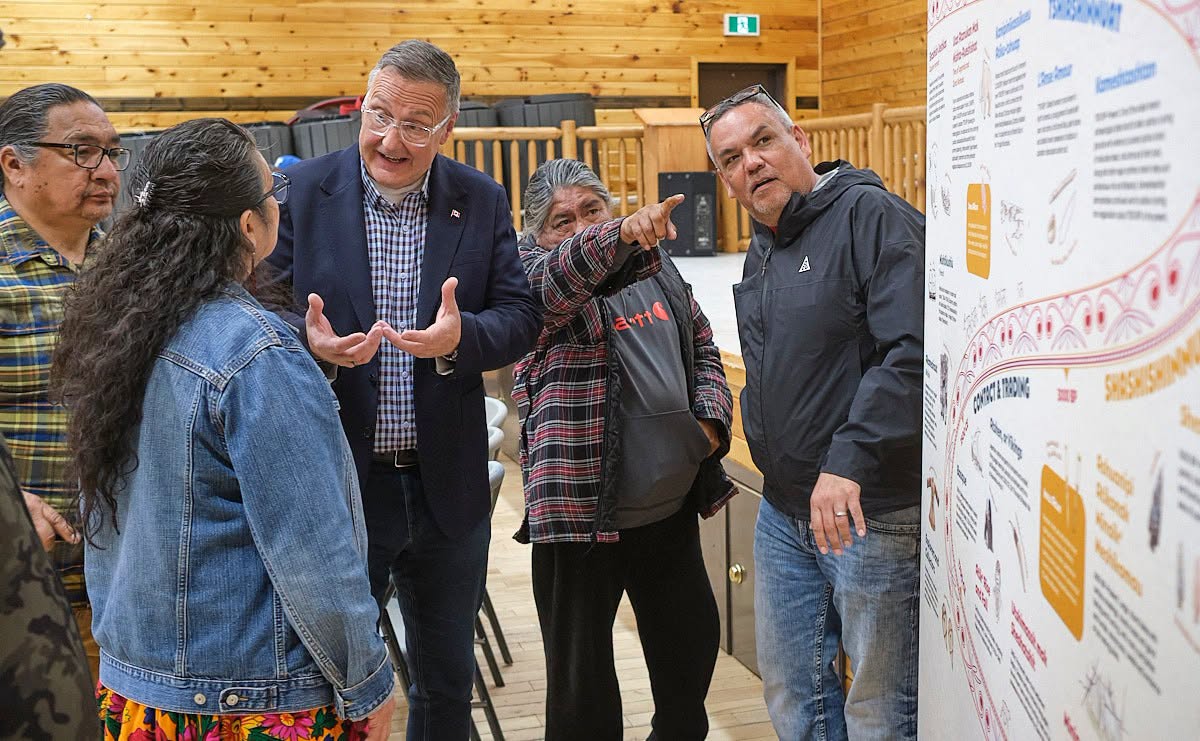
Innu Nation ‘moved to anger, to strength’ after accusing province of censoring history
Solidarity pours in after ‘Labrador’ history exhibition abruptly cancelled after province ordered removal of cultural items and timelines older than 300 years
-
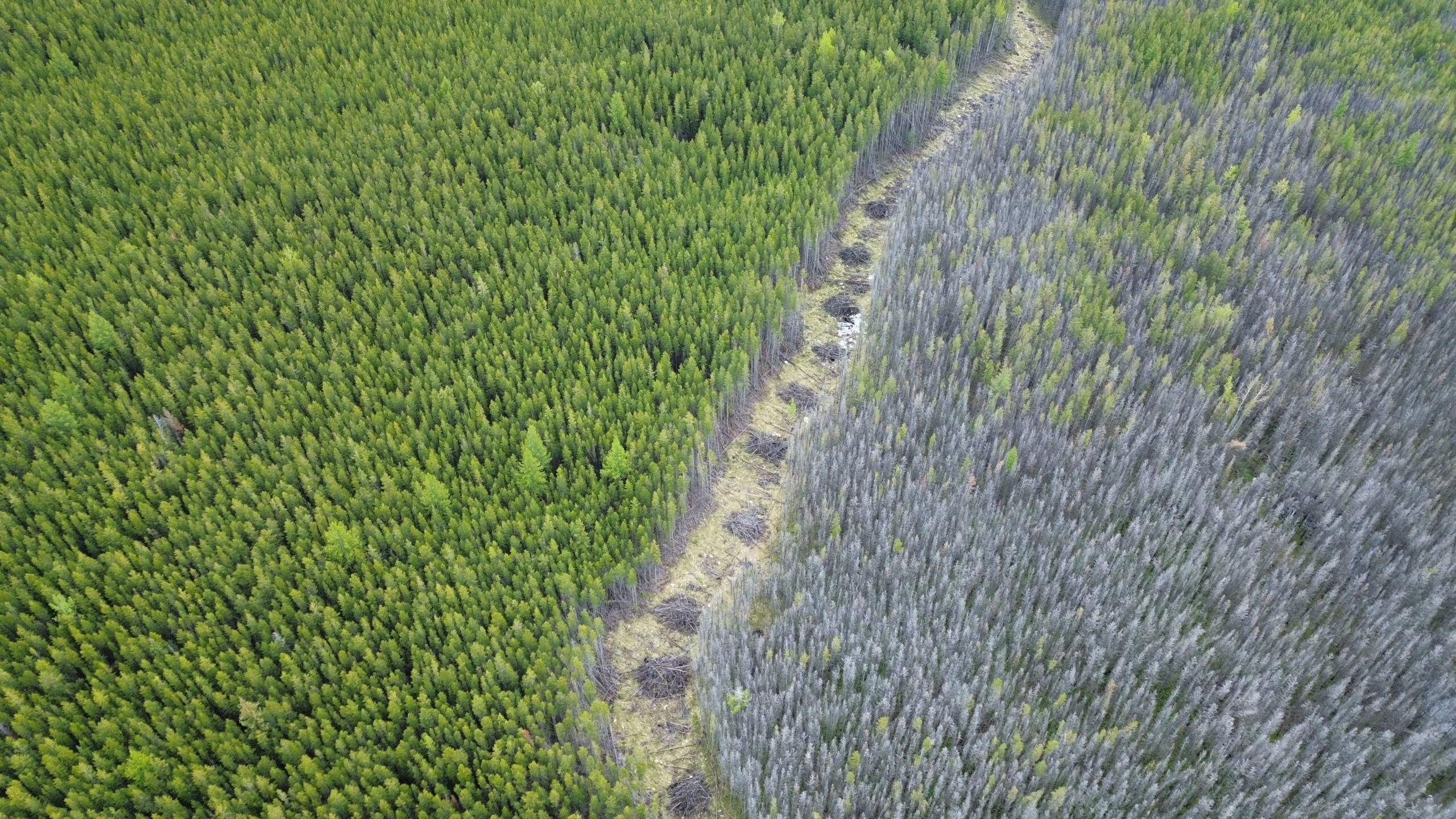
Osoyoos Indian Band set to restore native plants, species in wildfire-ravaged forests
The First Nation plans to clear out burned spaces and restore trees, berries and medicinal plants to the area, encouraging biodiversity and wildlife to return