K’ómoks becomes first Indigenous government to appoint justice of the peace
Marion Buller — former chair of the National Inquiry into MMIWG — says the new role will support the First Nation on ‘Vancouver Island’ to apply its own laws

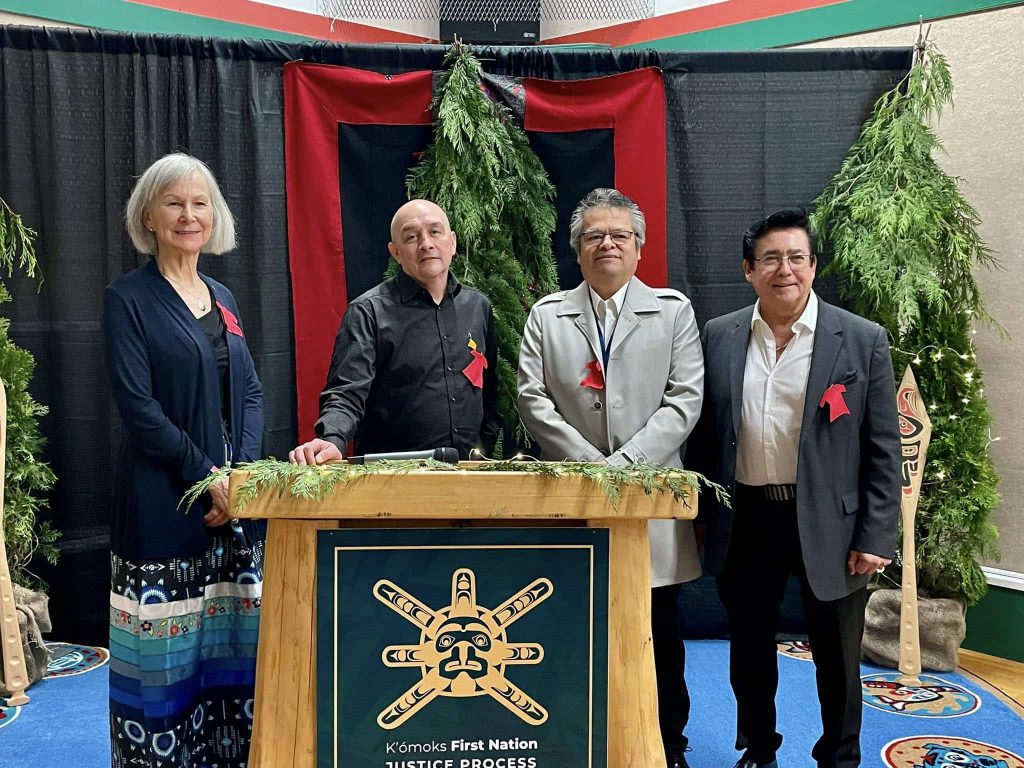
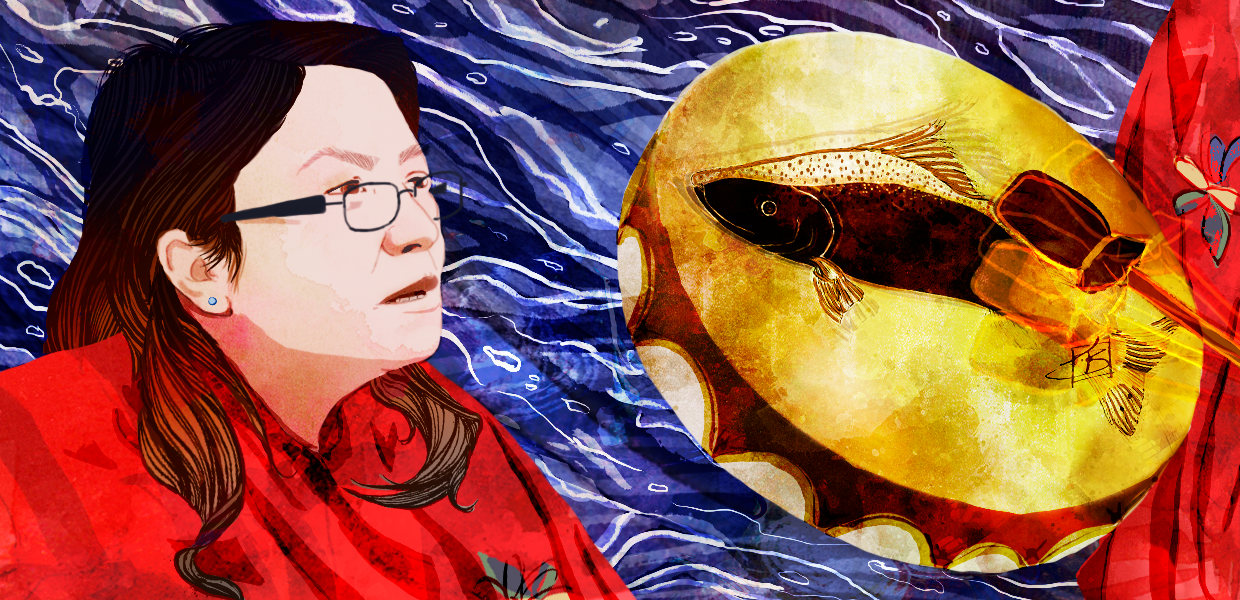
K’ómoks First Nation has appointed as its inaugural justice of the peace the former head of the National Inquiry into Missing and Murdered Indigenous Women and Girls.
On Thursday, K’ómoks named trailblazing judge Marion Buller to the new judicial role. According to the First Nation, it’s the first Indigenous government in the country to create such a post with lawmaking powers taken back from the Indian Act.
“This will be a wonderful opportunity to incorporate not only trauma-informed processes and practices, but also to place the emphasis on healing,” Buller said at a press conference last week, “because ultimately the goal is the safety and the health of the community.”
Buller added in a statement that she hopes to be an “independent change-maker” for self-government of the eastern “Vancouver Island” First Nation.
The role involves bridging the gap between Indigenous laws and “Canadian” laws, according to K’ómoks, and Buller will work at a community level “promoting access to justice, maintaining public safety, resolving conflicts, and ensuring that legal processes are followed efficiently.”
“My role as justice of the peace will enable the transparent application of K’ómoks First Nation’s laws in their own ways,” she explained.
“As a long-time advocate for decolonization, I have taken on this role as an opportunity to support KFN’s goals of self-determination and community safety.”
K’ómoks Councillor Coral Mackay called Buller’s appointment a “historic step in our journey toward self-determination.”
She said the position would help “protect our people and our lands while integrating our traditions into a fair and accountable justice process … for generations to come.”
‘Our nation’s commitment to building a legacy’
K’ómoks Chief Ken Price praised Buller as “one of the most accomplished Indigenous legal experts” as well as a “dedicated advocate for advancing Indigenous law and decolonization” in the legal system.
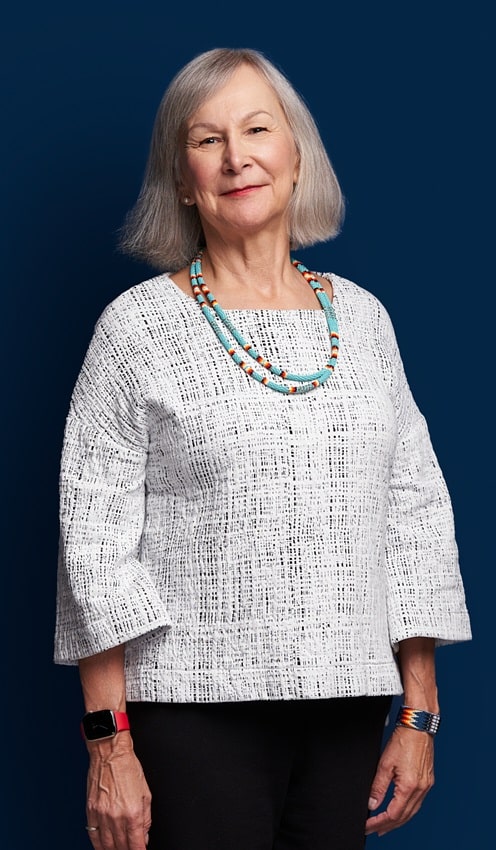
Buller, a member of Mistawasis First Nation, is currently also the University of Victoria’s chancellor.
This year marks 30 years since she made history as the province’s first woman judge of First Nations ancestry. She also set up the province’s First Nations and First Nations Family Courts.
“Marion’s choice to work with K’ómoks First Nation is a clear sign of good things to come,” Price said in a statement, “by addressing the legal gap for enforcement of our laws on reserve.”
A K’ómoks First Nation statement said it has faced significant barriers to having police help enforce its own laws.
Under the RCMP Act, policing services are restricted to federal, provincial, and municipal laws — not Indigenous laws. This has created what the First Nation called an enforcement gap on reserve lands.
“This gap leaves First Nation communities vulnerable,” the statement from K’ómoks reads, “as criminal activity can seek refuge on reserve lands.”
To address this, K’ómoks developed its own justice process, building on its governance under the K’ómoks First Nation Land Code.
Established in 2016, the Land Code replaced roughly a third of the Indian Act — in particular, clauses governing land use and the environment — with K’ómoks laws, granting the First Nation greater autonomy over its lands.
The First Nation’s legal authorities were bolstered in 2018 when it won a landmark trespassing case in provincial court — where K’ómoks launched a successful, but rare, private prosecution against two people renting a property on reserve.
The case’s judge declared the First Nation’s “unusual application” using K’ómoks’ Land Code was “unprecedented.”
The justice process now takes that victory a step further, providing a framework for enforcing K’ómoks laws that aligns traditional restorative justice practices with Canadian legal standards.
Such practices aim to resolve conflicts, keep the community safe, and protect K’ómoks lands and people.
“While the Framework Agreement on First Nation Land Management, which is ratified by the K’ómoks First Nation Land Code, provides the authority to appoint a justice of the peace, no other Land Code First Nation has done so to date. K’ómoks First Nation is the first,” explained a statement from the First Nation.
“The appointment of a justice of the peace helps to bridge the gap between our ‘First Nation’ laws and the ‘laws of Canada,’ so that we can further the work with the RCMP and Crown prosecutors to enforce our laws and collectively keep our communities safe.”
Chief Robert Louie of Westbank First Nation celebrated Buller’s appointment in a statement, calling her new role as a historic first in the country using authority under the Land Code.
“K’ómoks is the first ever to appoint a justice of the peace in Canada in accordance with Land Code authority,” Louie, chair of the First Nations Lands Advisory Board, confirmed in a statement.
“This appointment will advance the decolonization of First Nations land laws, benefitting the people of K’ómoks and many other First Nations across the country.”
Louie praised what he called Buller’s admirable “hard work and her commitment to finding Indigenous legal solutions.”
A model for Indigenous governance
K’ómoks said it plans to appoint officers to enforce K’ómoks law. There aren’t currently plans for that job to have the full scope of a police officer — but rather to serve people with violation tickets and summons.
Doing so would not stop RCMP or peace officers from operating on K’ómoks land.
There are still changes needed to the RCMP Police Act, which currently does not have specific provisions for officers to enforce First Nations law.
Louie added that federal legislation recognizes the “jurisdictional authority of First Nations to make laws — but that “what has failed to happen is some of the other laws that exist currently … need to catch up,” he said.
“The short of it is that when you have self-government, when you have lawmaking powers,” he said. “It should have an automatic provision for enforcement.”
K’ómoks’ move could set a precedent for other First Nations looking to expand their legal authority or enforcement powers.
Austin Bear, chair of the First Nations Land Management Resource Centre, said Buller was a good choice for the role — one that could inspire other Indigenous leaders.
“Her dedication to upholding First Nation legal authorities is a guiding light for First Nations, legal advocates and scholars,” Bear noted in a release.
Author

Latest Stories
-
Katzie First Nation guardians and partners celebrate restoration of important ‘B.C.’ marsh
Dikes were installed throughout the ‘Fraser River’ to pursue agriculture — now, reverting Xwíʔləm̓nəc to a wetland is restoring culture and connection
-
A new GyaaG̲ang (totem pole) is raised in Haida ceremony, celebrating a ‘small act of reconciliation’
Carving by Haida artist Ḵuuya Micheal Moody depicts ‘WaasG̲uu the Sea Wolf carrying a deep-sea frog — a symbol of luck, wealth and prosperity