‘I’m standing up for everything that I believe in’: Land defenders prepare to appeal TMX convictions
Secwépemc and Nlaka’pamux activists arrested at pipeline site ceremony await Supreme Court of Canada’s green light to appeal, as allies fundraise for legal costs
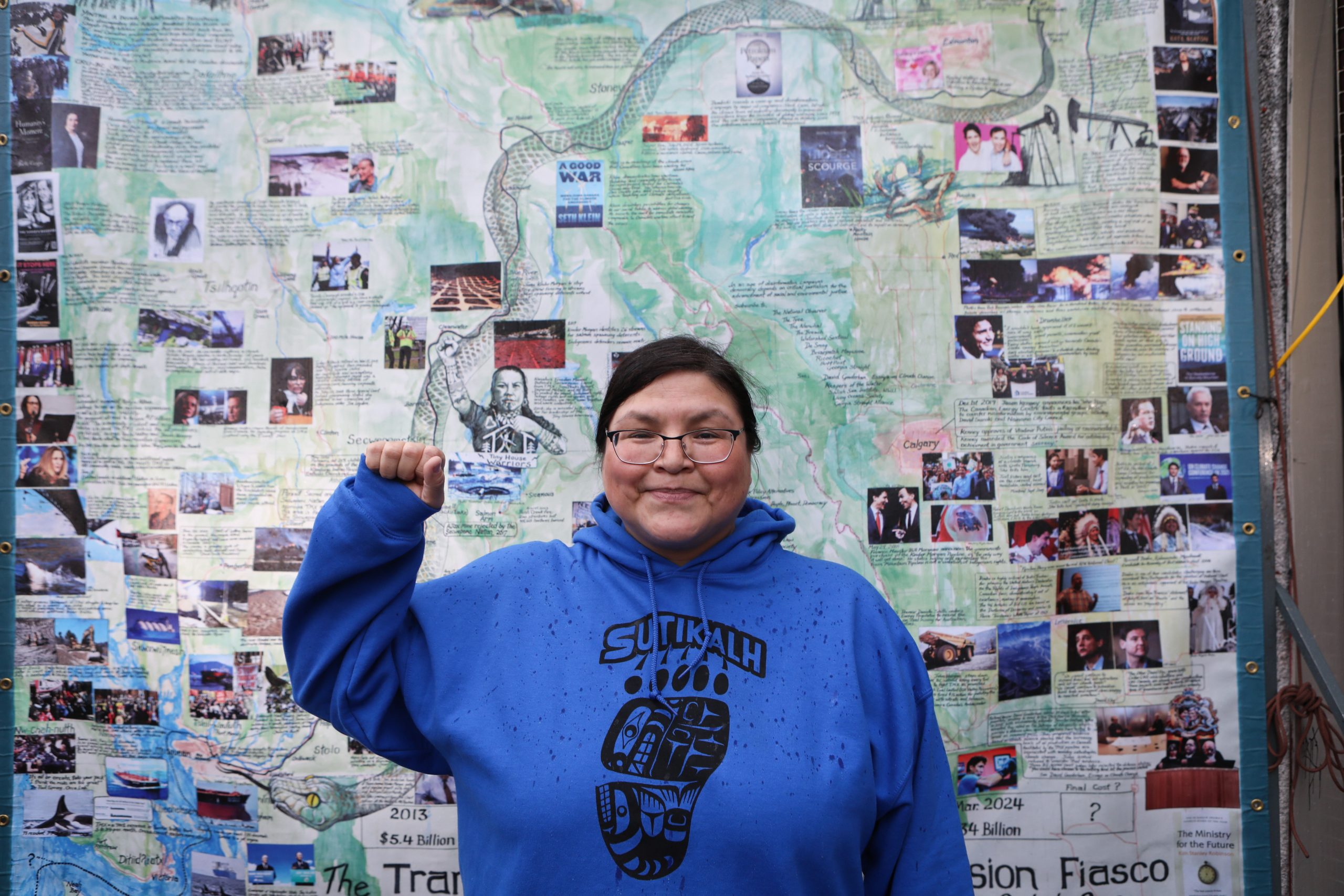
Two Indigenous land defenders criminalized for opposing the Trans Mountain pipeline expansion (TMX) received support from community members last week — with an event helping fundraise the cost of appealing their 2023 convictions to the country’s highest court.
On Monday, the Supreme Court of Canada announced its judges had officially received all documents needed “for consideration” of the land defenders’ request to appeal their guilty verdicts.
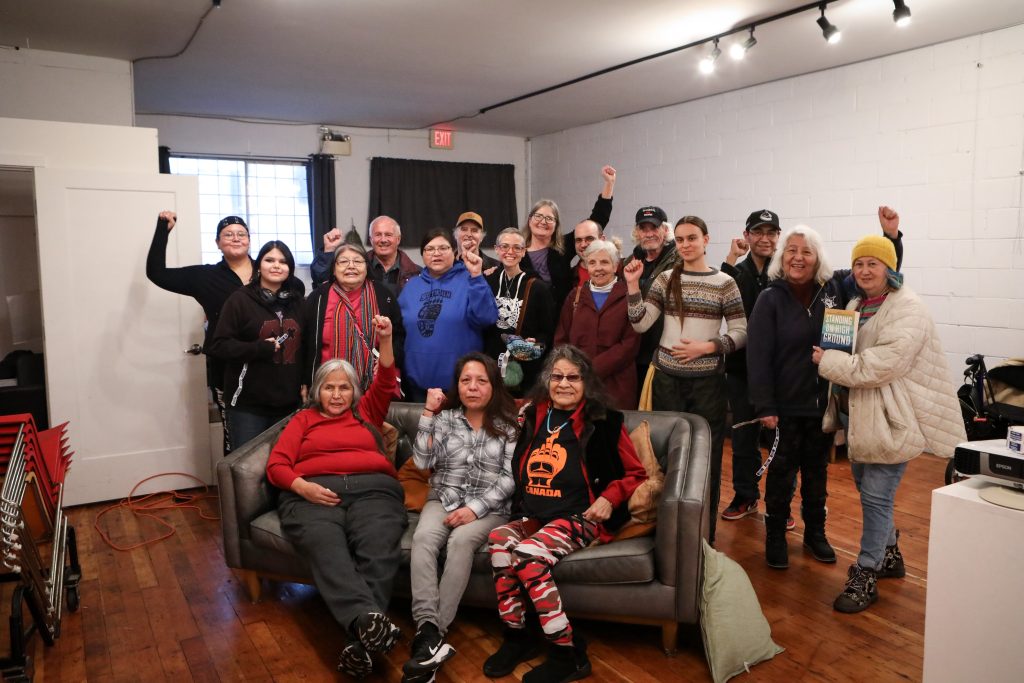
As they await a decision on their application, dozens of their supporters gathered on Coast Salish territories for a silent auction and 50/50 draw to raise more than $2,600 for Red Deer Billie Pierre, of Nlaka’pamux Nation, and April Thomas, who is Secwépemc.
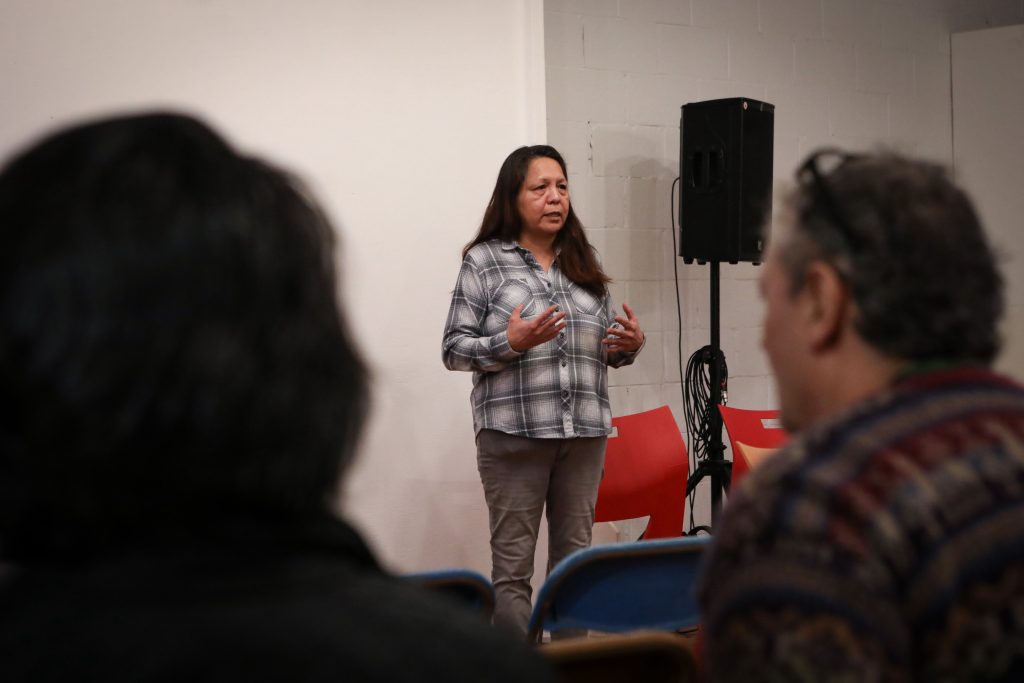
Thomas told IndigiNews she was amazed by the number of people who attended and showed their support at the event on Feb. 7.
“It revives me, because I can see and hear from other people that this is not the end,” she said in an interview during the event.
“It’s not even a new chapter: it’s a whole new book; it’s the dawn of a new era.”
The fundraiser, held at the Vines Art Society’s venue in “Vancouver,” drew supporters of the pair from the local area and wider region.
The silent auction included donations such as pottery, apparel, art and trips. Its organizers said they plan to host more fundraising events, including in both land defenders’ home communities.
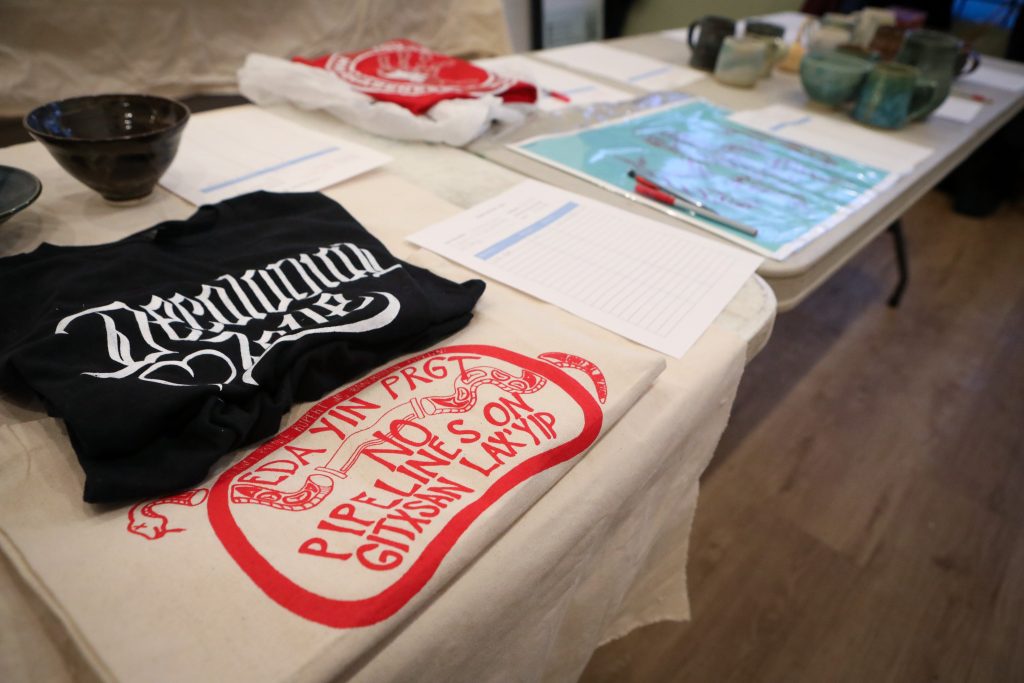
“This is a very layered fight that we’re up against,” Thomas added, “because it’s right down from the individual level, right up to fighting for collective rights and title.”
In 2023, a judge sentenced Thomas to 32 days in jail, and Pierre to 40 days under house arrest, after finding the pair guilty of criminal contempt.
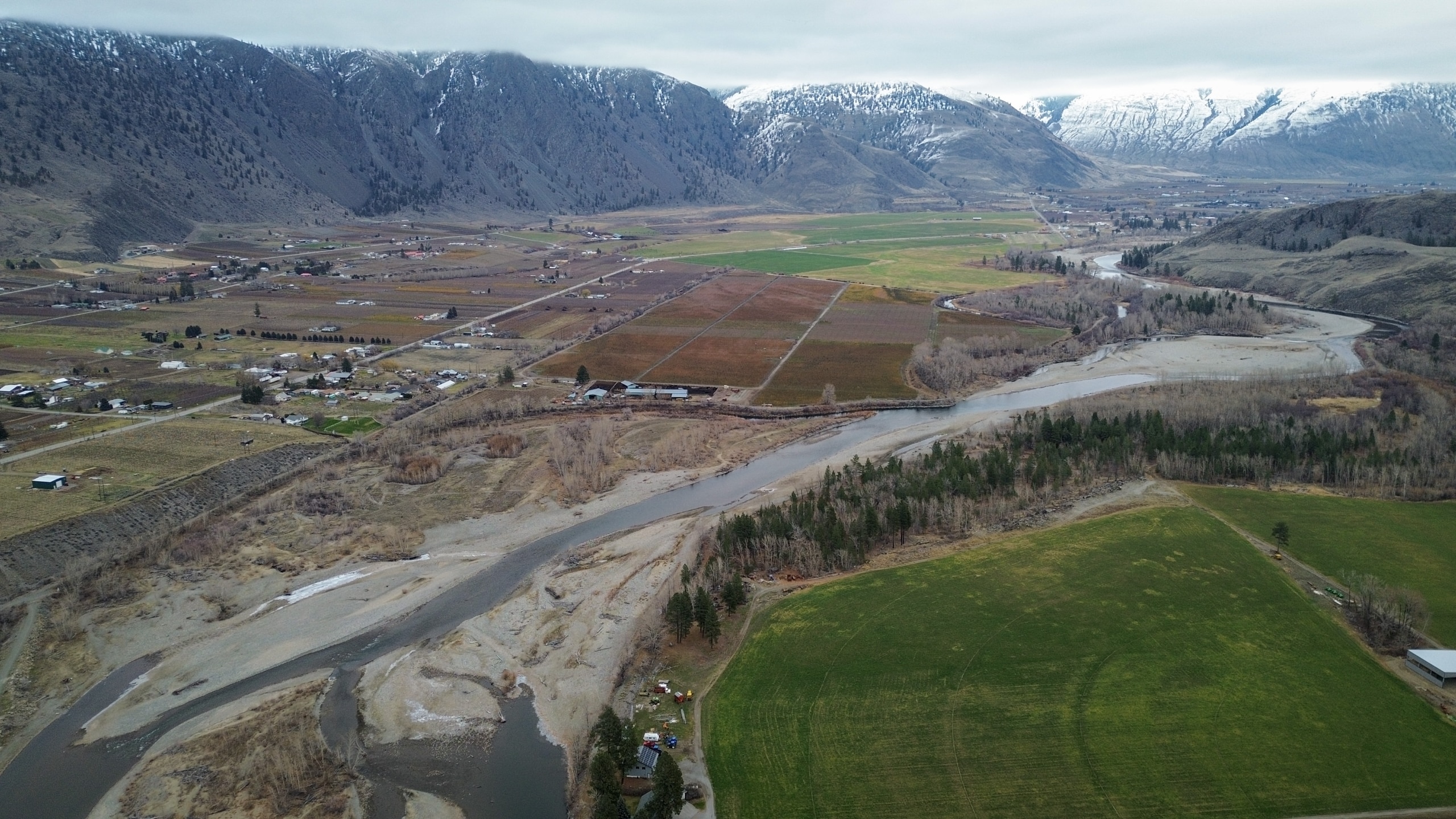
The charges stemmed from an incident three years earlier, when police arrested eight people holding ceremonies near a pipeline construction site at a sacred Secwépemc village site at Sqeq’petsin (Mission Flats area).
Arrested alongside Thomas and Pierre was settler-ally Romilly Cavanaugh and Secwépemc Hereditary Chief Saw-ses, a survivor of the Kamloops Indian Residential School.
His daughter, Secwépemc matriarch Miranda Dick, was one of one of four people to be arrested at the site two days later, on Oct. 17, 2020.
During their trial, Thomas and Pierre argued their actions that day upheld Secwépemc law and arose from their cultural obligations to protect the health of their lands, waters, and salmon relatives for current and future generations.
But in her decision, sentencing judge Justice Shelley Fitzpatrick of the B.C. Supreme Court said “even accepting that Indigenous people generally have a duty and obligation to protect the land and water, that does not mean that they have a duty to oppose Trans Mountain’s pipeline.”
Pierre completed her house arrest, but Thomas was incarcerated for just one day of her sentence before being released pending her appeal to the B.C. Supreme Court immediately after her trial.
“I plan to fight it right to the end, because I’m not going to have them treat me like I’m a criminal, when I’m standing up for everything that I believe in,” said Thomas.
She added that her children, grandkids and other family members are worried about her serving jail time.
“But I’m actually not worried,” she said. “If I have to go to jail, it’s more alone time for me to strategize and get work done.”
Indigenous law ‘had no place in the courtroom’
Early last year, Thomas, Pierre and Cavanaugh — the latter being a former TMX worker — appealed the Supreme Court of B.C.’s decision to the provincial Court of Appeal, arguing that Justice Fitzpatrick had made a series of errors against them during their trial.
One error they alleged was Justice Fitzpatrick’s dismissal of their lawyer’s “colour of right” argument.
That argument is a defence when defendants held “an honest belief in a state of facts which, if it existed, would be a legal justification” for their otherwise illegal actions, according to Courthouse Libraries B.C.
Ben Isitt, one of the land defenders’ lawyers throughout their legal battle, had argued the land defenders held the “honest belief” they were upholding Indigenous laws.
Isitt told the court his clients genuinely “believe they had legal duties in these circumstances arising from Secwépemc and Nlakaʼpamux laws to protect the sacred waters of the Thompson River — Simpcwétkwe (North Thompson) in Secwépemctsín — and the salmon people who relied on the health of the river to survive.”
But in July 2025, B.C. Court of Appeal Justice Lauri Ann Fenlon ruled Fitzpatrick “did not err” on any of the issues raised by the defendants, ultimately denying the three a chance of a provincial retrial.
The Court of Appeal said that the land defenders “failed to identify a particular Indigenous law they relied on to justify their contravention of the injunction.”
“That’s the way they looked at us: as being criminals, that’s it,” Thomas said during the fundraising event last week.
“Any Indigenous law that we were standing on had no place in the courtroom.”
Last September, Thomas and Pierre submitted an application to appeal their convictions to the Supreme Court of Canada, the country’s highest court.
Their new appeal, Pierre explained, seeks to challenge the court to reconsider “whether the colour of right defence can apply when Indigenous people act under their own laws and traditional authority on unceded lands — even if this conflicts with colonial injunctions.”
Pierre added they plan to argue the “B.C.” justices erred in “refusing to recognize Indigenous law as valid legal basis for action.”
If their Supreme Court of Canada appeal is accepted, then she believes the case would be “of national importance,” because it “speaks to the heart of who truly holds rightful authority over our unceded lands, and whether Indigenous law has force in Canadian court.”
Thomas argued other recent cases — such as last year’s historic B.C. Supreme Court decision upholding several Quw’utsun Nation bands’ title to an ancient village site on the “Fraser River” — could have a bearing on whether the Supreme Court of Canada accepts their application.
That’s because she said for too long “Canadian” courts have seen Indigenous laws as subordinate to colonial laws.
“But now everything is changing because of the Cowichan case,” she said. “I’m thinking it’s giving [courts] more of a challenge.
“We’re not just band members, we’re not just Indigenous people: We’re title holders to the land.”
If the Supreme Court of Canada rejects their application to appeal their guilty verdicts, Thomas said she and Pierre intend to file another application with them, this time to appeal just their sentences.
They hope their legal battle will challenge how land defenders across the country are treated by the judicial system.
“Land defenders who are standing up Indigenous laws … they’re here for us and for Mother Earth,” Thomas said.
“They’ve done everything to support us, so in turn we have to be there to support them right to the end.”
She hopes their court struggle’s ultimate outcome sets a precedent for all Indigenous land defenders.
“When everybody came into our territory, we welcomed them under our laws,” she said, “to come stand up to protect and care for what we hold sacred.”
Author

Latest Stories
-
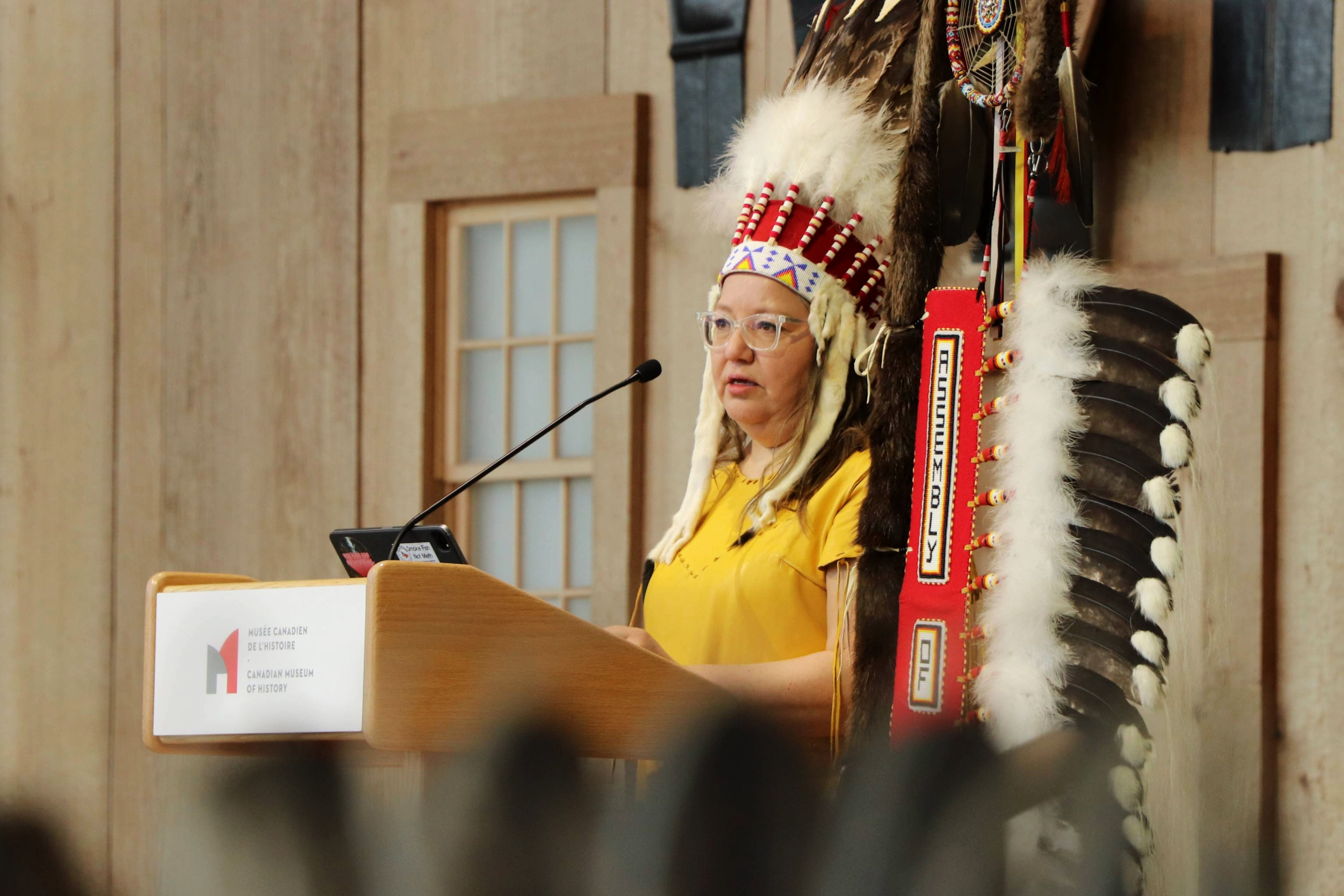
‘Carney is at a crossroads’ with First Nations, says AFN national chief
A year after prime minister took office, Cindy Woodhouse Nepinak speaks to IndigiNews about budget cuts, clean water and industry mega-projects
-

First Nation aims to grow its food security in northern ‘B.C.’ — with geothermal heat
West Moberly leaders look deep underground for clean energy solutions, in a project that would be the first-of-its-kind in ‘Canada’