MCFD misled Youth about education supports and ‘is not stepping up’ to fix it: report
BC Ombudsperson details how the province ‘financially disadvantaged a young person’ but won’t compensate for the error


An independent investigation reveals that the Ministry of Children and Family Development (MCFD) gave incorrect information to a Youth when she was being placed into permanent care — and says others may have been similarly impacted.
According to the report from the BC Ombudsperson titled Misinformed — released last week — MCFD misled a former Youth in care, Alexandra, on which financial supports she could access when she was making the decision to exit the province’s custody to live with her aunt.
Because a social worker gave Alexandra incorrect information, the report says, she believed she was entitled to government funding to pay for her post-secondary education that she did not actually qualify for. Though the error resulted in financial difficulties for Alexandra, MCFD won’t compensate her for the mistake, according to the report.
“The ministry is not accepting responsibility for misleading Alexandra, nor is it providing compensation to her,” says Ombudsperson Jay Chalke in a statement.
“The situation is fundamental — you make a mistake, you fix it. I am troubled that the ministry is not stepping up to correct an error that financially disadvantaged a young person, likely to the extent of tens of thousands of dollars. To make matters worse, the ministry won’t even look to see if others may have been similarly impacted.”
‘I would have chosen differently’
Alexandra had a goal to pursue post-secondary education, and she believed MCFD made promises about the funding available to her as a former Youth in care, the report states. After she applied for this funding and was rejected, Alexandra appealed directly to MCFD Minister Mitzi Dean by writing a letter in 2021.
In the letter, Alexandra explains that she grew up in a “chaotic, unpredictable and extremely abusive environment” — being removed from her her home five times by MCFD — which made going after higher education difficult for her.
“Most former youth in care, like me, are not only leaving home with some degree of trauma, but also no money to their name,” the letter states, in part.
“I have been told over and over again that I will be able to get assistance when I want to go to school, and if I had known at 16 that I would not get financial help if I chose to live with family as opposed to a foster family, I would have chosen differently.”
Chalke writes in the report that MCFD was aware of Alexandra’s goal and it was a central focus of discussions between her, her aunt and the ministry when discussing permanent custody arrangements.
The ministry applied to provincial court to permanently transfer custody to Alexandra’s aunt when Alexandra was 17, the report says, which resulted in her not being able to access the supports for former Youth in care when she was 19 and looking at post-secondary.
In the end, Alexandra’s decision to live with her aunt meant she no longer could qualify for a Youth Education Assistance Fund, despite all the years she spent in the system.
“Alexandra was clear in her letter to the minister that despite the many barriers that had existed in her life, getting an education was important to her,” writes Chalke.
Alexandra also described the ministry’s process of transferring her from their temporary care to the permanent care of her aunt as one that “she was not properly informed about and did not understand.”
“Alexandra came to us because she was frustrated and equally determined to hold the ministry accountable for not doing more to help her understand the ramifications of consenting to permanent custody with her aunt — a decision that, as we found in our investigation, was marked by the ministry’s failure to provide her with adequate information and to follow its own policies and legal requirements,” writes Chalke.
In the letter sent to Minister Dean by Alexandra, she says that she had “no clear sense of safety or predictability” during her time in the care of MCFD.
“In terms of my placement, I was not made aware of the long-term effects my choice would have. I didn’t even really understand that it was completely up to me. I was given the option to ‘go with family who is willing to take you’ or ‘go back into the system,’” Alexandra writes.

For children and Youth in MCFD’s care, “permanency” is the transfer of custody from the province through “family reunification, adoption or permanent transfer of custody.”
The report, which was released on Sept. 6, says that MCFD failed to follow its own policies and legal obligations.
“Our investigation found that the ministry mistakenly provided Alexandra with an incorrect understanding of what the permanent transfer of custody would mean for her,” writes Chalke.
“Further, the ministry did not offer Alexandra the independent legal advice required by law.”
Permanency for Indigenous children and Youth
Chalke also says that he is concerned that providing misinformation during the permanency planning process has likely impacted others — particularly Indigenous children and Youth.
“Because these kinds of orders are often used as a means of preserving kinship ties for Indigenous youth, it is possible that Indigenous youth are disproportionately affected by any ministry failures to follow the legal requirements in respect of permanency planning,” says Chalke in the report.
As of March 2023, 67.5 per cent of children and Youth in care are Indigenous, according to stats from MCFD.

Ministry data says that there is an increase in children and Youth in care being placed into permanent homes.
A Sept. 8 statement released by the First Nations Leadership Council in response to the report says the organization is concerned about MCFD’s failure to fulfil its permanency planning obligations and Minister Dean’s “stubborn refusal to follow some of the ombudsperson’s critical recommendations.”
“These failures not only violate the rights of the youth but also highlight the systemic issues that First Nations children and families face within the child welfare system, given that First Nations children comprise a disproportionately high number of children in the child welfare system.”
In an email response from Minister Dean, she says that MCFD will be reviewing the BC Ombudsperson’s report in detail. The ombudsperson has made five recommendations to MCFD but says only two have been accepted.
“It’s clear that social workers need to provide accurate and complete information to youth and families,” says Dean.
“We will continue to improve communication and information-sharing. We want to ensure that all youth in care receive the supports that will help make them successful in life.”
Author
We live in a media ecosystem that thrives on misinformation. Big Tech and AI companies are consuming the work of real human beings and Canadian news has been banned on Facebook and Instagram.
And yet, I have hope for journalism because of the work we’re doing at IndigiNews.
At IndigiNews, we embody tâpwêwin — the Cree value of integrity and responsibility in truth-telling. We are committed to our independent, Indigenous-led newsroom rooted in community, accountability, and relationality. We believe storytelling is a sacred fire that connects our pasts, presents, and futures through the storytellers in our Storytelling Lodge. IndigiNews creates space for Indigenous journalists, storytellers, Knowledge Keepers, and communities to gather, learn, and share stories that matter.
As a registered charity, we are building a fire that allows our work not just to ignite but to thrive. Rather than relying on advertising or corporate acquisition, IndigiNews is sustained by people like you who believe Indigenous stories are important for the future of our communities.
Your support is making a real difference.
Our community of supporters, our Firekeepers, make it possible to grow our newsroom, publish award-winning journalism, train emerging Indigenous journalists through initiatives like the ReFocus Photojournalism Fellowship, and publish trustworthy stories that serve our communities across the country. Every story we publish helps fill in gaps left by mainstream media and ensures Indigenous perspectives are represented with care, accuracy and respect.
But there is still more work to do.
As the media landscape becomes more and more uncertain, community support is as necessary and essential as it’s ever been. Every new Firekeeper helps protect the independence of our newsroom and strengthens journalism that is accountable to our many and varied communities over corporations.
That’s why we’re inviting you to become a Firekeeper.
Firekeepers tend to and protect the sacred fire. Your monthly contributions directly support IndigiNews’s Storytelling Lodge, helps sustain our independent, Indigenous-led newsroom, and ensures future generations of Indigenous storytellers have the resources they need to do the work.
As a registered Canadian charity, all eligible donations receive a charitable tax receipt.
If you believe Indigenous stories matter, if you value independent journalism, and if you want to help build a strong future for Indigenous media, we invite you to join our circle of Firekeepers today.
Together, we can keep the fire burning.
— Eden Fineday, Publisher, IndigiNews
Support us nowLatest Stories
-
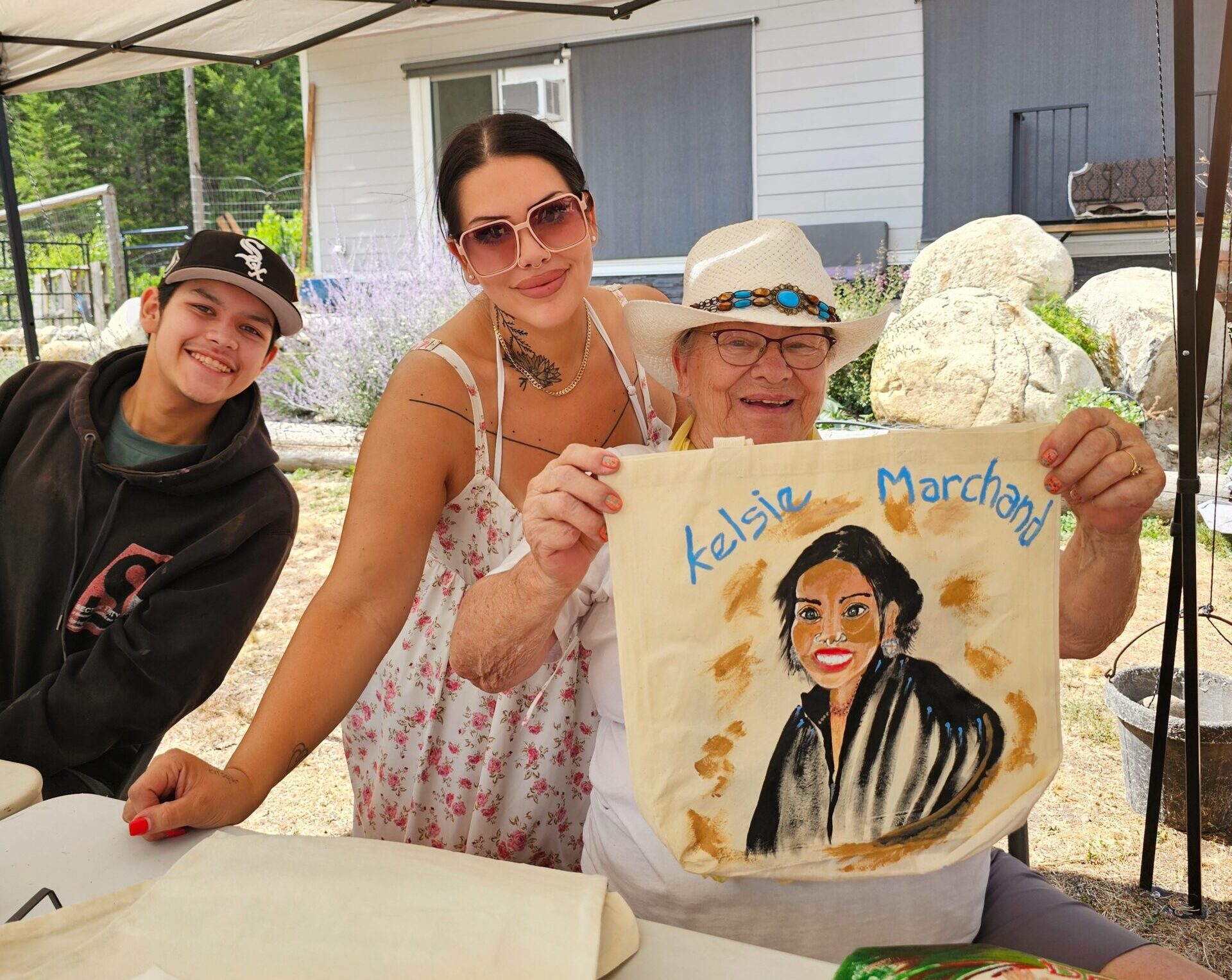
A graduation, a birthday — and an evacuation
As a wildfire burns in OKIB, I’m holding lessons close about grief, love and community — and remembering puti kʷu‿aláʔ (We are still here)
-
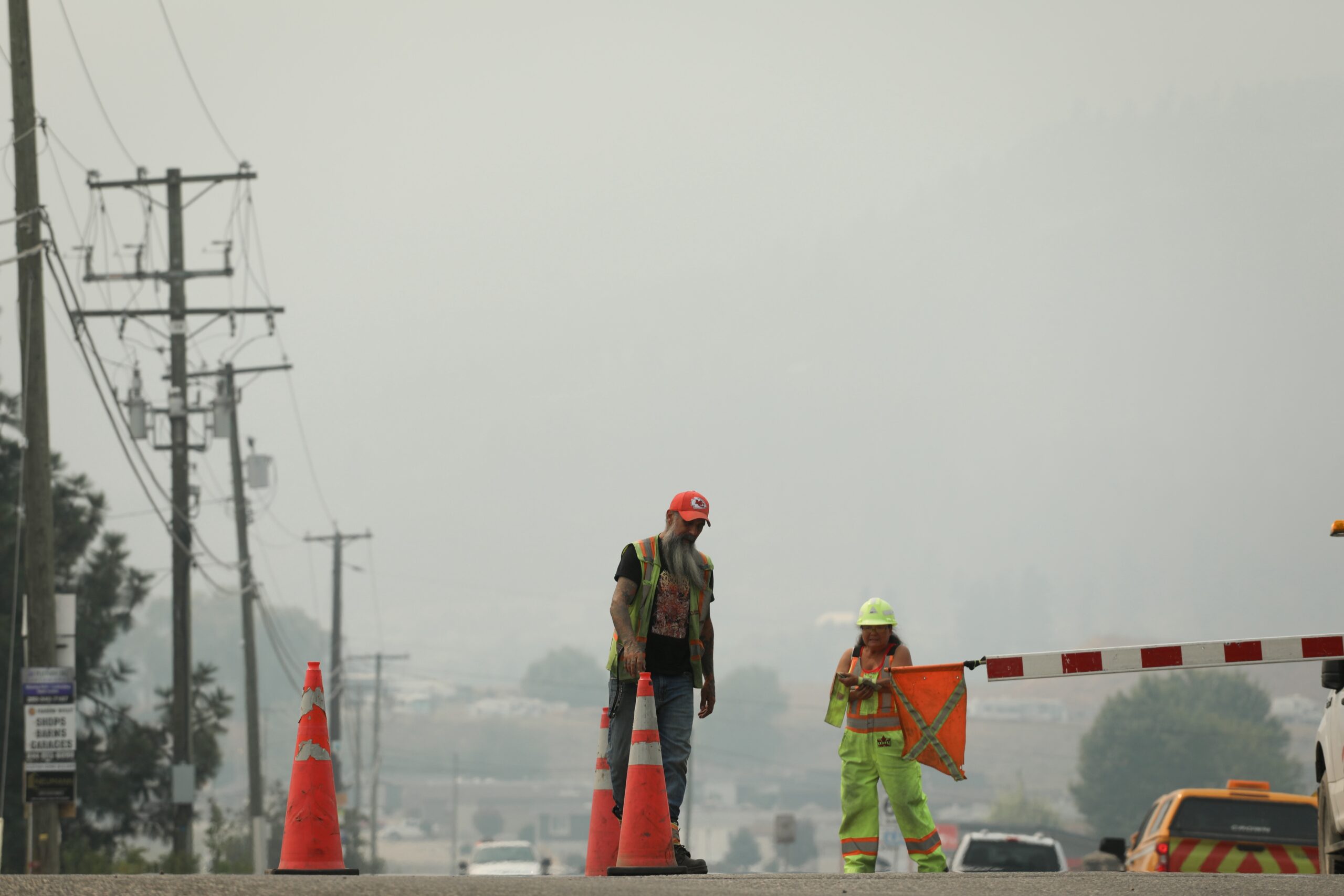
Okanagan Indian Band ‘getting stronger everyday’ amid devastating wildfire
Entire reserve has been evacuated and more than 30 people have lost homes, chief says, as blaze continues to burn as of Thursday