Medicine gardens help Indigenous kids in care stay culturally connected
‘You can always go back to the land.’
Meagan Saulnier says she has the best job in the world.
She works with urban Indigenous children and youth in foster care, connecting them to the land, and to their distinct and diverse cultures.
“Our children are especially looking for that sense of belonging,” Saulnier says. “It guides us in our identity and ways of being.”
Saulnier, who’s Mi’kmaq, is a cultural continuity worker with Surrounded by Cedar Child and Family Services (SCCFS), a Delegated Aboriginal Agency that provides programs and services for urban Indigenous children and youth in care in so-called Victoria.
At SCCFS, Saulnier says they recognize that social workers can’t do it all, which prompted their executive director to initiate cultural continuity programming to support Indigenous children and youth in care.
As part of the programming, Saulnier travels with the kids to their homelands, or attends cultural events like the annual Kamloopa Powwow.
“That is a really beautiful, transformational thing to see … when you’re there and you see kids put their feet on their territory,” Saulnier tells IndigiNews.
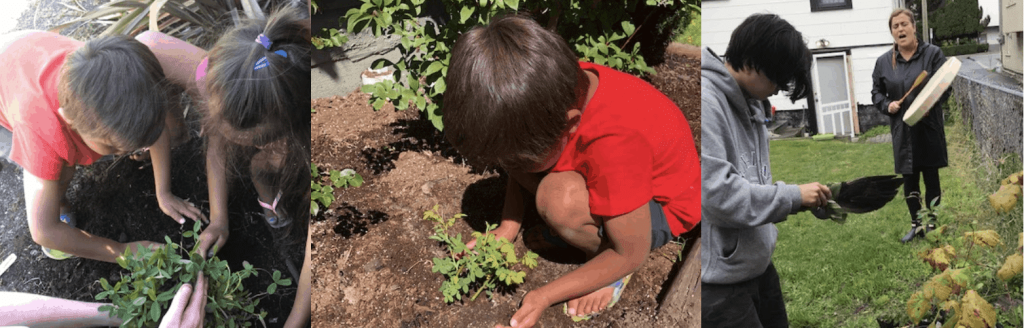
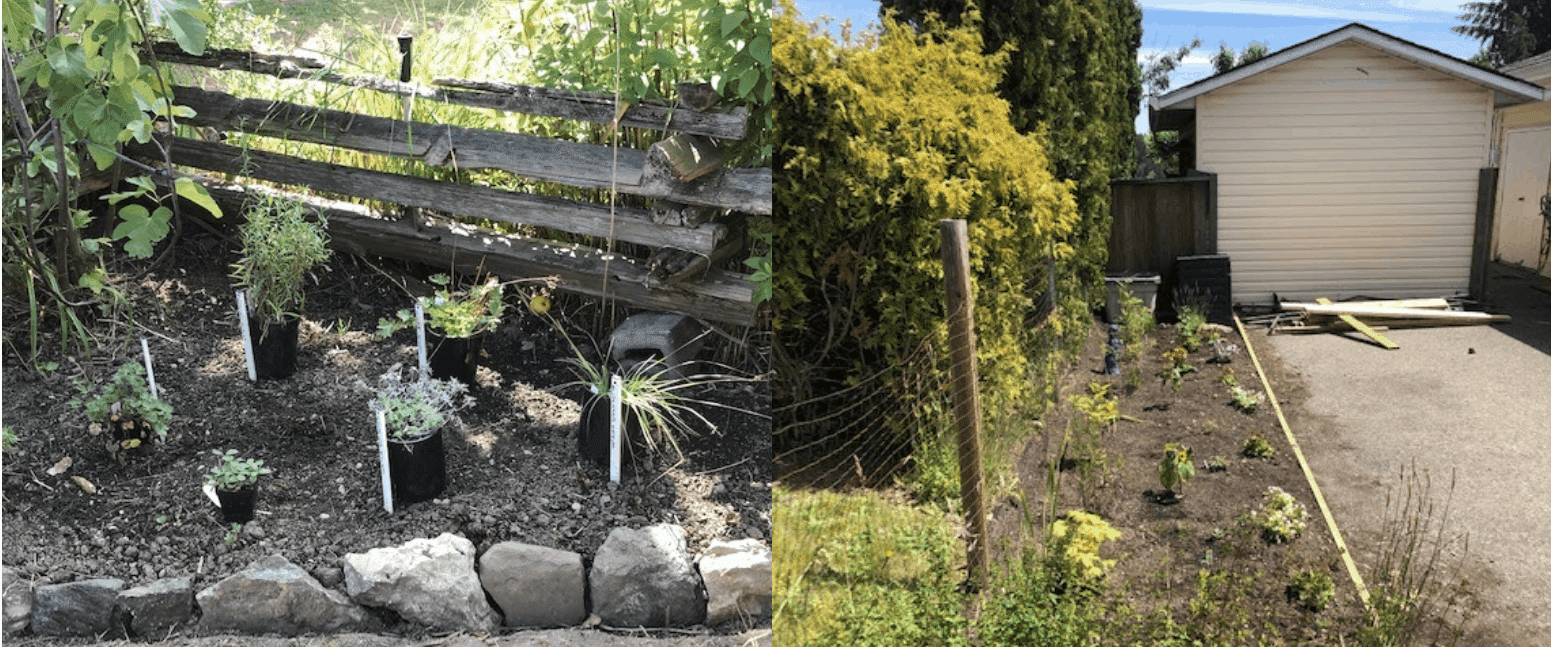
As a response to current travel restrictions which don’t allow for homeland trips or events, Sauliner shifted her efforts and began delivering plants and helping build medicine gardens at the homes of Indigenous kids, so they can stay connected during the pandemic.
“It’s been so hard on everyone’s spirit, but as Indigenous people … how we know to be, our ways of being, gathering and sharing food … that has been basically nonexistent. And so we’ve come up with creative ways of being outside,” she says.
To date, Saulnier says she has helped put together around 40 individualized medicine gardens, sourcing plants from the youth’s traditional territories, while also including plants from the lands they are on, as a way of honouring the traditional territories of the lək̓ʷəŋən people.
Saulnier says it’s important young people have ways to connect with the land.
She works to bring in Knowledge Keepers and engage youth in conversations about plants, where and how they grow, and their medicinal properties, she says.
“The intention is to eventually watch that plant to see how it grows, and build a relationship with it through the seasons and see what it needs, and then eventually be able to harvest and process the plant,” Saulnier says.
The youth practice “consent-based harvesting,” by speaking with the plants and offering gratitude, she says.
The medicine gardens program has branched out into other opportunities for youth, like learning about ceremonial practices, engaging with language, and regalia making, Saulnier explains.
Saulnier recalls supporting two siblings to plant a Saskatoon berry bush in their medicine garden, to honour their late brother. Another time, she says two of the older youth she works with were invited to share their stories at a public event.
“Often when you’re a child or youth in care, it’s sometimes focused on [just] that and the struggles that have been in your life,” Saulnier says. ”But to kind of step away from that for a moment and focus on this and your gifts … that’s really powerful.
“To be well, my belief is we do need to be connected to our culture and identity.”
She recognizes that coming together to engage with the land and with plants is a “multigenerational” practice, and helps educate non-Indigenous foster parents, she says.
Many of the caregivers for Indigenous youth are non-Indigenous, and the cultural continuity program supports them to nurture the child’s cultural and spiritual identities, she says.
“Sometimes there’s fear for non-Indigenous people around making a mistake, or not knowing what to do if you’re in community, and so it’s really like … it’s something universal as well, right? Like planting and the Earth, and the land.”
“It’s still vital to be connected, to go back to your territory to connect with your nation, whatever that looks like. We all have our different stories in our journeys as to why we’re disconnected,” she says.
“You can always go back to the land.”
Author
We live in a media ecosystem that thrives on misinformation. Big Tech and AI companies are consuming the work of real human beings and Canadian news has been banned on Facebook and Instagram.
And yet, I have hope for journalism because of the work we’re doing at IndigiNews.
At IndigiNews, we embody tâpwêwin — the Cree value of integrity and responsibility in truth-telling. We are committed to our independent, Indigenous-led newsroom rooted in community, accountability, and relationality. We believe storytelling is a sacred fire that connects our pasts, presents, and futures through the storytellers in our Storytelling Lodge. IndigiNews creates space for Indigenous journalists, storytellers, Knowledge Keepers, and communities to gather, learn, and share stories that matter.
As a registered charity, we are building a fire that allows our work not just to ignite but to thrive. Rather than relying on advertising or corporate acquisition, IndigiNews is sustained by people like you who believe Indigenous stories are important for the future of our communities.
Your support is making a real difference.
Our community of supporters, our Firekeepers, make it possible to grow our newsroom, publish award-winning journalism, train emerging Indigenous journalists through initiatives like the ReFocus Photojournalism Fellowship, and publish trustworthy stories that serve our communities across the country. Every story we publish helps fill in gaps left by mainstream media and ensures Indigenous perspectives are represented with care, accuracy and respect.
But there is still more work to do.
As the media landscape becomes more and more uncertain, community support is as necessary and essential as it’s ever been. Every new Firekeeper helps protect the independence of our newsroom and strengthens journalism that is accountable to our many and varied communities over corporations.
That’s why we’re inviting you to become a Firekeeper.
Firekeepers tend to and protect the sacred fire. Your monthly contributions directly support IndigiNews’s Storytelling Lodge, helps sustain our independent, Indigenous-led newsroom, and ensures future generations of Indigenous storytellers have the resources they need to do the work.
As a registered Canadian charity, all eligible donations receive a charitable tax receipt.
If you believe Indigenous stories matter, if you value independent journalism, and if you want to help build a strong future for Indigenous media, we invite you to join our circle of Firekeepers today.
Together, we can keep the fire burning.
— Eden Fineday, Publisher, IndigiNews
Support us nowLatest Stories
-
Indigenous leaders give the UN a roadmap for protecting their peoples
Amidst prayers and vows of solidarity, UN Expert Mechanism on the Rights of Indigenous Peoples ends annual meetings with demands for ‘action we’re not seeing globally’
-
Indigenous people demand more say at the UN, as new crises hit their homelands
Indigenous nations live ‘on the frontlines’ of climate, conflict and new tech. But their voices remain sidelined in the global halls of power.