snx̌aʔiwləm gathering celebrates salmon and their revival in syilx Okanagan waterways
‘It was a good run for our people this year,’ said OIB’s chief during the three-day event at sx̌ʷəx̌ʷnitkʷ (Okanagan Falls)

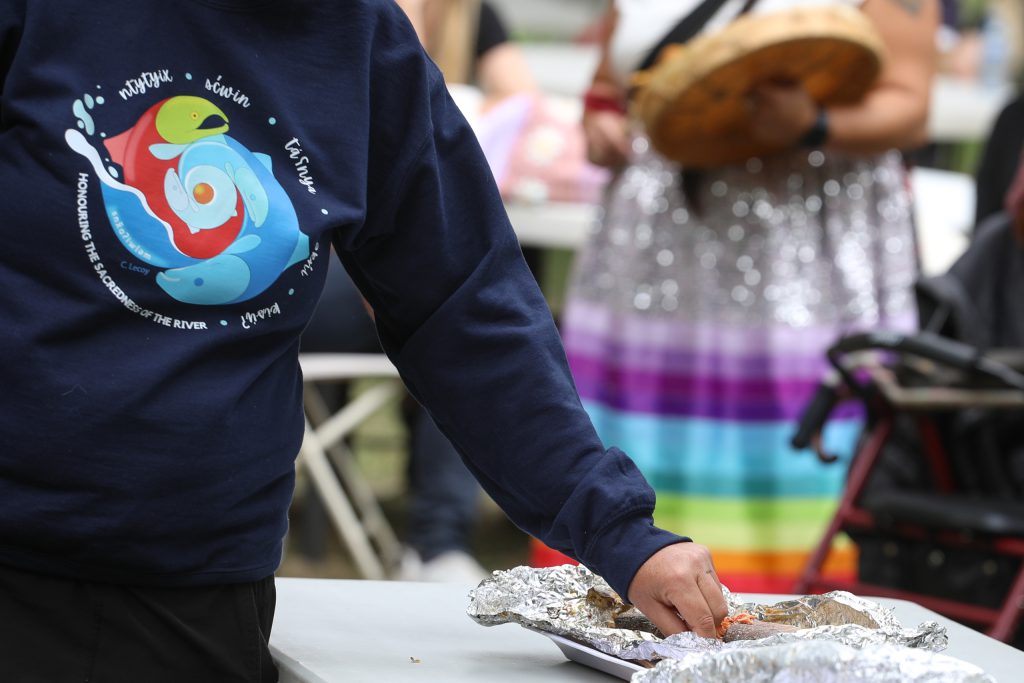
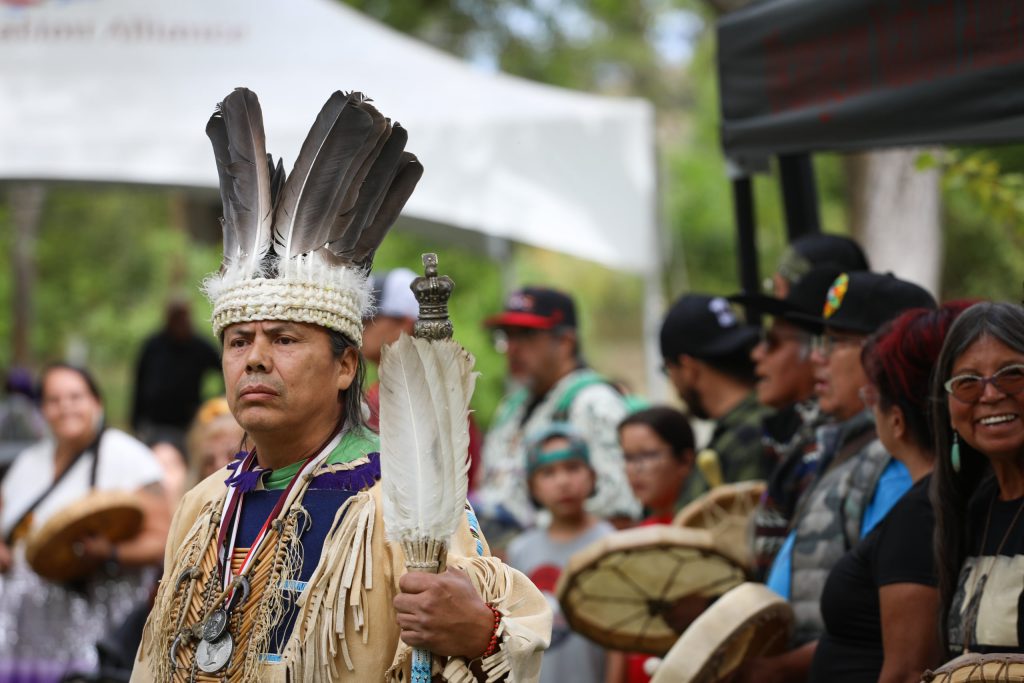
Community members from across the syilx Okanagan Nation gathered last week for their annual autumn salmon feast, to honour ntytyix (Chief Salmon) and to celebrate successes restoring the fish to their ancestral waterways.
The Sept. 22 event concluded the Okanagan Nation Alliance’s three-day snx̌aʔiwləm (honouring the sacredness of the river) gathering at sx̌ʷəx̌ʷnitkʷ (Okanagan Falls), an ancient fishing site reclaimed by the nation last year.
“It was a good run for our people this year,” said Osoyoos Indian Band Chief Clarence Louie (y̓ilmixʷm ki law na) before the feast. “It was so cool to see so many of our people … fishing like our people have fished here for thousands of years.”
This year’s ceremonies were particularly celebratory — as the ONA’s decades-long salmon restoration efforts are paying off to bring several species back to syilx waterways.
Last month, ONA scientists recorded the return of the first chinook salmon in years to the lake, swimming roughly 1,000 kilometres from the sea, after decades blocked by dams. In August, the nation helped re-introduce sockeye into Arrow Lakes for the first time in 80 years. And last spring, Youth in 60 local schools released thousands of juvenile sockeye and chinook into waterways throughout syilx territory.
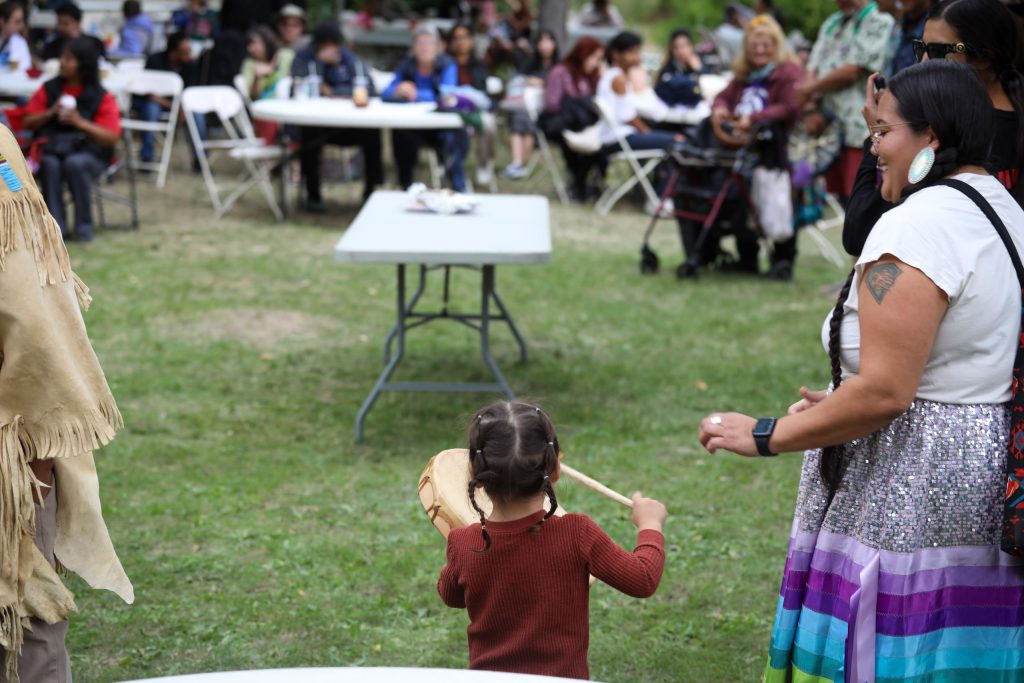
The salmon feast brought together families from different nations and cultures, including Indigenous and non-Indigenous people.
syilx fishers, including Youth, harvested the sc̓win (sockeye) from nk’mip (Osoyoos Lake) in July.
“We thank you gorgeous people for being here,” said syilx Elder cəqcqalx̌qn (Arnie Baptist).
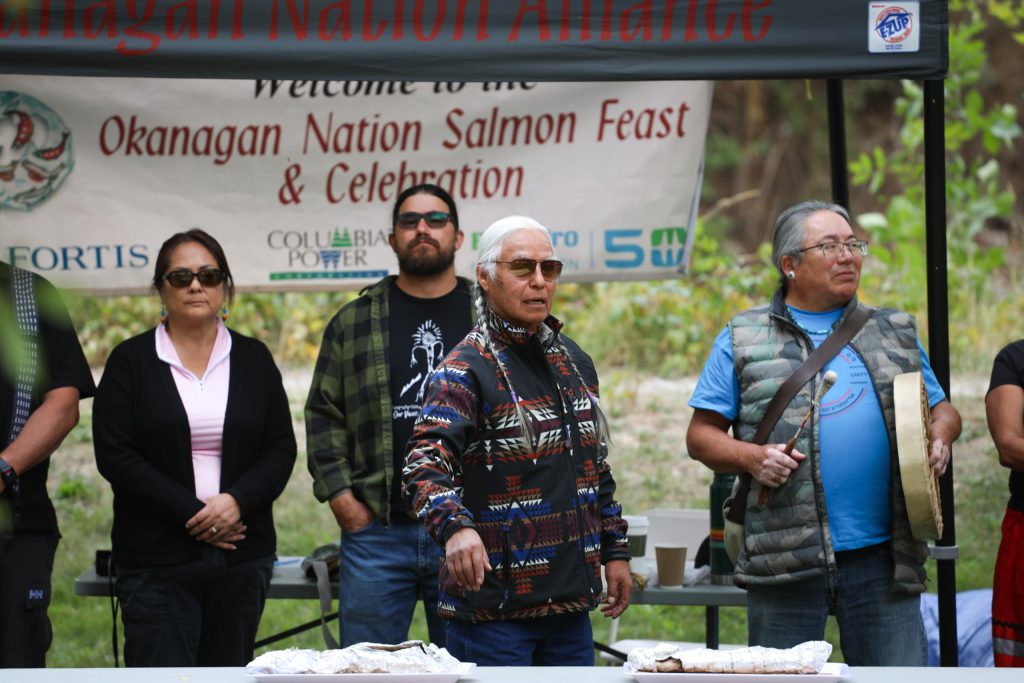
The day began with participants forming a circle, as the year’s first salmon offering was placed into the centre accompanied by drum songs.
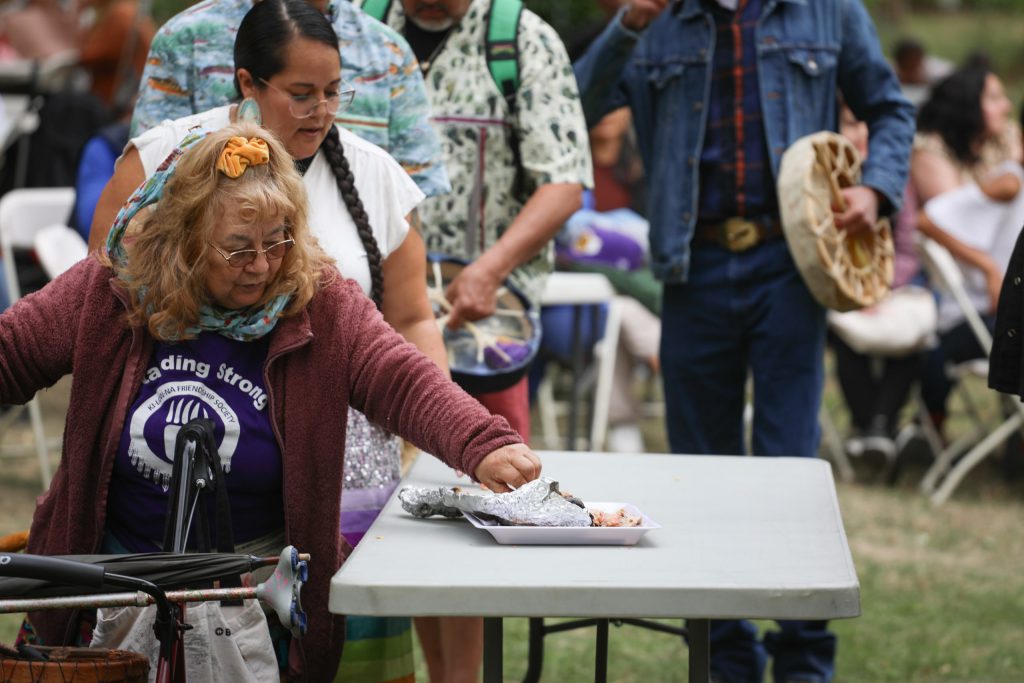
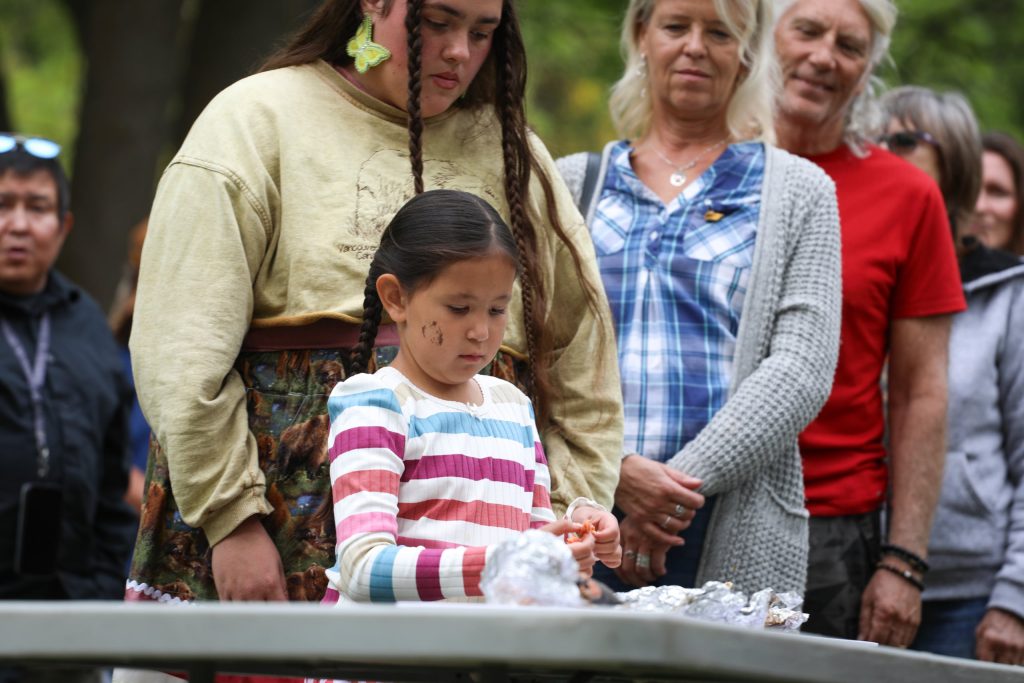
Community members lined up to receive a piece of cooked salmon. cəqcqalx̌qn encouraged attendees to say a prayer, or to think about their own path, as they went up one-by-one.
“You need a healing feeling; when you come by, remember who you love,” Baptist said. “All of these organizers brought forth something to bless us with — we don’t take that lightly.”
After the first offering of salmon, members of the community lined up with plates at a food tent to begin the feast.
The event’s hosts said any bones and skin left over from the feast would be collected and offered into the waters.
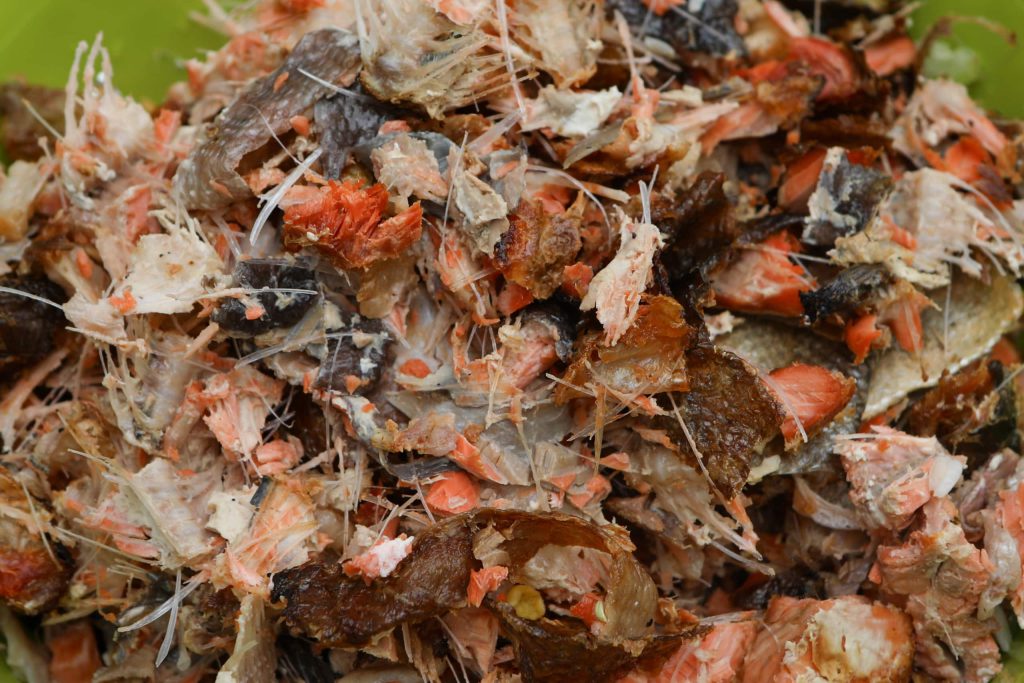
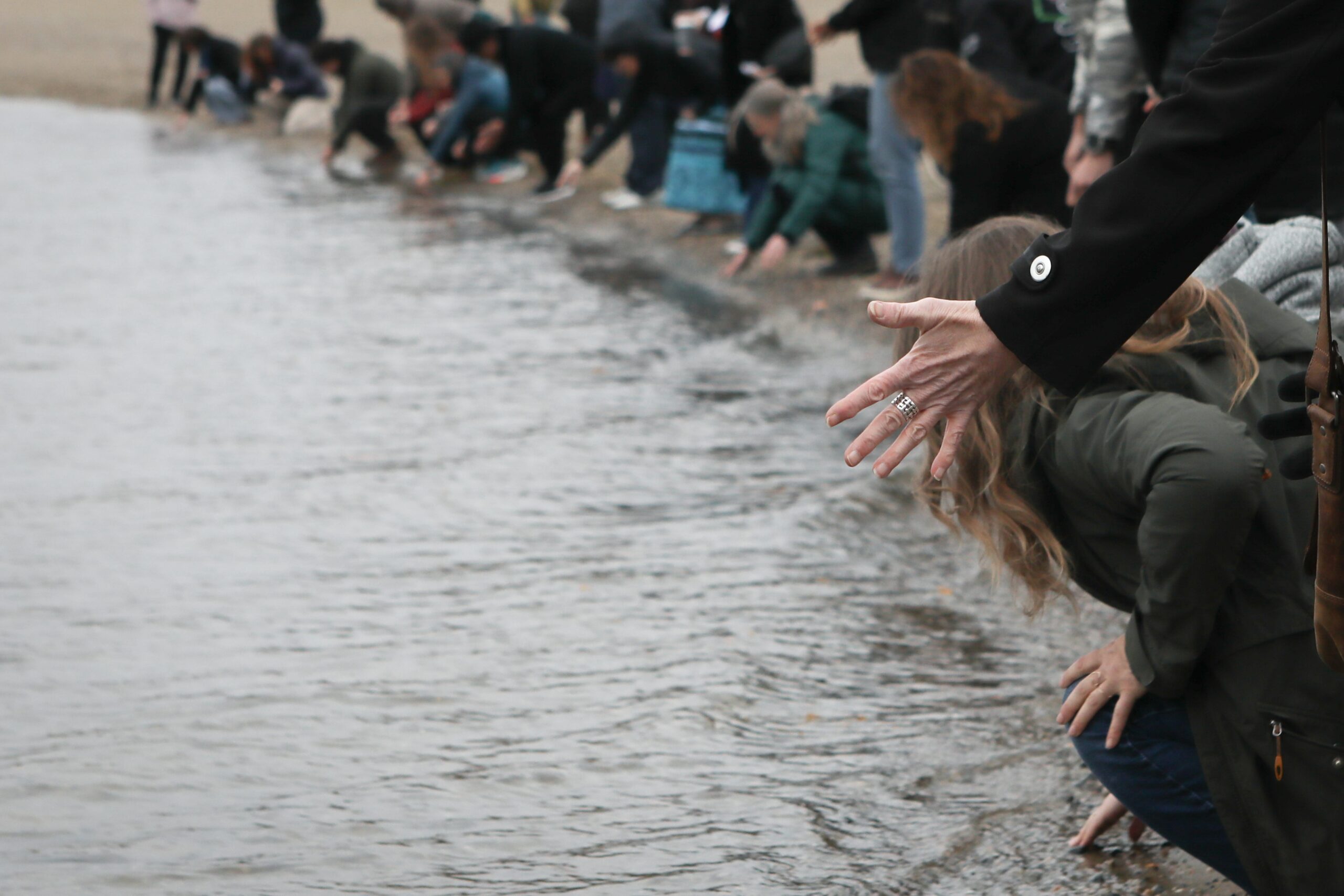
After eating, participants approached the river shores for a water ceremony, where leftover salmon was offered with prayers for the nation’s waters and all beings they give life to.
As people lined up at the Okanagan River’s edge, they were brushed with wet fir boughs.
“We can be thankful that we’re going to end another day together,” Baptist said after the ceremony. “Whatever little knowledge that we have — we hold on to that dearly.”
Prayers for the land and water
The gathering from Sept. 20 to 22 also included multiple events, including stick games, a canoe paddle, and educational booths for initiatives such as Bringing the Salmon Home.
To kick off the annual celebrations, a group of motorcycle riders, among them Chief Louie, embarked south to the “U.S.,” from sx̌ʷəx̌ʷnitkʷ to “Long Beach, Washington.”
They followed the weaving and winding route of the Columbia River, and throughout their journey held ceremonies and prayers to bring salmon back to the species’ historical range.
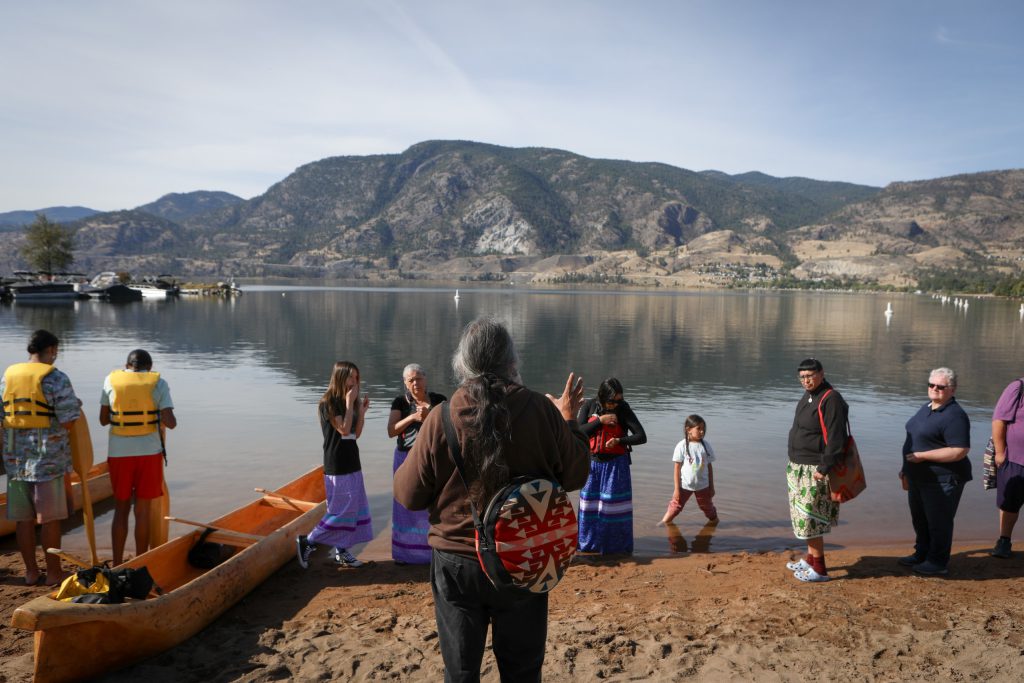
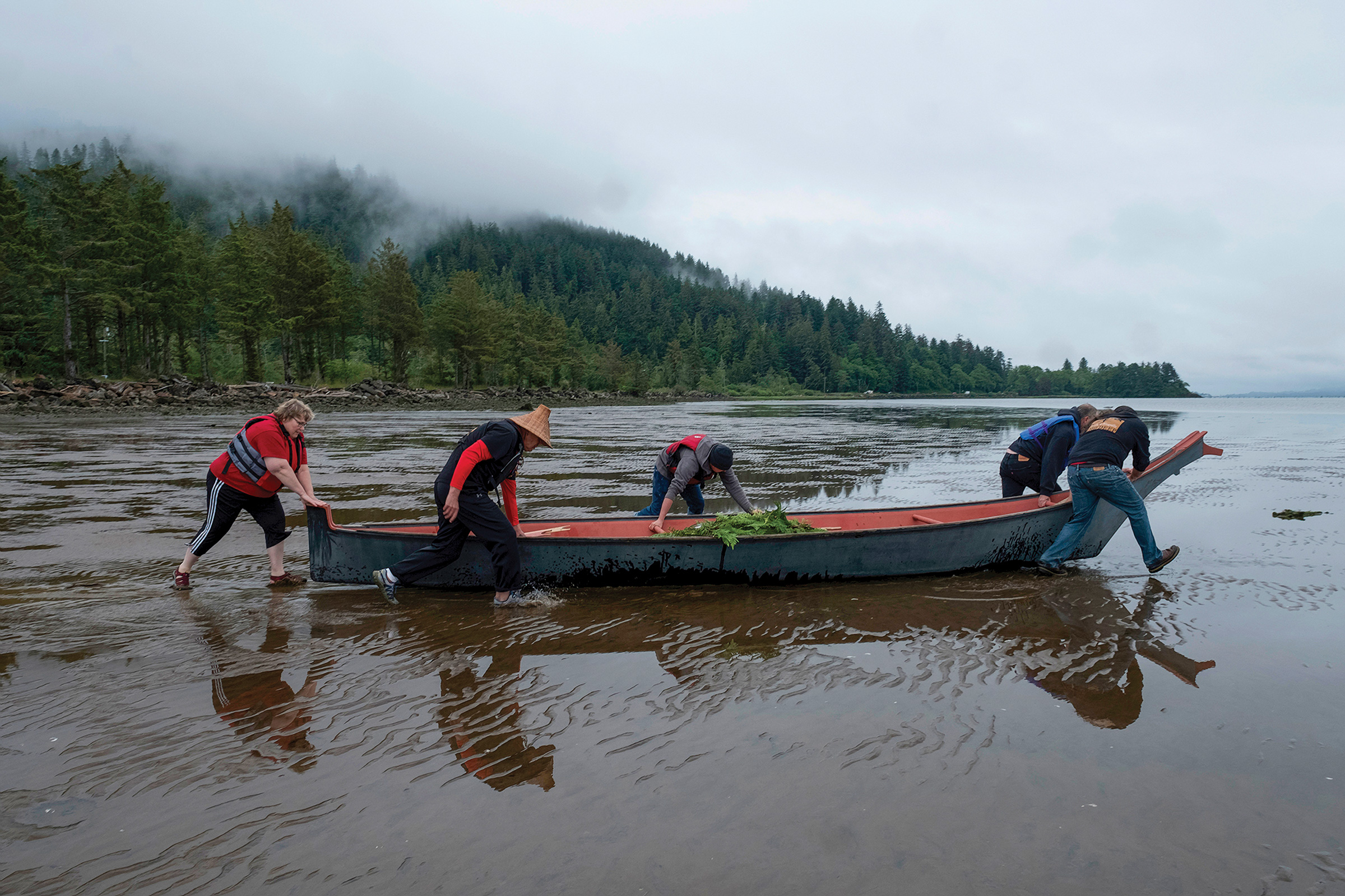
The bikers returned the same day as other syilx members paddled in canoes from Skaha Lake back to sx̌ʷəx̌ʷnitkʷ. Before hitting the water, they offered tobacco.
Herman Edward, of Lower Similkameen Indian Band, helped plan the journey and carved some of its canoes. He told participants the annual paddle reminds the nation’s children why their ancestral boats and waterways are so important.
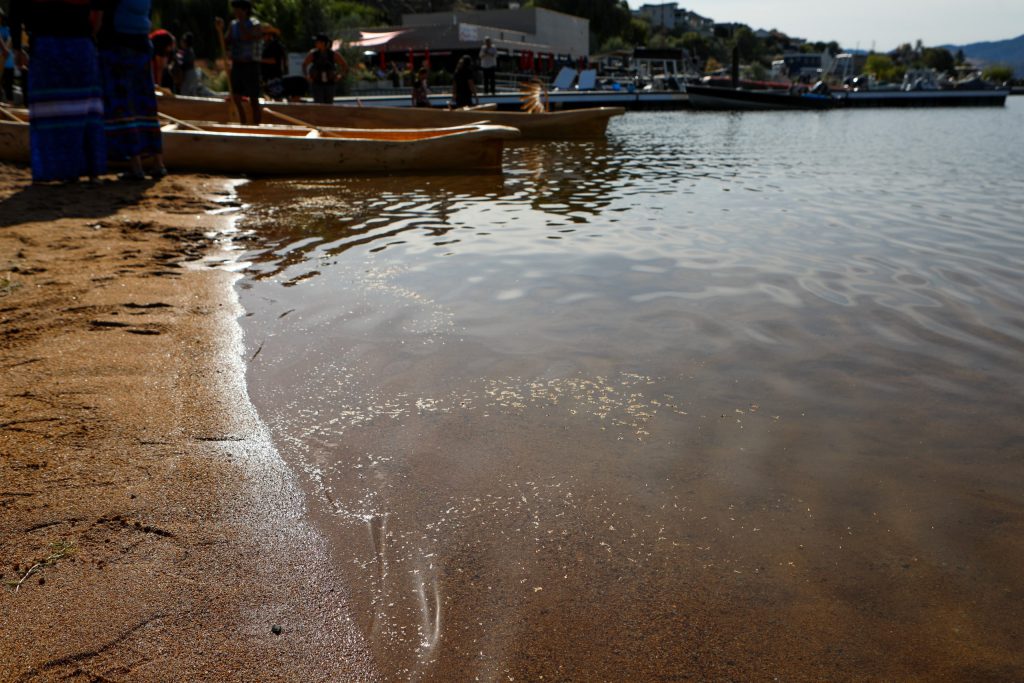
“Every pull you make is a prayer — you’re praying for everything that exists on the land,” Edward, a founder and organizer of the annual Sukʷnaqin July 4th Canoe Journey, explained. “Without water, we cannot live.”
He added it’s crucial to remind the wider community — especially settlers — to pray and take care of water, too.
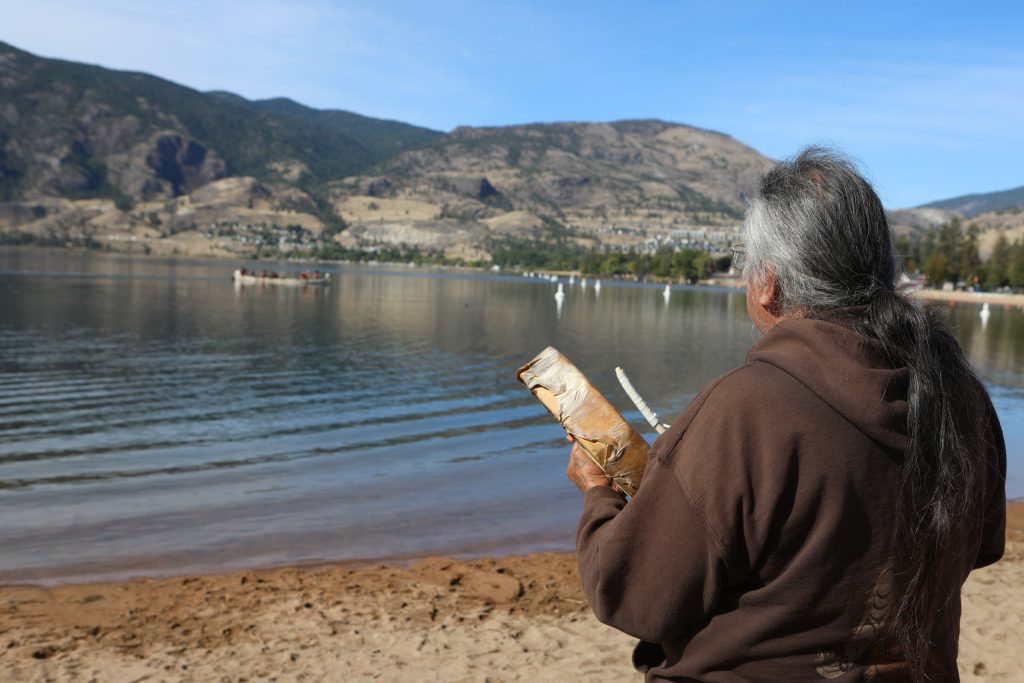
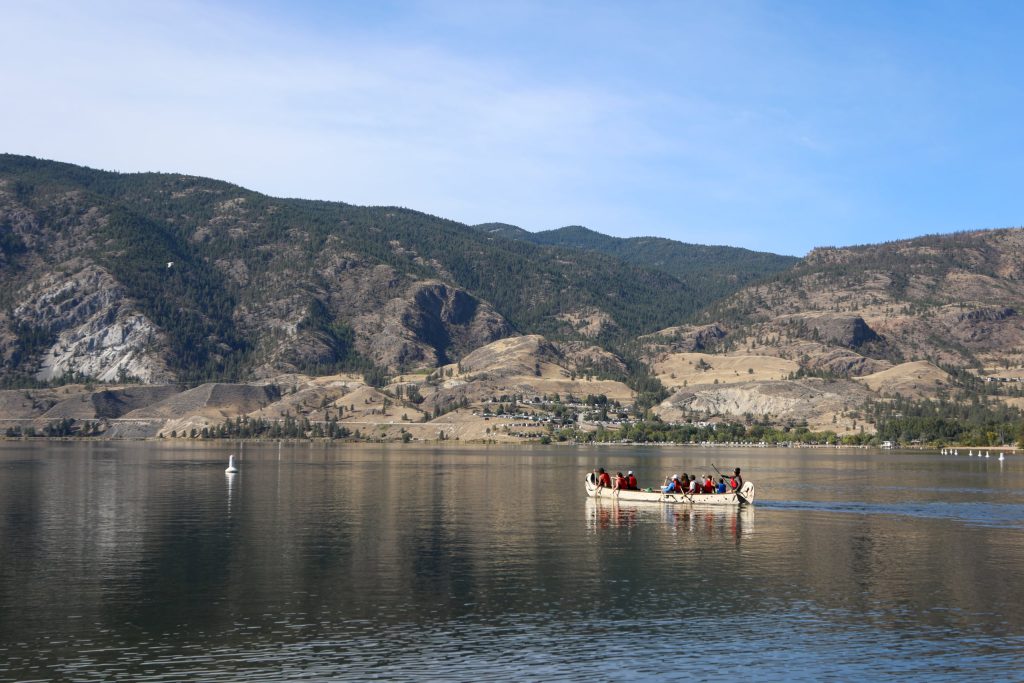
“This work is something that will make you proud that you were a part of it one day,” Edward said. “You’re going to remember — as young people — this as an important time that you went on this water.
“We don’t know what’s in the future; that’s why this prayer is important.”
Author
We live in a media ecosystem that thrives on misinformation. Big Tech and AI companies are consuming the work of real human beings and Canadian news has been banned on Facebook and Instagram.
And yet, I have hope for journalism because of the work we’re doing at IndigiNews.
At IndigiNews, we embody tâpwêwin — the Cree value of integrity and responsibility in truth-telling. We are committed to our independent, Indigenous-led newsroom rooted in community, accountability, and relationality. We believe storytelling is a sacred fire that connects our pasts, presents, and futures through the storytellers in our Storytelling Lodge. IndigiNews creates space for Indigenous journalists, storytellers, Knowledge Keepers, and communities to gather, learn, and share stories that matter.
As a registered charity, we are building a fire that allows our work not just to ignite but to thrive. Rather than relying on advertising or corporate acquisition, IndigiNews is sustained by people like you who believe Indigenous stories are important for the future of our communities.
Your support is making a real difference.
Our community of supporters, our Firekeepers, make it possible to grow our newsroom, publish award-winning journalism, train emerging Indigenous journalists through initiatives like the ReFocus Photojournalism Fellowship, and publish trustworthy stories that serve our communities across the country. Every story we publish helps fill in gaps left by mainstream media and ensures Indigenous perspectives are represented with care, accuracy and respect.
But there is still more work to do.
As the media landscape becomes more and more uncertain, community support is as necessary and essential as it’s ever been. Every new Firekeeper helps protect the independence of our newsroom and strengthens journalism that is accountable to our many and varied communities over corporations.
That’s why we’re inviting you to become a Firekeeper.
Firekeepers tend to and protect the sacred fire. Your monthly contributions directly support IndigiNews’s Storytelling Lodge, helps sustain our independent, Indigenous-led newsroom, and ensures future generations of Indigenous storytellers have the resources they need to do the work.
As a registered Canadian charity, all eligible donations receive a charitable tax receipt.
If you believe Indigenous stories matter, if you value independent journalism, and if you want to help build a strong future for Indigenous media, we invite you to join our circle of Firekeepers today.
Together, we can keep the fire burning.
— Eden Fineday, Publisher, IndigiNews
Support us nowLatest Stories
-
Innu Nation ‘moved to anger, to strength’ after accusing province of censoring history
Solidarity pours in after ‘Labrador’ history exhibition abruptly cancelled after province ordered removal of cultural items and timelines older than 300 years
-
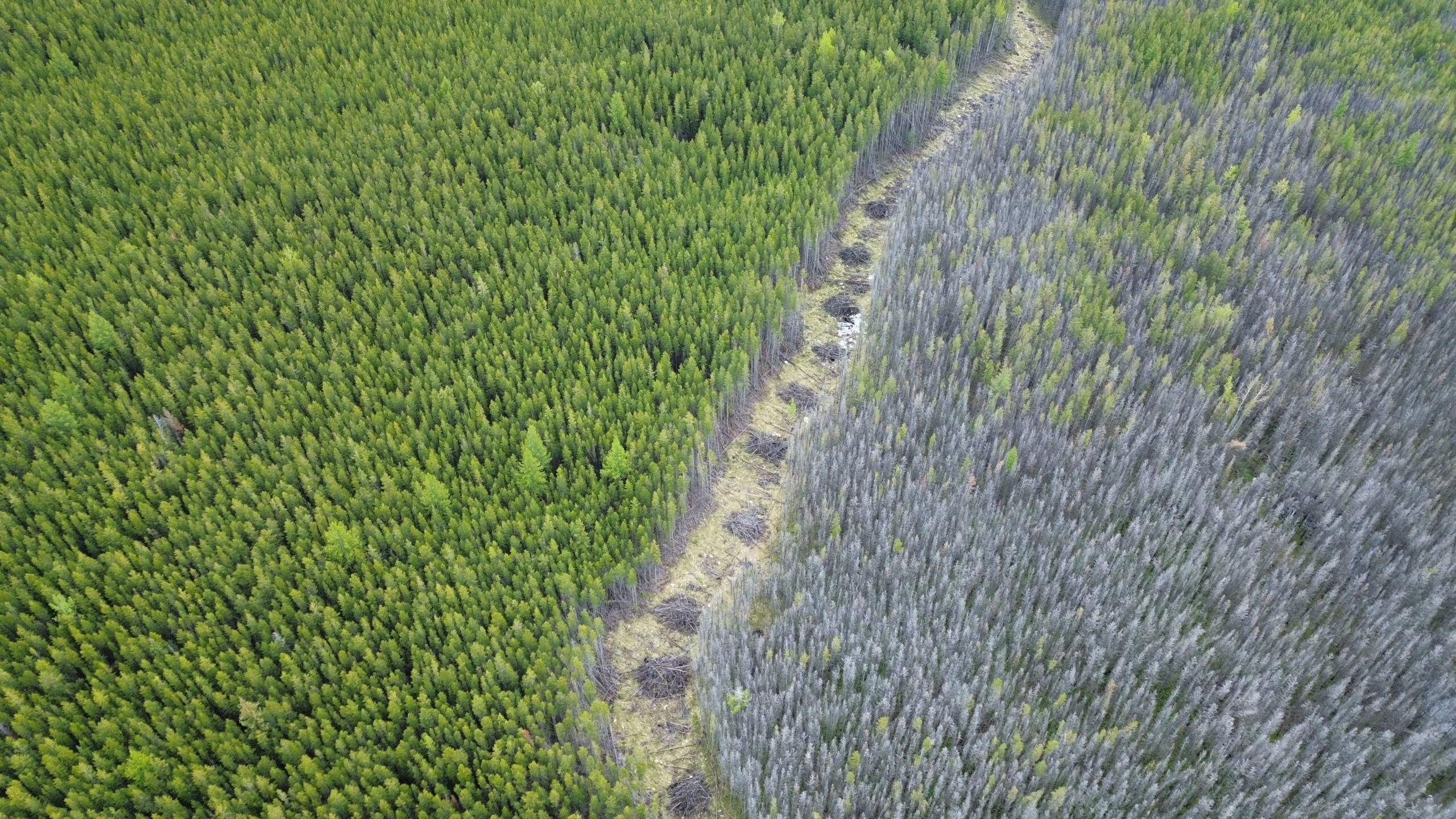
Osoyoos Indian Band set to restore native plants, species in wildfire-ravaged forests
The First Nation plans to clear out burned spaces and restore trees, berries and medicinal plants to the area, encouraging biodiversity and wildlife to return