shíshálh announces 40 residential ‘school’ graves, as chief pleads: ‘do not normalize this’
‘These children were our aunties, they were our uncles, they were our future leaders that we never met’
CONTENT WARNING: This story contains graphic details about residential “schools” that many will find distressing or triggering. Please look after your spirit and read with care.
The unmarked and shallow graves of 40 children have been identified near the former St. Augustine’s residential “school,” according to the shíshálh Nation which announced the findings today.
Part of an ongoing archeology project with the University of Saskatchewan, researchers launched a formal investigation of the institution early last year — an effort which has included scanning with ground-penetrating radar.
Chief yalxwemult’ Lenora Joe said that the GPR has sadly revealed what appear to be “shallow graves, only large enough for the young bodies to lay in a fetal position.”
The findings were made on or near the grounds of the “school” after survivors told researchers where to look, according to the team, and there are still more areas to be scanned.
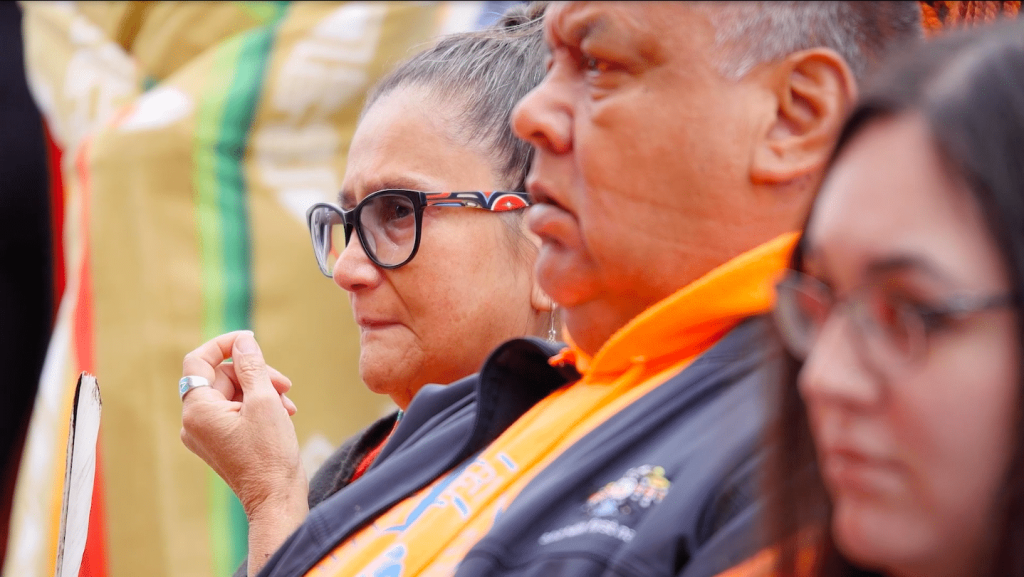
As Joe revealed the news in a video announcement — while other community leaders sat behind her in the community’s longhouse — her voice wavered.
She revealed the project has shaken her “to the core,” however, she said it’s important to share the findings.
“We have heard from our Elders that we must tell the truth about what happened to our people,” said Joe.
“These children were our aunties, they were our uncles, they were our future leaders that we never met. They never grew up. And decades later they are still lost children.”
Run by the Catholic Church and “Canada,” the St. Augustine’s Indian Residential School operated on and off in “Sechelt” between 1904 and 1975. During this time period, the institution burned down twice, according to shíshálh.
‘We strongly believe there are many more’
The shíshálh Archeological Research Project has involved consultation with survivors and historical research as well as scanning.
Terry Clark, an associate professor at the University of Saskatchewan, said he believes the number of identified graves will continue to grow as more work is done.
While GPR was used to identify the 40 unmarked burials, researchers also utilized survivor accounts and historical research to ensure accuracy. Because the site is located in a central area of town, the grounds have been affected by development.
“This is a very conservative number,” Clark said in a statement. “Through all aspects of the research, we strongly believe there are many more.”
According to shíshálh, survivors have shared disturbing stories about being forced to dig graves and bury their own friends and relatives. They also spoke about the disposal of children’s remains “that did not include burial” which happened during their time at the institution.
The nation said children from 51 First Nations other than shíshálh, from as far as “Saskatchewan,” were sent to the “school” and many have known of missing children.
In 2018, several nations came together to hold ceremony at the site of the former institution in “Sechelt” for all the children who never made it home as well as survivors.
The reason why some children were sent from nations as far as the prairies, Joe said, was because they stood up for themselves and ran away from residential “schools” closer to home — so they were sent even farther away from their families.
“The firsthand accounts and experiences of survivors are the most sacred, accurate, and honoured parts of this research,” Joe said.
“We have always known our children were missing. This is not news to us.”
‘An important time of reckoning for Canada’
The shíshálh Nation released information about the findings through a series of written releases and videos — and is otherwise asking for privacy and time to heal. The next phase of its investigation is still in the planning stage.
“This is a very challenging time for all the survivors who attended the institution, families of students, and communities, and for the shíshálh Nation,” said a statement from chief and council.
“Our focus throughout the upcoming community meetings will be on supporting survivors, community members and staff through sacred ceremony and cultural practices.”
The nation, which is the latest to announce this type of finding, said this time has been “an important time of reckoning for Canada.”
“The truth is being heard by many settler Canadians in new ways, information Indigenous peoples have been telling Canadians for generations,” the statement from leadership said.
“It is a horrifying and devastating history that must be grappled with. … We must find a path towards truth, justice, and unity. This new path will require great change for all of us.”
Joe said she wants people to remember that, amid all of the news about residential “school” deaths, the findings are not just a number.
“Please do not normalize this,” Joe said.
“Allow our community to absorb and acknowledge what’s happened.”
Author
We live in a media ecosystem that thrives on misinformation. Big Tech and AI companies are consuming the work of real human beings and Canadian news has been banned on Facebook and Instagram.
And yet, I have hope for journalism because of the work we’re doing at IndigiNews.
At IndigiNews, we embody tâpwêwin — the Cree value of integrity and responsibility in truth-telling. We are committed to our independent, Indigenous-led newsroom rooted in community, accountability, and relationality. We believe storytelling is a sacred fire that connects our pasts, presents, and futures through the storytellers in our Storytelling Lodge. IndigiNews creates space for Indigenous journalists, storytellers, Knowledge Keepers, and communities to gather, learn, and share stories that matter.
As a registered charity, we are building a fire that allows our work not just to ignite but to thrive. Rather than relying on advertising or corporate acquisition, IndigiNews is sustained by people like you who believe Indigenous stories are important for the future of our communities.
Your support is making a real difference.
Our community of supporters, our Firekeepers, make it possible to grow our newsroom, publish award-winning journalism, train emerging Indigenous journalists through initiatives like the ReFocus Photojournalism Fellowship, and publish trustworthy stories that serve our communities across the country. Every story we publish helps fill in gaps left by mainstream media and ensures Indigenous perspectives are represented with care, accuracy and respect.
But there is still more work to do.
As the media landscape becomes more and more uncertain, community support is as necessary and essential as it’s ever been. Every new Firekeeper helps protect the independence of our newsroom and strengthens journalism that is accountable to our many and varied communities over corporations.
That’s why we’re inviting you to become a Firekeeper.
Firekeepers tend to and protect the sacred fire. Your monthly contributions directly support IndigiNews’s Storytelling Lodge, helps sustain our independent, Indigenous-led newsroom, and ensures future generations of Indigenous storytellers have the resources they need to do the work.
As a registered Canadian charity, all eligible donations receive a charitable tax receipt.
If you believe Indigenous stories matter, if you value independent journalism, and if you want to help build a strong future for Indigenous media, we invite you to join our circle of Firekeepers today.
Together, we can keep the fire burning.
— Eden Fineday, Publisher, IndigiNews
Support us nowLatest Stories
-
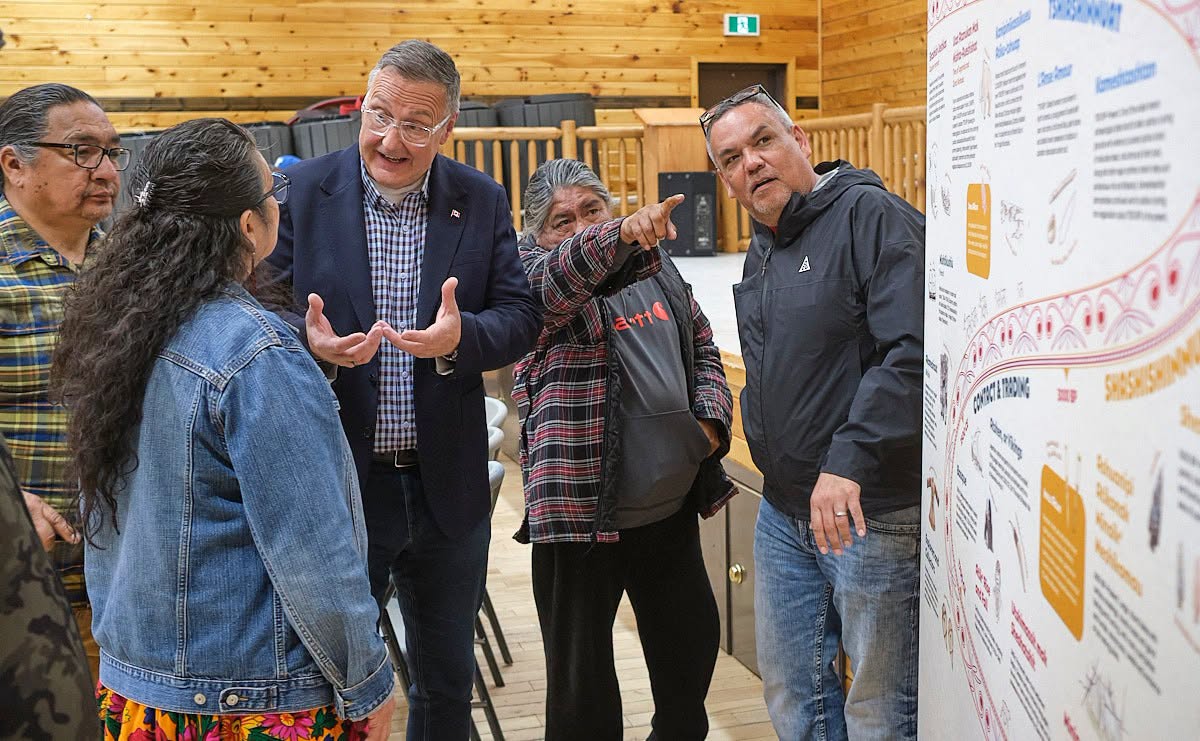
Innu Nation ‘moved to anger, to strength’ after accusing province of censoring history
Solidarity pours in after ‘Labrador’ history exhibition abruptly cancelled after province ordered removal of cultural items and timelines older than 300 years
-
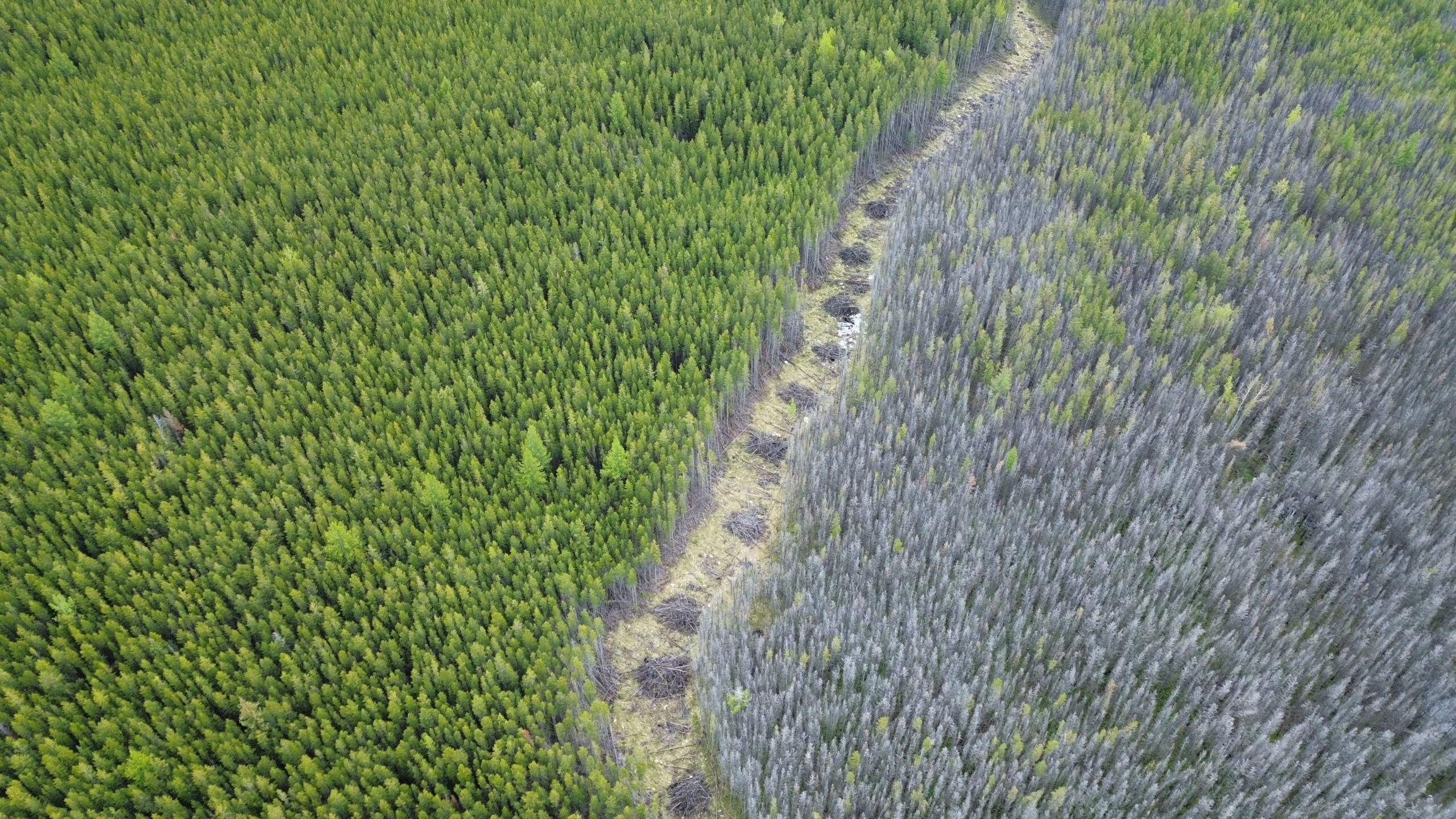
Osoyoos Indian Band set to restore native plants, species in wildfire-ravaged forests
The First Nation plans to clear out burned spaces and restore trees, berries and medicinal plants to the area, encouraging biodiversity and wildlife to return