Class action lawsuit against Kelowna social worker prompts calls for better oversight
Could registering child protection social workers in the province make a difference for Indigenous youth in care?
A class action lawsuit against a former B.C. social worker has raised an important question: should child protection social workers be required to register with an external regulator?
Robert Riley Saunders is accused of stealing basic living allowances from an estimated 102 children — 85 of whom were Indigenous — who were in the care of the B.C. government. Saunders was responsible for these kids as a social worker with the Ministry of Children and Family Development (MCFD) in Kelowna.
The children Saunders allegedly stole from are eligible to receive between $25,000 and $250,000 each, as per a settlement agreement reached last week with the B.C. government and approved by the B.C Supreme Court. But what’s being done to ensure this kind of alleged abuse doesn’t happen again?
“There should be a mandatory registration of social workers,” says Judith Sayers, president of the Nuu-chal-nulth Tribal Council and spokesperson for Usma Nuu-chah-nulth Family & Child Services.
The B.C. College of Social Workers (BCCSW), under the authority of the Social Workers Act, has a mandate to confirm the qualifications of its membership, but social workers who work with MCFD are not required to register.
According to court documents, Saunders listed fake qualifications on his résumé. He claimed to have a Bachelor in Social Work from the University of Manitoba, when in fact he didn’t.
Sayers, who is also a lawyer, says strong oversight of any profession is essential.
“All professions — we all seem to have an oversight body. If you want to check up on a lawyer, you go to the law society.”
She says employers considering whether to hire a social worker, “should be able to go there, find he’s in good standing and then go to the references.”
Michael Crawford is president of the B.C Association of Social Workers, which works to support and promote the profession of social work and to advocate for social justice. He argues that all social workers in the province should be registered with — and regulated by — the B.C. College of Social workers.
Registering with an independent oversight body means committing to adhering to practice standards and a code of ethics established by your peers, Crawford says.
“The B.C. Association of Social Workers has for decades taken the position, with this government and previous governments, that the title of ‘social worker’ needs to be protected,” he says.
“Everytime someone in the ministry is referred to as a ‘social worker’, we wonder, is this person really a social worker or not?”
The law firm representing claimants in the class action lawsuit against Saunders argues that MCFD “failed to properly supervise Riley Saunders and failed to implement sufficient policies and safeguards to prevent and detect the fraud and neglect.”
IndigiNews contacted MCFD for comment on their stance on registering social workers with the BCCSW, but they did not respond prior to publication.
Author
We live in a media ecosystem that thrives on misinformation. Big Tech and AI companies are consuming the work of real human beings and Canadian news has been banned on Facebook and Instagram.
And yet, I have hope for journalism because of the work we’re doing at IndigiNews.
At IndigiNews, we embody tâpwêwin — the Cree value of integrity and responsibility in truth-telling. We are committed to our independent, Indigenous-led newsroom rooted in community, accountability, and relationality. We believe storytelling is a sacred fire that connects our pasts, presents, and futures through the storytellers in our Storytelling Lodge. IndigiNews creates space for Indigenous journalists, storytellers, Knowledge Keepers, and communities to gather, learn, and share stories that matter.
As a registered charity, we are building a fire that allows our work not just to ignite but to thrive. Rather than relying on advertising or corporate acquisition, IndigiNews is sustained by people like you who believe Indigenous stories are important for the future of our communities.
Your support is making a real difference.
Our community of supporters, our Firekeepers, make it possible to grow our newsroom, publish award-winning journalism, train emerging Indigenous journalists through initiatives like the ReFocus Photojournalism Fellowship, and publish trustworthy stories that serve our communities across the country. Every story we publish helps fill in gaps left by mainstream media and ensures Indigenous perspectives are represented with care, accuracy and respect.
But there is still more work to do.
As the media landscape becomes more and more uncertain, community support is as necessary and essential as it’s ever been. Every new Firekeeper helps protect the independence of our newsroom and strengthens journalism that is accountable to our many and varied communities over corporations.
That’s why we’re inviting you to become a Firekeeper.
Firekeepers tend to and protect the sacred fire. Your monthly contributions directly support IndigiNews’s Storytelling Lodge, helps sustain our independent, Indigenous-led newsroom, and ensures future generations of Indigenous storytellers have the resources they need to do the work.
As a registered Canadian charity, all eligible donations receive a charitable tax receipt.
If you believe Indigenous stories matter, if you value independent journalism, and if you want to help build a strong future for Indigenous media, we invite you to join our circle of Firekeepers today.
Together, we can keep the fire burning.
— Eden Fineday, Publisher, IndigiNews
Support us nowLatest Stories
-
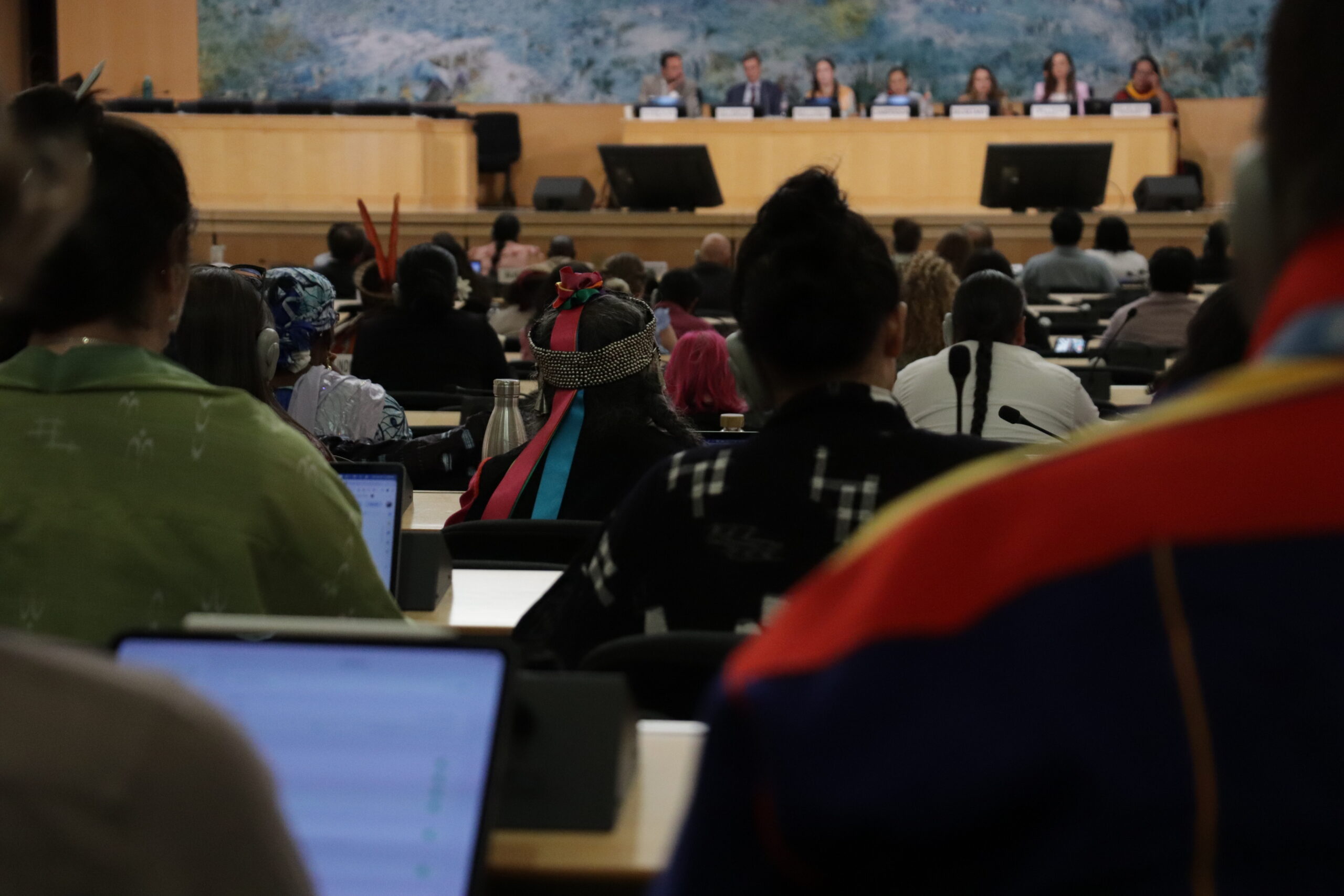
Indigenous leaders give the UN a roadmap for protecting their peoples
Amidst prayers and vows of solidarity, UN Expert Mechanism on the Rights of Indigenous Peoples ends annual meetings with demands for ‘action we’re not seeing globally’
-
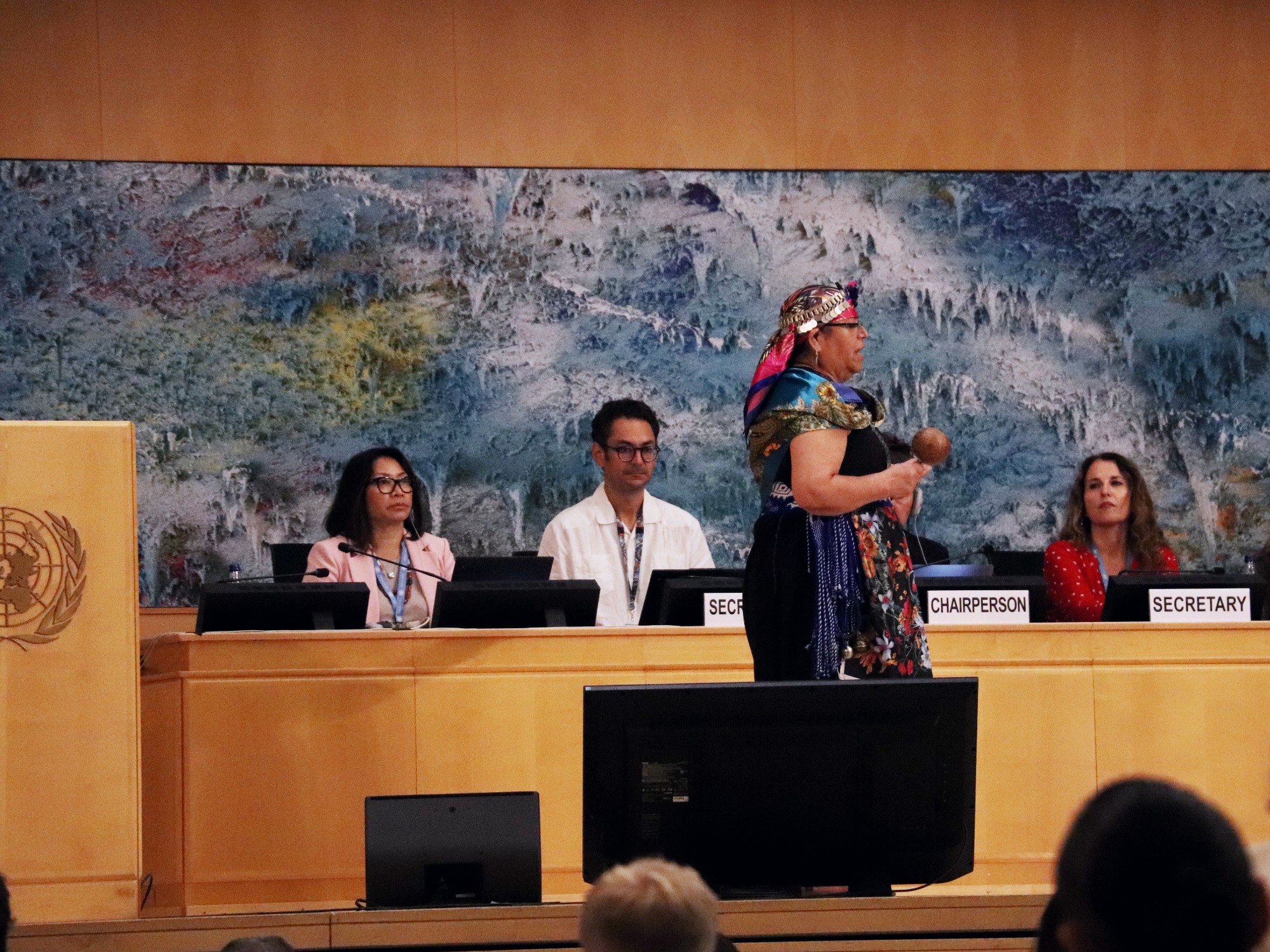
Indigenous people demand more say at the UN, as new crises hit their homelands
Indigenous nations live ‘on the frontlines’ of climate, conflict and new tech. But their voices remain sidelined in the global halls of power.