Tk’emlúps te Secwépemc signs ‘sacred covenant’ with the Catholic Church, marking ‘new journey of truth’
The new agreement not only acknowledges ‘past wrongs’ but outlines ‘practical commitments’ around continued investigation at KIRS, according to a statement

Content warning: This article contains details about residential “schools.” Please read with care for your spirit.
Tk’emlúps te Secwépemc and the Catholic Church have signed what’s being called a “sacred covenant” this week, which includes a commitment to work together on the nation’s ongoing investigation of Le Estcwicwéy̓ (the missing children from Kamloops Indian Residential School).
The sacred covenant — which Kúkpi7 Rosanne Casimir described as the church’s version of a memorandum of understanding — was signed on March 31, Easter Sunday, with the Roman Catholic Archdiocese of Vancouver and the Roman Catholic Diocese of Kamloops.
According to a joint statement issued by the three parties, this agreement not only acknowledges “past wrongs, particularly the Catholic Church’s role in the residential school system,” but outlines “practical commitments.”
These include “honouring and memorializing residential school students, facilitating access to historical records and retaining scientific expertise to support the nation’s efforts in uncovering the truth and promoting healing,” the statement says.
In the days leading up to the ceremony of the signing, Casimir said in a video to members that the nation’s Le Estcwicwéy̓ department has been conducting archival research and recordings of Wenecwtsínem (truth telling) from survivors and their families.
“Yet, we are missing key records to assist us in the investigative work. Be it baptismal records, first communion records, confirmation, marriage, or last rites,” said Casimir.
The commitments to action in the sacred covenant include “information sharing and full transparency to identify and determine the truth related to missing children, including sharing of archives and records in Catholic possession” and assisting in answering the nation’s questions related to their work during the course of their investigation.
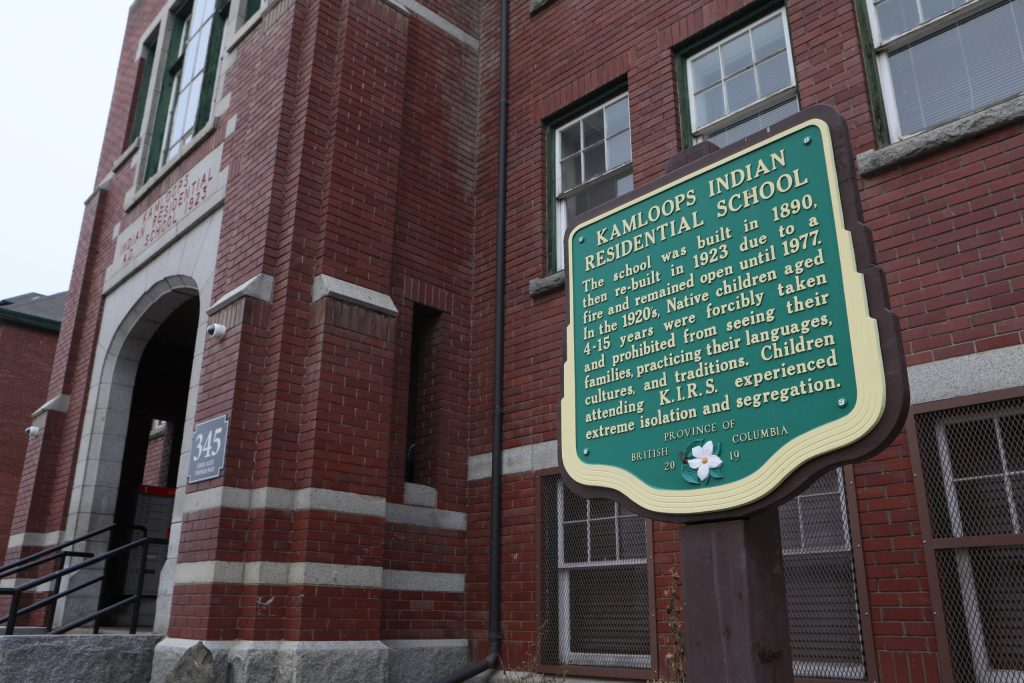
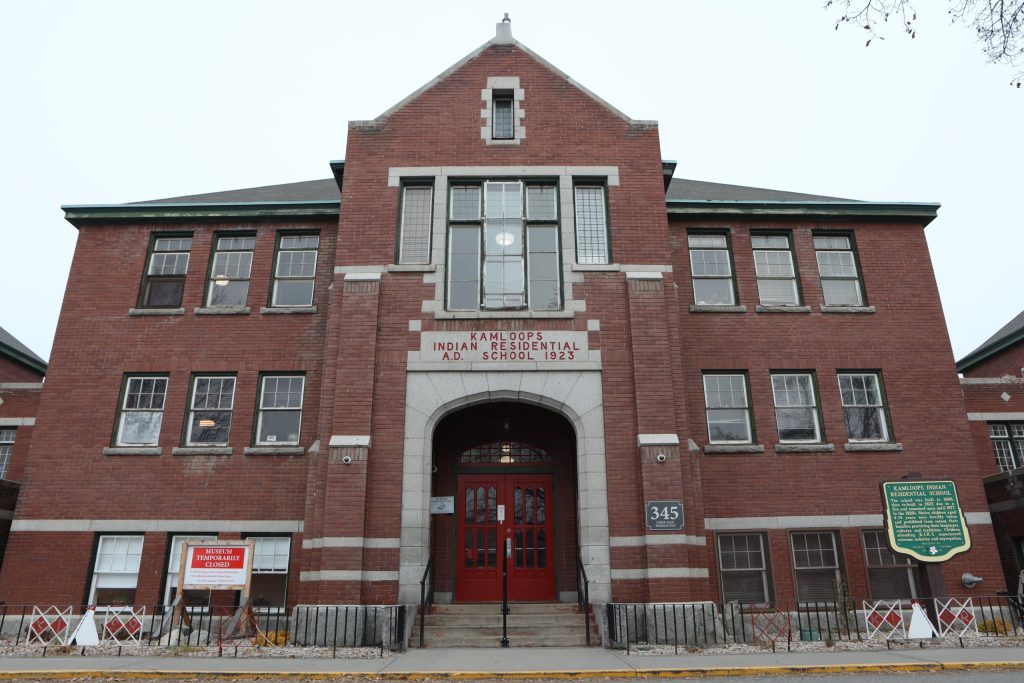
The Kamloops Indian Residential School (KIRS) was opened, under Roman Catholic administration, in 1890. It came under the administration of the federal government in 1969, before closing in 1978. It was once the largest residential “school” in the country.
In 2021, Tk’emlúps te Secwépemc leadership announced the nation had identified evidence of the remains of 215 children on the KIRS grounds through ground-penetrating radar. The findings sparked global attention and discourse around the genocide of Indigenous Peoples in “Canada,” and the Catholic Church’s active role through their operations of the residential “school” system.
One year later, Pope Francis made a five-day pilgrimage to “Canada,” with visits to Treaty Six territory, Iqaluit and around “Quebec City” to apologize to residential “school” survivors. He was invited to Tk’emlúps te Secwépemc during this visit, but did not attend.
As the covenant’s signing took place, Cardinal Pietro Parolin, the Vatican’s secretary of state, relayed a message from Pope Francis to Vancouver Archbishop J. Michael Miller, saying that the Pope “sends cordial greetings to all who are present for the signing.”
“In light of the sufferings of the past, His Holiness hopes that this generous gesture will be a further step on the path toward truth and reconciliation,” Parolin wrote.
“Indeed, today’s gathering responds to the call of Pope Francis during his apostolic journey, when he spoke of the need for the Church and the Indigenous Peoples of Canada ‘to walk together, pray together, and work together.’”
Casimir said Secwépemc protocol was also part of the signing, with a sunrise intention-setting ceremony. She also said Elders travelled from Canim Lake, Esketemc, Canoe Creek, and Williams Lake First Nation (WLFN) “to join us and sing hymns in Secwepemctsin” as part of an Easter Sunday mass.
The signing was also witnessed by WLFN Kúkpi7 Willie Sellars, Upper Nicola Band Chief Dan Manuel, Member of Parliament Frank Caputo, Member of the BC Legislative Assembly Peter Milobar and Kamloops Councillor Bill Sarai.
“In keeping with our oral traditions, we called upon many leaders (who) came to bear witness of the historic event,” Casimir said in the statement.
“The Archdiocese of Vancouver and the Diocese of Kamloops have made it clear that they are embarking on this new journey of truth, justice, and healing with us.”
Author
We live in a media ecosystem that thrives on misinformation. Big Tech and AI companies are consuming the work of real human beings and Canadian news has been banned on Facebook and Instagram.
And yet, I have hope for journalism because of the work we’re doing at IndigiNews.
At IndigiNews, we embody tâpwêwin — the Cree value of integrity and responsibility in truth-telling. We are committed to our independent, Indigenous-led newsroom rooted in community, accountability, and relationality. We believe storytelling is a sacred fire that connects our pasts, presents, and futures through the storytellers in our Storytelling Lodge. IndigiNews creates space for Indigenous journalists, storytellers, Knowledge Keepers, and communities to gather, learn, and share stories that matter.
As a registered charity, we are building a fire that allows our work not just to ignite but to thrive. Rather than relying on advertising or corporate acquisition, IndigiNews is sustained by people like you who believe Indigenous stories are important for the future of our communities.
Your support is making a real difference.
Our community of supporters, our Firekeepers, make it possible to grow our newsroom, publish award-winning journalism, train emerging Indigenous journalists through initiatives like the ReFocus Photojournalism Fellowship, and publish trustworthy stories that serve our communities across the country. Every story we publish helps fill in gaps left by mainstream media and ensures Indigenous perspectives are represented with care, accuracy and respect.
But there is still more work to do.
As the media landscape becomes more and more uncertain, community support is as necessary and essential as it’s ever been. Every new Firekeeper helps protect the independence of our newsroom and strengthens journalism that is accountable to our many and varied communities over corporations.
That’s why we’re inviting you to become a Firekeeper.
Firekeepers tend to and protect the sacred fire. Your monthly contributions directly support IndigiNews’s Storytelling Lodge, helps sustain our independent, Indigenous-led newsroom, and ensures future generations of Indigenous storytellers have the resources they need to do the work.
As a registered Canadian charity, all eligible donations receive a charitable tax receipt.
If you believe Indigenous stories matter, if you value independent journalism, and if you want to help build a strong future for Indigenous media, we invite you to join our circle of Firekeepers today.
Together, we can keep the fire burning.
— Eden Fineday, Publisher, IndigiNews
Support us nowLatest Stories
-
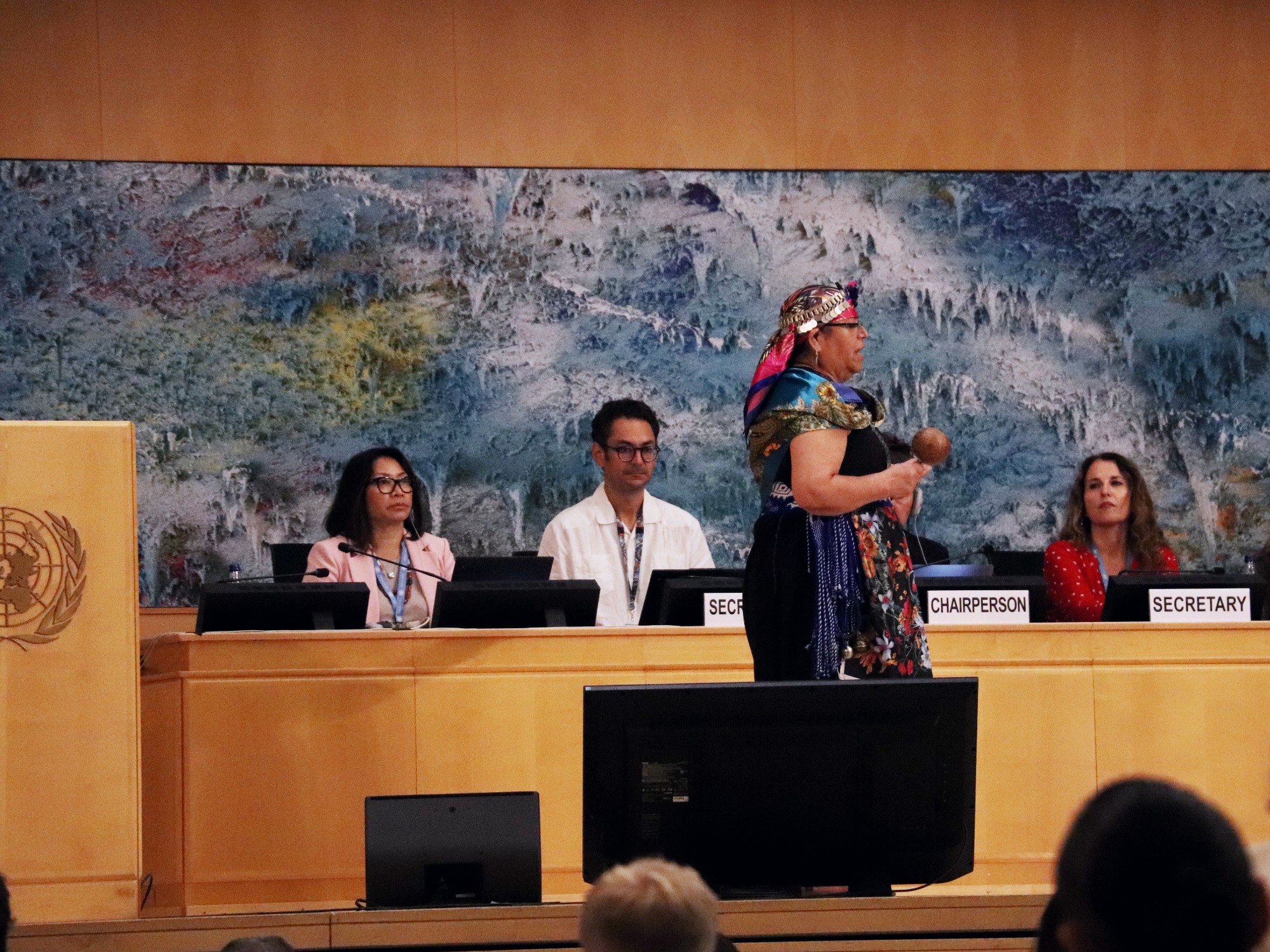
Indigenous people demand more say at the UN, as new crises hit their homelands
Indigenous nations live ‘on the frontlines’ of climate, conflict and new tech. But their voices remain sidelined in the global halls of power.
-
Through their lenses: Showcasing the work of our 2026 ReFocus fellows
Get to know our photojournalism training cohort through a series of portraits shot during a week in Kjipuktuk (Halifax)