‘Truth, courage, care’: Esk’etemc leader honoured with ‘B.C.’ reconciliation award
Charlene Belleau has been ‘leading voice’ of justice for survivors — documenting truth and supporting community healing
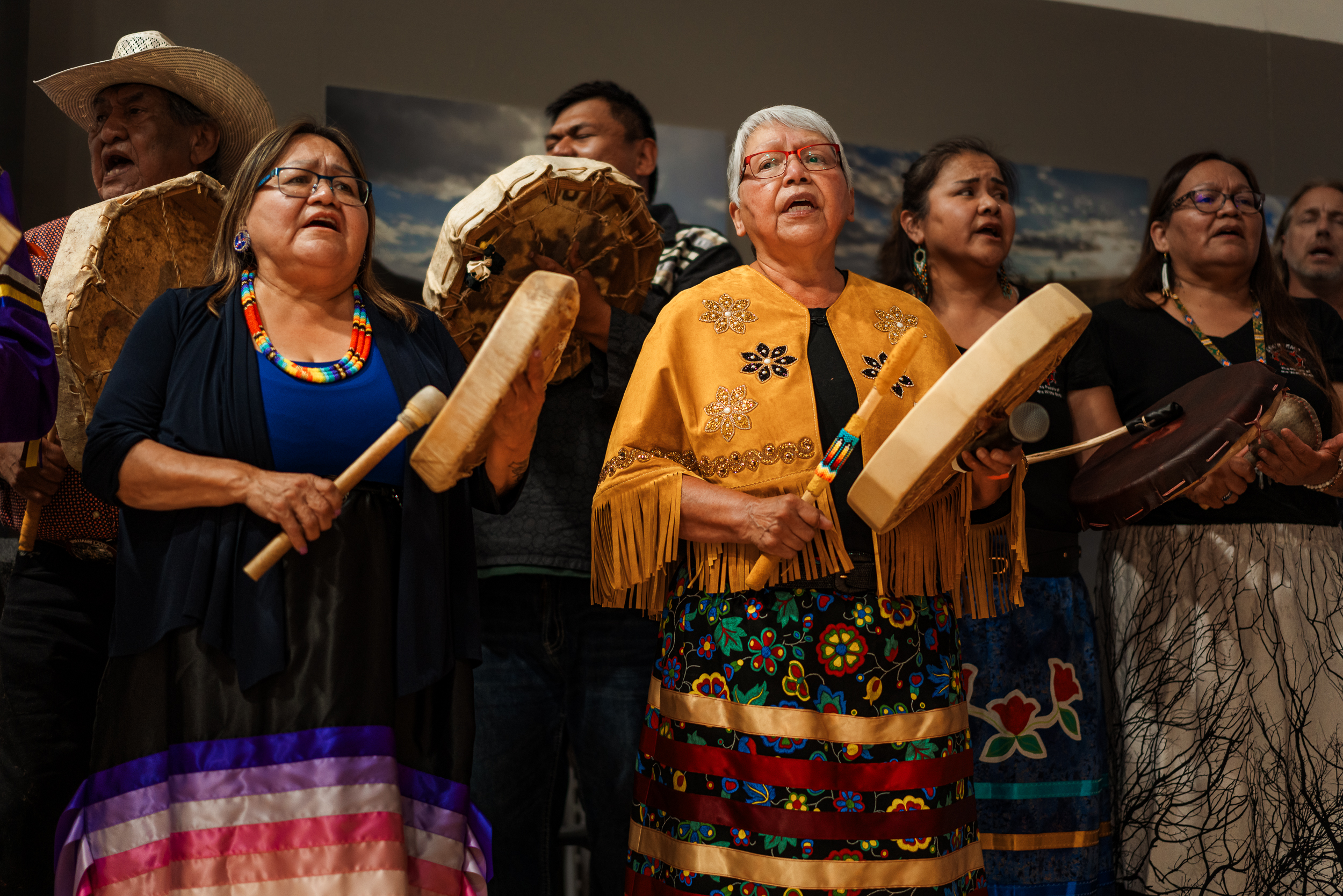
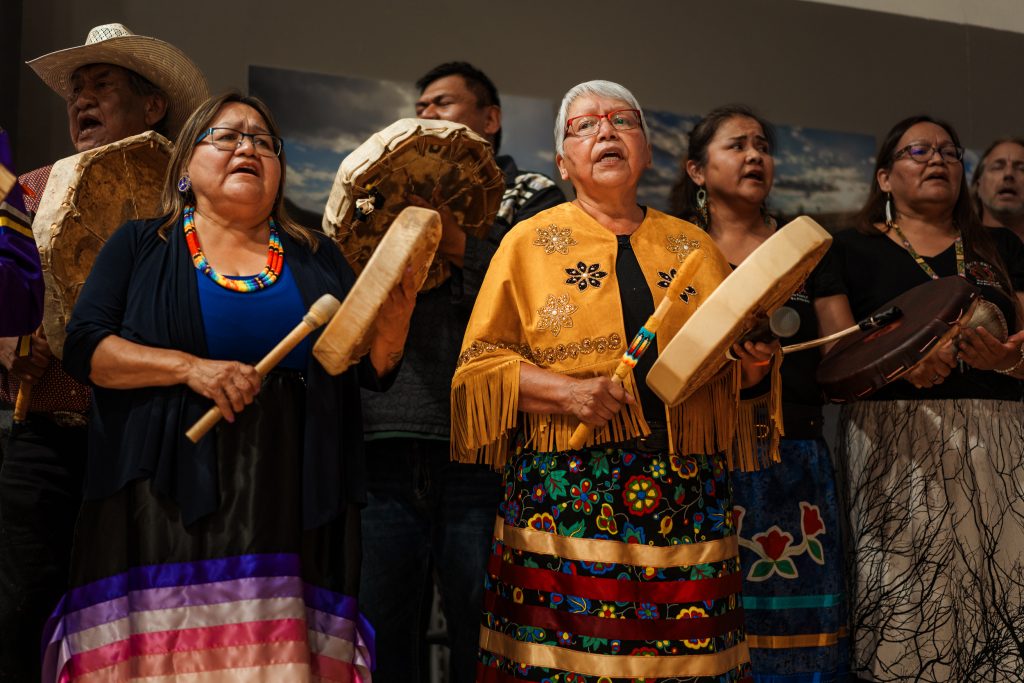
Former Esk’etemc Kúkwpi7 Charlene Belleau (Eaglestar Woman) has been recognized with an award for her work to support healing and justice for residential “school” survivors and their families.
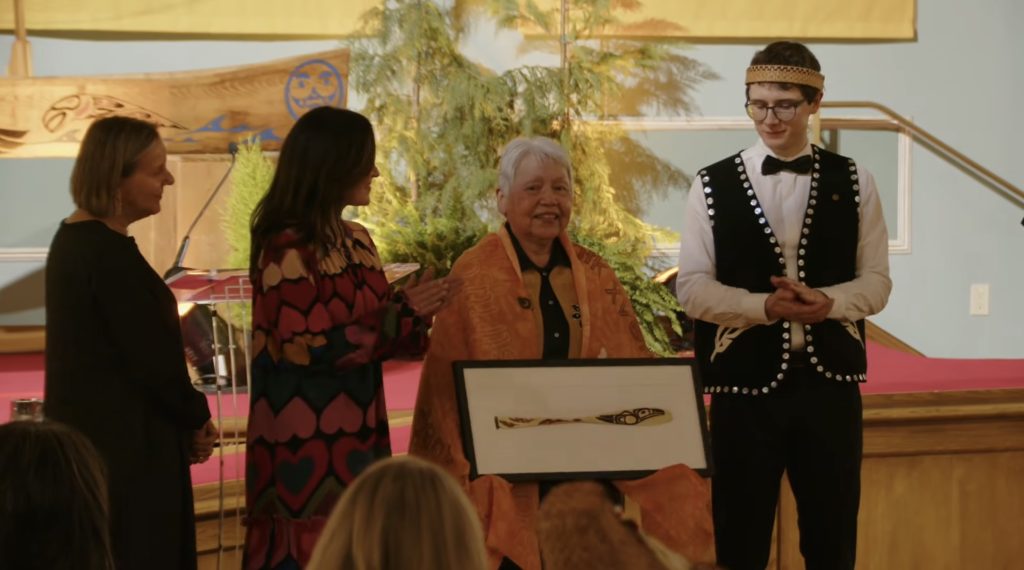
The Elder was among seven people honoured with a British Columbia Reconciliation Award at the Government House in lək̓ʷəŋən territories on Thursday evening.
The award — presented by the Office of the Lieutenant Governor and BC Achievement Foundation — recognizes individuals, groups and organizations who demonstrate their commitment to reconciliation.
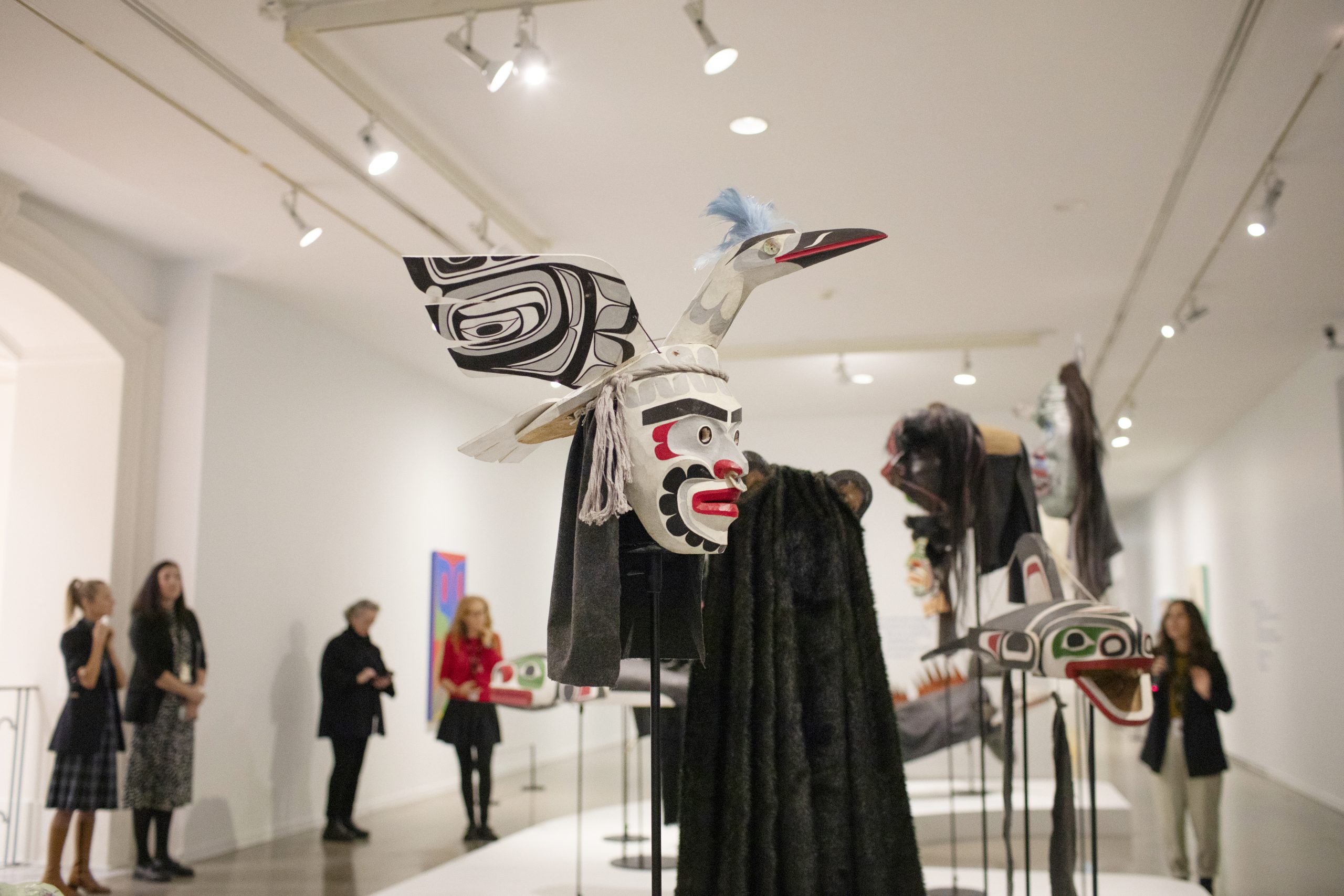
At the presentation ceremony, this year’s recipients were welcomed in behind lək̓ʷəŋən dancers as the Government House was rearranged to resemble a longhouse.
Jerymy Brownridge, executive director of Government House, acknowledged Belleau’s embodiment of “truth, courage, care” as she’s been dedicated to advancing healing and justice for survivors of residential “schools,” families and many communities across the province.
He commended her time as a First Nations liaison with the government where she ensured communities were met with respect, provided resources and allowed for accountability through her work.
Brownridge also recognized the importance of Belleau’s involvement with the groundbreaking documentary Sugarcane and the decades of leadership she has displayed through her time in her community and Indigenous healthcare spaces.
“Tonight we honour a leader whose integrity and lived experience continue to light the path forward on reconciliation,” Brownridge announced.
Belleau has been committed to helping communities through her time as a leader of her community and later as an investigator for the St. Joseph’s Mission — a residential “school” that operated near Williams Lake — which the Elder attended for four years.
“A residential school survivor herself, Charlene has been a leading voice in addressing the intergenerational impacts of colonial institutions,” says the award website.
“She has supported communities in collecting and protecting oral histories, accessing historical records, and creating safe spaces where survivors can share their truths with dignity and care.”
She was heavily involved in the Sugarcane documentary, through her work as an investigator and with firsthand experience at the “school,” using her knowledge to continue leading and helping others learn the truth.
In a past interview with IndigiNews, Belleau mentioned how it wasn’t until the documentary that her family became aware of how difficult her work was with the residential “schools,” but she remained committed to helping others and ensuring people continue to grow through their experiences.
“I’ve said before that I want our people to know that because of our resilience, that we’re stronger for what we’ve been through,” she said.
A lifelong advocate
Belleau is described on the award website as a “lifelong advocate for truth, justice, and healing.”
She was appointed as a First Nations liaison in 2021 by then-Minister of Indigenous Relations and Reconciliation Murray Rankin. In this role, she is described as having provided “critical guidance to the Province of British Columbia in its response to findings at former Indian Residential Schools and Indian Hospitals.”
Serving as a liaison, Belleau maintained communication between Indigenous communities and the government to “ensure that communities receive the resources, respect, and support needed to pursue truth, healing, and accountability.”
Belleau also held previous roles as chair of the First Nations Health Council which represents the five health regions in the province and as Provincial Indian Residential School Coordinator.
Through her roles, Belleau has created safe spaces for other survivors to come forward and share their own experiences at residential “schools” where she helped collect the oral stories and create records of firsthand accounts.
The supportive environment Belleau provides extends to her roles in health and wellness and community leadership as well.
Fellow recipients of the award were: Kevin Borserio (Luu G̱aahlandaay), Deanna Duncan (H̀búkvs λamalayu), Aboriginal Housing Management Association, Honouring Our Elders Legacy Project Coordinating Team and the syiyaya Reconciliation Movement and Dwight Ballantyne who was the recipient of the first Phyllis Webstad Emerging Leader award.
To commemorate their efforts, the recipients received a print of a canoe paddle designed by artist Stephanie Anderson who is a member of the Likhsilyu “Small Frog” clan of the Wet’suwet’en Nation. They were also gifted an intricately designed orange scarf by Kwakwa̱ka̱’wakw artist Carey Newman (Hayalthkin’geme).
Nominations for the 2026 Reconciliation Awards are open until Feb. 15, 2026.
Author

Latest Stories
-
‘Truth, courage, care’: Esk’etemc leader honoured with ‘B.C.’ reconciliation award
Charlene Belleau has been ‘leading voice’ of justice for survivors — documenting truth and supporting community healing
-

Across the border, Indigenous fears spike amidst ‘U.S.’ immigration crackdown
With ICE operations, multiple First Nations warn members about travel risks — despite treaty rights. Why Indigenous communities are on the frontlines defending rights for all