Going beyond western notions of theatre
How playwright Kim Senklip Harvey honours her ancestors and future generations through her work.

Kim Senklip Harvey interweaves her traditional role as a firekeeper in her work as a director, actor and playwright. Harvey is a proud Syilx, Tsilhqot’in, Ktunaxa and Dakelh woman who calls herself ‘Fire Creator.’
Throughout her work, she carries a sacred responsibility to care for those she works with and this is reflected in the messaging she relays in her work. Harvey is also passionate about creating space to talk about sexuality and the importance of body positivity.
“If we do not talk about our sexuality in a healthy, positive life-giving way, generations are going to be impacted by the self-worth, the sovereignty and sexual agency to think that we don’t deserve respect when we talk about or presence, our own sexuality and femininity,” she asserts.
Harvey is currently completing her MFA in Creative Writing at the University of Victoria while working on a T.V. script adaptation for her play Kamloopa.
She is the fall 2020 writer-in-residence at the University of British Columbia Okanagan, where she recently gave a public lecture, Interior Salish Sharing: Stories from a shapeshifter.
IndigiNews connected with Harvey to talk about her work, inspiration and what’s next.
Work as ceremony
The term ‘Fire Creator’ comes from Harvey’s award-winning play Kamloopa — an “Indigenous Matriarch story” showcasing two Indigenous sisters and a trickster on a journey reconnecting to the land and their ancestors.
“Fire Creator came from Kamloopa in this new methodology, we were innovating around how to create, conjure a process that lives in an Indigenous paradigm to make Indigenous stories,” she says.
Long after a project is completed, Harvey believes she has a responsibility to uphold — it’s a teaching she learned in her culture and ceremonial spaces, she says.
“A fire ceremony is a part of my tradition especially up in the Tsilhqot’in — in birth, death, and life gatherings,”
“When you’re a fire tender at somebody’s funeral, that’s a responsibility that goes beyond life,” Harvey explains.
When she calls her work “ceremony,” Harvey refers to the responsibilities she holds as a fire creator, a fire tender, a fire holder, she says, and all of the obligations that come with that work.
Fire is a common element used in various ancient traditions in many parts of the world – fire is sacred, fire is cared for, fire purifies and renews life. Harvey says her work goes beyond a typical contract — she invests in and cares for people.
“I have a responsibility to them for the rest of my life,” she says.
Matriarchal led systems
Part of Harvey’s work involves the resurgence of Indigenous matriarchal led systems, she says.
“I believe that through colonization and imperialism a lot of our matrilineal and matriarchal systems were wiped out, or heavily influenced by a Western religion,” she explains.
“When I sit in ceremony and I speak to my knowledge-keepers there, every teaching is around the fact that women, femmes, non-binary, and two-spirited people were respected members of the fire — decision-makers.”
Harvey believes matriarchal isn’t about a prescribed gender, but about the feminine qualities that people can embody.
“Our women are not being respected, our two-spirited people are not being honoured and our even matriarchal is not even about gender,” she says.
“It’s about a way of being and allowing your feminine qualities to permeate through to have a nurturing, thoughtful, nuanced sensitivity.”
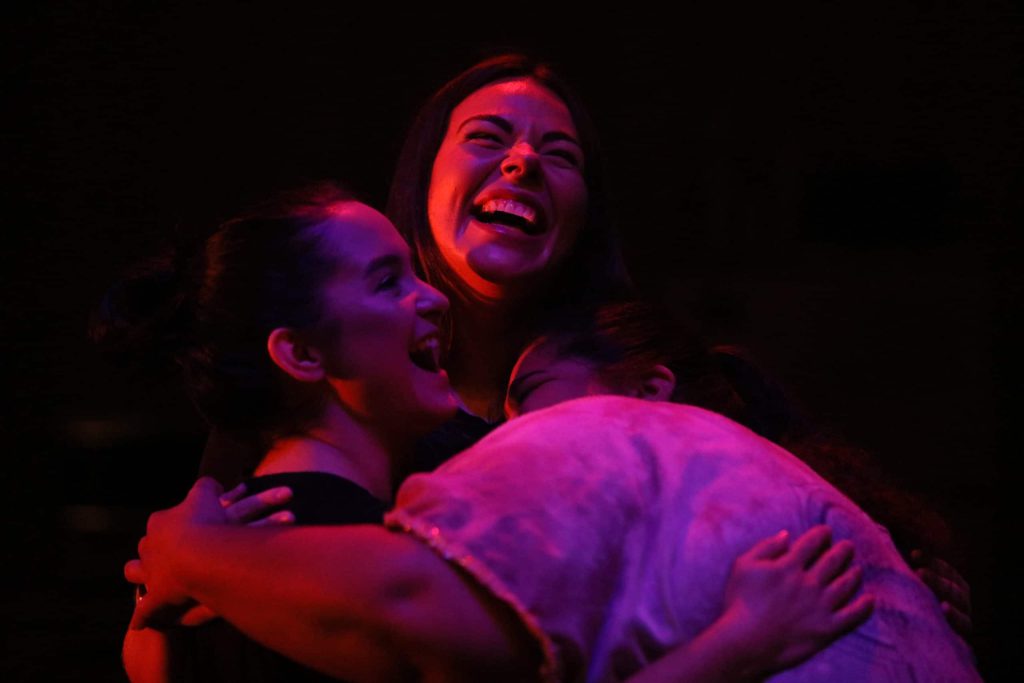
Harvey says that men should consider how matriarchy ‘sits within them.’ She says she intentionally hires women and femmes to balance the environment.
“Until I see that balance in art spaces and theatre and the work in work sectors, I think we are not going to be able to rectify the challenges and conflicts we’re in,” she says.
Harvey also explains the importance of talking about Indigenous women, femme, and sexuality in positive ways and contexts without violence.
“I didn’t experience learning about sexuality or just even like being flirtatious without it being intrinsically connected to violence against us,” she says.
“We need body positivity. We need body sovereignty.”
Without more nuanced conversations about our sexuality in a positive way she fears “that teaches young Indigenous women and girls that our sexuality is connected to being treated poorly, being harmed and killed.”
Harvey explains that it is often uncomfortable to have these conversations but she poses the question: “Is my uncomfortability more important than the next generation of young Indigenous women and femmes feeling confident about saying no in the bedroom?
“So every time I get nervous talking about it, I think about my nieces. I think about my grand nieces….the future generations who need us talking about our sexuality all side and apart, and extracted from colonial violence,”
What’s next?
While Harvey is a writer in residence this fall, and completing her MFA at UVIC, she also continues to work on her play Break Horizons,
“[It’s] about five indigenous women in a healing lodge, which are restorative justice-focused prisons,” she explains.
She is also working on a TV adaptation of Kamloopa, other theatre projects and a collection of poetry that Harvey describes as, ‘Indigenous love, a dirtbag, Indian hot dog storybook’ that she hopes can bring readers joy.
Through her work, she tries “to always remember that before we wrote anything down as an oral people, we sat and shared space to tell stories. And that to me is what theatre is beyond the Canadian Western notion of theatre.
“Sitting around a fire and telling a story, ignites a part of our blood memory,” she adds. No matter what race, colour, creed background… at some point in all of our histories, we would sit by a river, sit by a fire, sit in our homes, sit in our pit houses and listen to the nurturing nature of what a story can be.”
Harvey expresses her gratitude for everything her ancestors did for her to be alive and she juxtaposes this with the responsibility of taking care of the land for future generations.
“We don’t inherit this land from our ancestors, we borrow it from our children,” she says.
Ultimately, Harvey says, her work is about “really believ[ing] in yourself and that you intrinsically matter.
Our children come to mind… and what I owe them. And I hope that when I do humbly go back to the earth, I’ve done everything I can to make an environment for them that is a little bit more peaceful.”
Author
We live in a media ecosystem that thrives on misinformation. Big Tech and AI companies are consuming the work of real human beings and Canadian news has been banned on Facebook and Instagram.
And yet, I have hope for journalism because of the work we’re doing at IndigiNews.
At IndigiNews, we embody tâpwêwin — the Cree value of integrity and responsibility in truth-telling. We are committed to our independent, Indigenous-led newsroom rooted in community, accountability, and relationality. We believe storytelling is a sacred fire that connects our pasts, presents, and futures through the storytellers in our Storytelling Lodge. IndigiNews creates space for Indigenous journalists, storytellers, Knowledge Keepers, and communities to gather, learn, and share stories that matter.
As a registered charity, we are building a fire that allows our work not just to ignite but to thrive. Rather than relying on advertising or corporate acquisition, IndigiNews is sustained by people like you who believe Indigenous stories are important for the future of our communities.
Your support is making a real difference.
Our community of supporters, our Firekeepers, make it possible to grow our newsroom, publish award-winning journalism, train emerging Indigenous journalists through initiatives like the ReFocus Photojournalism Fellowship, and publish trustworthy stories that serve our communities across the country. Every story we publish helps fill in gaps left by mainstream media and ensures Indigenous perspectives are represented with care, accuracy and respect.
But there is still more work to do.
As the media landscape becomes more and more uncertain, community support is as necessary and essential as it’s ever been. Every new Firekeeper helps protect the independence of our newsroom and strengthens journalism that is accountable to our many and varied communities over corporations.
That’s why we’re inviting you to become a Firekeeper.
Firekeepers tend to and protect the sacred fire. Your monthly contributions directly support IndigiNews’s Storytelling Lodge, helps sustain our independent, Indigenous-led newsroom, and ensures future generations of Indigenous storytellers have the resources they need to do the work.
As a registered Canadian charity, all eligible donations receive a charitable tax receipt.
If you believe Indigenous stories matter, if you value independent journalism, and if you want to help build a strong future for Indigenous media, we invite you to join our circle of Firekeepers today.
Together, we can keep the fire burning.
— Eden Fineday, Publisher, IndigiNews
Support us nowLatest Stories
-
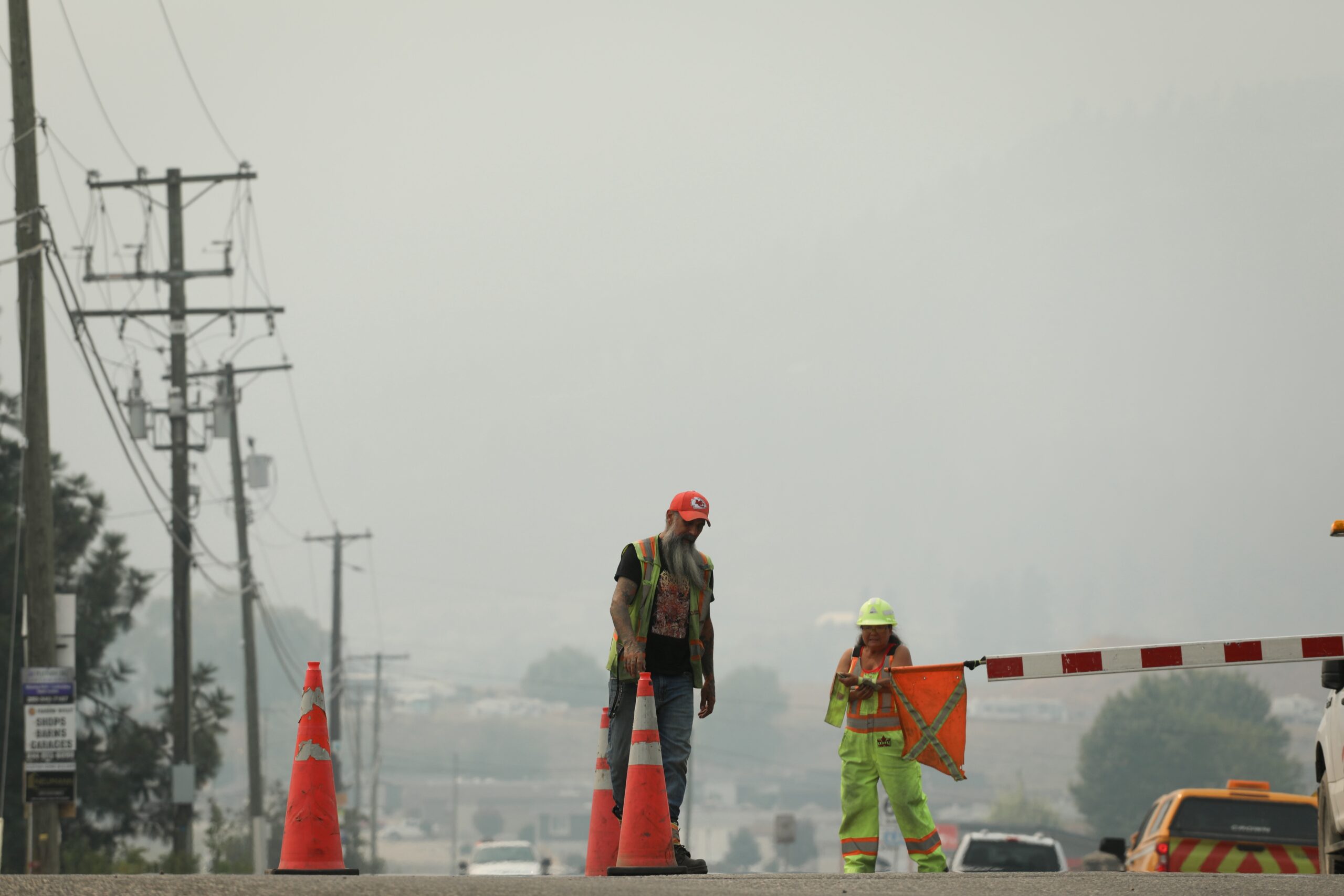
Okanagan Indian Band ‘getting stronger everyday’ amid devastating wildfire
Entire reserve has been evacuated and more than 30 people have lost homes, chief says, as blaze continues to burn as of Thursday
-
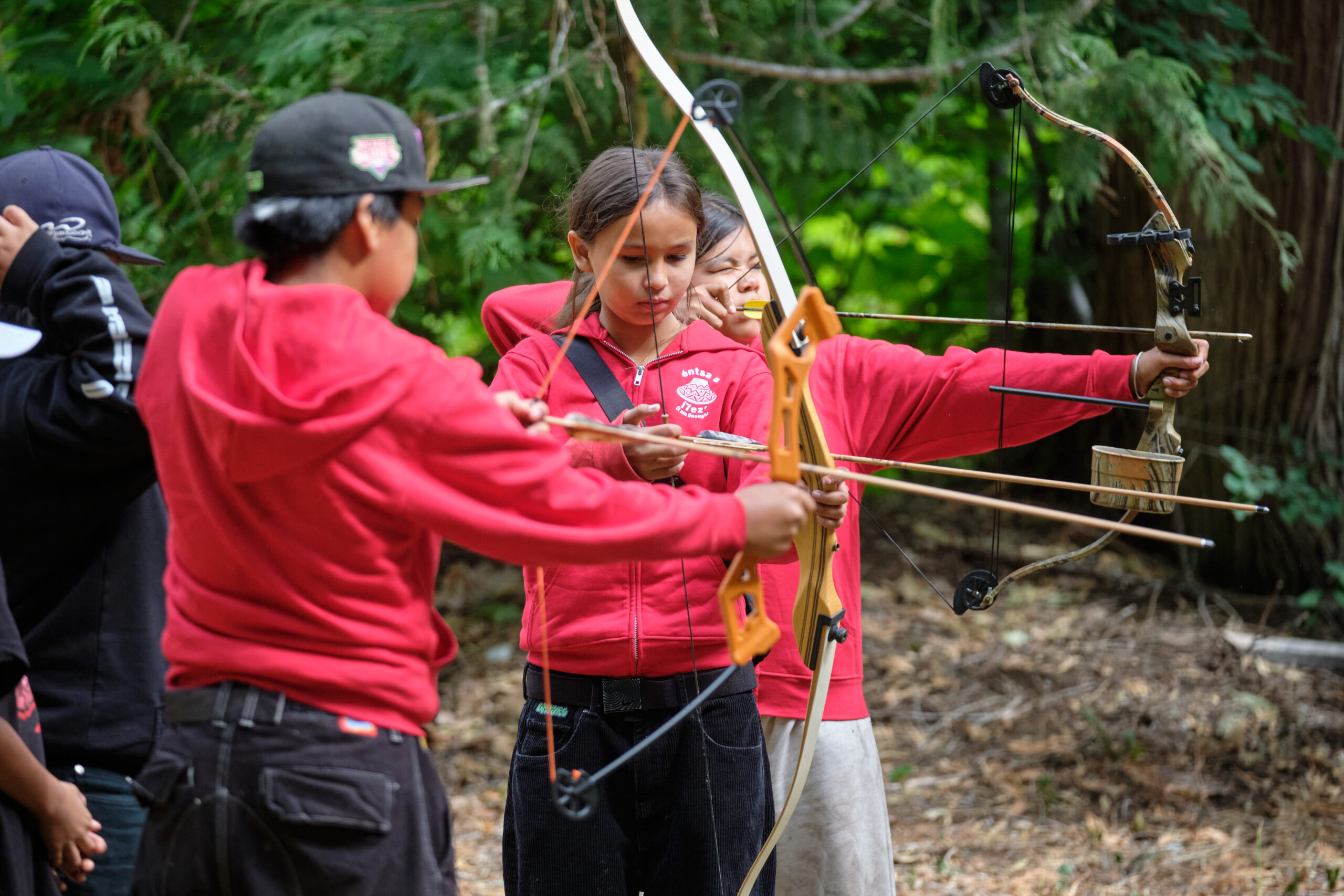
Interior Salish culture camps create ‘a safe haven’ during provincial wildfires
Organizers move ahead with caution, connecting young people with land-based teachings, healing and kinship