Syilx artist Clint George welds oral stories into massive steel sculptures
Artist Clint George from the Penticton Indian Band is creating three sculptures in Lake Country B.C.

When Clint George (wàpupxn) entered his first art competition at his elementary school in grade three, he didn’t think he could win.
“When I picked up a pencil and started drawing, I didn’t think I was ever going to make it on a pedestal, because for one, I’m First Nations, and I was also in grade three,” says George.
But he did win — his art was selected as first place out of the entire elementary school. That victory ignited hope in young George’s life, signally to him that he could do anything he put his mind to.
“I think at that point it was just, ‘Oh, we can do anything’ I mean, it’s a matter of how hard we push and how far we go,” he says.
He began welding when he was 11 and practiced many forms of visual art, from painting, to drawing, to sculpting. He then became a tattoo artist for eighteen years.
Now George, a member of Penticton Indian Band (PIB), is a PIB council member and full-time artist. For the past six years he has been building steel sculptures for many private collections, municipalities, and for First Nations schools across British Columbia.
His artwork is displayed as far as Japan, China, Russia and New Zealand.
“It’s an honour for me to be able to send out some of my stuff all around the world,” he says.
‘Proud to be Syilx’
One of George’s most recent sculptures is displayed in the Okanagan College, at the Kelowna Campus. The three story high sculpture shows steel images of the Okanagan/Syilx Nations Four-Food Chiefs, Saskatoon Berry, Bitter Root, Salmon, and Bear.
The Four-Food Chiefs are the cultural keystone species for the Okanagan/Syilx people, if they collapse that means their whole ecosystem will collapse. Each Chief represents the Okanagan/Syilx Peoples laws and these laws come from their C’aptikwl (oral stories), which show them how they should use their resources.
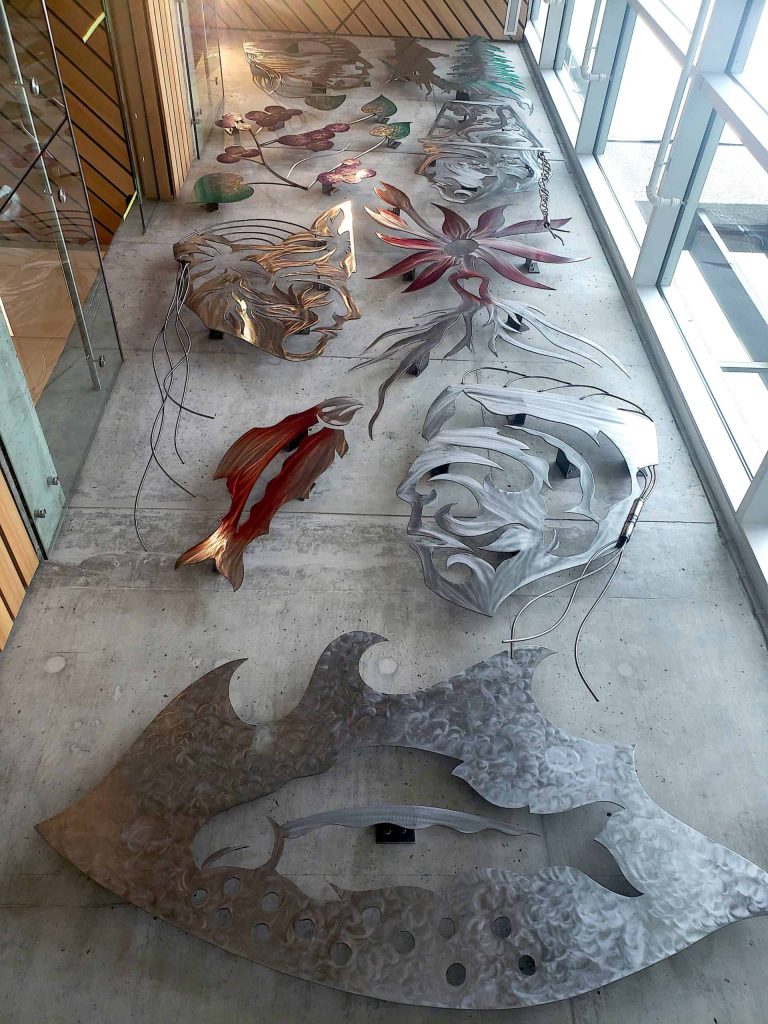
George says it’s important his sculptures are displayed in schools, where students go to learn. He wants to encourage students to learn the true history of Okanagan/Syilx people in their traditional stories embedded in his work.
“I think it’s very important to teach more of our images in our territory, who we are and where we are and come from,” says George whose Nsyilxcən (Syilx language) name wàpupxn, meaning linx, was given to him by his grandfather at birth.
“To be in the general public’s face and to say that, ‘we’re not going anywhere’ is important to me.”
The inspiration behind the artwork
George says his sculptures are inspired by his culture, traditions and traditional C’aptikwl.
George is currently building three sculptures for the Winfield, located in Lake Country B.C.
The sculptures are made entirely of steel, both mounted on a hand-carved pole with pictographs engraved along the sides. He is also working on a fourteen-foot standing steel feather.
George says the steel canoe represents how Okanagan/Syilx people would fish, hunt and gather thousands of years ago in the Winfield area.
“It was a traditional place for us,” he explains.
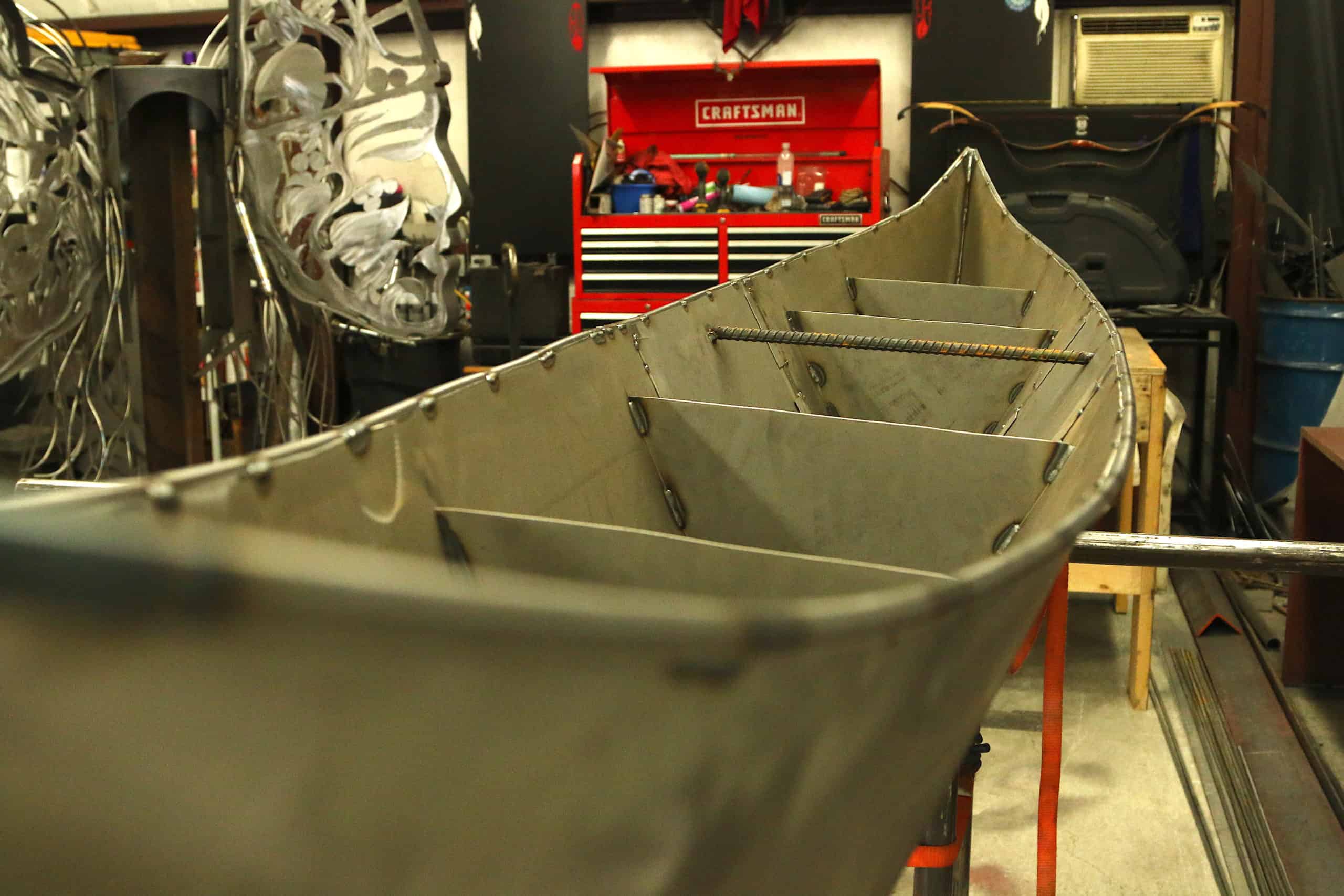
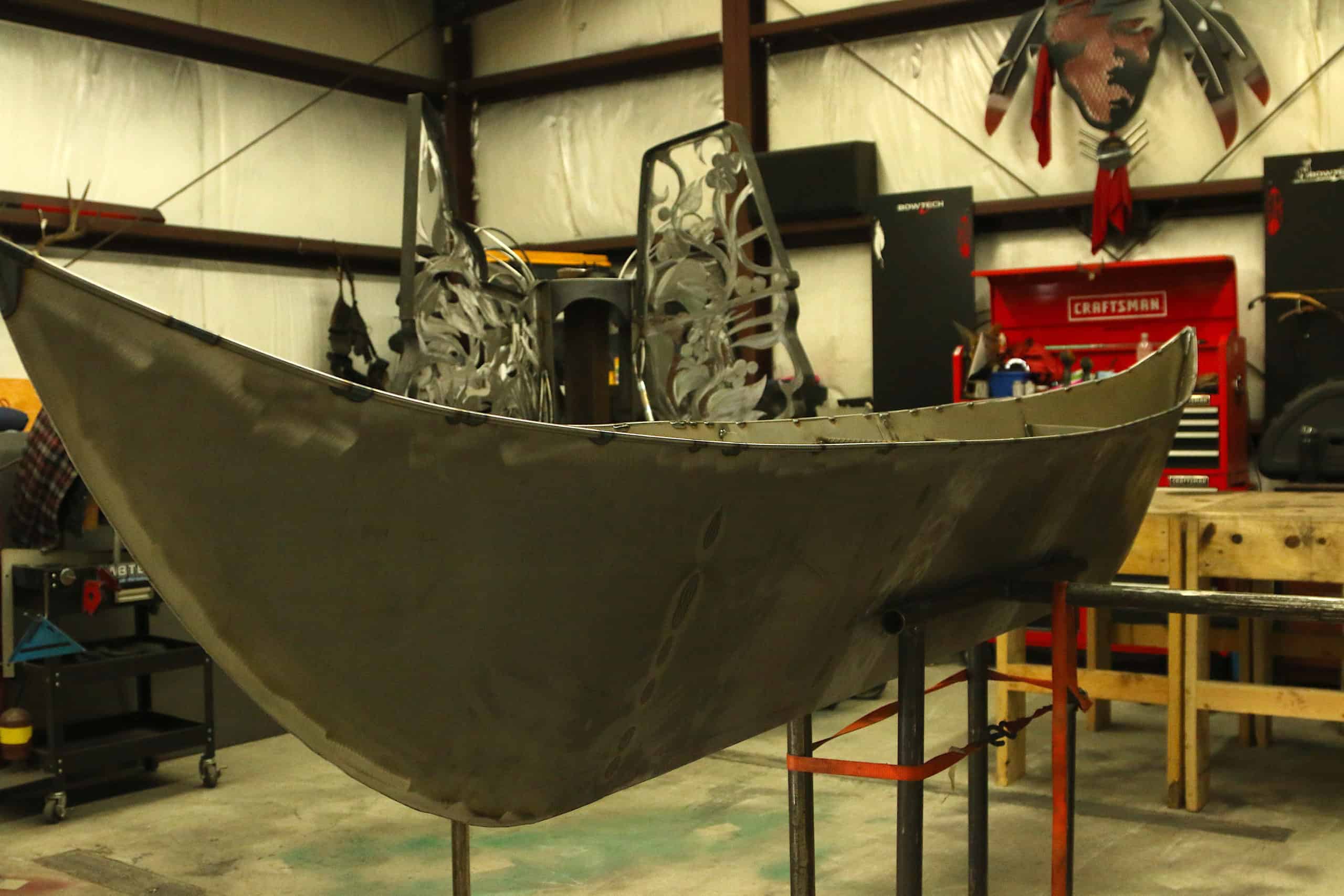
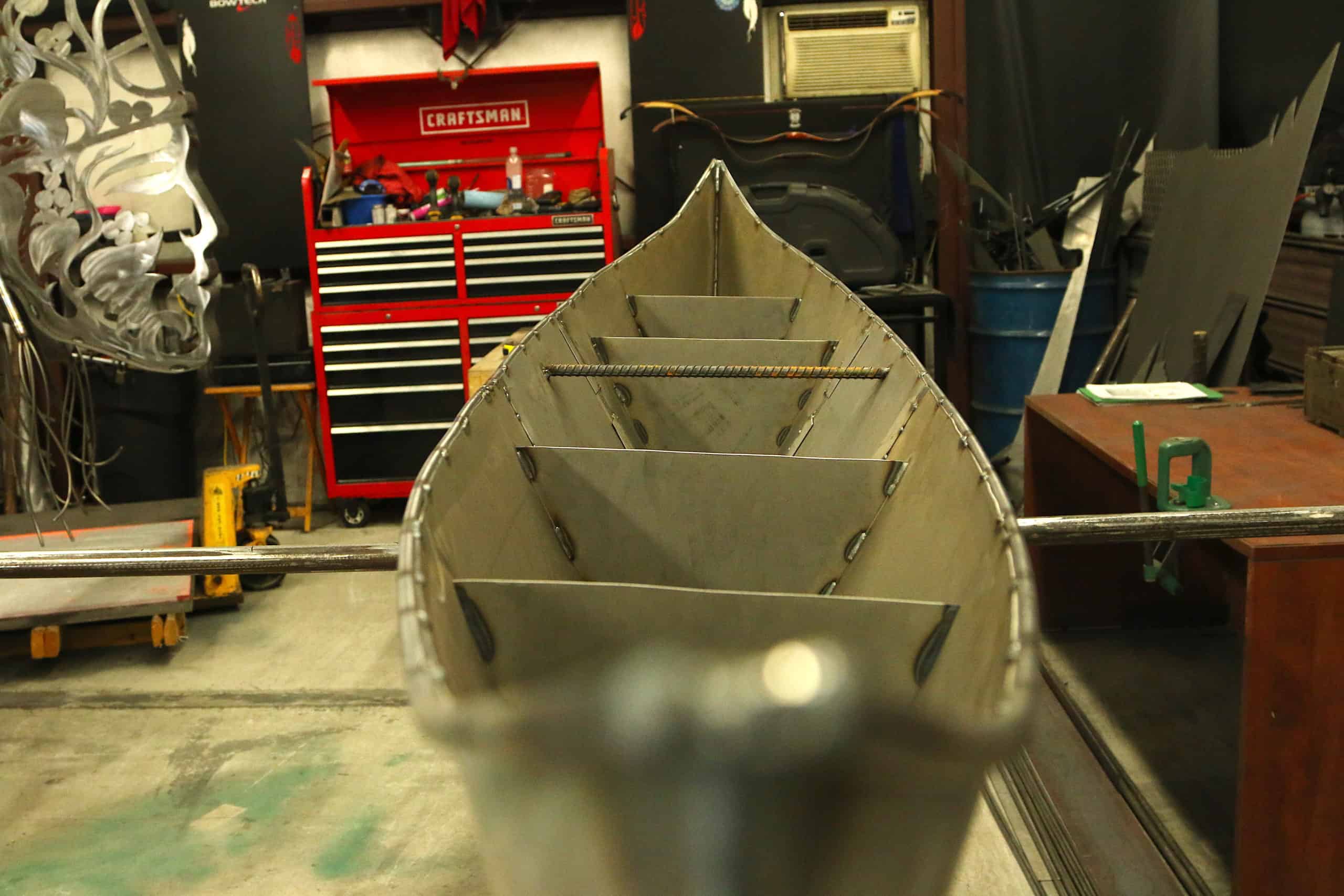
George’s ‘Four-Food Chiefs’ sculpture is based on the Okanagan/Syilx Peoples’ creation story on who they are and how they became to be the people they are today.
“Those are the kinds of stories I hope it inspires people to want to know and learn more about,” George says.
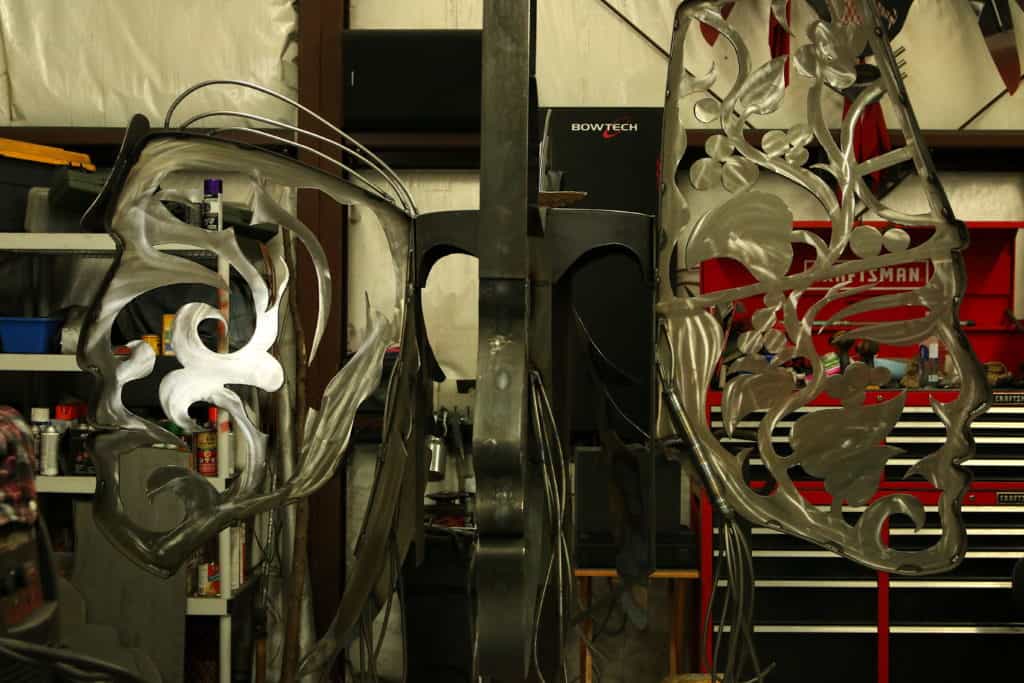
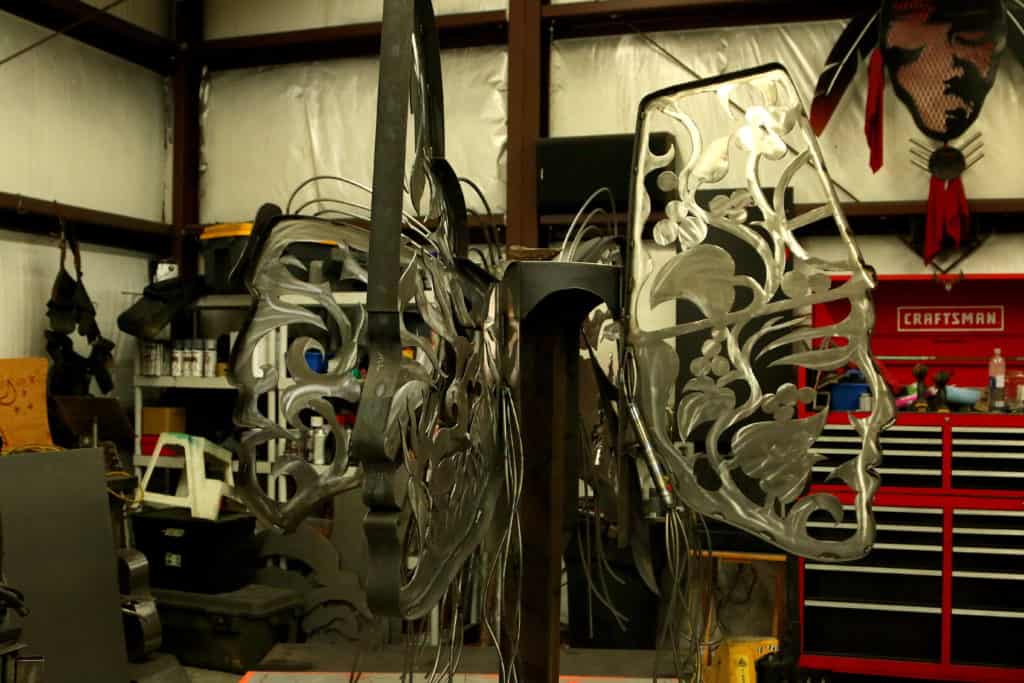
The fourteen- foot standing steel feather is meant to represent all First Nations, the original people of this land, says George.
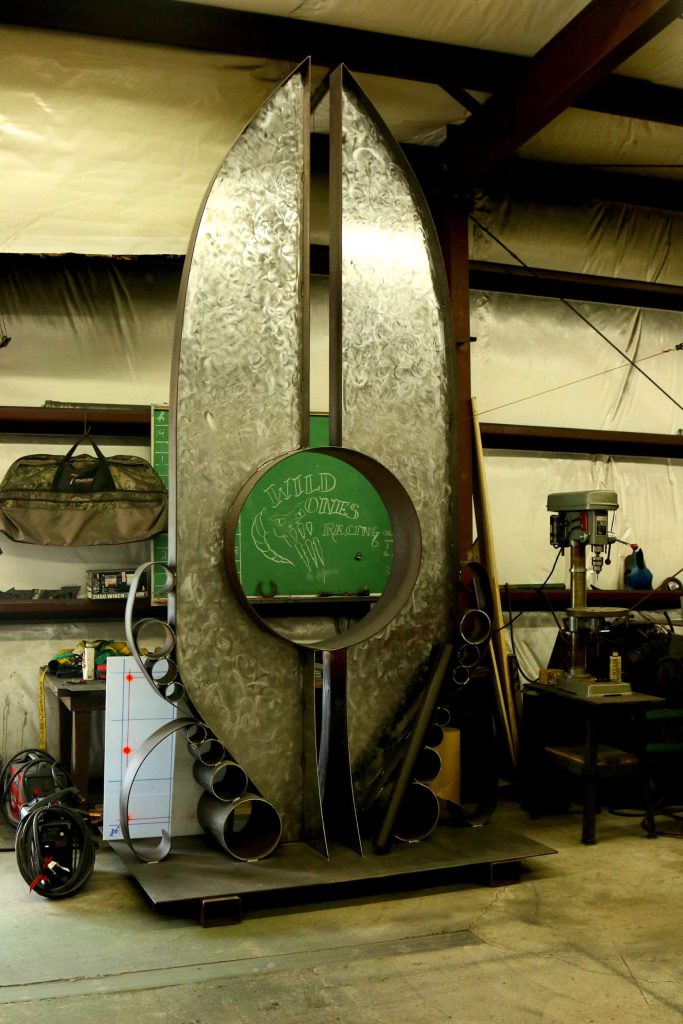
Two of the displays, the canoe, and the four-food chiefs, will be mounted on poles engraved with pictographs carved and painted around their circumference. The fourteen-foot feather will stand alone.
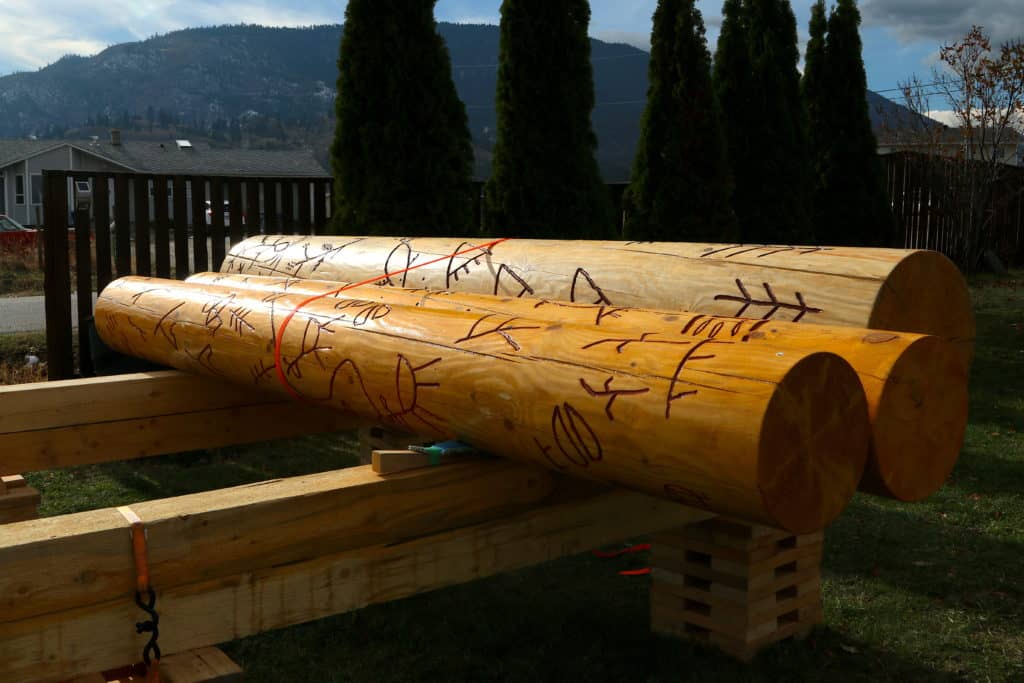
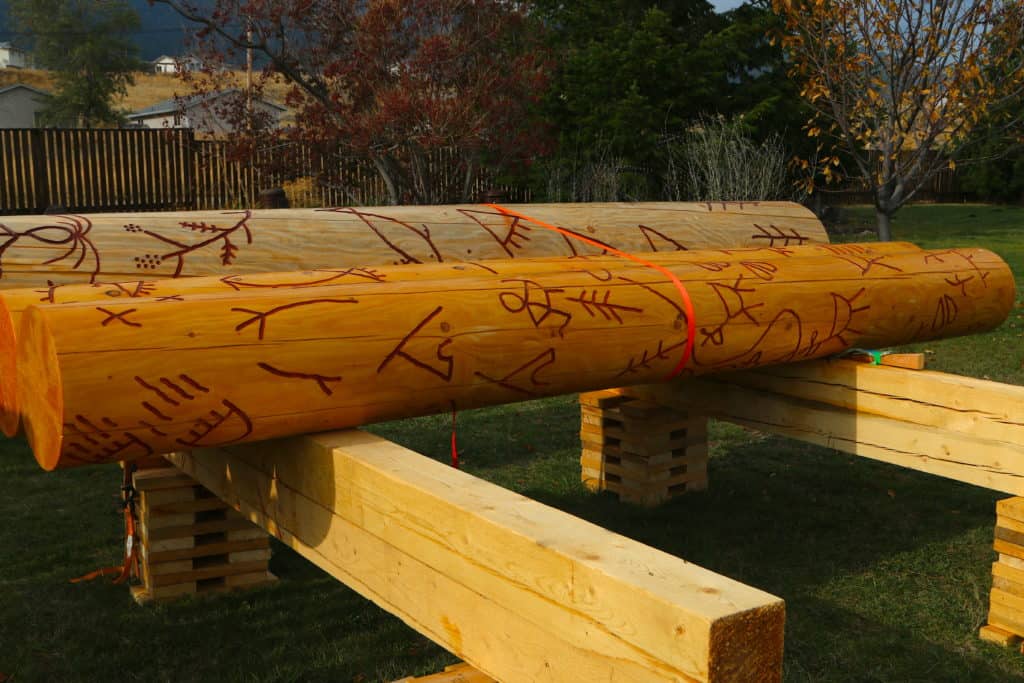
George collaborated with Les Louis, another Indignenous artist from the Okanagan, to carve the poles and paint in the pictographs.
“There’s no letters, no words. It’s all images of pictographs telling the story of that area,” says George. “Which is actually another cool way of bringing knowledge to people about who we are and where we came from.”
George’s current installation of the three sculptures will be available to the public in late November, at the Pelmewash Parkway in Winfield.
“It makes me feel proud of who I am and where I’m from,” says George. “It makes me feel proud to be a Syilx person and to represent our people and our stories.”
Editor’s note, Nov. 6, 2020: A previous version of this story stated referred to Winfield as a city. Winfield is in fact a formal ward within the district municipality of Lake County.
Athena Bonneau is a reporter for IndigiNews Okanagan. You can follow her work here, or email athena@indiginews.com
Author
We live in a media ecosystem that thrives on misinformation. Big Tech and AI companies are consuming the work of real human beings and Canadian news has been banned on Facebook and Instagram.
And yet, I have hope for journalism because of the work we’re doing at IndigiNews.
At IndigiNews, we embody tâpwêwin — the Cree value of integrity and responsibility in truth-telling. We are committed to our independent, Indigenous-led newsroom rooted in community, accountability, and relationality. We believe storytelling is a sacred fire that connects our pasts, presents, and futures through the storytellers in our Storytelling Lodge. IndigiNews creates space for Indigenous journalists, storytellers, Knowledge Keepers, and communities to gather, learn, and share stories that matter.
As a registered charity, we are building a fire that allows our work not just to ignite but to thrive. Rather than relying on advertising or corporate acquisition, IndigiNews is sustained by people like you who believe Indigenous stories are important for the future of our communities.
Your support is making a real difference.
Our community of supporters, our Firekeepers, make it possible to grow our newsroom, publish award-winning journalism, train emerging Indigenous journalists through initiatives like the ReFocus Photojournalism Fellowship, and publish trustworthy stories that serve our communities across the country. Every story we publish helps fill in gaps left by mainstream media and ensures Indigenous perspectives are represented with care, accuracy and respect.
But there is still more work to do.
As the media landscape becomes more and more uncertain, community support is as necessary and essential as it’s ever been. Every new Firekeeper helps protect the independence of our newsroom and strengthens journalism that is accountable to our many and varied communities over corporations.
That’s why we’re inviting you to become a Firekeeper.
Firekeepers tend to and protect the sacred fire. Your monthly contributions directly support IndigiNews’s Storytelling Lodge, helps sustain our independent, Indigenous-led newsroom, and ensures future generations of Indigenous storytellers have the resources they need to do the work.
As a registered Canadian charity, all eligible donations receive a charitable tax receipt.
If you believe Indigenous stories matter, if you value independent journalism, and if you want to help build a strong future for Indigenous media, we invite you to join our circle of Firekeepers today.
Together, we can keep the fire burning.
— Eden Fineday, Publisher, IndigiNews
Support us nowLatest Stories
-
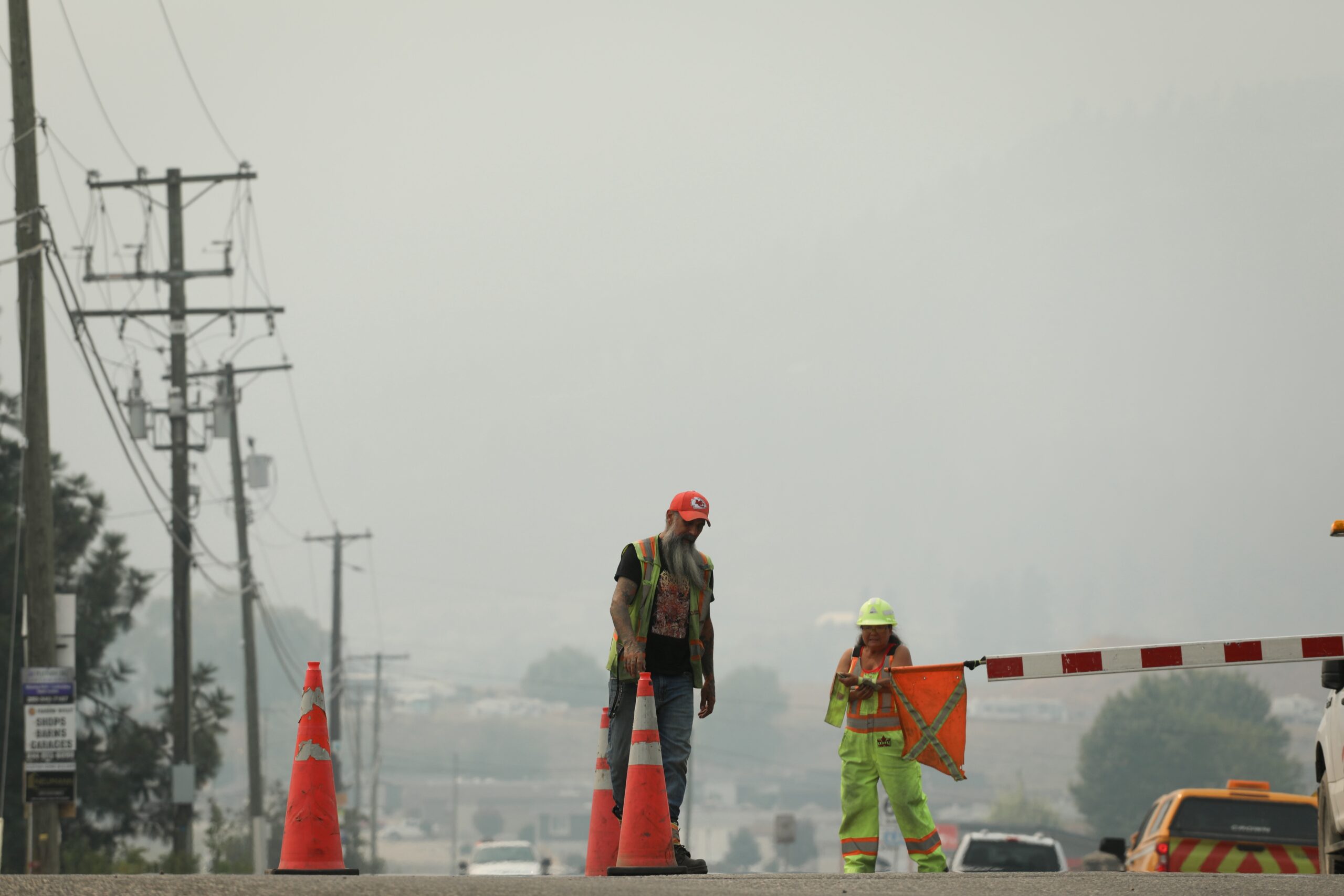
Okanagan Indian Band ‘getting stronger everyday’ amid devastating wildfire
Entire reserve has been evacuated and more than 30 people have lost homes, chief says, as blaze continues to burn as of Thursday
-
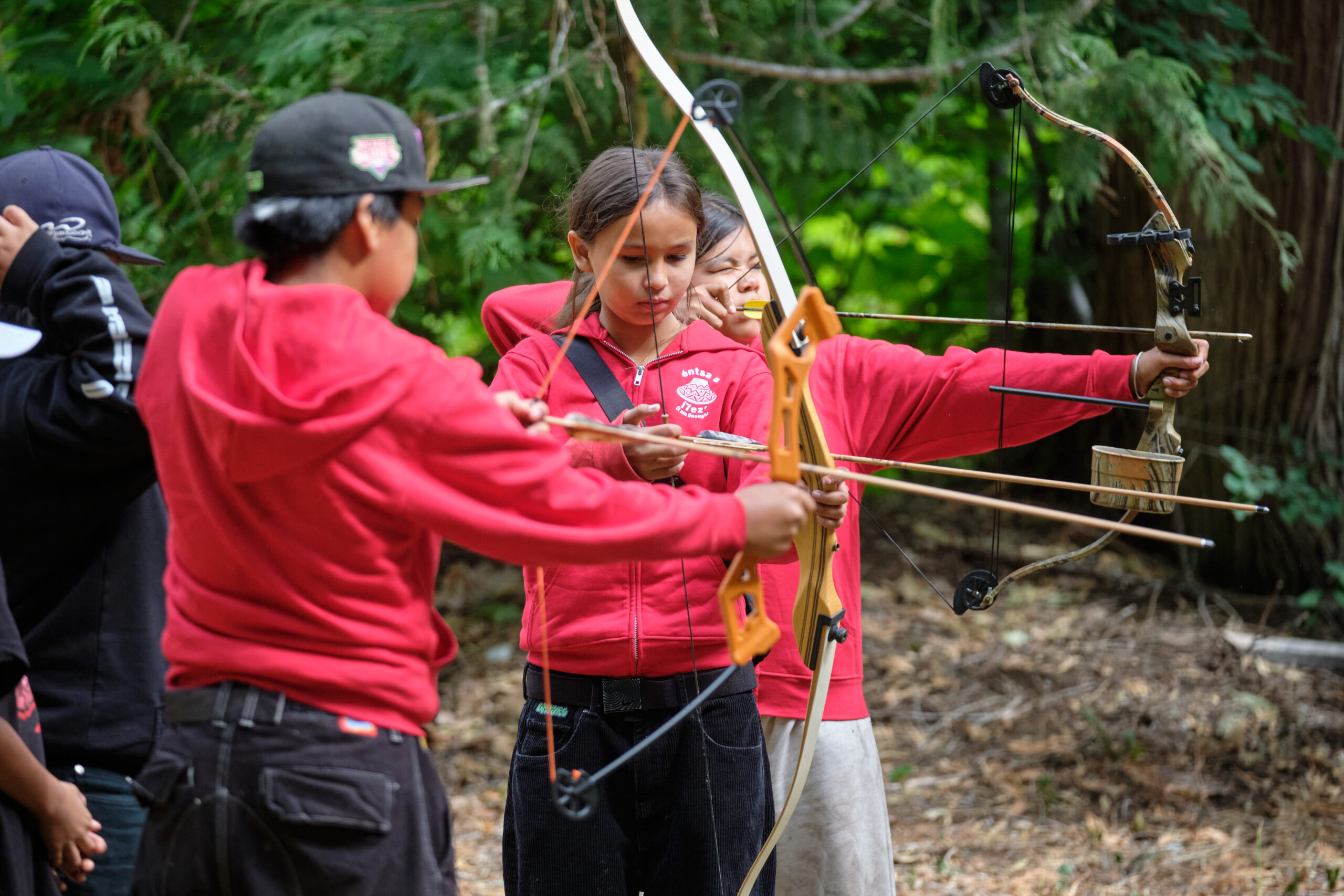
Interior Salish culture camps create ‘a safe haven’ during provincial wildfires
Organizers move ahead with caution, connecting young people with land-based teachings, healing and kinship