Beyond Red Dress Day: Seven calls to action for allies
Non-Indigenous people have a role to play in the fight for justice for missing and murdered Indigenous women, girls and gender diverse people in this country.

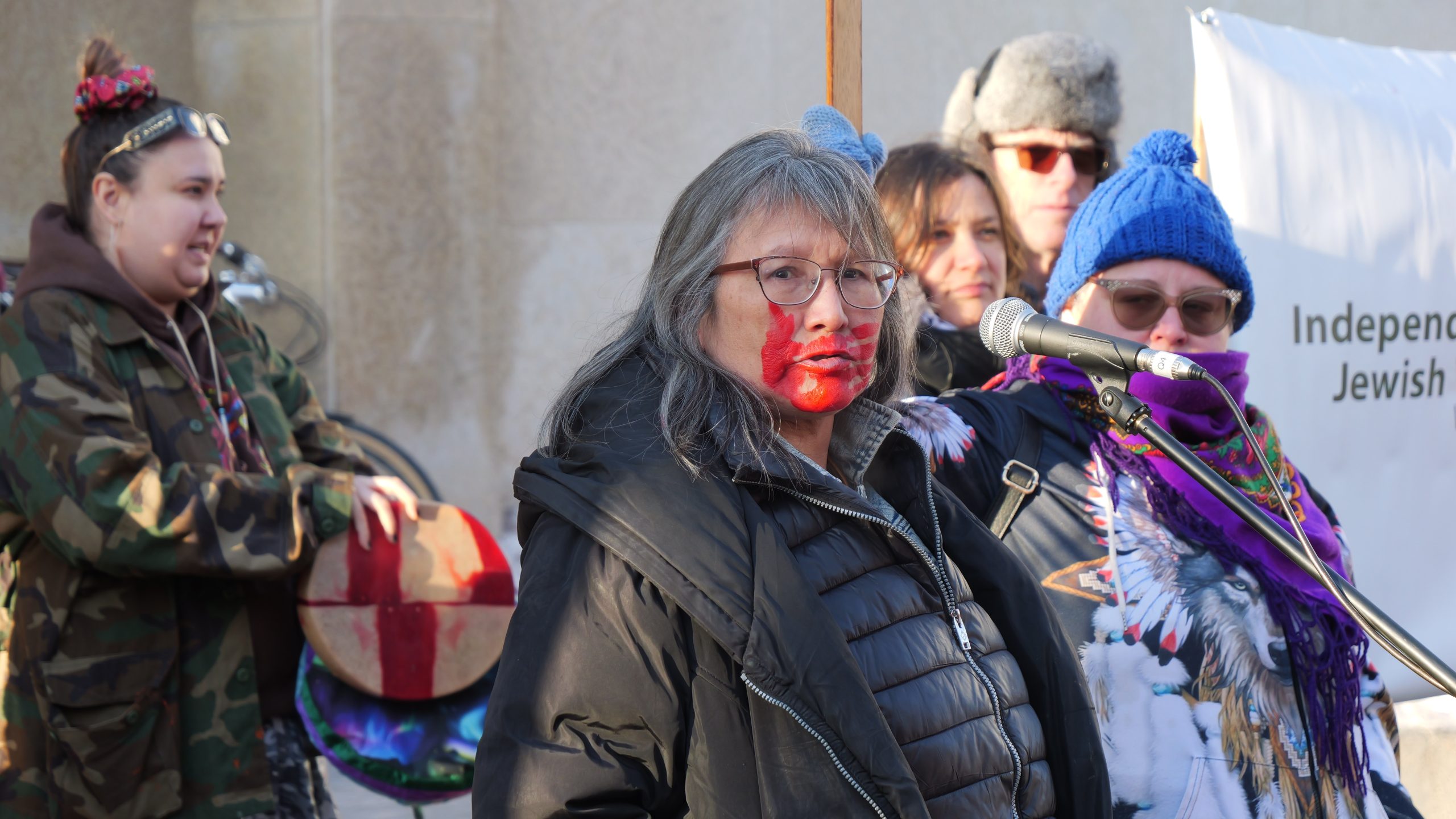
Sage smoke rose softly across screens in the IndigiNews virtual meeting space yesterday on the National Day of Awareness for MMIWG+ — also known as Red Dress Day — as team members smudged and prayed in their respective homes.
To mark this time of remembering and honouring the Indigenous women, girls, Two-Spirit and gender diverse people who have been victims of gender-based and racialized violence, the IndigiNews team came up with seven calls to action for allies.
1. Read and share the MMIWG+ final report, especially the calls for justice
The National Inquiry into Missing and Murdered Indigenous Women and Girls released its final report on June 3, 2017. It contains 231 individual calls for justice “directed at governments, institutions, social service providers, industries and all Canadians.”
More than 2,380 family members, survivors of violence, experts and Knowledge Keepers and Carriers contributed to the report by sharing their truths in “cross-country public hearings and evidence gathering,” according to the inquiry.
2. Hold those in positions of power to account
Review the 231 individual calls for justice developed by the National Inquiry.
Which calls apply to your local government, health authority, police service or transportation authority? Which calls apply to leaders in education, social work, resource extraction and correctional services? Have they answered the calls that apply to them?
If not, ask them what they plan to do and when they plan to do it by. Share responses on social media — or pitch accountability story ideas to journalists.
Policies have real impacts on people’s lives. In his book How to Be an Antiracist, Black historian Ibram Kendi writes about how racist policymakers feed white privilege and uphold white supremacy.
“Racist policymakers drum up fear of antiracist policies through racist ideas, knowing if the policies are implemented, the fears they circulate will never come to pass. Once the fears do not come to pass, people will let down their guards as they enjoy the benefits. Once they clearly benefit, most Americans will support and become the defenders of the antiracist policies they once feared,” he writes.
3. Take responsibility for white supremacy
White people need to take responsibility for the systems our ancestors created which continue to benefit or privilege us while oppressing and marginalizing others. We need to educate ourselves and support our loved ones in their learning journeys.
There are loads of books, podcasts and resources available to white and non-Indigenous people who are working to become better allies. Here are just a few:
- Me and White Supremacy — Layla Saad offers “a step-by-step reflection process” for “people with white privilege to examine their racist thoughts and behaviors.”
- Indigenous Writes — a guide to First Nations, Métis and Inuit issues in Canada by Chelsea Vowel, a legal scholar, teacher, and intellectual who is Métis from manitow-sâkahikan (Lac Ste. Anne), Alberta.
- The Land Back issue of Briarpatch magazine, which explores “how to return land in so-called Canada to Indigenous Peoples, and encourage the flourishing of Indigenous laws, life, and governance on those territories.”
- The Secret Life of Canada — a podcast “about the country you know and the stories you don’t” hosted by Leah-Simone Bowen and Falen Johnson.
- Finding Cleo and The Disappearance of Natasha Lynn Starr — these podcasts, respectively created by former CBC journalist Connie Walker and Natasha (Reimer) Okemow, and Indigenous Carribean Millennial Scoop survivor, offer deep insights on Canada’s so-called child-welfare system and its destructive impact on Indigenous children and families.
- So You Want to Talk About Race — a guide for people interested in having “honest conversations about race and racism” by American writer Ijeoma Oluo.
- Intersectionality Matters — podcast by Kimberlé Crenshaw, an American civil rights advocate and a leading scholar of critical race theory.
- 10 Ways to Be a Genuine Ally to Indigenous Communities (Amnesty International).
- Ally Bill of Responsibilities by Lynn Gehl, an Algonquin Anishinaabe-kwe from the Ottawa River Valley who holds a PhD in Indigenous Studies.
- Indigenous Ally Toolkit created by Montreal Urban Aboriginal Community Strategy Network.
- For non-Indigenous journalists:
- Reporting in Indigenous Communities — a guide for journalists curated and created by CBC journalist Duncan McCue, who is Anishinaabe and a member of the Chippewas of Georgina Island First Nation.
- Seeing Red: A History of Natives in Canadian Newspapers — “a groundbreaking study of how Canadian English-language newspapers have portrayed Aboriginal peoples from 1869 to the present day.”
- Style Guide for Reporting on Indigenous People (Journalists for Human Rights).
- Best practices: child welfare journalism developed as part of the Spotlight: Child Welfare project by Dylan Cohen, who is Red River Métis and Jewish, an organizer and a former youth in care.
For more ideas, visit Indigenous-owned bookstores like Iron Dog Books, located in the unceded territories of the xʷməθkwəy̓əm, Skwxwú7mesh, and Səl̓ílwətaɬ Nations (Vancouver, B.C.)
4. Listen to Indigenous people and show up for them
Seek out Indigenous writers, filmmakers, podcasters, musicians, artists, academics, journalists and advocates. Follow them on social media, attend their events, subscribe to their podcasts and buy their books, movies, music, etc.
Volunteer with organizations supporting Indigenous people and communities.
Build relationships with Indigenous co-workers and people in your neighbourhood. If and when an Indigenous person chooses to share something personal with you, really listen and hold space.
“Try not to express too much emotion or offer comparative experiences when listening to stories because it takes away from the person telling the story, and can make the storyteller feel like they have to console — which further causes trauma to those experiencing the pain,” says IndigiNews reporter Katłįà (Catherine) Lafferty.
5. Donate to organizations serving Indigenous women
While many organizations serve Indigenous people, in honour of MMIWG+ we’ve highlighted organizations dedicated to serving Indigenous women in particular:
- Lil’ Red Dress project — as reported by APTN, the project uses money raised from the sale of beaded earrings and pins in the shape of red dresses to “create awareness about people who are missing online and through signs and billboards, mostly on Vancouver Island.”
- GoFundMe campaigns raising money for private investigators, billboards and other supports in MMIWG+ cases, such as this campaign for April Lee-Ann Parisian, an Ojibwe woman with mixed heritage who has been missing since March 2020, and this campaign for Caitlin Potts, a mother from Samson Cree First Nation who has been missing since February 2016 and was last seen in Enderby, B.C.
- DTES Women’s Centre — provides safe space, food, clothing and other resources to self-identified women and their children in Vancouver’s Downtown Eastside community.
- Native Women’s Association of Canada (NWAC) — a national Indigenous organization that “works to preserve Indigenous culture and advance the well-being of all Indigenous women, girls and gender diverse people, as well as their families and communities” through advocacy, policy and legislative analysis.
6. Hang a red dress in your window
Jaime Black, an artist of mixed Anishinaabe and Finnish descent, launched the REDress Project in Winnipeg over a decade ago. She hoped to “draw attention to the gendered and racialized nature of violent crimes against Aboriginal women and to evoke a presence through the marking of absence.”
Her project has since grown into an international movement, prompting people to hang red dresses from trees and in windows across so-called Canada.
IndigiNews reporter Anna McKenzie has written several stories about communities gathering to hang dresses in honour of their loved ones. On April 17, she wrote about how leadership from Stz’uminus First Nation and the Town of Ladysmith came together to hang dresses after two people were filmed taking dresses down from trees and hoisting them into the bush along the Island Highway in Ladysmith, B.C.

“After the red dresses were taken down in Ladysmith, I heard at a ceremony to re-hang dresses that it was comforting to see how many red dresses were hung up throughout Ladysmith and along Island highway — in peoples homes, in businesses, and in and around the Town Hall,” says McKenzie.
“We even got an email at IndigiNews from the Potlotek First Nation in Cape Breton that a group of women heard about what happened in Ladysmith. In solidarity, they hung up red dresses in their territory.”
7. Remember that saviors aren’t needed — solidarity is
This tip comes from Amnesty International’s “10 Ways to Be a Genuine Ally to Indigenous Communities.”
“Solidarity is only meaningful if it is substantive and not merely performative,” they write. “This means showing up to support the community with your presence alone should be the baseline, not the end game.”
Brielle Morgan is a white, non-Indigenous woman living on the unceded territories of the xʷməθkwəy̓əm (Musqueam), Skwxwú7mesh (Squamish), and Səl̓ílwətaɬ (Tsleil-Waututh) Nations in Vancouver, B.C. She’s grateful to be learning about allyship and decolonizing from her colleagues at IndigiNews.
Author
We live in a media ecosystem that thrives on misinformation. Big Tech and AI companies are consuming the work of real human beings and Canadian news has been banned on Facebook and Instagram.
And yet, I have hope for journalism because of the work we’re doing at IndigiNews.
At IndigiNews, we embody tâpwêwin — the Cree value of integrity and responsibility in truth-telling. We are committed to our independent, Indigenous-led newsroom rooted in community, accountability, and relationality. We believe storytelling is a sacred fire that connects our pasts, presents, and futures through the storytellers in our Storytelling Lodge. IndigiNews creates space for Indigenous journalists, storytellers, Knowledge Keepers, and communities to gather, learn, and share stories that matter.
As a registered charity, we are building a fire that allows our work not just to ignite but to thrive. Rather than relying on advertising or corporate acquisition, IndigiNews is sustained by people like you who believe Indigenous stories are important for the future of our communities.
Your support is making a real difference.
Our community of supporters, our Firekeepers, make it possible to grow our newsroom, publish award-winning journalism, train emerging Indigenous journalists through initiatives like the ReFocus Photojournalism Fellowship, and publish trustworthy stories that serve our communities across the country. Every story we publish helps fill in gaps left by mainstream media and ensures Indigenous perspectives are represented with care, accuracy and respect.
But there is still more work to do.
As the media landscape becomes more and more uncertain, community support is as necessary and essential as it’s ever been. Every new Firekeeper helps protect the independence of our newsroom and strengthens journalism that is accountable to our many and varied communities over corporations.
That’s why we’re inviting you to become a Firekeeper.
Firekeepers tend to and protect the sacred fire. Your monthly contributions directly support IndigiNews’s Storytelling Lodge, helps sustain our independent, Indigenous-led newsroom, and ensures future generations of Indigenous storytellers have the resources they need to do the work.
As a registered Canadian charity, all eligible donations receive a charitable tax receipt.
If you believe Indigenous stories matter, if you value independent journalism, and if you want to help build a strong future for Indigenous media, we invite you to join our circle of Firekeepers today.
Together, we can keep the fire burning.
— Eden Fineday, Publisher, IndigiNews
Support us nowLatest Stories
-
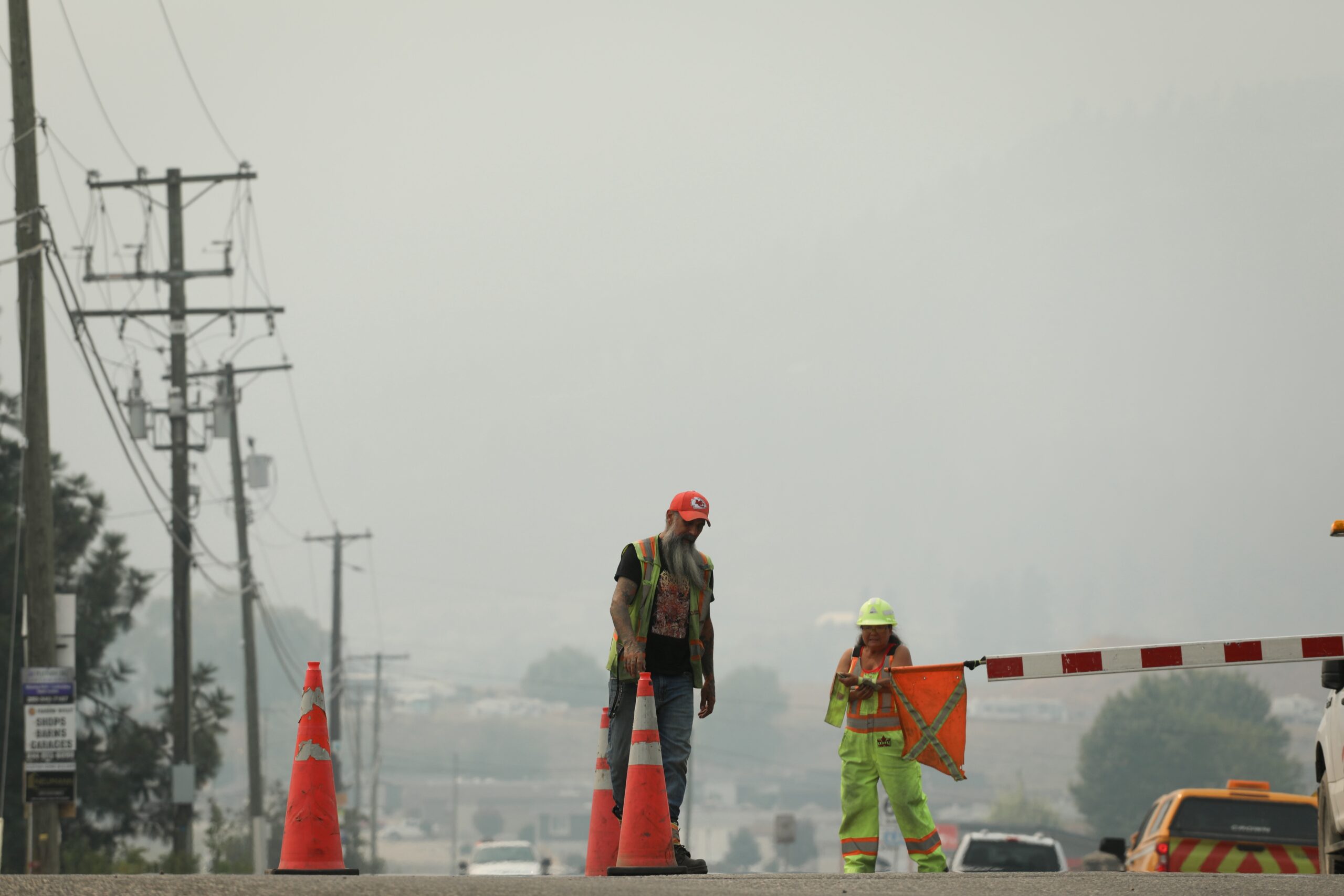
Okanagan Indian Band ‘getting stronger everyday’ amid devastating wildfire
Entire reserve has been evacuated and more than 30 people have lost homes, chief says, as blaze continues to burn as of Thursday
-
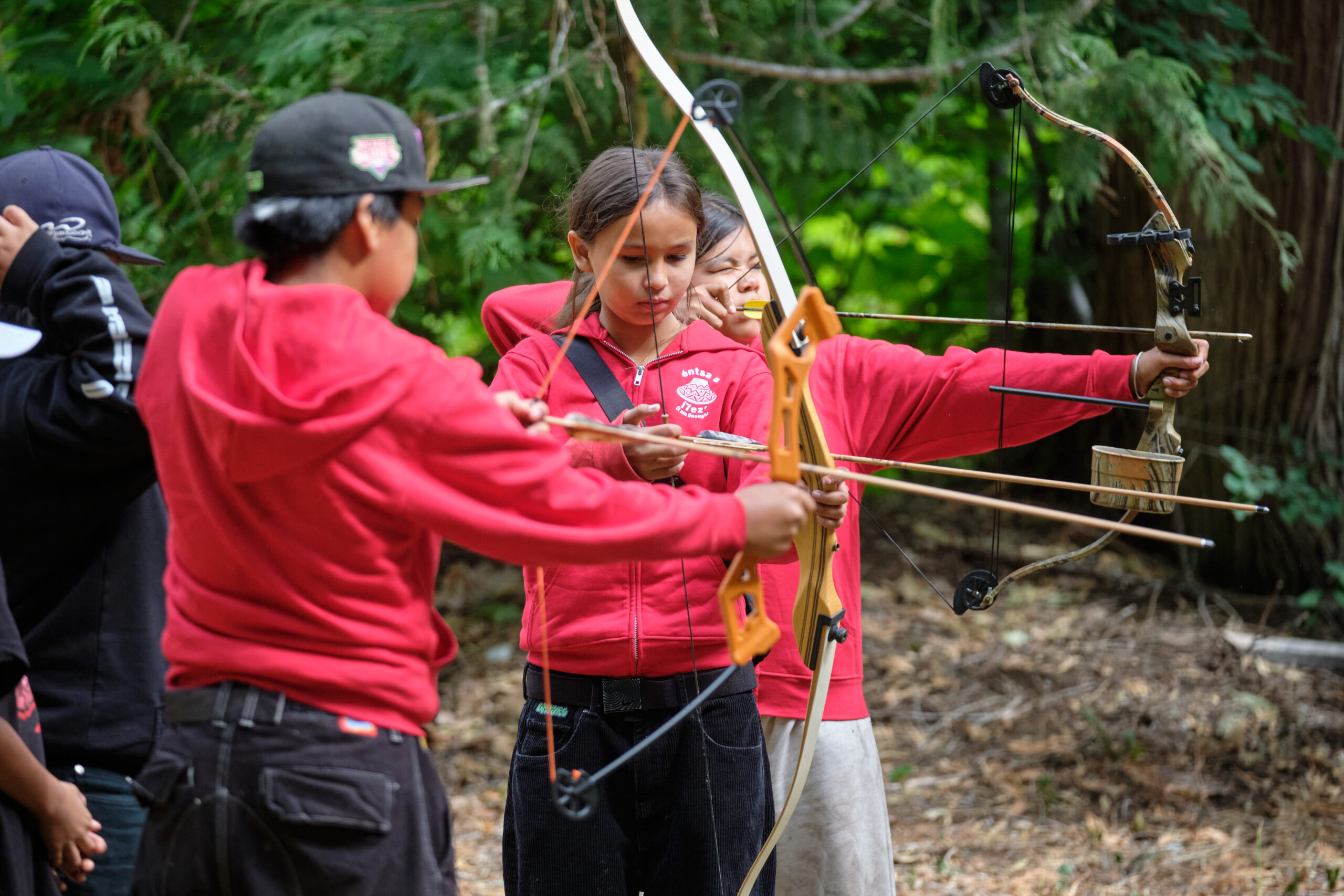
Interior Salish culture camps create ‘a safe haven’ during provincial wildfires
Organizers move ahead with caution, connecting young people with land-based teachings, healing and kinship