26 Indigenous governing bodies are reclaiming authority over child welfare
Leaders dig into Bill C-92 at AFN virtual gathering.

Leaders from across Canada recently gathered to talk about Indigenous child and family wellbeing, and the implementation of the Act respecting First Nations, Inuit and Métis children, youth and families, also known as Bill C-92.
“This legislation ensures that First Nations laws are paramount, so we can focus on prevention, as opposed to apprehension,” says Perry Bellegarde, National Chief of the Assembly of First Nations (AFN), in a welcome letter to those participating in the virtual gathering on Jan. 19.
Since the Act came into force, “there has been significant effort by First Nations across Canada to take back authority for child and family services,” says University of British Columbia law professor Mary Ellen Turpel-Lafond, who broke down the Act’s key principles in her keynote presentation.
This was the first of five virtual leadership gatherings focused on the Act — which came into force on Jan. 1, 2020 — to be hosted by the AFN.
Over the course of the series, attendees can expect to “hear presentations and updates about the Act and its implementation, learn about tools and resources for First Nations leadership implementing the Act, and discuss the changes that will come with implementation,” says Bellegarde.
‘We are in a moment of change’
The Act was co-developed with Indigenous peoples, provinces and territories to reduce the overrepresentation of Indigenous children and youth in care, according to the Government of Canada.
“We are in a moment of change,” says Turpel-Lafond, who served as B.C.’s Representative for Children and Youth from 2006-2016.

Under the Act, there are two options for Nations to exercise their jurisdiction over child and family services, according to the Government of Canada.
Nations can give notice of their intent to exercise their jurisdiction to the Minister of Indigenous Services and relevant provincial or territorial governments. In this case, the Indigenous governing body’s laws on child and family services would “not prevail over federal, provincial and territorial laws.”
Or Nations can request a “tripartite coordination agreement with Indigenous Services Canada and relevant provincial or territorial governments.”
In the latter case, if parties can reach an agreement within 12 months “or reasonable efforts to reach an agreement were made” during that year — “including use of alternative dispute resolution mechanism” — the Indigenous governing body would exercise its jurisdiction and its laws on child and family services would “prevail over federal, provincial and territorial laws.”
As of Dec. 23, 2020, Indigenous Services Canada (ISC) had “received requests and notices to exercise jurisdiction under the Act from 26 Indigenous governing bodies, representing 64 Indigenous groups and communities,” according to an ISC spokesperson.
Nine Nations have sent notice of their intent to exercise their jurisdiction while 17 Nations have requested coordination agreements.
Reframing ‘the best interests of the child’
Not only does the Act create pathways to self-determination for nations working to reclaim jurisdiction over child and family services, but Turpel Lafond says it also “reframes’’ the best interests of the child — a key concept in Canada’s child welfare system.
“There’s a concept or doctrine in the provincial child welfare system to remove the kids, and to say it’s not in the best interest of First Nations kids to be with their families.”
Under the new legislation, the best interests of the child are reframed to include the principles of the United Nations Declaration on the Rights of Indigenous People, she says.
“We know [that UNDRIP] has very important protections and provisions,” she says, pointing to Article 8 of the declaration, which calls on the state to “provide effective mechanisms” to prevent “any form of forced assimilation.”
“The best interest is no longer about the removal,” says Turpel-Lafond. ”The best interest is about keeping children with community.”
The next virtual gathering in AFN’s series will be on Feb. 9, with a continued focus on navigating Indigenous child and family services legislation. Anyone can register to attend and there is no cost.
Anna McKenzie is a child welfare reporter for IndigiNews. You can follow her work here, or reach her via email: anna@indiginews.com
Author
We live in a media ecosystem that thrives on misinformation. Big Tech and AI companies are consuming the work of real human beings and Canadian news has been banned on Facebook and Instagram.

And yet, I have hope for journalism because of the work we’re doing at IndigiNews.
At IndigiNews, we embody tâpwêwin — the Cree value of integrity and responsibility in truth-telling. We are committed to our independent, Indigenous-led newsroom rooted in community, accountability, and relationality. We believe storytelling is a sacred fire that connects our pasts, presents, and futures through the storytellers in our Storytelling Lodge. IndigiNews creates space for Indigenous journalists, storytellers, Knowledge Keepers, and communities to gather, learn, and share stories that matter.
As a registered charity, we are building a fire that allows our work not just to ignite but to thrive. Rather than relying on advertising or corporate acquisition, IndigiNews is sustained by people like you who believe Indigenous stories are important for the future of our communities.
Your support is making a real difference.
Our community of supporters, our Firekeepers, make it possible to grow our newsroom, publish award-winning journalism, train emerging Indigenous journalists through initiatives like the ReFocus Photojournalism Fellowship, and publish trustworthy stories that serve our communities across the country. Every story we publish helps fill in gaps left by mainstream media and ensures Indigenous perspectives are represented with care, accuracy and respect.
But there is still more work to do.
As the media landscape becomes more and more uncertain, community support is as necessary and essential as it’s ever been. Every new Firekeeper helps protect the independence of our newsroom and strengthens journalism that is accountable to our many and varied communities over corporations.
That’s why we’re inviting you to become a Firekeeper.
Firekeepers tend to and protect the sacred fire. Your monthly contributions directly support IndigiNews’s Storytelling Lodge, helps sustain our independent, Indigenous-led newsroom, and ensures future generations of Indigenous storytellers have the resources they need to do the work.
As a registered Canadian charity, all eligible donations receive a charitable tax receipt.
If you believe Indigenous stories matter, if you value independent journalism, and if you want to help build a strong future for Indigenous media, we invite you to join our circle of Firekeepers today.
Together, we can keep the fire burning.
— Eden Fineday, Publisher, IndigiNews
Support us nowLatest Stories
-
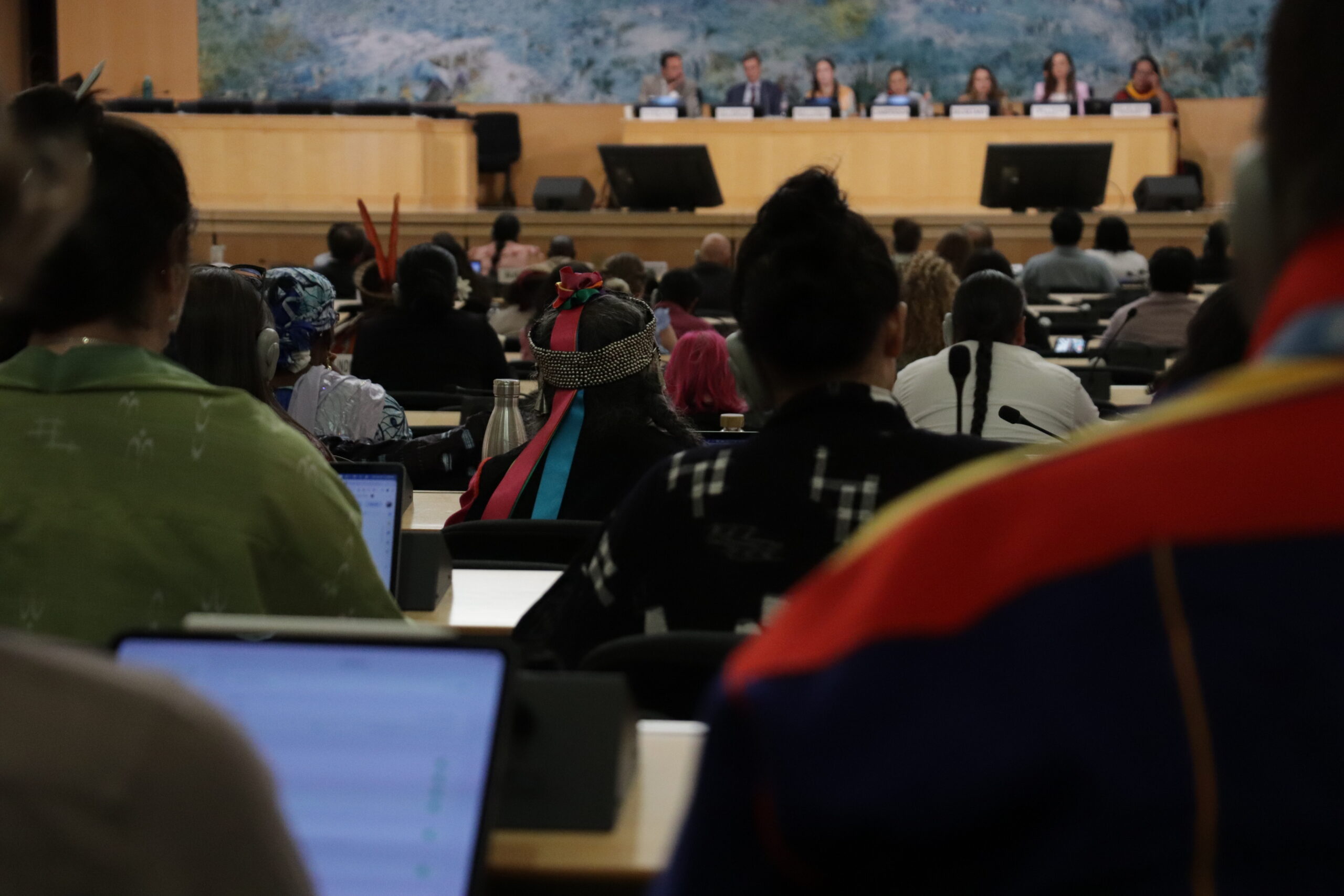
Indigenous leaders give the UN a roadmap for protecting their peoples
Amidst prayers and vows of solidarity, UN Expert Mechanism on the Rights of Indigenous Peoples ends annual meetings with demands for ‘action we’re not seeing globally’
-
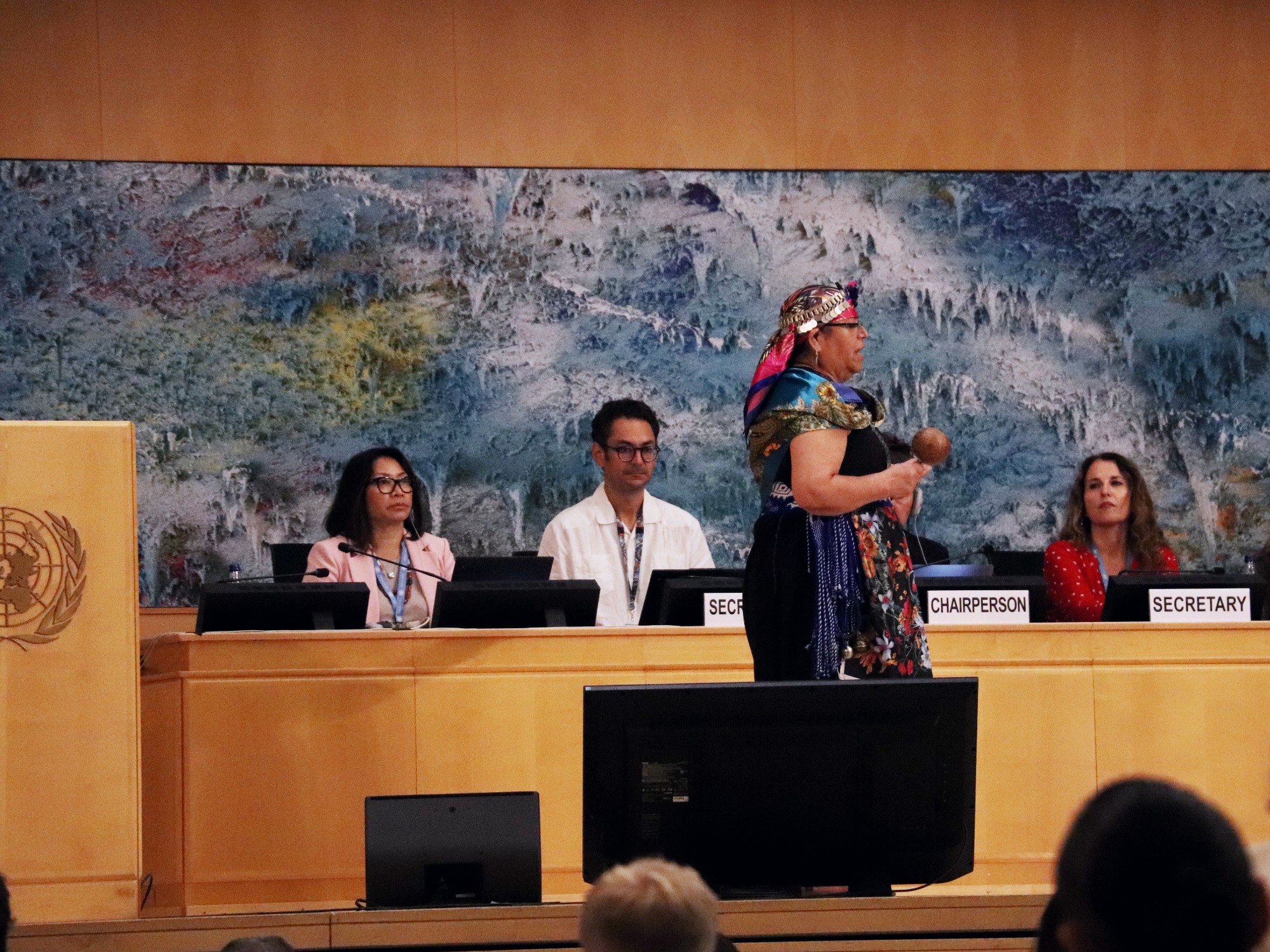
Indigenous people demand more say at the UN, as new crises hit their homelands
Indigenous nations live ‘on the frontlines’ of climate, conflict and new tech. But their voices remain sidelined in the global halls of power.