Community hangs red dresses back up after two people are filmed taking them down in Ladysmith, B.C.
Snuneymuxw Elder sees opportunity to re-educate people on the ‘love and meaning’ behind the dresses
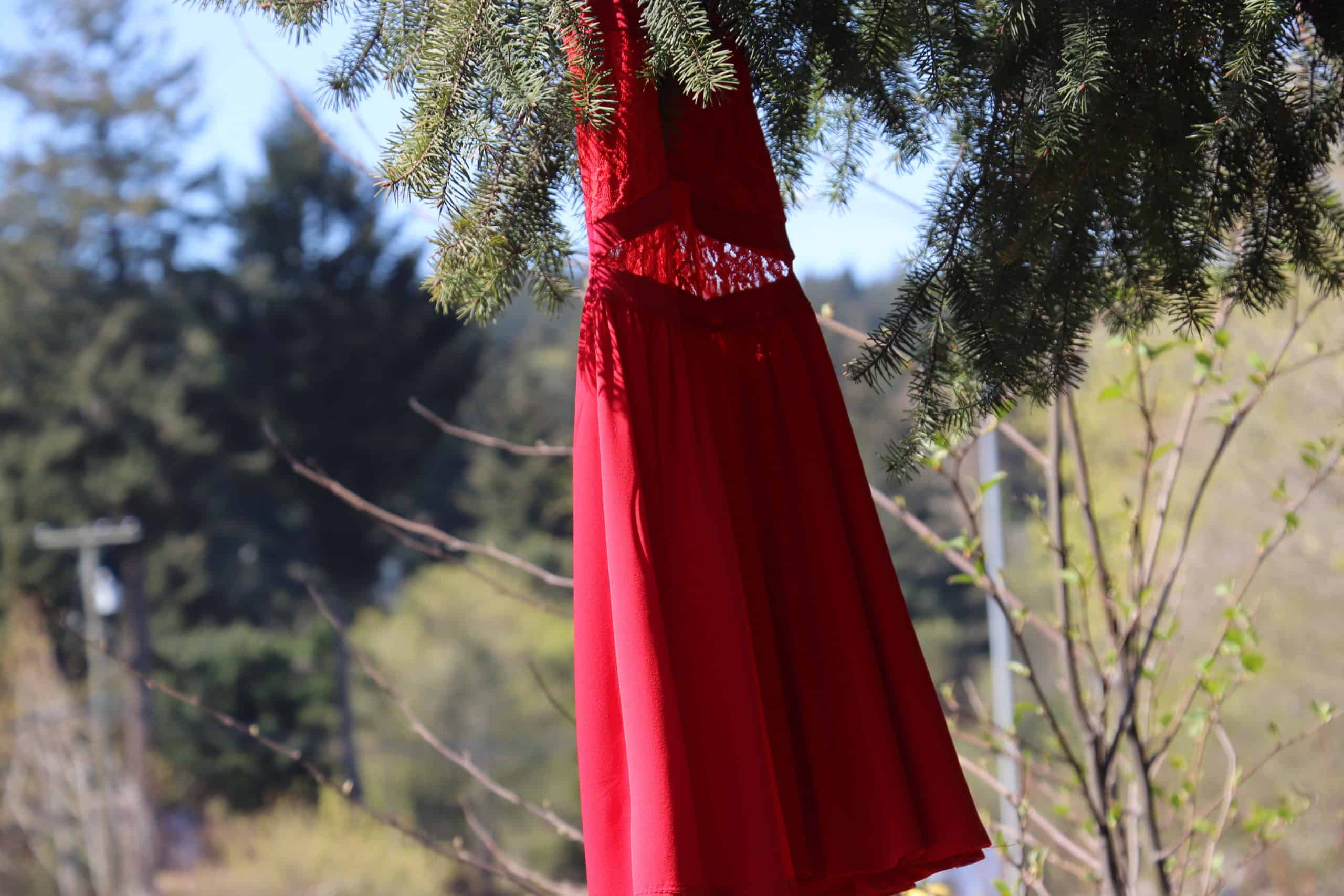
If you drive along Island highway on so-called Vancouver Island, you may catch a fleeting glimpse of a red dress hanging hauntingly in a tree.
In honour of missing and murdered Indigenous women, girls, trans and Two Spirit people (MMIWG2S), more than 100 red dresses were hung along the highway on Family Day, from Victoria all the way to Port Hardy.
Last weekend two people were caught on camera taking down some of those red dresses along the Island Highway in Ladysmith, B.C.
The video was taken on April 10 by Nanaimo-resident Tina Henderson. She says she had just finished work and was waiting for her sushi order at Sushi Wara, when she noticed two people on the opposite side of the highway.
They were using large sticks to take down red dresses and hoisting them out of sight, into the bush.
“We have to as a community, as people, stand up for our missing and murdered Indigenous women, men and children, and to me, that was like a huge violation,” says Henderson.
She says she considered driving across the highway, so she could yell and honk at them, but she figured that it was more important to capture what was happening on video.
Initially she wasn’t sure what to do with the video, so she talked with her “go-to” activist friend, Stephanie Goudie, who posted it on Facebook.
The use of the red dress to honour MMIWG2S was originally inspired by the REDress Project, which was initiated by Anishnaabe artist Jaime Black as an “aesthetic response to this critical national issue”, according to Black’s website.
The video has prompted anger, sadness and outrage in the community.
Roxanne Harris, Chief of the Stz’uminus First Nation, says she was “shocked” and “disheartened” when the video clip was brought to her attention. After viewing it, she says she called the mayor of Ladysmith, Aaron Stone.

“We have a good working relationship,” she says. “His council, the Ladysmith town council, and our Chief and Council from Stz’uminus are going to gather [on Saturday] to put red dresses up where those guys took them down.”
Harris says that other community members are also lending a hand, including the Ladysmith Fire Department and the people behind the Ladysmith Festival of Lights.
“We are working together to try and remedy the situation,” says Harris, adding that people who want to contribute can drop off red dresses at Ladysmith City Hall, in anticipation of May 5, which is recognized nationally as Red Dress Day.
Snuneymuxw Elder Yvonne Rigsby-Jones, who helped to hang the red dresses, says this is an opportunity to re-educate the general public about what the dresses represent.
“Those red dresses are hung in memory of people,” she says. “There’s love and meaning behind them.
“We don’t know why those men took those dresses down so they need to know what they signified,” says Rigsby-Jones, who is the former executive director of Tsow-Tun Le Lum Society.

According to an oft-cited report published by the RCMP in 2014, there are 1,181 police-recorded homicides and unresolved cases of Indigenous women in Canada.
Rigsby-Jones believes the number is much higher.
In June 2019, a two-volume report released by the National Inquiry into Missing and Murdered Indigenous Women and Girls produced 231 calls for justice.
The report stems from a series of cross-country public hearings and evidence gathering, including testimonies shared over two years from “2,380 family members, survivors of violence, experts and Knowledge Keepers,” according to the inquiry.
One of the inquiry’s recommendations was for police services to put together a national strategy “to ensure consistency in reporting mechanisms for reporting missing Indigenous women, girls, and 2SLGBTQQIA people,” and to implement a national database.
The report also calls for a special investigation into failures to investigate and police misconduct.
Rigsby-Jones is currently working with the Indian Residential School Survivors Society, where she offers counselling support to individuals and families.
“To hear from families that services aren’t protecting them is devastatingly sad and wrong,” she says.
Harris says that the plan this weekend is not simply to replace the dresses that were taken down, but to extend their reach, hanging dresses from Ladysmith all the way to Stz’uminus territory.
“We will be making a big statement.”
Author
We live in a media ecosystem that thrives on misinformation. Big Tech and AI companies are consuming the work of real human beings and Canadian news has been banned on Facebook and Instagram.
And yet, I have hope for journalism because of the work we’re doing at IndigiNews.
At IndigiNews, we embody tâpwêwin — the Cree value of integrity and responsibility in truth-telling. We are committed to our independent, Indigenous-led newsroom rooted in community, accountability, and relationality. We believe storytelling is a sacred fire that connects our pasts, presents, and futures through the storytellers in our Storytelling Lodge. IndigiNews creates space for Indigenous journalists, storytellers, Knowledge Keepers, and communities to gather, learn, and share stories that matter.
As a registered charity, we are building a fire that allows our work not just to ignite but to thrive. Rather than relying on advertising or corporate acquisition, IndigiNews is sustained by people like you who believe Indigenous stories are important for the future of our communities.
Your support is making a real difference.
Our community of supporters, our Firekeepers, make it possible to grow our newsroom, publish award-winning journalism, train emerging Indigenous journalists through initiatives like the ReFocus Photojournalism Fellowship, and publish trustworthy stories that serve our communities across the country. Every story we publish helps fill in gaps left by mainstream media and ensures Indigenous perspectives are represented with care, accuracy and respect.
But there is still more work to do.
As the media landscape becomes more and more uncertain, community support is as necessary and essential as it’s ever been. Every new Firekeeper helps protect the independence of our newsroom and strengthens journalism that is accountable to our many and varied communities over corporations.
That’s why we’re inviting you to become a Firekeeper.
Firekeepers tend to and protect the sacred fire. Your monthly contributions directly support IndigiNews’s Storytelling Lodge, helps sustain our independent, Indigenous-led newsroom, and ensures future generations of Indigenous storytellers have the resources they need to do the work.
As a registered Canadian charity, all eligible donations receive a charitable tax receipt.
If you believe Indigenous stories matter, if you value independent journalism, and if you want to help build a strong future for Indigenous media, we invite you to join our circle of Firekeepers today.
Together, we can keep the fire burning.
— Eden Fineday, Publisher, IndigiNews
Support us nowLatest Stories
-
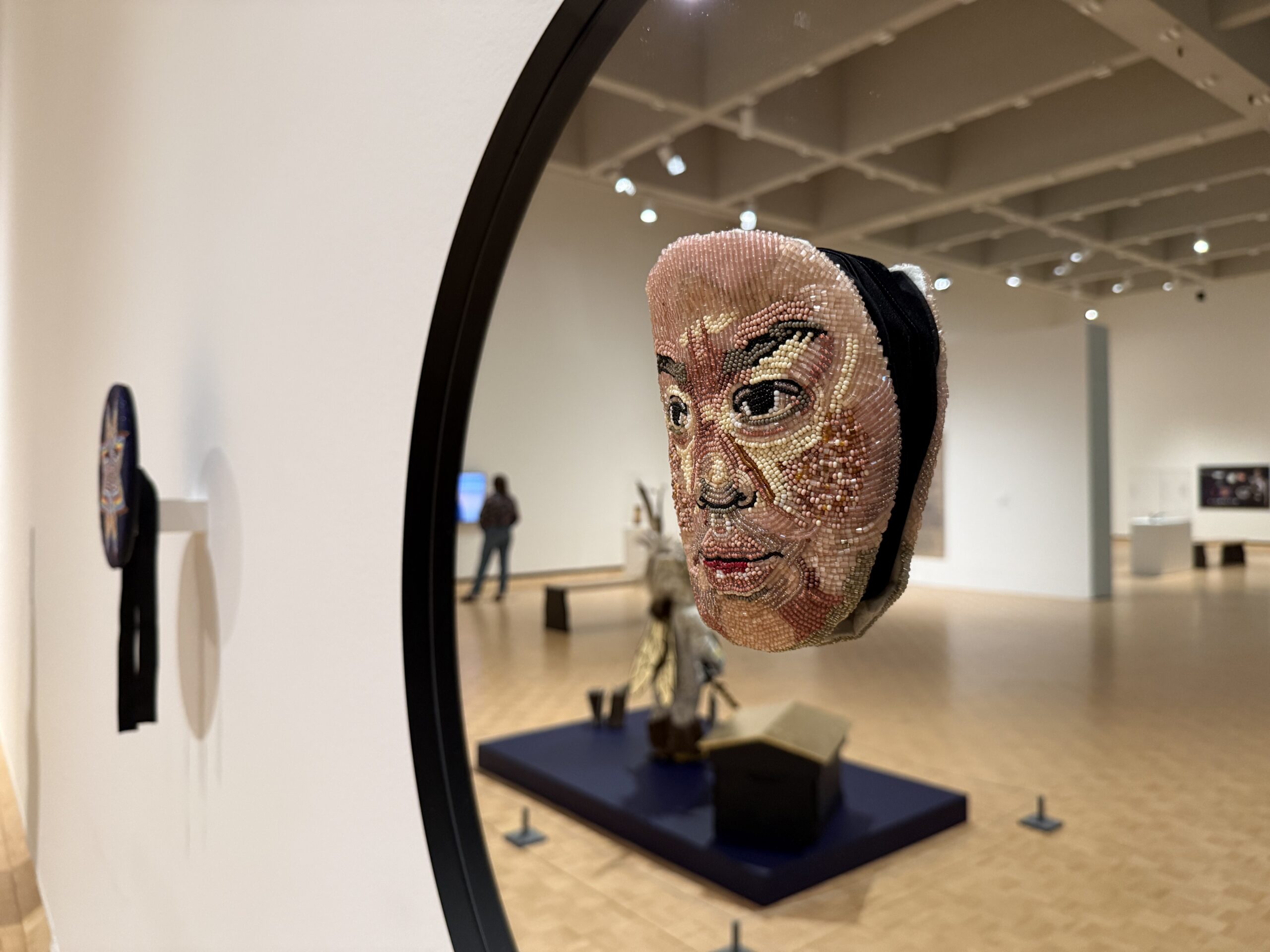
‘Love Medicine’ exhibition celebrates Two Spirit and Indigiqueer artists
Curated by Métis art historian Michelle McGeough, 22 Indigenous 2SLGBTQIA+ artists explore the idea of love as healing, belonging — and resistance — in a Oskana kâ-asastêki (Regina) gallery
-

‘Rhythm crafted for the human voice’: Poet kit-xgwélemc kennedy wins an Indigenous Voices Award
Member of St’uxwtéws Secwépemc Nation recognized in unpublished poetry category — following in his wordsmith mom’s footsteps