In photos: Snuneymuxw women teach the art of wool weaving
At a recently-opened learning centre, community members craft intricate designs with the help of experienced mentors


On a cool November evening, a group of six students are gathered at the Snuneymuxw Learning Academy to learn the art of Coast Salish wool weaving.
The quiet darkness of outside quickly dissipates when entering the bright classroom filled with conversation and laughter. There are looms of varying sizes, and the students eagerly return to their individual weaving projects.
Located on the unceded territory of the Snuneymuxw First Nation, the learning academy was once an elementary school. Now, since reopening earlier this year, it’s a hub for engaging with the Snuneymuxw way of life: the Hul’qumi’num language, songs, traditional medicine making, cedar weaving and — tonight — wool weaving.

This is the space that Chenoa Point and her aunt Stephanie Thomas have curated to teach their Snuneymuxw kin and Coast Salish relatives the practice of weaving. This weekly class, which started back in October, is generations in the making. The sessions quickly filled up and Point and Thomas hope it will be the first of many to be hosted at the centre.
Point explains that the practice of traditional weaving was almost lost during colonization. However, revitalization efforts by xʷməθkʷəy̓əm (Musqueam) people in the 1980s kept the practice alive — and crossed the waters to Snuneymuxw by way of the late Margaret Pointe, Stephanie’s sister.

The original weaving process included washing, separating, teasing, and carting the wool, followed by spinning. Before European contact, a spindle whorl was used to spin the wool.
Now, Point and Thomas guide their students to spin the wool using a wooden table and spinner, with a foot pedal.

“When we first started weaving, I wanted to see these blankets back in our Big House, ” says Thomas, whose traditional name is Naalthwiik.
“The first thing I did was a speaker blanket for someone to use in the Big House. My goal is to have as many of these as I can make for our families.”
Thomas now sees her work, and the work of her students, when she enters the Big House. Kin rest on woven sitting blankets, speakers are adorned with woven blankets that sit like sashes over their shoulders. There are also lap blankets, shawls, drum bags, purses, headbands and belted skirts.


Thomas speaks softly about her craft, yet the impact she’s made through weaving has created waves all over the world. She has shared her knowledge at conferences in Hawaii and New Zealand. One of her blankets was even gifted to the Dalai Lama during a visit to xʷməθkʷəy̓əm in 2014.

Once used as currency and a signifier of wealth, Coast Salish people once raised woolly dogs, whose wool was utilized for their respective weaving projects.
Snuneymuxw people and surrounding communities raised their own woolly dogs, or used mountain goat hair originally. However the dogs became extinct, and other traditional types of wool are harder to come by, so colourful pieces of yarn are now often used.

When asked how the weaving process makes her feel, Point says it gives her a sense of tranquillity.
“It’s an honour to be able to teach our people so that the tradition gets carried on … for the people who are learning today for future generations,” says Point.
“Like sitting by the ocean, there’s a sense of connection, a sense of calm. I feel like I am at peace with the Ancestors.”
Editor’s note: This is a corrected story. An earlier version incorrectly stated that Margaret Pointe was Stephanie’s mother. We apologize for the error.
Author
We live in a media ecosystem that thrives on misinformation. Big Tech and AI companies are consuming the work of real human beings and Canadian news has been banned on Facebook and Instagram.
And yet, I have hope for journalism because of the work we’re doing at IndigiNews.
At IndigiNews, we embody tâpwêwin — the Cree value of integrity and responsibility in truth-telling. We are committed to our independent, Indigenous-led newsroom rooted in community, accountability, and relationality. We believe storytelling is a sacred fire that connects our pasts, presents, and futures through the storytellers in our Storytelling Lodge. IndigiNews creates space for Indigenous journalists, storytellers, Knowledge Keepers, and communities to gather, learn, and share stories that matter.
As a registered charity, we are building a fire that allows our work not just to ignite but to thrive. Rather than relying on advertising or corporate acquisition, IndigiNews is sustained by people like you who believe Indigenous stories are important for the future of our communities.
Your support is making a real difference.
Our community of supporters, our Firekeepers, make it possible to grow our newsroom, publish award-winning journalism, train emerging Indigenous journalists through initiatives like the ReFocus Photojournalism Fellowship, and publish trustworthy stories that serve our communities across the country. Every story we publish helps fill in gaps left by mainstream media and ensures Indigenous perspectives are represented with care, accuracy and respect.
But there is still more work to do.
As the media landscape becomes more and more uncertain, community support is as necessary and essential as it’s ever been. Every new Firekeeper helps protect the independence of our newsroom and strengthens journalism that is accountable to our many and varied communities over corporations.
That’s why we’re inviting you to become a Firekeeper.
Firekeepers tend to and protect the sacred fire. Your monthly contributions directly support IndigiNews’s Storytelling Lodge, helps sustain our independent, Indigenous-led newsroom, and ensures future generations of Indigenous storytellers have the resources they need to do the work.
As a registered Canadian charity, all eligible donations receive a charitable tax receipt.
If you believe Indigenous stories matter, if you value independent journalism, and if you want to help build a strong future for Indigenous media, we invite you to join our circle of Firekeepers today.
Together, we can keep the fire burning.
— Eden Fineday, Publisher, IndigiNews
Support us nowLatest Stories
-
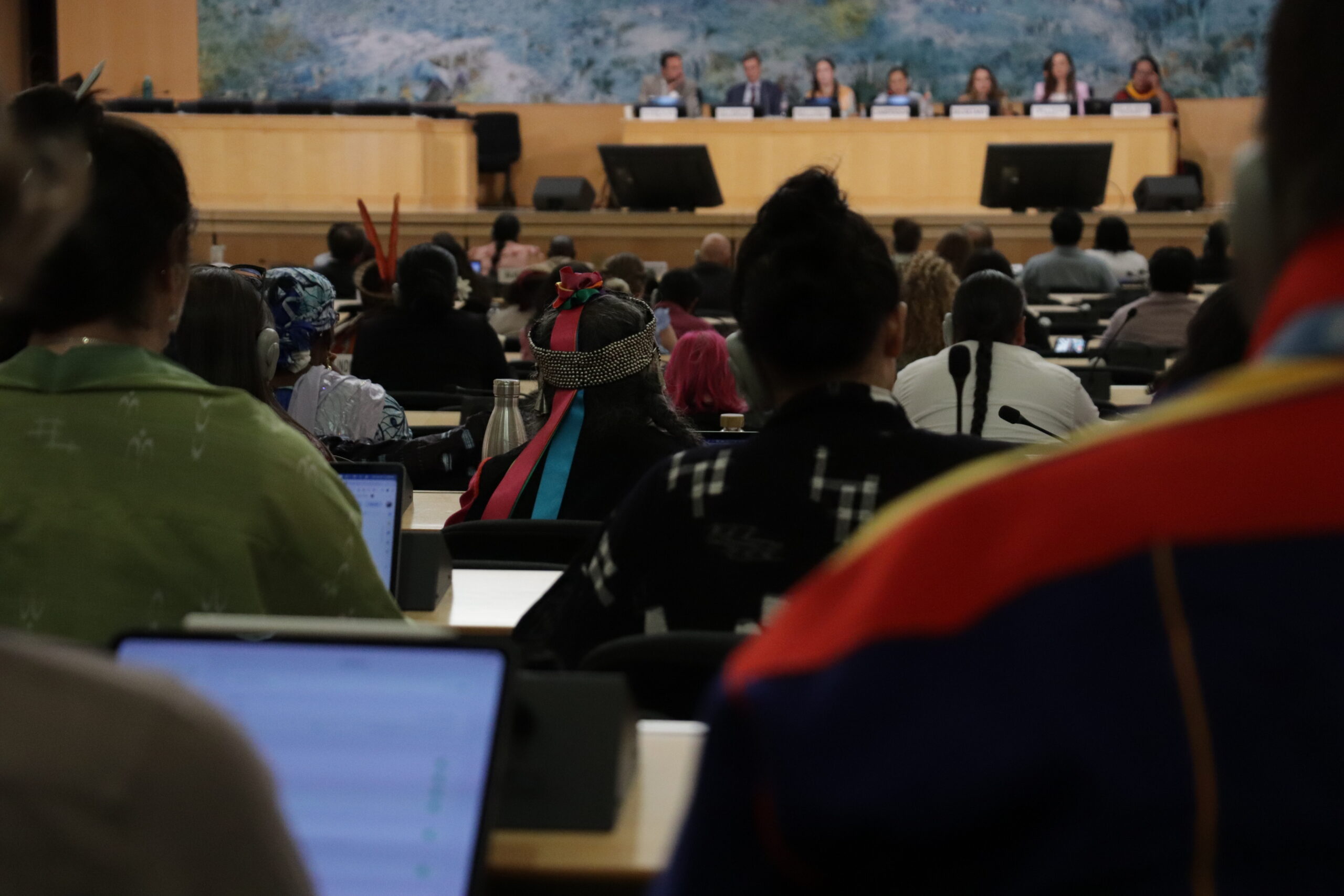
Indigenous leaders give the UN a roadmap for protecting their peoples
Amidst prayers and vows of solidarity, UN Expert Mechanism on the Rights of Indigenous Peoples ends annual meetings with demands for ‘action we’re not seeing globally’
-
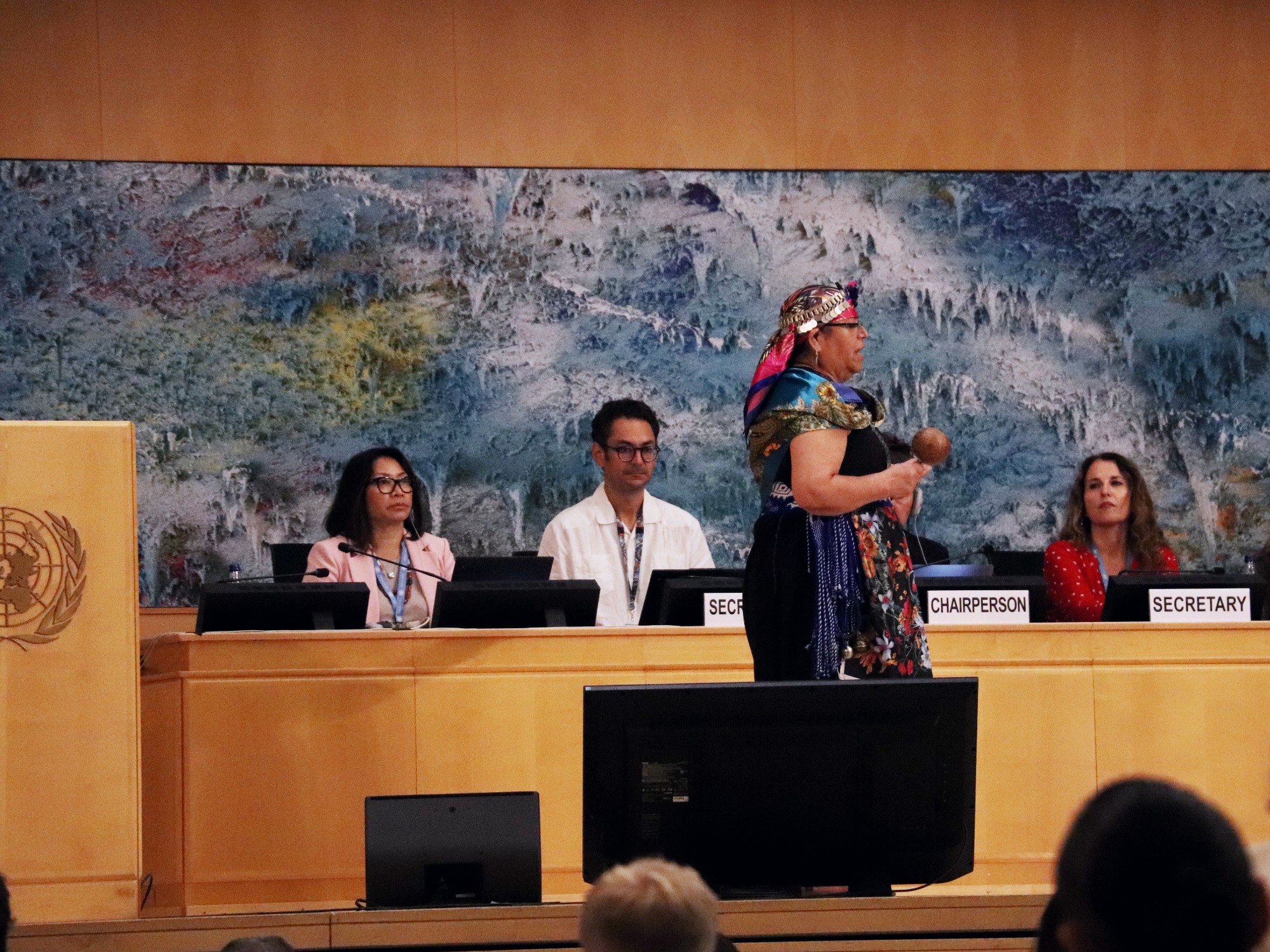
Indigenous people demand more say at the UN, as new crises hit their homelands
Indigenous nations live ‘on the frontlines’ of climate, conflict and new tech. But their voices remain sidelined in the global halls of power.