Inquest continues into ‘Winnipeg’ police shooting death of Eishia Hudson, 16
Non-adversarial probe of teen’s death cannot assign blame, but family and First Nations hope it will recommend meaningful ways to prevent similar police shootings
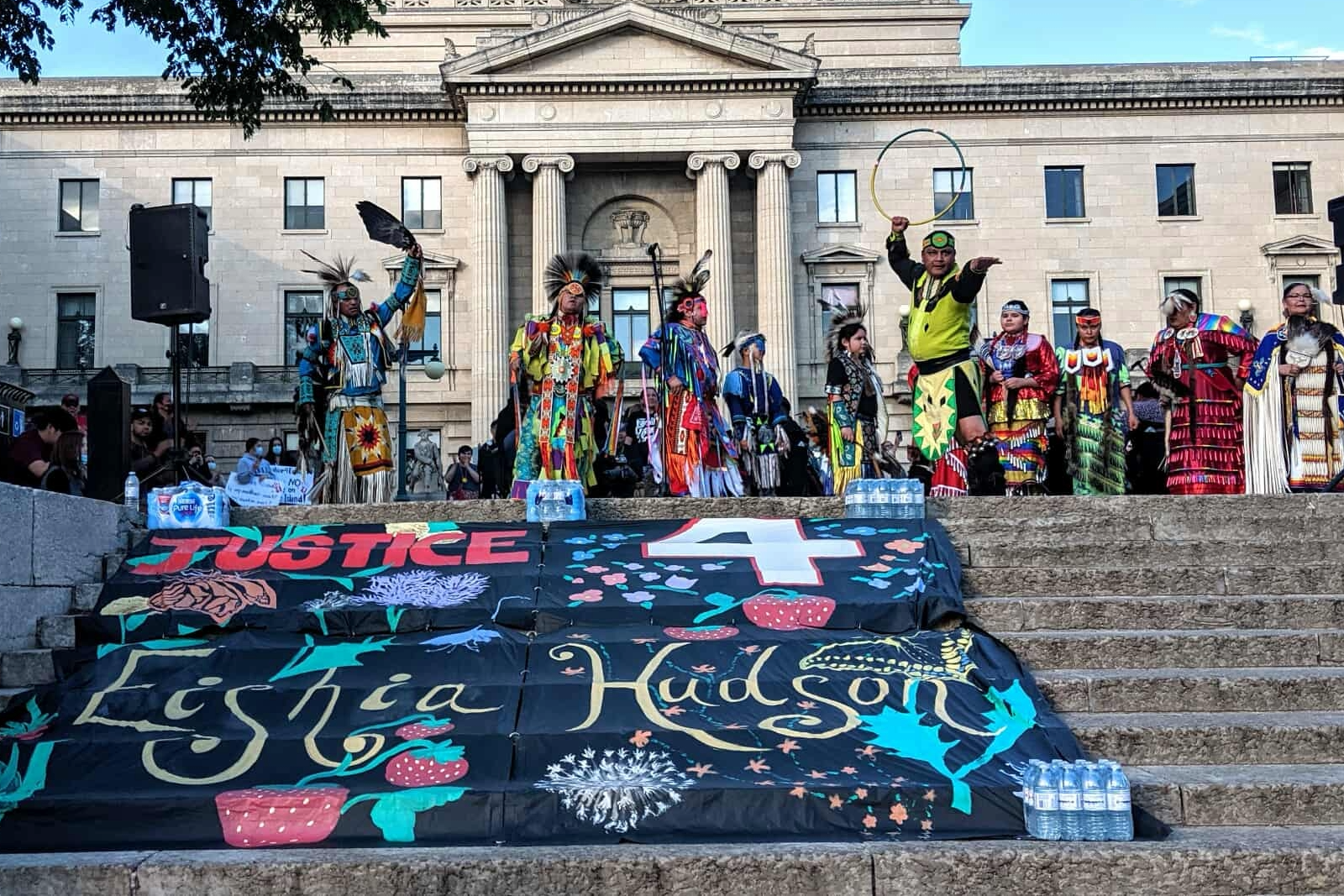

Holding up an eagle feather, the father of Eishia Hudson — a teenage girl killed by “Winnipeg” police officers six years ago — remembered his daughter as “loved beyond words, missed beyond measure.”
William Hudson, the late teen’s father, gave an emotional opening statement earlier this month at the start of an inquest into the circumstances of her 2020 shooting.
The inquest launched with ceremonial protocols and drumming.
Hudson spoke of his daughter’s impact, pausing at times to compose himself from emotionally breaking down during his appearance.
“The dreams she would’ve chased in her life, she deserved to live,” he said, describing his daughter as kind, athletic, full of energy, and someone who made others laugh.
He said losing her “changed us forever,” leaving “an empty space that cannot be filled.”
“Our children deserve safety, love and a future,” he said. “Although her time was far too short, her impact was not.”
This week, nearly six years after 16-year-old Hudson was shot and killed by a Winnipeg Police Service officer, her shooter publicly testified about the incident for the first time.
An inquest is underway into the death of the teenage girl, an Ojibwe member of Berens River First Nation.

An earlier police watchdog report had declined to recommend criminal charges against the officer, Const. Kyle Pradinuk, setting off community protests and demands for an inquest.
Pradinuk shot the teen on April 8, 2020 after a liquor store robbery and high-speed chase in a stolen Jeep, which Hudson drove with four other passengers, all of them youth.
The inquest heard how Pradinuk refused requests to be interviewed by “Manitoba’s” Independent Investigation Unit (IIU) — an agency that probes serious incidents involving police officers — eventually providing the unit with only notes four days after the shooting.
The province’s Police Service Act does not force any officer to participate in investigations by the IIU, which eventually cleared Pradinuk of any wrongdoing.
Pradinuk told the inquest that the stolen Jeep was still moving slowly after it crashed into a Ford F-150 truck and veered onto a median near the intersection of Winnipeg’s Lagimodiere Boulevard and Fermor Avenue.
One of the Jeep’s passengers told the inquest the vehicle made a “grinding” sound when it landed on the boulevard and stopped.
Pradinuk fired his gun twice as he approached the Jeep driver’s window, with his second bullet hitting Hudson’s left shoulder and travelling downwards into her spine.
Pradinuk testified his actions were justified to protect the “safety of the police.”
“She was willing to potentially risk safety of the police and people within the Jeep,” he testified.
An ambulance took Hudson to the Health Sciences Centre emergency department, where she died that day.
Dad hopes Youth seen as ‘precious and protected’
The inquest, which launched on Feb. 2, is examining what happened that day, but cannot assign blame. Instead, it’s looking at any systemic issues or circumstances at play in Hudson’s death and can make recommendations.
Hudson was not the only First Nations person killed by Winnipeg police that month in 2020.
Within a ten-day span that April, the Winnipeg Police Service killed three First Nations people, including Hudson.
Eleven hours after her death, a WPS officer fatally shot Jason Collins, a father of three. Then on April 18, officers shot Stewart Andrews, a 22-year-old father.
Because there are no publicly available government data tracking fatalities by police, several attempts have been made to collect such data — including CBC News’ Deadly Force database and Tracking In(Justice), launched by academics two years ago.
As his family grieves their loss of their youngest of five children, her father believes her death “created and will continue to create change for other Indigenous Youth.”
His daughter’s story and spirit “stand as a reminder for our young people,” Hudson told the inquest, that young people “matter, that their lives be precious and protected.”
The teenage victim’s sister Mary-Ann read a statement on behalf of their mother, Christie Zebrasky, who described her late daughter as “a tomboy from an early age” who was “always beautiful, always smiling.”
“It’s been six years since my baby brushed her teeth,” Zebrasky’s statement read. “She told me she’d be back right away.
“Eishia wasn’t violent or aggressive or misbehaved — she was a teenager. Eishia never had a criminal record, she wasn’t involved in the justice system either.”
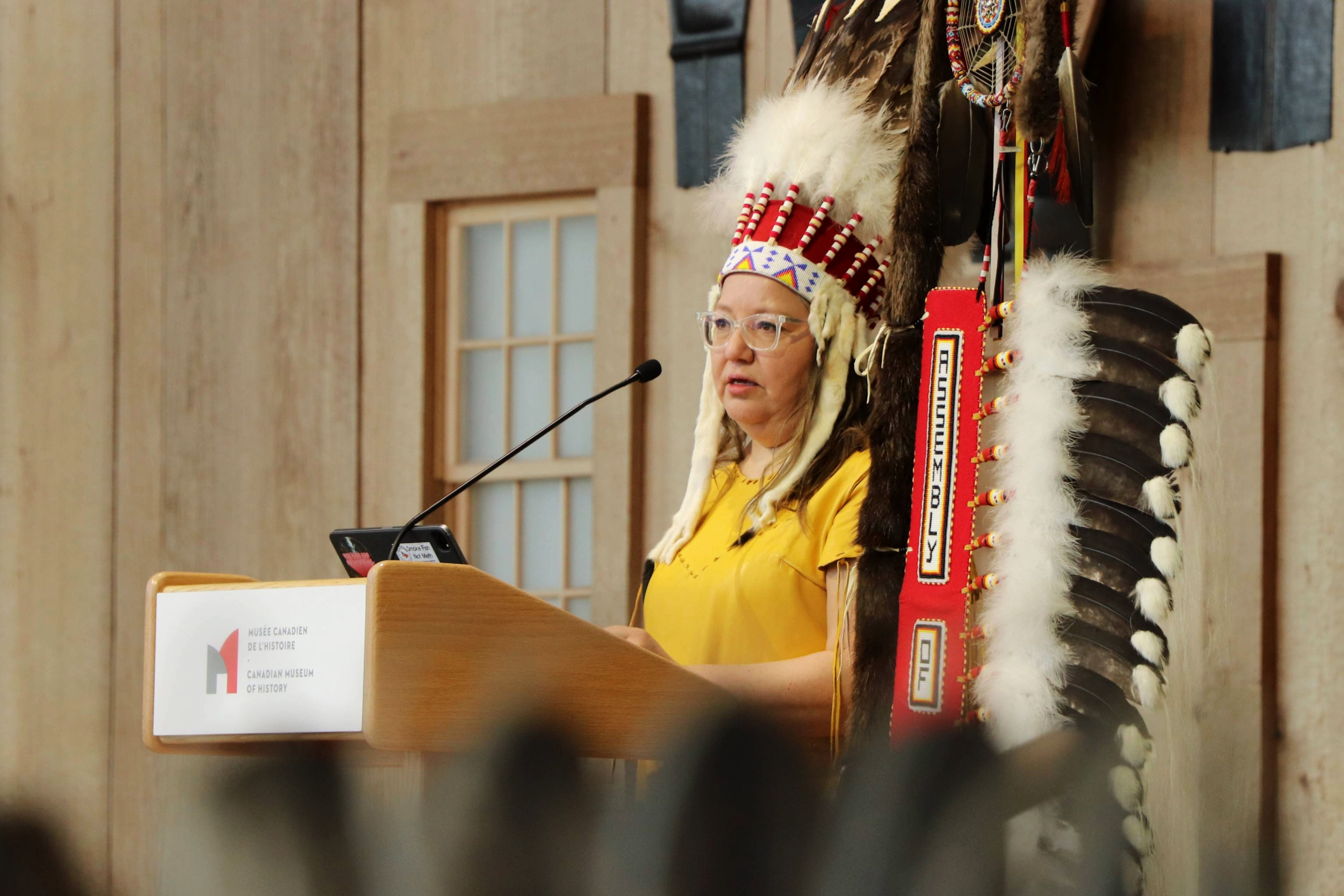
In a press release, the Assembly of Manitoba Chiefs said Hudson’s family “asked for privacy” during the inquiry into her death.
“We are here to ensure her life is remembered with dignity,” the organization stated, “and that this process is carried out with the care and respect she deserved.”
Police contact ‘unnecessary and punitive’
A 2023 report by the Manitoba Advocate for Children and Youth (MACY) said Hudson had previously been in the foster system, and that both she and her father were impacted by his mother’s traumatic experiences in day school.
The MACY report concluded that Hudson was easily influenced by others, but thrived when she had consistent and specialized help at school and from government agencies; however, it found those supports had tapered off during the COVID-19 pandemic.
One of the advocate’s findings was “the potential negative consequences of police contact indicate that unnecessary and punitive contact must be mitigated when in the best interests of children and youth.”
Since 2020, her family has rallied and pushed for a public inquest to scrutinize her death, which caused widespread public outcry from the Indigenous community — demanding systemic changes.

The grassroots organization Red River Echoes said they saw “a lot more allies” starting to “walk the talk” and Indigenous folks “providing kinship support” to the Hudson family.
“There was a real change in perspective that happened,” said Chantale Garand, a member of the group in a phone call with IndigiNews.
“You can notice it in the feeling at these events as well the amount of people that attended these events — because that was also the same time period that the Winnipeg Police killed three people.”
They added that the community’s support for Hudson’s family “was unwavering.”
“The strength of these vigils and round dances that were held was quite strong and consistent,” they said.
According to Kyra Wilson, Grand Chief of the Assembly of Manitoba Chiefs, it’s essential that the inquest be “grounded in respect, care, and truth” — and that most importantly it should “center” the victim, Hudson, “as a young person whose life mattered.”
“It is essential that this process be conducted with dignity, cultural awareness,” she said, “and a clear focus on the systemic conditions that continue to place Indigenous lives at risk.”
Teen victim’s last words: ‘We’re done’
Wiebe issued a publication ban giving anonymity to the three witnesses who were with Hudson at the time of her shooting, because they were all minors at the time.
When WPS counsel Kimberly Carswell addressed Hudson’s peers during the inquest, her questions focused on pushing the witnesses to agree with allegations they had been drinking alcohol and using cannabis and cocaine that day.
The first witness, a young Indigenous man who appeared in ankle shackles, remembered waking up at the police station, and discovering Hudson had died from his lawyer.
A second witness, Hudson’s female friend for three or four years, recounted sitting in Jeep’s middle backseat.
She noticed police were following them when they got to Lagimodiere Boulevard, after leaving Sage Creek liquor store.
“We were all saying that we’re going to get caught,” said the young woman who added she was “scared.”
The female witness said Hudson lost control of the Jeep, which then got stuck on the median curb facing back in the direction they had just driven from.
She recalled Hudson’s words: “We’re done.”
The female witness described a police cruiser approaching nose-to-nose with the Jeep on the median, followed by officers “coming out of cars with batons.”
“Then literally right after that, that’s when the shots were fired,” said the witness.
“I heard two shots.”
She agreed to a statement of facts that police were on both sides of the Jeep and hit its windows with batons on the driver and passenger side.
She said police yelled for them to “get on the ground,” before pulling her from the vehicle. She said officers shouted at her “to stop resisting” — but she asserted she wasn’t resisting.
She testified that police then piled onto her, partially blocking her from seeing the surroundings.
“I knew something was wrong because they took everyone out and they left her in the vehicle,” said the witness.
“Then I saw them drag her out of the vehicle and put her in the middle of the road, and they started giving her CPR.”
The young woman cried.
WPS counsel Carswell questioned her claim about being punched when she was in handcuffs and standing against a cruiser.
“You also indicated that you were … punched and hit during this arrest, is that correct?” Carswell asked.
“Yes,” the witness replied.
“If I were to say to you that there was video showing that there was no punching or police brutality, what do you have to say about that?” Carswell asked.
The witness disputed the lawyer’s statement, replying “there was” brutality.

‘She was a good friend’
A male witness who was also in the Jeep said he befriended Hudson ten years ago, at General Wolfe junior high school.
“She was a good friend, she’d be there for me if I needed her,” the witness testified, wearing a black t-shirt that emblazoned with “Justice for Eishia Hudson.”
“If I called her, she’d answer.”
He also recounted his memories of the car chase.
“Everybody just kind of started panicking,” he testified. “Nobody wanted to get locked up, nobody wanted to get in trouble. We’re all kind of scared at that point.”
He said Hudson drove into a cul-de-sac, turned around, and swerved around a police cruiser to flee.
“It wasn’t until closer to Lagimodiere that the police cruiser started ramming us a bit,” said the male witness.
“At that point, there wasn’t really much we could do,” he recalled. “We were already in the chase.”
After the Jeep hit a Ford F-150 truck, she lost control and their vehicle turned to face south, coming to a halt on the median.
He recalled an officer smashing the front passenger window using a baton, and seeing the other male witness being pulled out in front of him.
“Then they grabbed me, threw me out,” the male witness told the inquest.
He then remembered police officers were pulling Hudson out of the vehicle and throwing her onto the ground.
“I remember them all jumping on top of her,” he testified. “She was bleeding quite a lot from her upper chest, and she was bleeding out of her mouth, and they were still using force on her, even though she was clearly not OK.”
He became emotional on the stand, and a young woman came from the public gallery to sit with him, to comfort him as he spoke.
A support dog named Glossy — a black labrador with provincial victim services — also came to his aid.
The witness was also asked about his perception of the police.
“All I can say is that there are some good ones, and that there are some bad ones who can get away with what they want,” he responded.

‘They shouldn’t have shot her’
At the inquest, IndigiNews viewed two videos used as evidence in the IIU investigation.
Missing from the initial IIU investigation was footage from a traffic camera located at Fermor and Lagimodiere, in which the IIU report stated, (pg 2, para 4) “it was not functioning at the time of the shooting.”
One video shown in court was from the Royal Canadian Mint’s security camera.
The inquest cross-examined police asking if Hudson had actually “rammed” the police cruiser.
Sgt. Dustin Dreger admitted that the “contact wasn’t significant,” but that his partner Vincent had radio’d that their cruiser was “rammed,” which he referred to as “police lingo” used when there’s any sort of contact.
Another video played in court came from Paul Dhillon.
Dhillon, who was on this daily commute from work to home, recorded the video while idling and facing southbound at the intersection of Lagimodiere and Fermor.
His vertical video showed a police car stopping traffic from moving through the intersection and the Jeep on the median.
“The girl was trying to get away from the police and she backed up to get away,” Dhillon said.
While he couldn’t see the shooting as it happened across the intersection, he said, “I knew something bad happened right there.”
“I’ve never seen so many police vehicles,” he added. “Been living 35 years there … never seen anything like it before.”
Wiebe asked him for his opinion on how “to prevent such tragedies” in the future.
Dhillon replied, “Tragedy? Definitely.”
“It’s not like she’s holding a gun [that] she’s trying to shoot you or something. She’s panicked, she’s trying to get away from the police.”
He acknowledged a liquor store robbery did occur, but questioned the extent and scale of the police response.
”Why all those police for one person?” he asked. “In my opinion they shouldn’t have shot her.”
Tears flowed from members of Hudson’s family, as well as the teen’s friends and supporters.
Dhillon hugged Hudson’s father. They quietly shared words, and Dhillon sat with Hudson’s family.
Public outcry ‘for police to do something’
For the last six years, Pradinuk was granted anonymity by the IIU, which determined the incident as “case closed” after the Manitoba Prosecution Service advised it to not pursue charges.
The officer’s name was eventually revealed to the public at the inquiry when he took the stand.
The IIU is “independent” and arms-length of the police officially. But critics have questioned its independence because it includes current and former members of the RCMP or other police forces under the command of a civilian director.
The first six days of the inquest saw several police witnesses take the stand including Pradinuk, whose voice sounded faint.
Lawyer Dayna Steinfeld, who is counsel for the inquest itself, asked another officer who testified why police deemed it necessary “to initiate the pursuit” of the teen suspects.
That witness, Det. Sgt. Jeff Vincent, replied that around the time of the incident there had been “a lot of liquor store thefts” taking place, and the public “was getting fed up” and “taking matters into their own hands.”
“There was an outcry from the public for police to do something about these thefts that were happening,” he added.
Judge Margaret Wiebe asked all witnesses what they would recommend to prevent similar incidents in the future.
At least two of the police witnesses called for a new helicopter to be dedicated to supporting police chases of suspects.
Multiple officers agreed they would like to see WPS members wear body cameras.

Watchdog ‘should never be buddy-buddy with police’
The case has also shone a light of scrutiny on how closely police officers relate to their accountability watchdog, the IIU.
Zane Tessler, the IIU’s civilian director at the time it rejected pressing any charges over Hudson’s death, was quoted in the Jewish Post and News that initially investigators with the agency “were viewed as outsiders, an irritant” by police.
“It took a while for police officers to buy in,” he told the outlet. “To realize that the work we are doing benefits them. Now, we have a good relationship with law enforcement.”
University of Winnipeg criminal justice professor Kevin Walby told IndigiNews such statements raise troubling questions about the agency’s independence.
“I don’t think the IIU should ever seek to have a ‘good relationship’ with law enforcement,” Welby said. “They should seek the status of ‘irritant.’
“A review body should never be buddy-buddy with police.”
He alleged it could be a conflict of interest for police officers, either current and former, to be investigating other police.
“It should be a completely investigative mindset at the IIU,” he argued. “They shouldn’t be seeking to have warm relations with the WPS.”
Too often after WPS shootings, officers will say, “The officer was afraid, they can shoot whoever they want,” Walby said.
He said that justification often cites part of the Criminal Code which effectively provides immunity from charges if officers say they thought they were in danger.
“To live in a society like that, and call it a democracy,” Walby said, “when we have absolutely no say over what’s happening with these kinds of shootings — we have no say over the powers of these oversight bodies to investigate police.”
In 2021, a provincial bill was introduced to give IIU more powers to penalize officers who don’t comply with its investigators. For instance, if passed it would have required officers to hand over police notes or evidence, and participate in IIU interviews.
But the legislation was never implemented, according to CBC.
Inez Hillel, a member of Winnipeg Police Cause Harm, said changing such laws “has been a central demand” of many community and First Nations organizations at the inquest.
But the groups also recognize the inquest’s powers are very “limited.”
“The value that we see in it is bringing the story from multiple perspectives, and bringing the inconsistency of the cop stories to light … and being able to get the names of the police officers involved,” Hillel said.
“The inquest is a very limited avenue for transformation, because it doesn’t assign blame,” said Hillel.
The inquest is planned to continue until Feb. 27, with further hearing dates scheduled in April. It will also hear from MACY and a police use-of-force expert.
Editor’s note: This is a corrected story. An earlier version incorrectly identified Chantale Garand as a member of Winnipeg Police Cause Harm; in fact she is with the organization Red River Echoes. We apologize for the error.
Author

Latest Stories
-
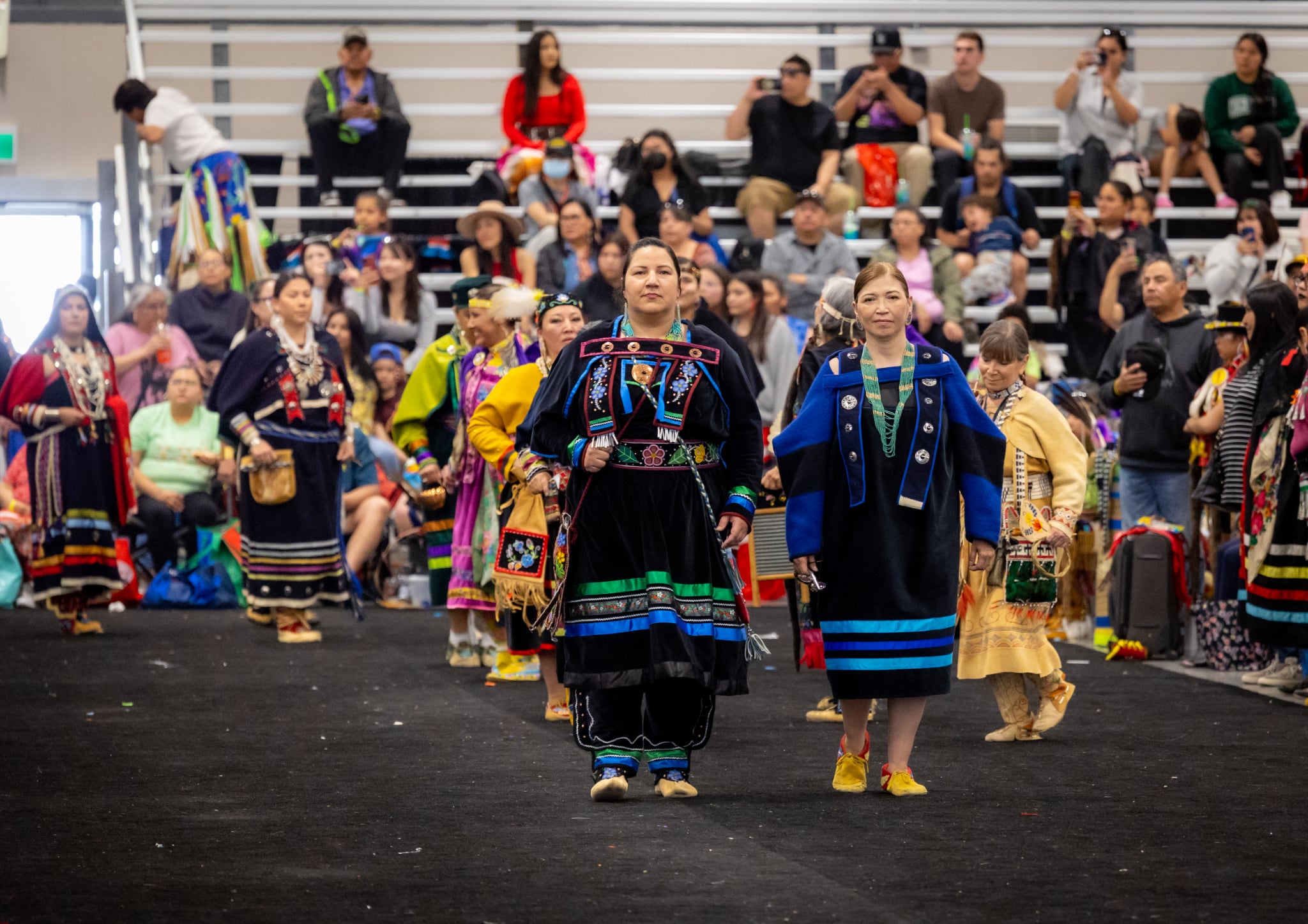
How woodland strap dress dancers are reviving a tradition on the powwow circuit
From the Great Lakes to the prairies, Anishinaabe seamstresses are bringing back the once-common ancestral regalia, with trial-and-error, sewing bees, workshops and powwow specials
-
‘Carney is at a crossroads’ with First Nations, says AFN national chief
A year after prime minister took office, Cindy Woodhouse Nepinak speaks to IndigiNews about budget cuts, clean water and industry mega-projects