Restored W̱SÁNEĆ Ethnobotany Trail connects land, language and learning
The newly revamped trail at the Horticulture Centre of the Pacific showcases the W̱SÁNEĆ language and culture through botanical education.

The W̱SÁNEĆ Ethnobotany Trail is covered in oak leaves in early December. The Garry oak trees from which they fall are an endangered species, and one of several Indigenous plants two W̱SÁNEĆ women steward with the PEPÁḴEṈ HÁUTW foundation.
The trail, marked by plant identification tags, educates visitors, students and community members about the cultural, ecological and medicinal importance of native plants and ecosystems.
“It’s kind of like a living art exhibition, or a living museum,” says Sarah Jim, who designed the plant tags through her work for PEPÁKEṈ HÁUTW̱, which means ‘blossoming place’ in SENĆOŦEN, the language of the W̱SÁNEĆ Peoples.
PEPÁḴEṈ HÁUTW̱ is a food systems foundation where native plants are restored in various locations throughout W̱SÁNEĆ homelands.
“It’s showcasing the culture, but in a way that is contemporary — a way that shows that the culture is living, like physically living in the land,” Jim says.
Jim, an artist and member of the W̱SÁNEĆ nation from the Tseycum village, used Coast Salish design elements in the plant tag drawings. Each tag includes a drawing, the plant name in SENĆOŦEN, then in Latin and English.
“Having these elements kind of established a sense of place, and it signified that these plants are important and significant to the culture,” says Jim. “[It] represented, who took care of them and who utilized them.”

Ethnobotany Trail planning
The restoration of the W̱SÁNEĆ Ethnobotany Trail is part of a larger restoration project. The trail first opened in 2009, but closed in 2012, due to nearby construction. In the last few years, work on the area has restarted.
PEPAḴIYE, the programs director for PEPÁḴEṈ HÁUTW̱, says the restoration has been a team effort. Plans for the renewal grew out of relationships the team built at the horticulture centre while delivering public presentations and co-hosting classes.
“I had done some talks [at the Horticulture Centre], and then it kind of germinated that idea again,” says PEPAḴIYE.
“Now was a better time for us to be able to focus on that with different support. To have younger generations involved with it as well, and for peoples’ world-views to change. For it to be absorbed in, in a constructive and healthy way,” she says.
This team effort includes the expertise of Elder XEṮXÁṮEN Earl Claxton Jr and the relationship-building efforts of ecosystems director, Judith Lyn Arney. PEPAḴIYE also credits the work of staff and volunteers at the Horticulture Centre.
As of this year, the forest and meadow section of the trail is open, and there are plans to connect the trail to a conservation area beyond the perimeter of the centre.

Language and land
The forest and meadow are a part of a small Garry oak grove. According to Jim, the Garry oak is one of the trees the W̱SÁNEĆ traditionally took care of with controlled burns.
“When colonizers came here, it was a fallacy that this was an untouched paradise. It was actually the work of Indigenous People who looked after the land and took care of it through technology,” she says.
PEPAḴIYE, a SENĆOŦEN speaker from W̱JOȽEȽP, contributed language and plant knowledge to the project.
“I come from a line of women who have studied plants and medicines on both sides of my family. I give a lot of credit to my ancestors for helping me learn this,” she says.
Land and language are deeply connected, PEPAḴIYE says.
“My uncle, and my Elders have always told me our language comes from the land.”
In her work at PEPÁḴEṈ HÁUTW̱, PEPAḴIYE teaches SENĆOŦEN and the traditional uses of plants and medicines to W̱SÁNEĆ community members.

‘We’ve always been here’
Walking along the trail, visitors can learn about common plants from the W̱SÁNEĆ homelands. The brochure informs readers whether a plant is from a forest or meadow ecosystem and how to pronounce its name in SENĆOŦEN. People also learn about the cultural, medicinal and spiritual uses of the plants.
Jim says that working and learning on the land has informed her world-view, and helped connect her to her community.
“I know that when I started learning how to identify [plants], I felt way more connected to the land and grounded,” she says. “I acknowledge that they were there, and they could acknowledge me after that.”
“Hopefully … people will start to appreciate their surroundings a bit more, and learn about W̱SÁNEĆ, the people, the culture.”
For PEPAḴIYE, the trail represents the continuation of her culture, community, and an opportunity to teach others about W̱SÁNEĆ land and language.
“We’re claiming space and showing that we’ve always been here. We’re not going anywhere,” PEPAḴIYE says. “This is a really great teaching opportunity for people to understand the land that they come from.”
Author
We live in a media ecosystem that thrives on misinformation. Big Tech and AI companies are consuming the work of real human beings and Canadian news has been banned on Facebook and Instagram.

And yet, I have hope for journalism because of the work we’re doing at IndigiNews.
At IndigiNews, we embody tâpwêwin — the Cree value of integrity and responsibility in truth-telling. We are committed to our independent, Indigenous-led newsroom rooted in community, accountability, and relationality. We believe storytelling is a sacred fire that connects our pasts, presents, and futures through the storytellers in our Storytelling Lodge. IndigiNews creates space for Indigenous journalists, storytellers, Knowledge Keepers, and communities to gather, learn, and share stories that matter.
As a registered charity, we are building a fire that allows our work not just to ignite but to thrive. Rather than relying on advertising or corporate acquisition, IndigiNews is sustained by people like you who believe Indigenous stories are important for the future of our communities.
Your support is making a real difference.
Our community of supporters, our Firekeepers, make it possible to grow our newsroom, publish award-winning journalism, train emerging Indigenous journalists through initiatives like the ReFocus Photojournalism Fellowship, and publish trustworthy stories that serve our communities across the country. Every story we publish helps fill in gaps left by mainstream media and ensures Indigenous perspectives are represented with care, accuracy and respect.
But there is still more work to do.
As the media landscape becomes more and more uncertain, community support is as necessary and essential as it’s ever been. Every new Firekeeper helps protect the independence of our newsroom and strengthens journalism that is accountable to our many and varied communities over corporations.
That’s why we’re inviting you to become a Firekeeper.
Firekeepers tend to and protect the sacred fire. Your monthly contributions directly support IndigiNews’s Storytelling Lodge, helps sustain our independent, Indigenous-led newsroom, and ensures future generations of Indigenous storytellers have the resources they need to do the work.
As a registered Canadian charity, all eligible donations receive a charitable tax receipt.
If you believe Indigenous stories matter, if you value independent journalism, and if you want to help build a strong future for Indigenous media, we invite you to join our circle of Firekeepers today.
Together, we can keep the fire burning.
— Eden Fineday, Publisher, IndigiNews
Support us nowLatest Stories
-
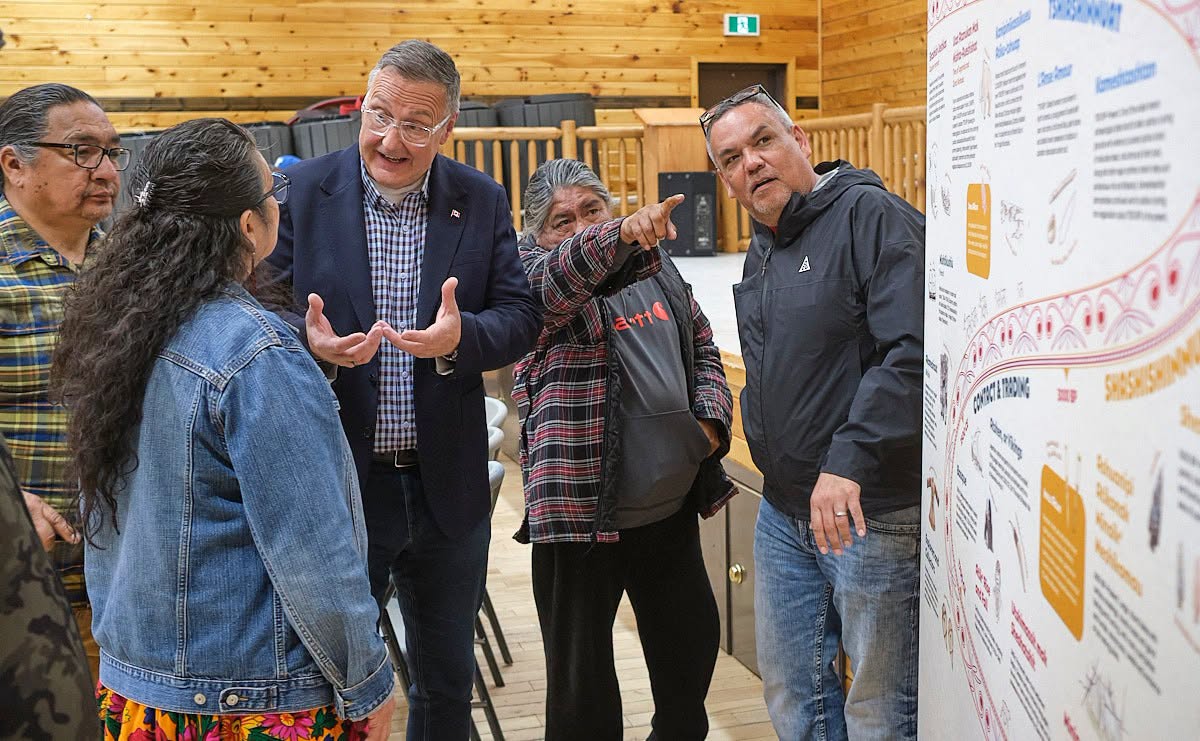
Innu Nation ‘moved to anger, to strength’ after accusing province of censoring history
Solidarity pours in after ‘Labrador’ history exhibition abruptly cancelled after province ordered removal of cultural items and timelines older than 300 years
-
Osoyoos Indian Band set to restore native plants, species in wildfire-ravaged forests
The First Nation plans to clear out burned spaces and restore trees, berries and medicinal plants to the area, encouraging biodiversity and wildlife to return