Looking back at 2023: A year in stories
From Secwépemc land defense to the historic return of a Nisg̱a’a totem pole, IndigiNews featured a variety of topics over the past year


Another calendar year has gone by, and this one was particularly eventful for the team at IndigiNews. We published more stories than ever before — expanding our coverage to some of the far reaches of “B.C.” and beyond.
We brought on new storytellers, embarked on new partnerships, and even became part of the news ourselves when we ended up in B.C. Supreme Court in an effort to uncover redacted information involving birth alerts (more on that below).
So before the year closes out, we wanted to take a look back at some of some of the most significant and impactful stories we wrote about in 2023 — from calls for justice and accountability, to powerful moments of change. This list could have been much longer, given how much has happened this year, but we managed to narrow it down to 10 for the sake of brevity.
As always, we’re very grateful for all of our sources, readers and supporters for your efforts, trust and everything you do that makes it possible for IndigiNews to function — hiy hiy, kukwstép-kucw, thank you.
Secwépemc land defenders in B.C. Supreme Court

Throughout the year, IndigiNews reporter Aaron Hemens followed the story of eight land defenders who were charged with criminal contempt for disrupting construction of the Trans Mountain pipeline expansion (TMX) in Secwépemc’ulucw. After a court hearing in Tkʼemlúps early this year, six people were sentenced to jail time in February by Judge Shelley Fitzpatrick. The story didn’t stop there, though, as remarks Fitzpatrick made during the case caused controversy and led to her conduct being widely criticized — with one artist even depicting her in an unflattering sculpture the following month, calling her courtroom “a colonial environment where she’s just pushing dispossession.”
In May, two more Indigenous women who breached TMX’s injunction were sentenced by Fitzpatrick, and in November, Secwépemc Matriarch Miranda Dick and her father, Hereditary Chief Saw-ses, headed to serve their jail sentences.
TMX trenches through Pípsell
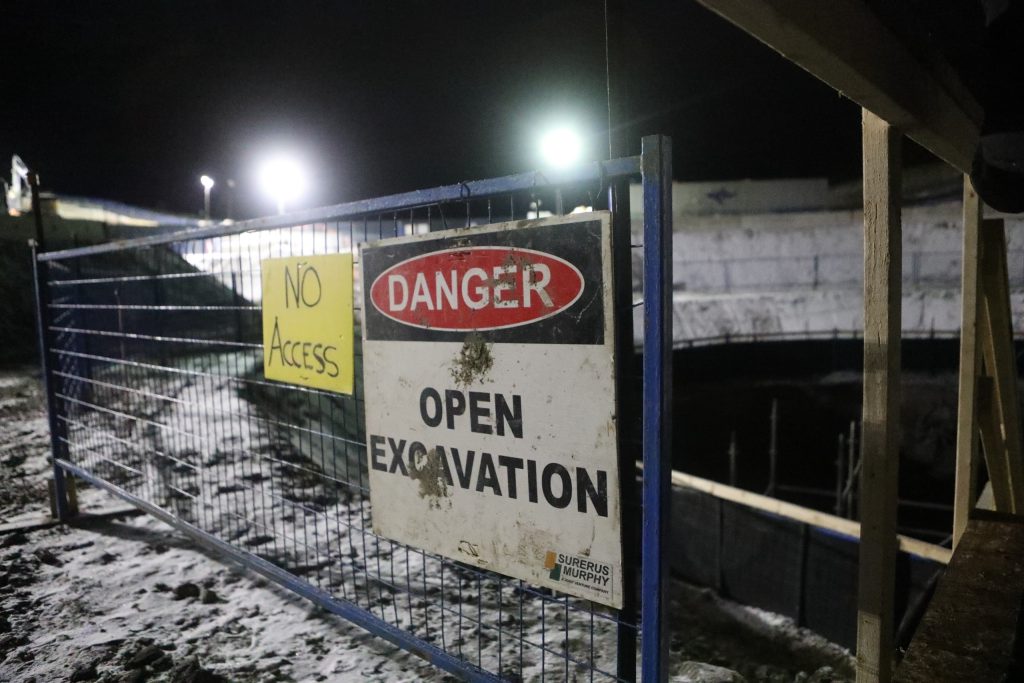
The story of TMX in Secwépemc’ulucw took another turn in the fall, as the company requested permission from the Canada Energy Regulator (CER) to dig an open trench through the sacred site Pípsell against the nation’s wishes. When TMX’s plan was approved by the CER after a hearing in September, many people were outraged, including knowledge-keeper Mike McKenzie, who responded by forming the Unceded Law Response Group in October along with other Secwépemc people.
The situation at Pípsell escalated in December, when a sacred fire was lit and two allies broke into TMX‘s worksite to drop tobacco into the trench.
Wet’suwet’en land defense continues amid RCMP raid

As part of our ongoing partnership with Ricochet Media, we featured stories from Brandi Morin who covered ongoing land defense actions in Wet’suwet’en territories this spring. In March, RCMP raided a camp of people opposing the Coastal GasLink (CGL) pipeline project — the latest of various police actions defending the pipeline company’s site that’s protected by a B.C. Supreme Court injunction. In May, Brandi published a first person piece about her time on Wet’suwet’en territories.
In December, Amnesty International published a report documenting years of human rights abuses against Wet’suwet’en and admonished the RCMP, Coastal GasLink and colonial governments for their actions to push the pipeline through.
Parents win battle to have son’s Kwakwala name on birth certificate

In March, IndigiNews reporter Anna McKenzie broke the story of two parents who won a battle with the province’s Vital Statistics department to have their son’s Kwak̓wala name on his birth certificate. The parents filed a challenge with the B.C. Supreme Court in 2022, arguing that the agency’s naming standards violate their constitutional rights — the agency would previously only accept names composed of Latin alphabetic letters, apostrophes, hyphens, periods and French accents.
Earlier this year, however, λugʷaləs K’ala’ask Shaw was able to have his name accurately reflected on his birth certificate, and the province told IndigiNews that “going forward the ability to claim names will be open to all Indigenous peoples” on birth certificates regardless of age.
A reckoning with evidence of graves at residential ‘schools’
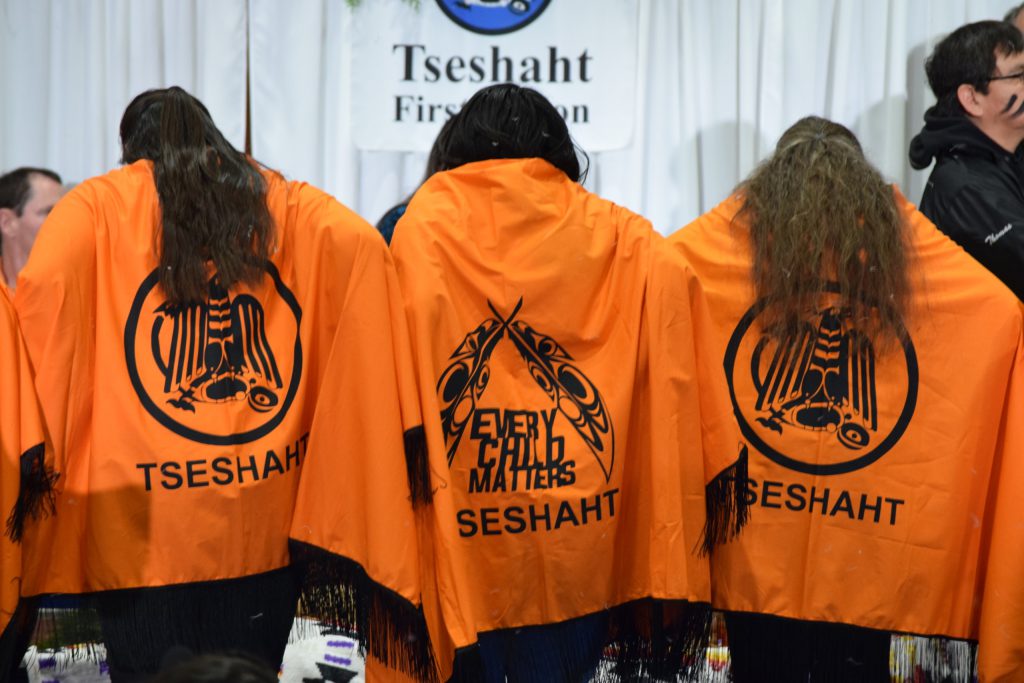
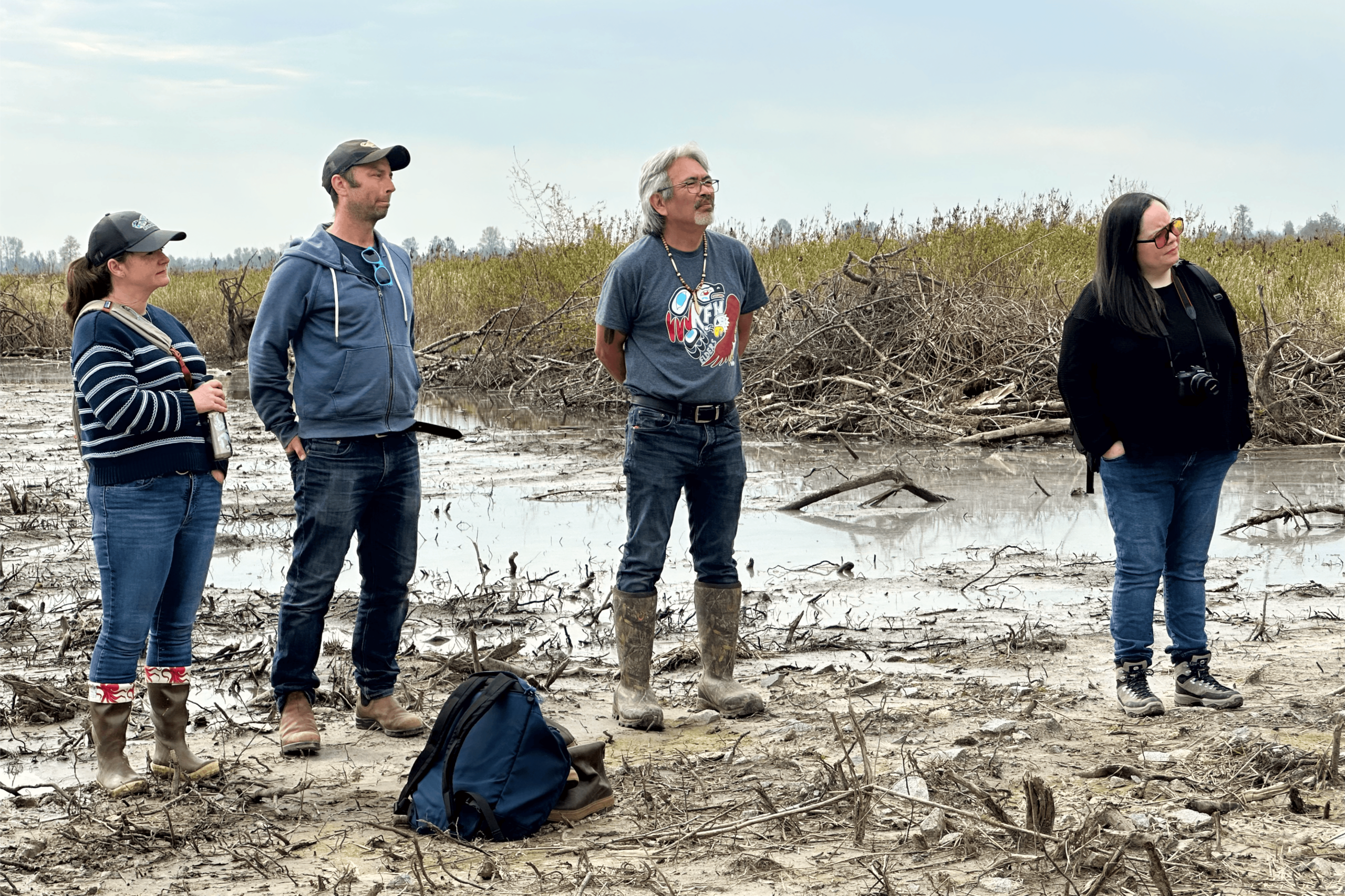
Two years ago, the announcement of evidence of graves at the former Kamloops Indian Residential School unleashed a reckoning around the world. Many nations have since undertaken similar searches and in 2023, several announced the results of their investigations and ground scans. In February, IndigiNews editor Cara McKenna and Discourse reporter Julie Chadwick covered the findings of an investigation into deaths at the former Alberni Indian Residential School by c̓išaaʔatḥ First Nation.
In April, another announcement was made by shíshálh Nation about the former St. Augustine’s residential “school.” Then in September, Cara travelled to Stó:lō Nation to cover an announcement that spanned four government and church-run institutions in the Fraser Valley. Many people have been continually moved to take action for the lost children and their families, including Kwakiutl artist Stan Hunt, who carved a monument in memory of children who never made it home from residential “school” and brought it from “Vancouver Island” to the Lower Mainland on Indigenous People’s Day.
Demanding justice for Carsyn Seaweed
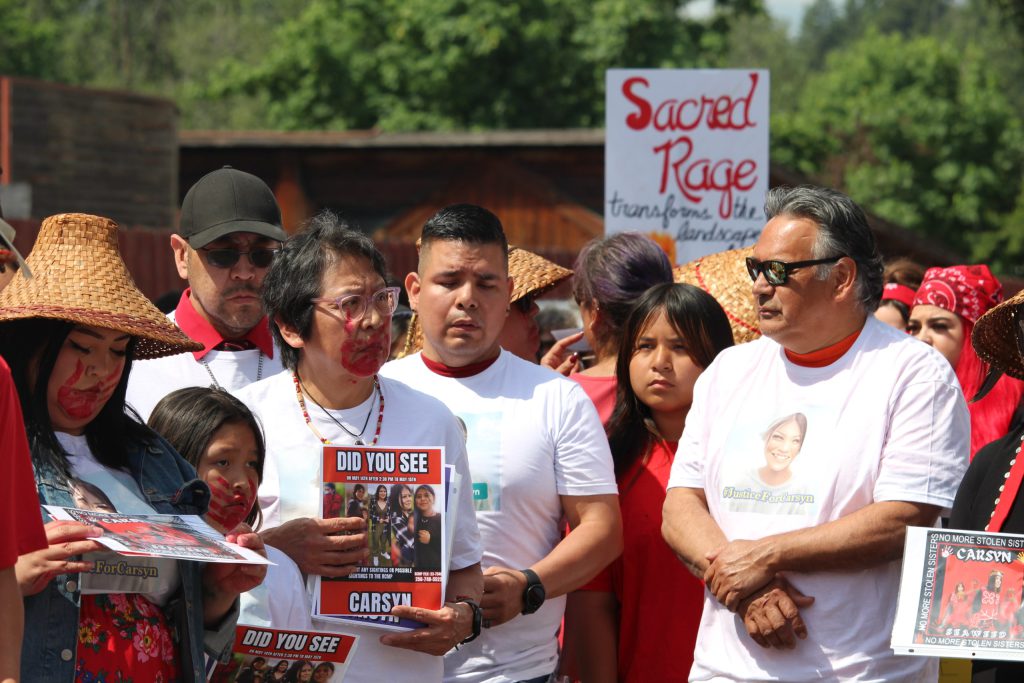
In May, after Carsyn Mackenzie Seaweed tragically and suddenly passed away in “Duncan,” a local newspaper reported that RCMP believed there to be no criminality in her death. This announcement resulted in a huge public outcry, given the circumstances under which the Cowichan and Na̱mǥis teen was found. The police later apologized for what they called a “miscommunication” and announced the circumstances were suspicious — as well as apologizing to Carsyn’s family.
IndigiNews reporter Anna McKenzie and Discourse reporter Shalu Mehta reported on the community’s search for answers and demands for accountability from local RCMP, in a two-part series that won a Jack Webster award for Excellence in Community Reporting later in the year.
Judge orders MCFD to reveal redacted birth alerts records

In June, IndigiNews was in B.C. Supreme Court as part of a dispute involving involving us, MCFD and the province’s privacy commissioner. B.C.’s Ministry of Children and Family Development (MCFD) had been fighting to keep records about birth alerts under wraps — records that could have important implications for parents in “B.C.” — and journalist Brielle Morgan covered this summer’s hearing for our readers.
The case stemmed from government documents that were acquired by IndigiNews through a freedom of information request and had pages entirely blacked out. MCFD would not reveal these pages to either IndigiNews or the privacy commissioner. In July, Justice Nitya Iyer ordered that MCFD must disclose the records to the privacy commissioner’s office for review.
Tribal Canoe Journeys resumes after three-year hiatus

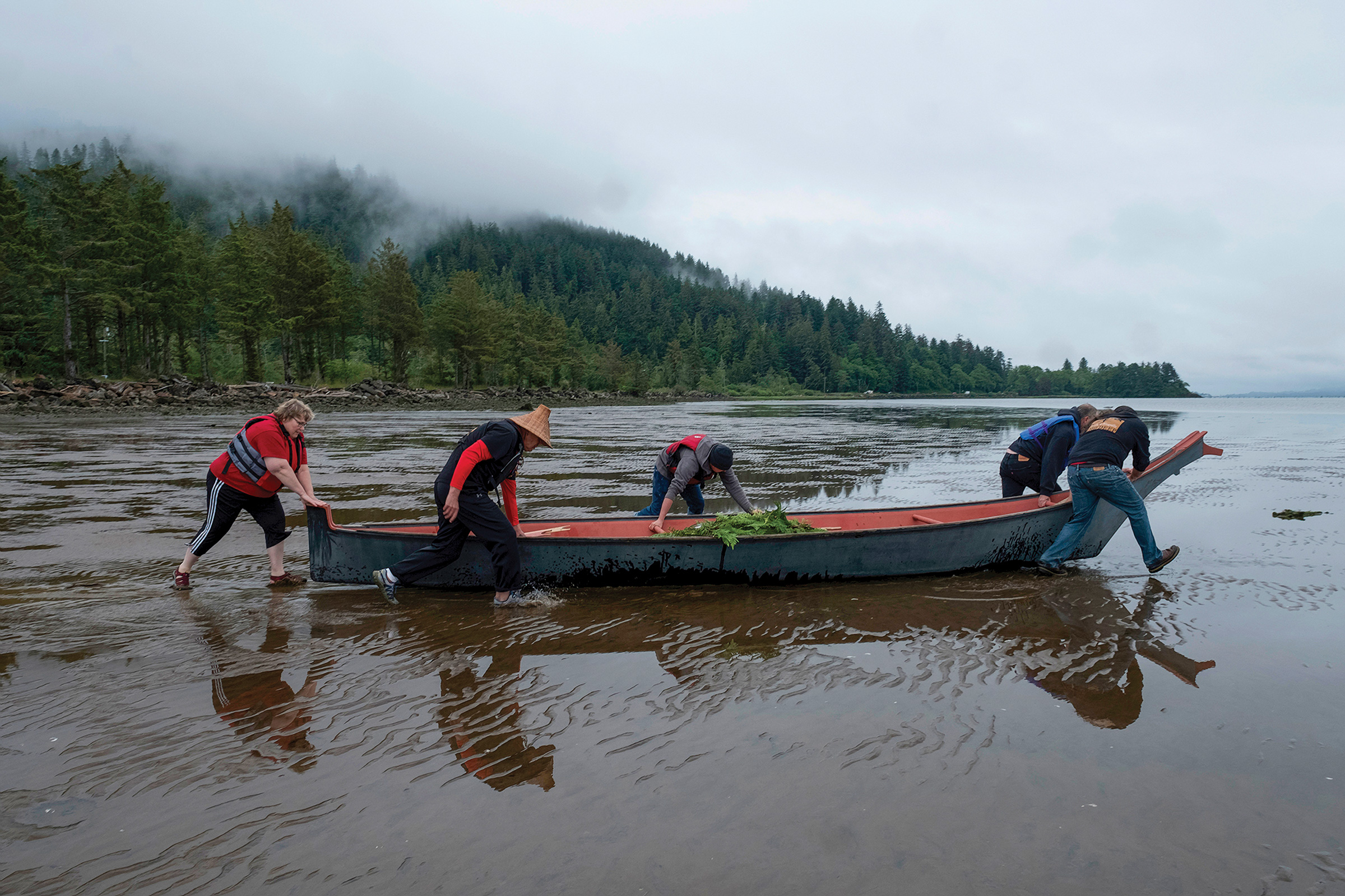
Tribal Canoe Journeys is normally an annual event, but it had been on pause since 2019 because of COVID-19 restrictions. This summer, after a three-year hiatus, the event resumed and canoe families from both sides of the colonial border made the trip to the Muckleshoot Indian Tribe for a long-awaited week of celebration and culture.
Photographer Margaret Benson covered the story for IndigiNews, including images from a stopover canoe families made in Tsawout in July.
A Nisg̱a’a totem pole is brought home from Scotland

In September, the Wilps Ni’isjoohl memorial pole made a historic return to Nisg̱a’a territory almost a century after it was stolen in 1929. The pole had been housed in the National Museum of Scotland and, though colonial documents show a sale by a Matriarch from the House of Ni’isjoohl, that signature is believed to have been falsified since it contradicts the family’s oral history, according to the Nisg̱a’a.
When IndigiNews editor Cara McKenna found herself in Edinburgh around the same time as the pole was leaving the institution — she visited the museum to view it prior to its journey. IndigiNews partnered with the Narwhal and journalist Matt Simmons, who lives near Nisg̱a’a, to tell the story about the pole’s return for both publications — with beautiful photos from Marty Clemens.
#SearchTheLandfill movement gains traction nationwide
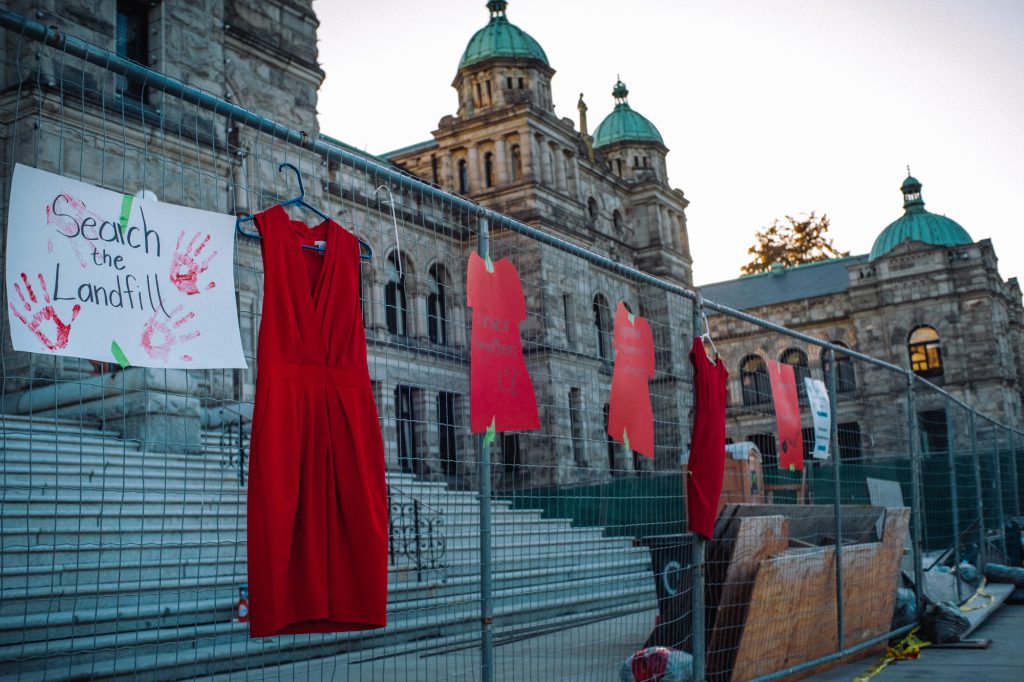
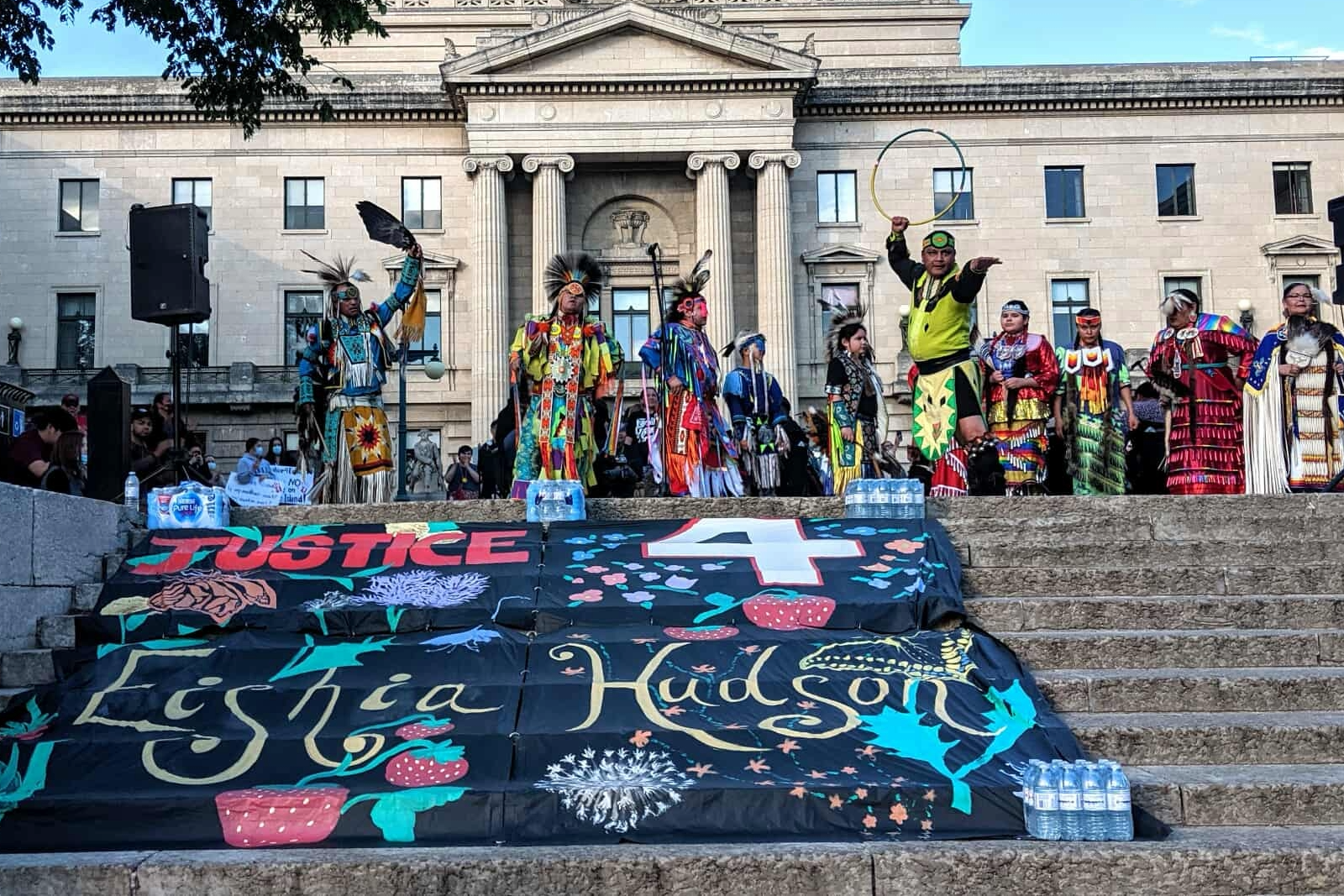
In September, a country-wide day of action took place, calling for a search of a “Winnipeg” landfill and other facilities across the country where MMIWG2S+ could be located. Dozens of people gathered at the B.C. Legislature, an event that was captured by photographer and writer Mike Graeme.
In July, IndigiNews also published a first person piece by Viv Ketchum, a writer on the frontlines of Camp Morgan, about the importance of searching the landfill amid the provincial government’s refusal to fund this effort.
Author
Latest Stories
-
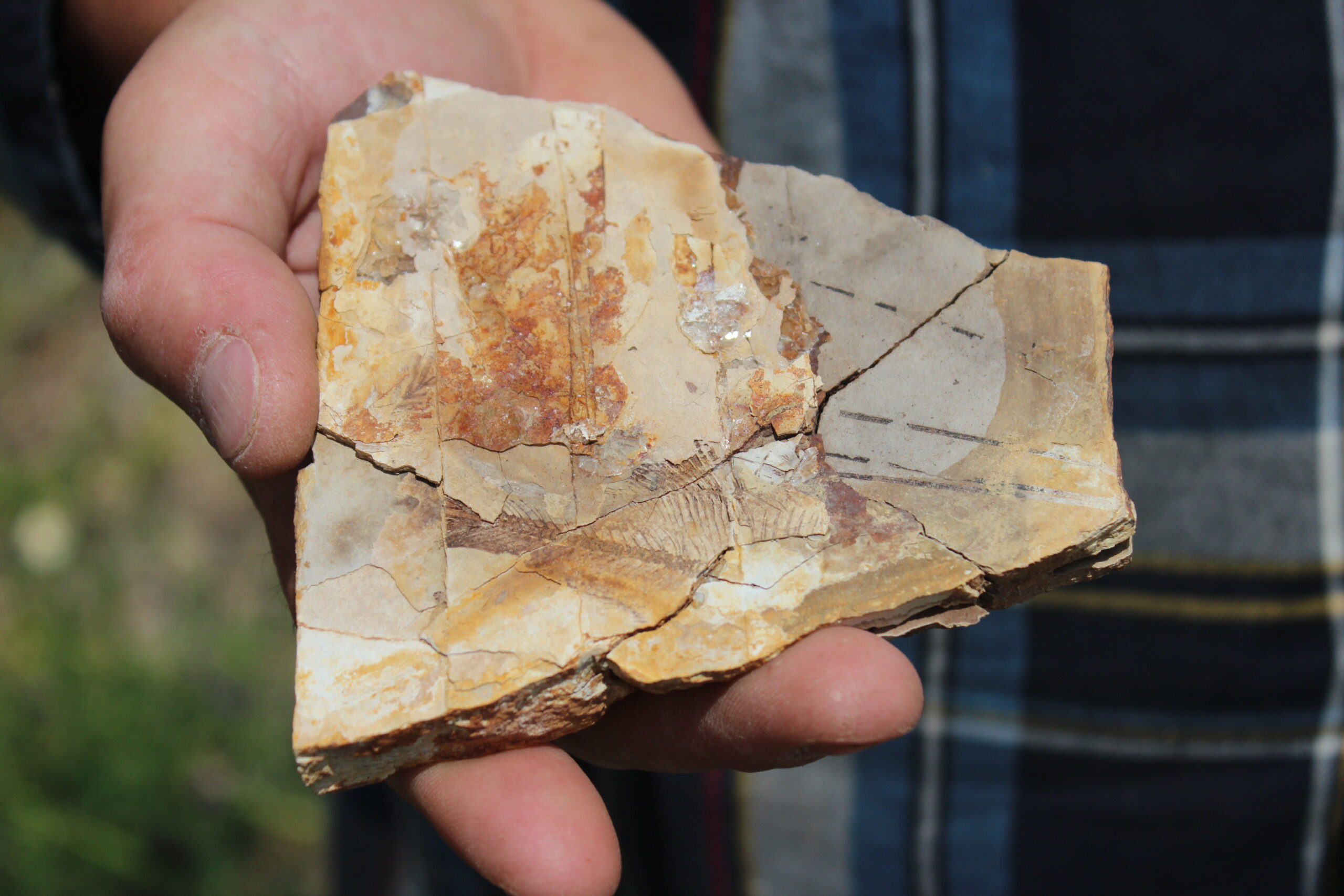
Secwépemc stewards preserve culture, history of a 53-million-year-old forest
Community-led trails, tours and a cultural centre are part of Bonaparte First Nation’s vision for the McAbee Fossil Beds in Secwépemcúl’ecw
-
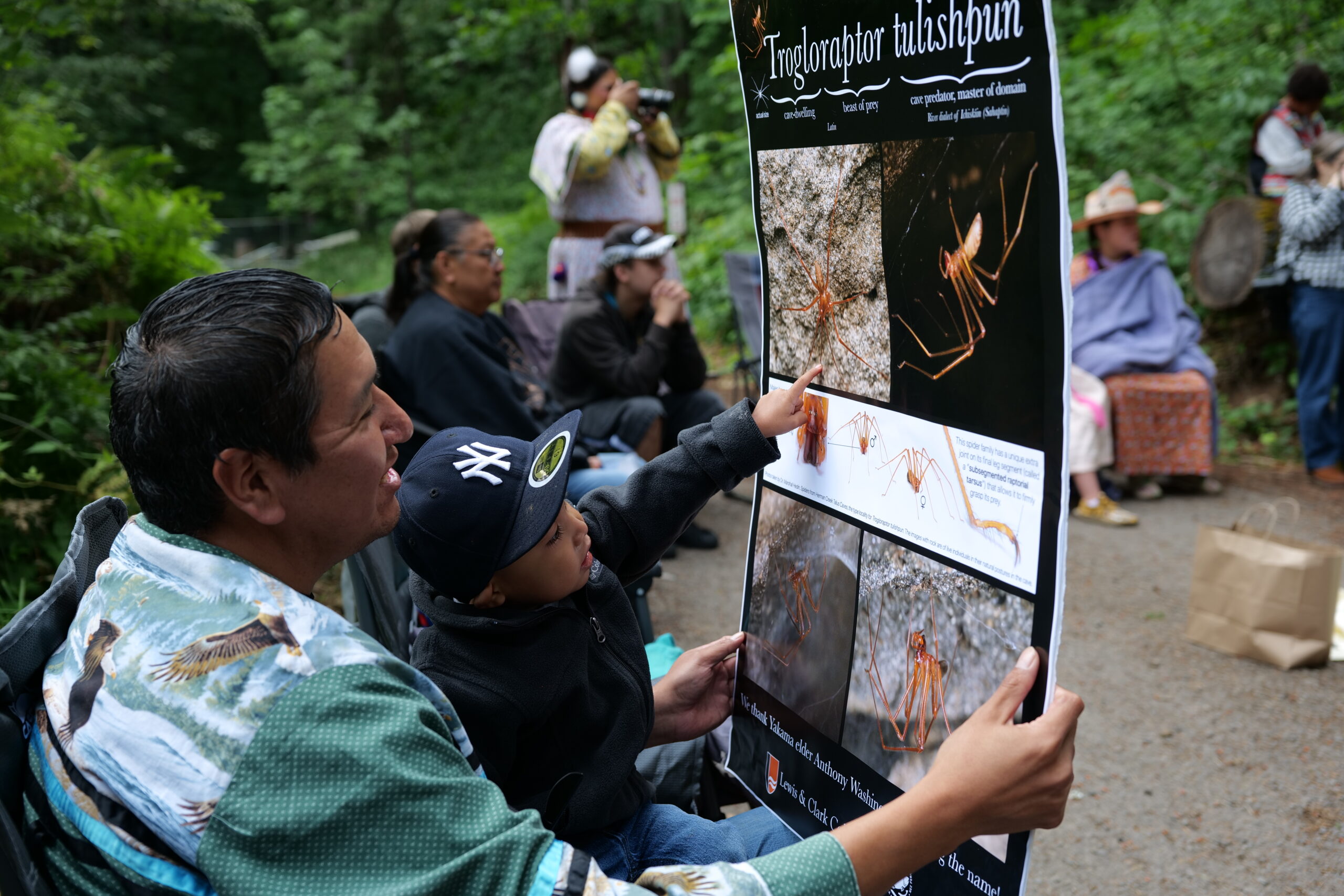
Yakama Nation holds naming ceremony for spider previously unknown to scientists
The arachnid species found in the Columbia River Gorge was given the Indigenous name ‘Tulishpun’ alongside its scientific name ‘Trogloraptor’