Tiny house for matriarch opposing PRGT arrives in Gitxsan Lax’yip from ‘Victoria’
Volunteer supporters built the home for Maas Gwitkunuxws Teresa Brown, who has been camping in the path of the controversial pipeline in northern ‘B.C.’
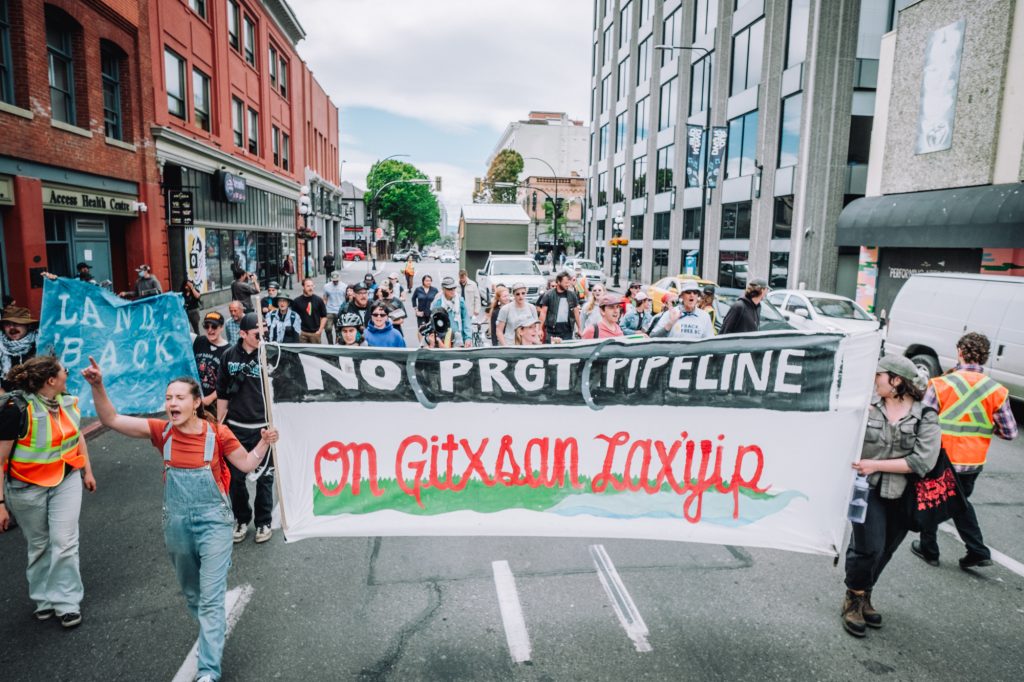
A hand-built tiny home arrived in Gitxsan territories on Sunday, marking the latest act of grassroots resistance to the Prince Rupert Gas Transmission (PRGT) pipeline.
With support from more than 100 volunteers, the mobile structure was built over two weeks in May in “Victoria” for Gitxsan Matriarch Maas Gwitkunuxws Teresa Brown, who is leading efforts to oppose the pipeline on her nation’s Lax’yip (ancestral lands).
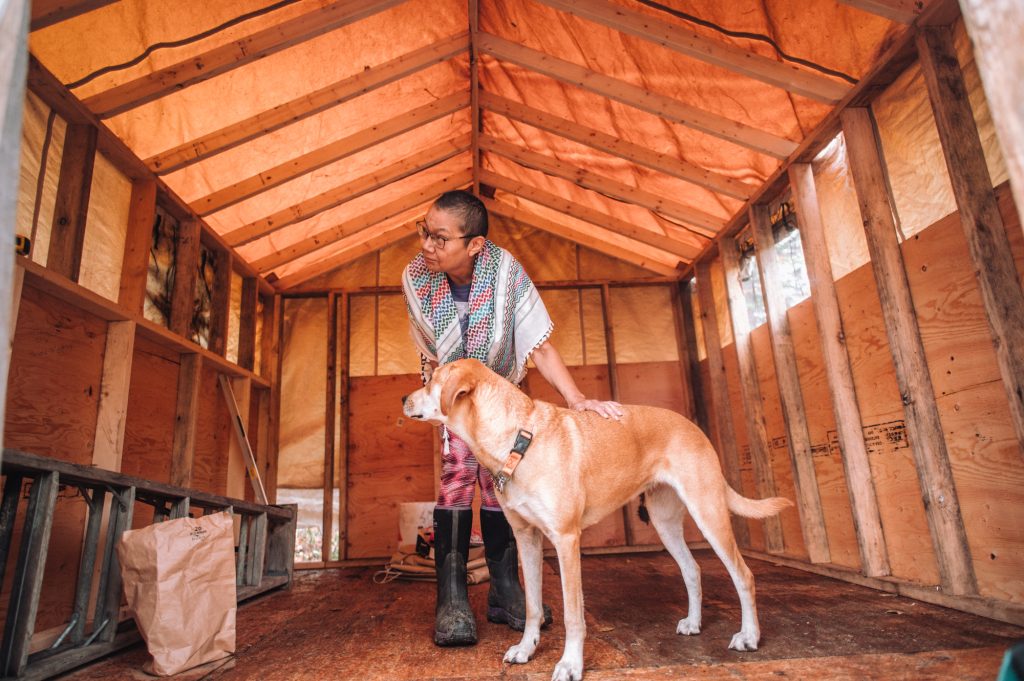
The home will serve as a base at the site of Brown’s dog sanctuary along the pipeline’s proposed route, as she and supporters continue to challenge the fossil fuel project’s incursion onto unceded Gitxsan territory.
While the tiny house will support Brown’s resistance to the PRGT pipeline, she is also grateful to have a space she can call entirely her own.
“I don’t even really have the words,” she said about receiving the structure on July 13.
“All my life I wanted a home that no one could take from me. I’ll never be without warmth in a home again.”
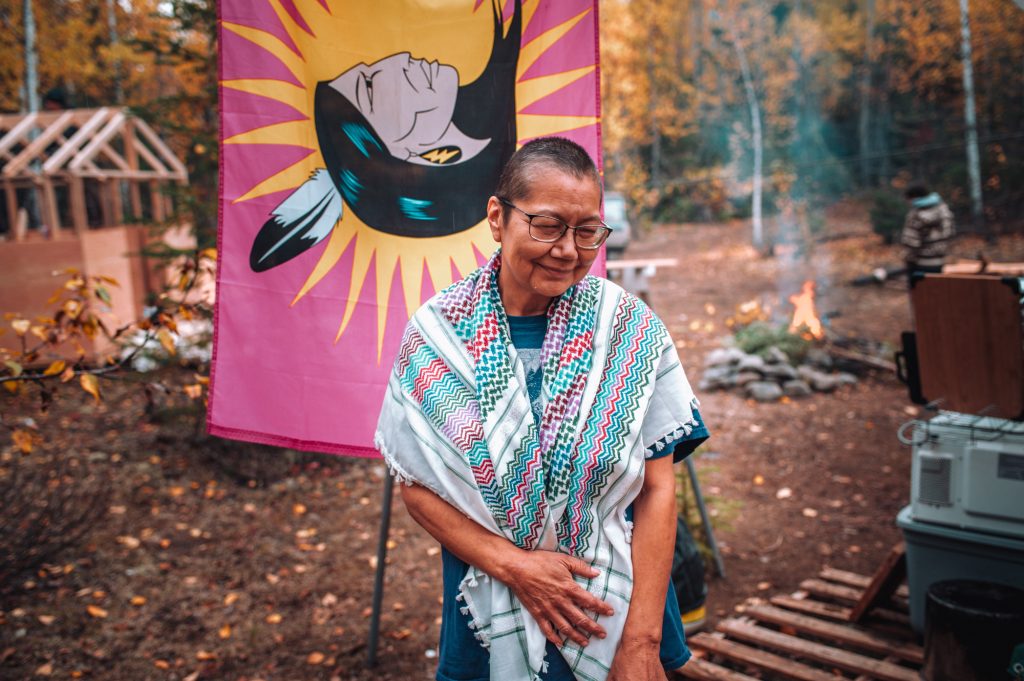
Brown established her dog sanctuary near the village of Anspayaxw (Kispiox) shortly after Gitanyow hereditary chiefs launched a pipeline blockade last August at Cranberry Junction, just north of Kitwanga.
Last month, the province’s Environmental Assessment Office (EAO) ruled that construction of the PRGT pipeline had been “substantially started” — allowing the project to proceed under the terms of a decade-old environmental assessment issued in 2014, despite calls for the project to be reassessed.
‘No jurisdiction’
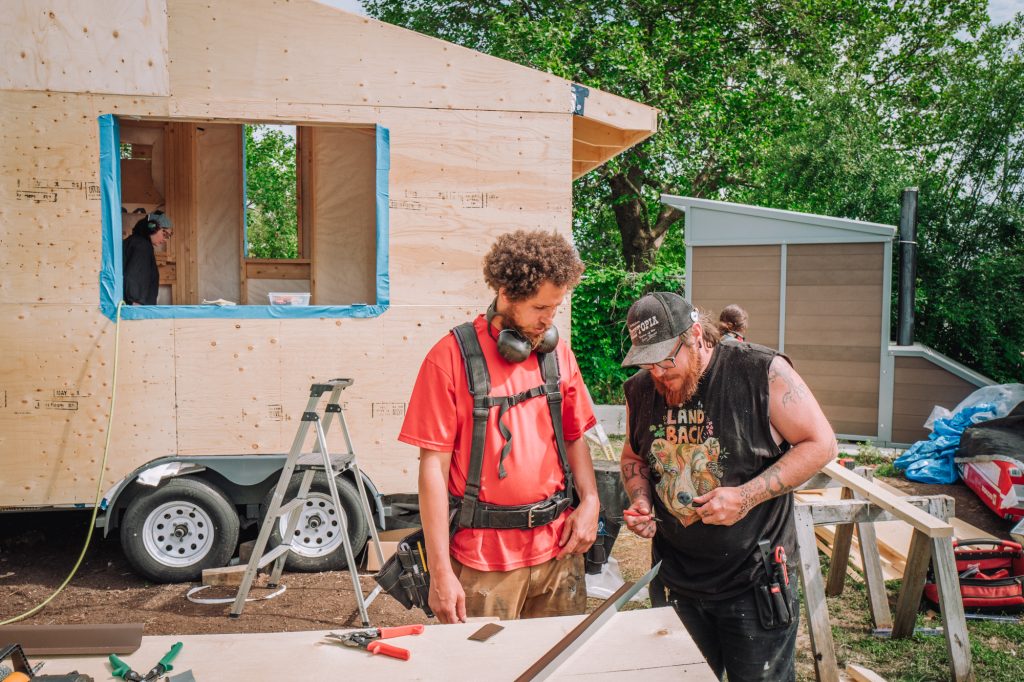
The idea of deploying tiny houses as a tool of resistance was sparked by the Secwépemc-led Tiny House Warriors, who began building similar structures along the Trans Mountain pipeline route in 2018.
Laurie Storrie, lead builder of Brown’s tiny house, said they contributed to the project as one way of using their privilege to push back against colonial dispossession.
“There are so many Indigenous people facing this war against them,” they said.
Storrie, who has built a number of tiny homes, wants to show those on the frontlines they “have people willing to fight alongside them, or behind them, in any way we can.”
The 18-foot-long, heated structure features a small kitchen, a sleeping loft, storage spaces, and a built-in bench — already claimed by Brown’s dog, Rumble, as his new bed.
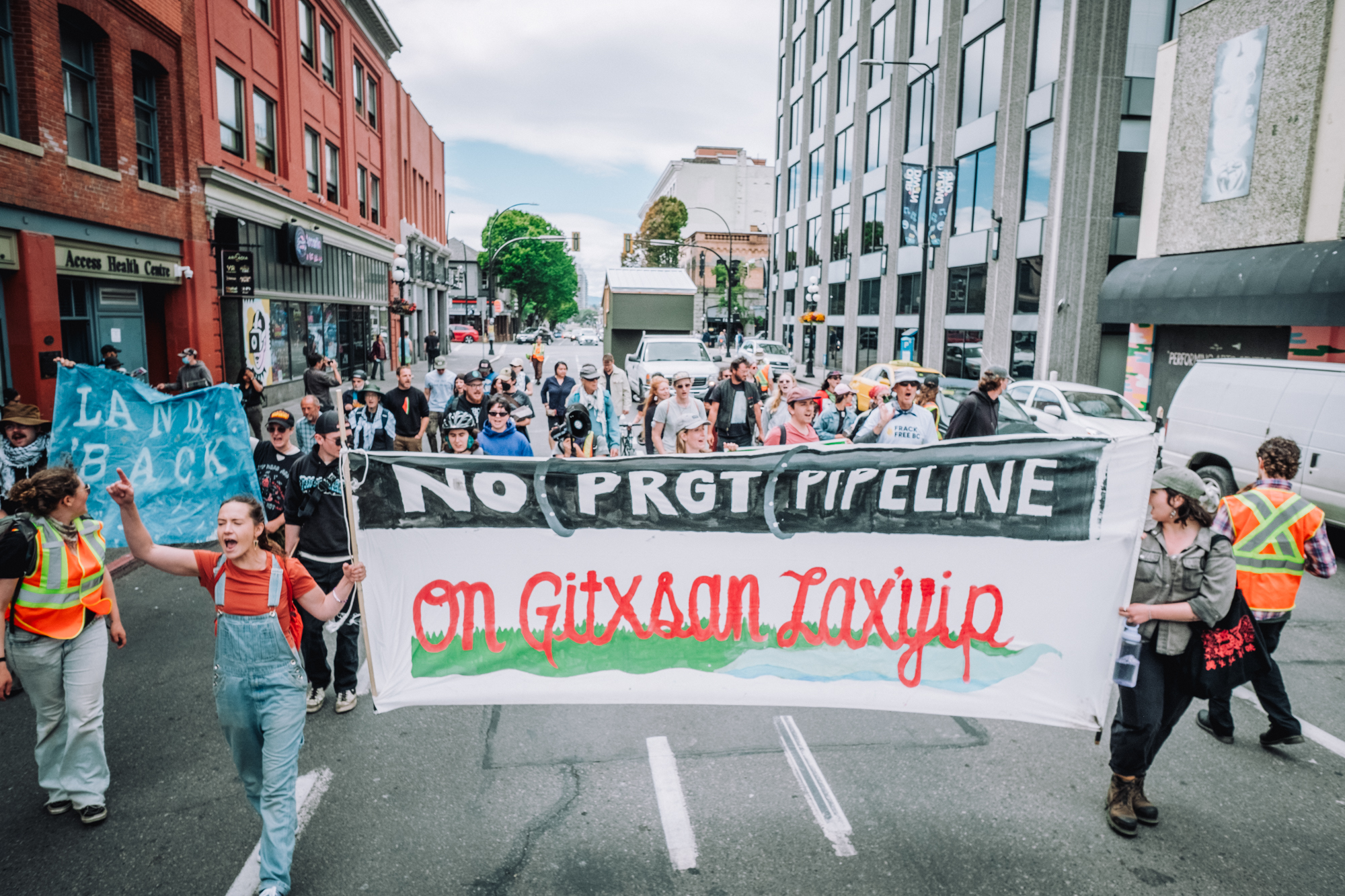
A send-off for the tiny home was held in “Victoria” on July 9, as Gitxsan land defenders and dozens of supporters wheeled the structure to the EAO headquarters.
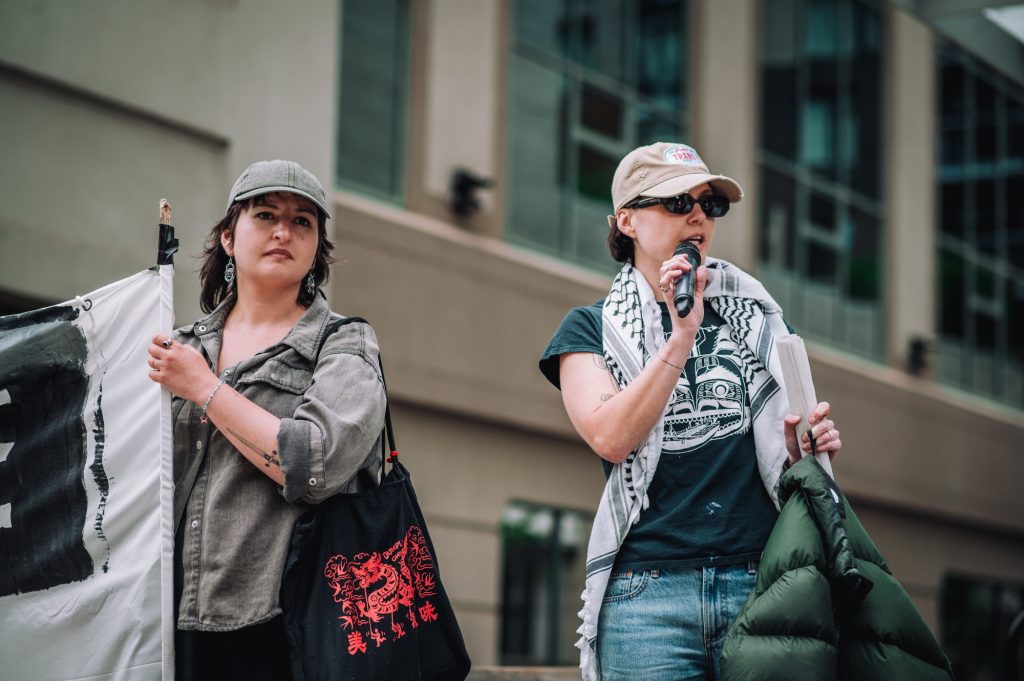
“The EAO has no jurisdiction on our territories,” said Gina Mowatt, who is Gitxsan, speaking outside the agency’s office. Mowatt belongs to Wilp (House) Luutkudziiwus and Xsimwitjinn, from Lax Seel (Frog clan).
“British Columbia has no jurisdiction. Canada has no jurisdiction,” said Mowatt. “Our chiefs and our people and our ancestors have never ceded an inch of our territory. Our territory remains under Gitxsan sovereignty.”
Pipeline could affect food security, say land defenders


If completed, the PRGT pipeline would deliver liquified natural gas an estimated 750 kilometres to the proposed Ksi Lisims LNG terminal, positioning it as “B.C.’s” second-largest LNG export facility.
The PRGT pipeline is supported by the Nisg̱a’a Lisims Government. But it faces strong opposition from several other Indigenous communities in the region, including members of the Gitxsan, Gitanyow, and even some within the Nisg̱a’a Nation itself.
Critics of the project — which is co-owned by Texas-based company Western LNG and Nisg̱a’a Lisims Government — have pointed out its connections to powerful “U.S.” investors with deep ties to Wall Street and the political orbit of President Donald Trump.
Meanwhile, Nisg̱a’a Lisims Government has stated it will respond to feedback from other First Nations.
It said the project is “our chance as Indigenous people to develop a pipeline project in our own way, to show how it can and should be done,” while leaving “a legacy of prosperity for nations across B.C.”

At last week’s sendoff, Gitxsan land defender Denzel Sutherland-Wilson, a member of Wilp Git’luuhl’um’hetxwit from the Gisgaast (Fireweed) clan, spoke about the protection of salmon — a lifeblood of his nation.
Sutherland-Wilson, whose ancestral village Anspayaxw is 15 kilometres south of the proposed pipeline route, said he grew up fishing the river there.
“We have lived off the salmon for thousands of years,” he added. “The salmon were here before any human beings were here. They have their own world, which we must respect … This pipeline is an attack on their world.”
Brown also fears the pipeline could have devastating consequences for the Lax’yip and Gitxsan’s food security.
“I’m scared of never tasting fish from the waters, moose, deer, grouse again in the same way,” said Brown, member of Gitluudaahlxw, a Wilp of the Gisgaast clan.
She added that the pipeline is the latest episode in a long legacy of dispossession.
“Since this place was invaded … people have worked hard to take us from our land, to erase us in every way possible.”


While Brown is happy to receive the tiny home, she remains cautious. She pointed to RCMP raids on neighbouring Wet’suwet’en territory, where police dismantled and destroyed a home occupied by matriarchs opposing the Coastal GasLink pipeline.
“The mercenaries were sent to hunt them in their homes,” she said. “Cabins burned down, axes through doors — unacceptable.”
Sutherland-Wilson was present during one of those raids. A viral video shows him pleading with an RCMP officer to lower a gun pointed at him.
“When you say British Columbia, you’re naming a violent occupation,” he said outside the EAO.
“Make no mistake, British Columbia has no claim to our land, never has, never will. These decisions are being made by people who have never set foot on our land.”
Project ‘was just a no brainer’


The tiny home project was also about skill sharing and building political organizing power.
“On a personal level, it fit everything I believed in,” said Storrie. “To use the skills that we have, and teach the skills that we have in a way that is directly transferable to a political movement and Indigenous justice, was just a no brainer.”
The build included workshops on themes ranging from “Decarcerating (Trans) Childhoods” to “Indigenous Feminist Approaches to Solidarity.” Coupled with shared meals and collaborative labor, the build drew in new supporters, deepened understanding of frontline struggles, and connected participants to the broader movement for Indigenous sovereignty.
Storrie emphasized that the completion of the tiny house doesn’t mark the end of the group’s solidarity — nor does it define how that support will take shape moving forward.
“This time, our solidarity took the form of a tiny house,” they said. “Next time, it might look like something different. That door remains open.”
Author
We live in a media ecosystem that thrives on misinformation. Big Tech and AI companies are consuming the work of real human beings and Canadian news has been banned on Facebook and Instagram.

And yet, I have hope for journalism because of the work we’re doing at IndigiNews.
At IndigiNews, we embody tâpwêwin — the Cree value of integrity and responsibility in truth-telling. We are committed to our independent, Indigenous-led newsroom rooted in community, accountability, and relationality. We believe storytelling is a sacred fire that connects our pasts, presents, and futures through the storytellers in our Storytelling Lodge. IndigiNews creates space for Indigenous journalists, storytellers, Knowledge Keepers, and communities to gather, learn, and share stories that matter.
As a registered charity, we are building a fire that allows our work not just to ignite but to thrive. Rather than relying on advertising or corporate acquisition, IndigiNews is sustained by people like you who believe Indigenous stories are important for the future of our communities.
Your support is making a real difference.
Our community of supporters, our Firekeepers, make it possible to grow our newsroom, publish award-winning journalism, train emerging Indigenous journalists through initiatives like the ReFocus Photojournalism Fellowship, and publish trustworthy stories that serve our communities across the country. Every story we publish helps fill in gaps left by mainstream media and ensures Indigenous perspectives are represented with care, accuracy and respect.
But there is still more work to do.
As the media landscape becomes more and more uncertain, community support is as necessary and essential as it’s ever been. Every new Firekeeper helps protect the independence of our newsroom and strengthens journalism that is accountable to our many and varied communities over corporations.
That’s why we’re inviting you to become a Firekeeper.
Firekeepers tend to and protect the sacred fire. Your monthly contributions directly support IndigiNews’s Storytelling Lodge, helps sustain our independent, Indigenous-led newsroom, and ensures future generations of Indigenous storytellers have the resources they need to do the work.
As a registered Canadian charity, all eligible donations receive a charitable tax receipt.
If you believe Indigenous stories matter, if you value independent journalism, and if you want to help build a strong future for Indigenous media, we invite you to join our circle of Firekeepers today.
Together, we can keep the fire burning.
— Eden Fineday, Publisher, IndigiNews
Support us nowLatest Stories
-

Skateboard parks on reserves are ‘cultural engines’ for Youth: short film
In ‘Paving the Way,’ skateboarding becomes a way for young people to make art, build friendships, and carry grief together
-
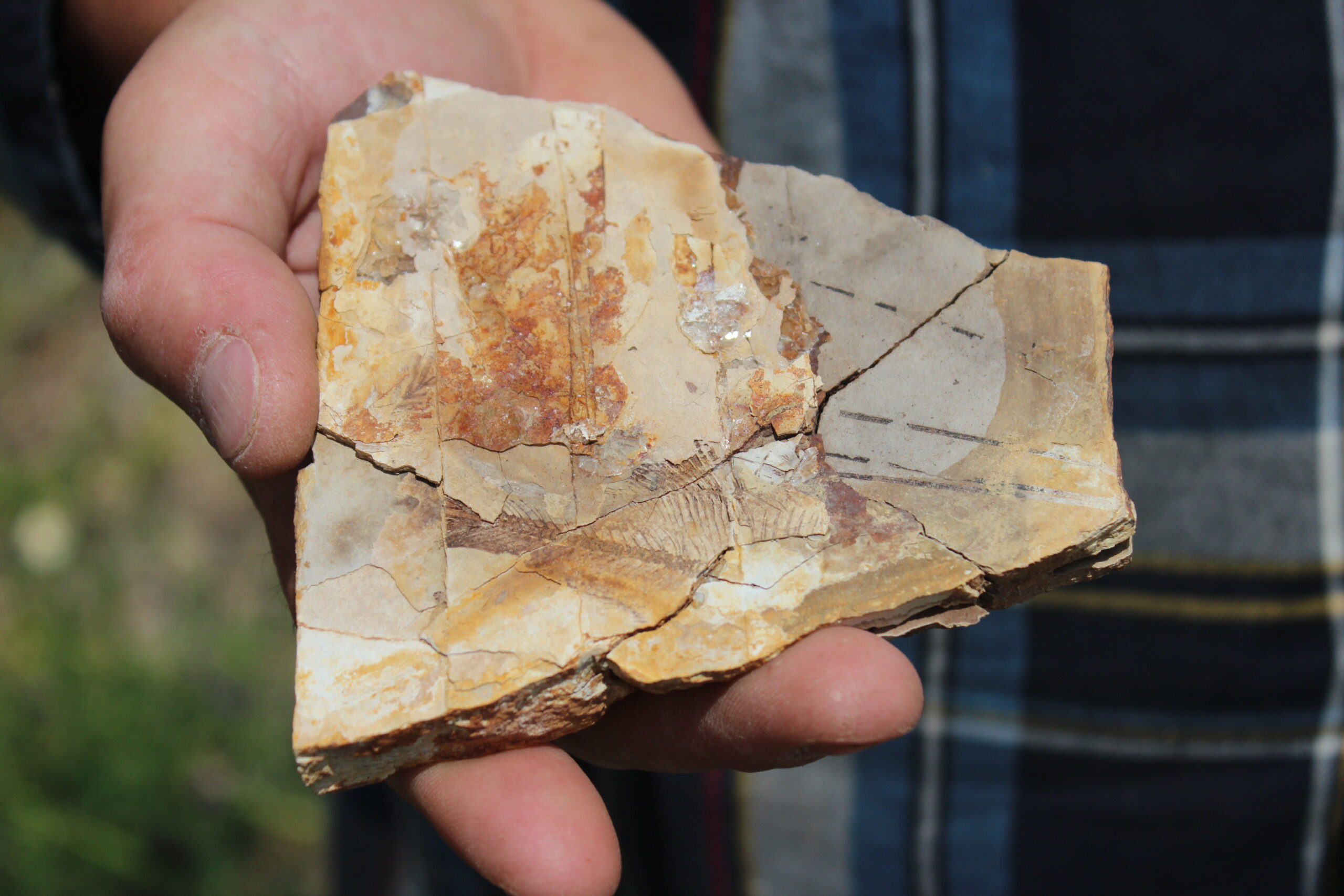
Secwépemc stewards preserve culture, history of a 53-million-year-old forest
Community-led trails, tours and a cultural centre are part of Bonaparte First Nation’s vision for the McAbee Fossil Beds in Secwépemcúl’ecw