Secwépemc stewards preserve culture, history of a 53-million-year-old forest
Community-led trails, tours and a cultural centre are part of Bonaparte First Nation’s vision for the McAbee Fossil Beds in Secwépemcúl’ecw
This story was originally printed in The Wren and appears here with permission and minor edits.
Seven years after reclaiming the McAbee Fossil Beds, St’uxwtéws (Bonaparte First Nation) is stewarding the site by combining paleontological research and Secwépemc culture.
The First Nation took over management of the site — containing one of “B.C.’s” most significant fossil deposits — from the province in 2019, after it had been closed to the public for several years because of conservation concerns. It was designated a provincial heritage site in 2012.
As visitors return to the McAbee Fossil Beds this summer since it re-opened in May, Secwépemc leaders are working to ensure the internationally recognized site in Secwépemcúl’ecw tells not only the story of ancient fossils, but also the enduring relationship between people and the land.
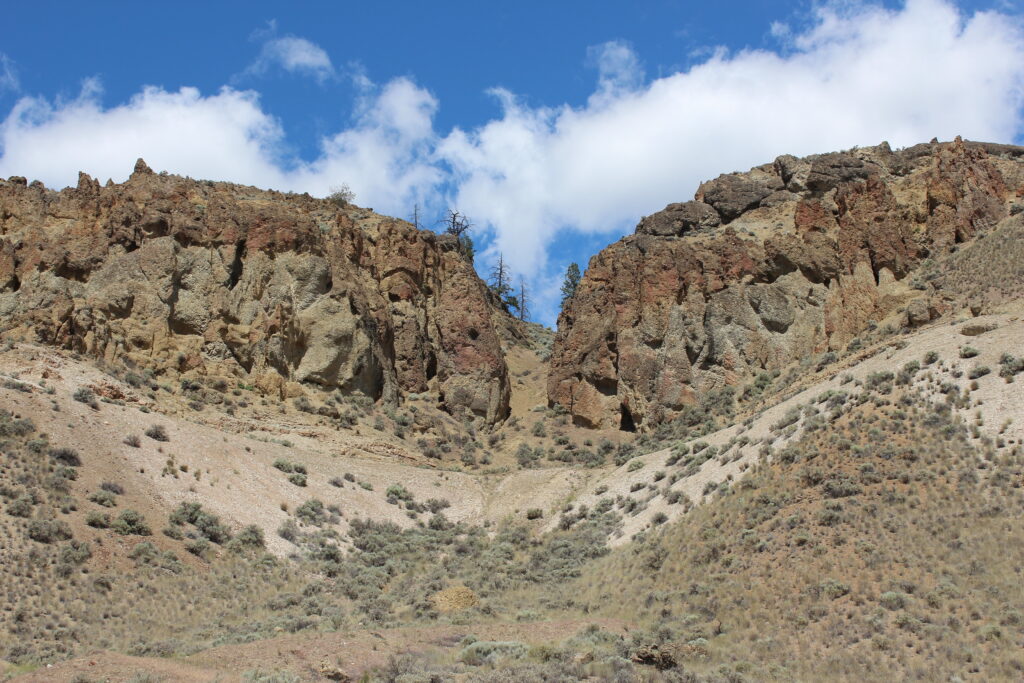
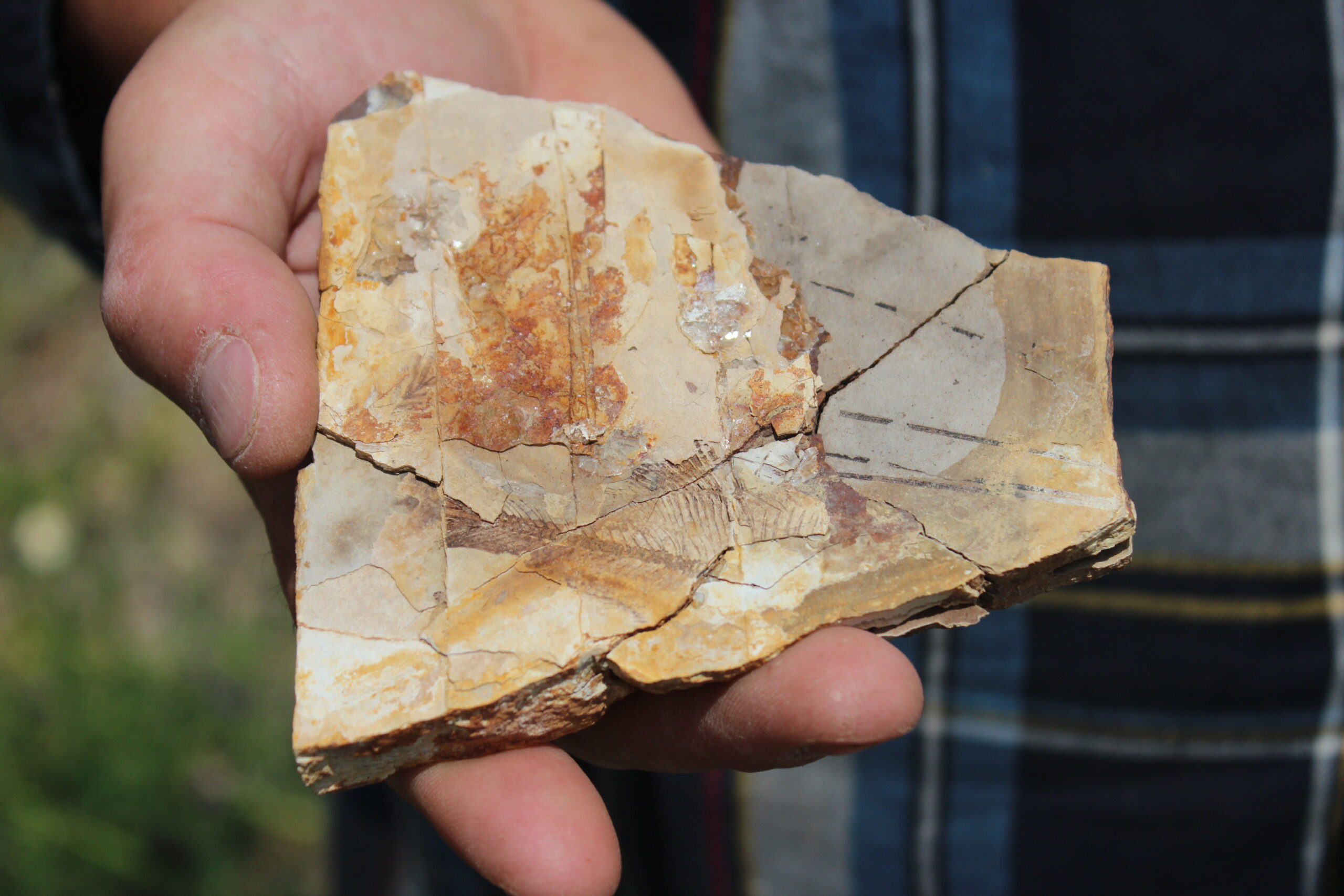
Sitting in the unceded territory of the St’uxwtews west of Kamloops, the site contains fossils from a former forest identified as approximately 53 million years old.
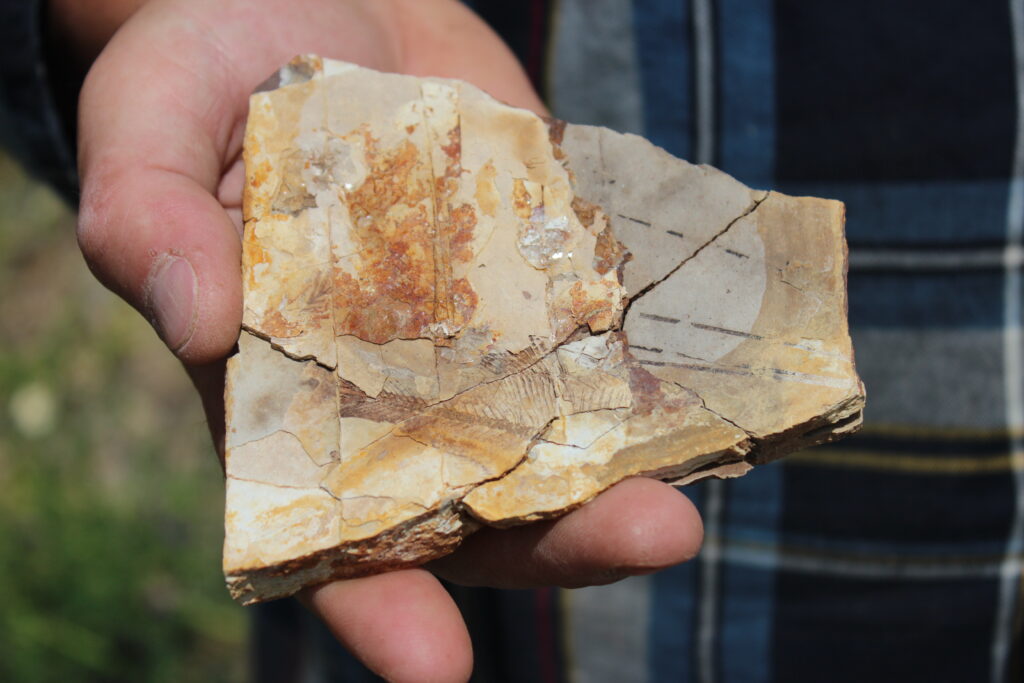
The fossils are primarily well-preserved plants, such as rare Ginkgo biloba, insects, fish such as the oldest known fossil salmonidae, and birds from the Eocene Epoch period.
St’uxwtéws Kukpi7 Frank Antoine said the focus is on ensuring McAbee is preserved as both a place of scientific and historical importance, and a reflection of Secwépemc values.
The First Nation collaborated with neighbouring Secwépemc governments through the St’uxwtews Pesuten Heritage Society to document the site’s history.
“It’s about shared territories,” he said. “It’s not about being different, it’s about working together.”
Antoine is collaboratively working on procuring approximately $80 million in funding with other Secwépemc leaders and Thompson Rivers University’s paleontology team.
The vision is to build a cultural centre that’s set into the earth like a traditional St’uxwtews winter home, or pit house, which the community hopes to break ground on as soon as next summer.
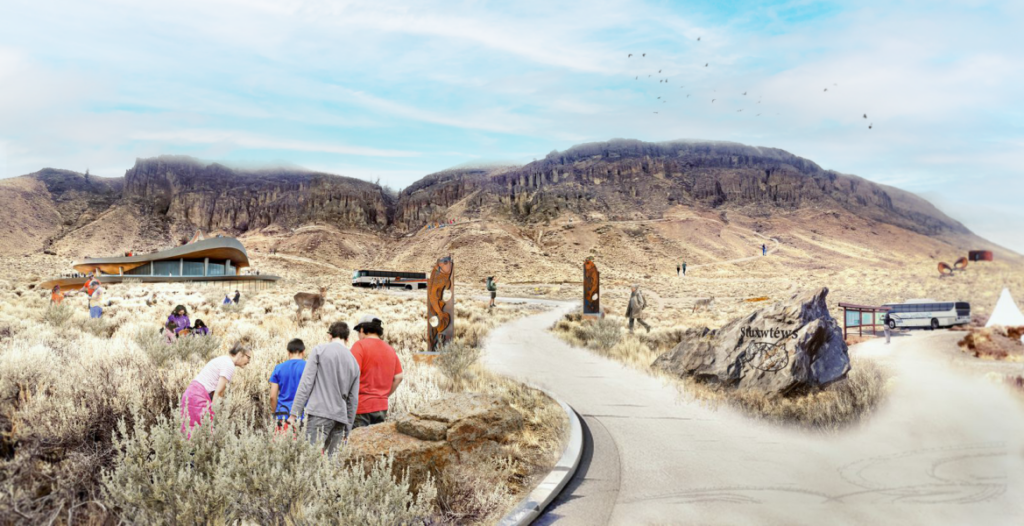
He hopes to improve the colonial framework and descriptions starting with sharing knowledge about traditional winter homes that brought families and communities together — called Kwséltktenin in the Secwepemctsín language.
A new sign at the trailhead welcomes visitors, explaining, “extended family groups travelled across the territory to hunt and gather resources for food, medicine and shelter.”
With QR codes on the hiking trails signage, visitors can learn about the culture and science as they walk the hiking trails. He said when people think about paleontology, it’s usually about the past, but his goal is for it to be “kind of like Jurassic Park” — in a positive way.
“We want to start showing the timelines of how we were, and how we got involved, so when you walk into the winter home, which is an underground home, [you’re] actually walking back into the earth,” Antoine said.
McAbee Fossil Beds site manager Adrian Lewis said when he visited the McAbee fossil site five years ago, the landscape and traditional medicinal plants of Secwépemcúl’ecw captured his attention right away.
He’s since immersed himself in learning about the community’s traditional plants, and worked on the trail network that visitors access at the site today.
“I was a greenhorn completely, so you got to go out and buy books, study online, but the best knowledge that I got was from the local Elders [and Knowledge Keepers] from the Bonaparte First Nation who came out here,” he said.
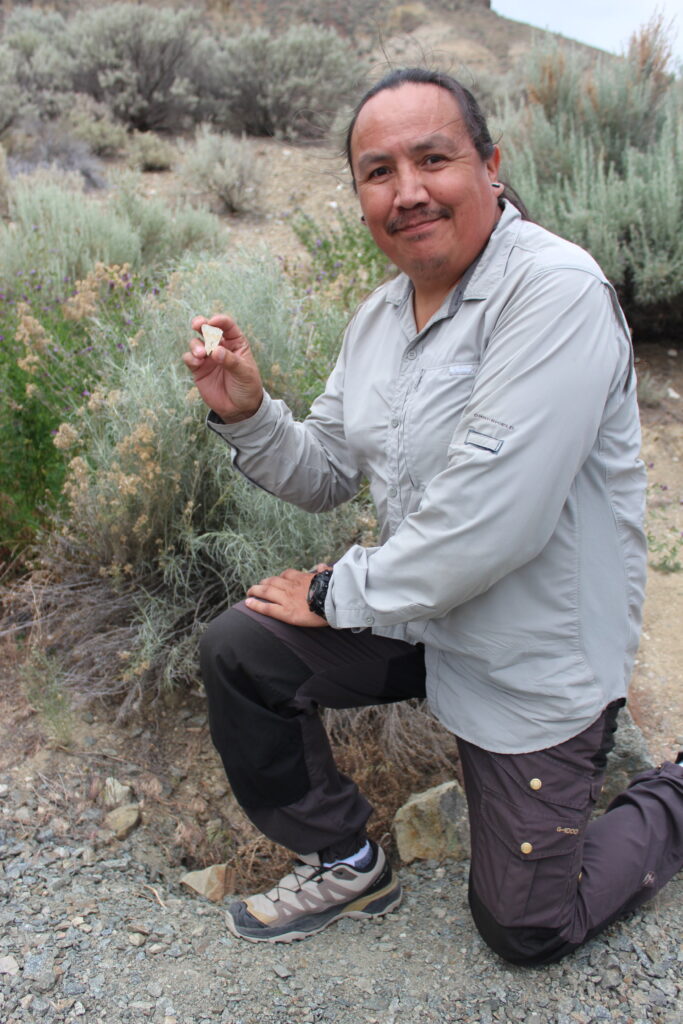
By October of 2022, the trail system at McAbee was well-established, and Lewis began offering tours of the area to educate visitors on medicinal and edible plants, paleontology, geology, Indigenous and settler histories and local wildlife. Part of his responsibilities as the site manager include raising awareness about rattlesnakes, bears, coyotes and birds that pass through the area.
Today, Lewis lives on-site during the summer to provide security and serves the community as one of the site’s most recognizable stewards.
“He’s a pioneer of that site,” Antoine said. “He lives in our territory, and he’s a big part of our community. He’s not a band member, but he is a community member, and that’s just as powerful.”
Learning the scientific names of the fossils found at the site is an ongoing process, Lewis said. But helping the community to both identify fossils and build additional trail systems is an ongoing effort he’s passionate about.
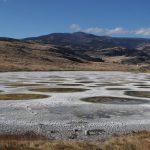
The goals of the visually striking historical site includes Indigenous archeology that are driven by the needs, values and worldviews of the community.
Beyond artifacts found throughout the park, the modern practice highlights the return and extraction of findings to descending communities, like the St’uxwtews.
While Lewis is not directly involved in the band’s strategic vision for the McAbee site, he is constantly thinking about ways to improve access and enhance the visitor experience with the community.
“I would like to add on another 15 to 20 kilometres of trails onto the loop,” Lewis said, adding it would be nice to add a side-by-side tour to cater to those with accessibility needs.
Antoine later added mobility aids for visitors of all abilities would be beneficial. Antoine is optimistic the tourism that draws visitors to the McAbee site will also drive traffic to surrounding communities, like Cache Creek, Spence’s Bridge, Ashcroft, Clinton and Walhachin.
“We’re looking at bike trails, we’re looking at all kinds of mobility,” Antoine said.
“There’s all types of different types of trails that you can make out there because the roads are already there [behind the hoodoos], you don’t have to build them, you just gotta connect them.”
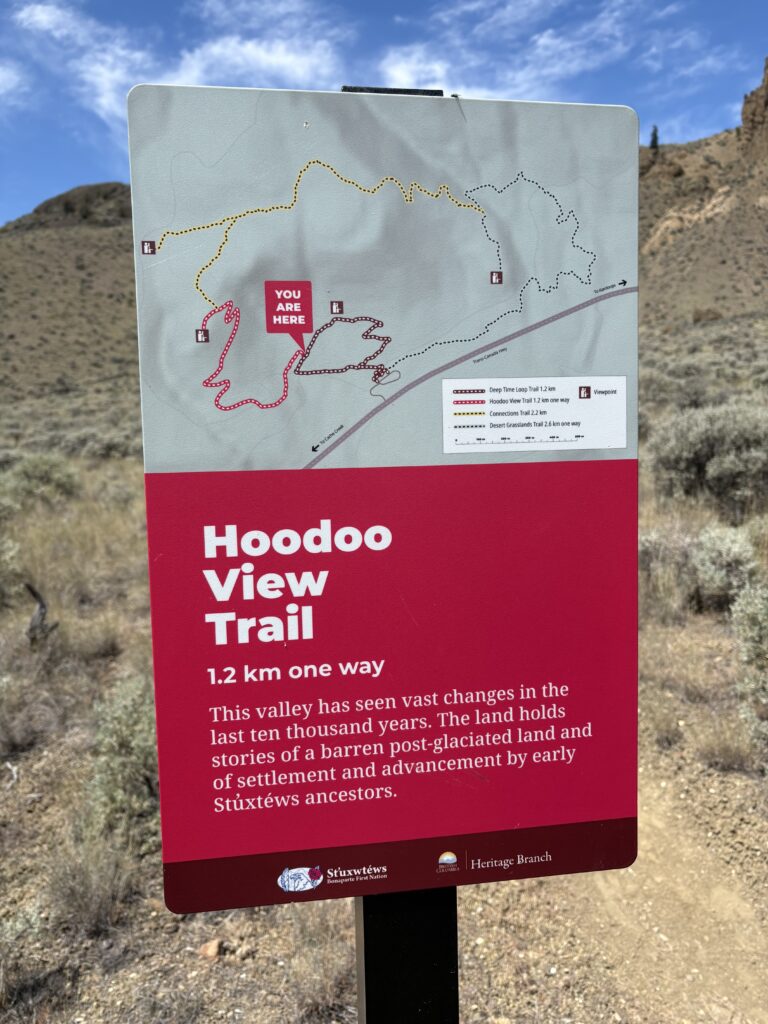
Visitors can hike four different routes: the Deep Time Loop Trail, the Hoodoo View Trail, the Connections Trail and the Desert Grasslands Trail.
The total loop of the trail network stretches approximately eight kilometres with shorter options for families and schools who visit the site during the day.

Trail guide Brian Gross, who is employed through the Hat Creek branch of Bonaparte, estimates it takes up to three hours to see the entire trailhead at McAbee Fossil Fields.
He greets visitors at the entrance of the site, collects admission and tracks statistics on visitors for the community and fields questions from visitors about the provincial heritage site.
“This season, we’ve had visitors from Belgium and four days ago, a paleontology group came out here,” Gross said at the site’s trailhead June 6.
“We have schools visiting from Kamloops, Lillooet and near Williams Lake.”
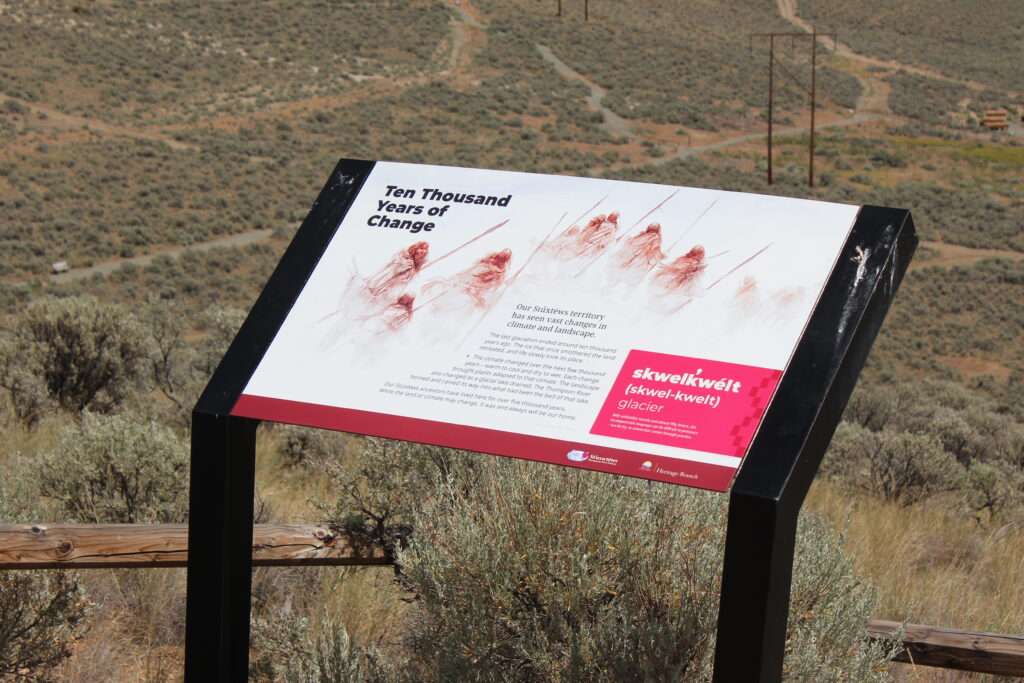
The parking lot was flattened this season and signage to improve access of the site is slated to take place before the end of the year to improve awareness, he added.
Minister of Tourism, Arts, Culture and Sport Anne Kang said the fossil beds are “places of historical significance and an important part of our province’s story.”
“As part of the B.C. government’s commitment to the ongoing care of heritage properties, the province contracts with non-profit societies for the management of these sites,” she said in an emailed statement.
“This includes providing public access, as well as ongoing conservation and maintenance, so that B.C.’s history can continue to be shared with residents and visitors, now and into the future.”
The fossil site reopened May 1 and remains open until Sept. 30. Visitors can tour the site on a self-guided basis between 9 a.m. to 5 p.m. during the summer, and there is no admission charge for those who have valid status cards or Métis citizenship cards.
Author
We live in a media ecosystem that thrives on misinformation. Big Tech and AI companies are consuming the work of real human beings and Canadian news has been banned on Facebook and Instagram.

And yet, I have hope for journalism because of the work we’re doing at IndigiNews.
At IndigiNews, we embody tâpwêwin — the Cree value of integrity and responsibility in truth-telling. We are committed to our independent, Indigenous-led newsroom rooted in community, accountability, and relationality. We believe storytelling is a sacred fire that connects our pasts, presents, and futures through the storytellers in our Storytelling Lodge. IndigiNews creates space for Indigenous journalists, storytellers, Knowledge Keepers, and communities to gather, learn, and share stories that matter.
As a registered charity, we are building a fire that allows our work not just to ignite but to thrive. Rather than relying on advertising or corporate acquisition, IndigiNews is sustained by people like you who believe Indigenous stories are important for the future of our communities.
Your support is making a real difference.
Our community of supporters, our Firekeepers, make it possible to grow our newsroom, publish award-winning journalism, train emerging Indigenous journalists through initiatives like the ReFocus Photojournalism Fellowship, and publish trustworthy stories that serve our communities across the country. Every story we publish helps fill in gaps left by mainstream media and ensures Indigenous perspectives are represented with care, accuracy and respect.
But there is still more work to do.
As the media landscape becomes more and more uncertain, community support is as necessary and essential as it’s ever been. Every new Firekeeper helps protect the independence of our newsroom and strengthens journalism that is accountable to our many and varied communities over corporations.
That’s why we’re inviting you to become a Firekeeper.
Firekeepers tend to and protect the sacred fire. Your monthly contributions directly support IndigiNews’s Storytelling Lodge, helps sustain our independent, Indigenous-led newsroom, and ensures future generations of Indigenous storytellers have the resources they need to do the work.
As a registered Canadian charity, all eligible donations receive a charitable tax receipt.
If you believe Indigenous stories matter, if you value independent journalism, and if you want to help build a strong future for Indigenous media, we invite you to join our circle of Firekeepers today.
Together, we can keep the fire burning.
— Eden Fineday, Publisher, IndigiNews
Support us nowLatest Stories
-
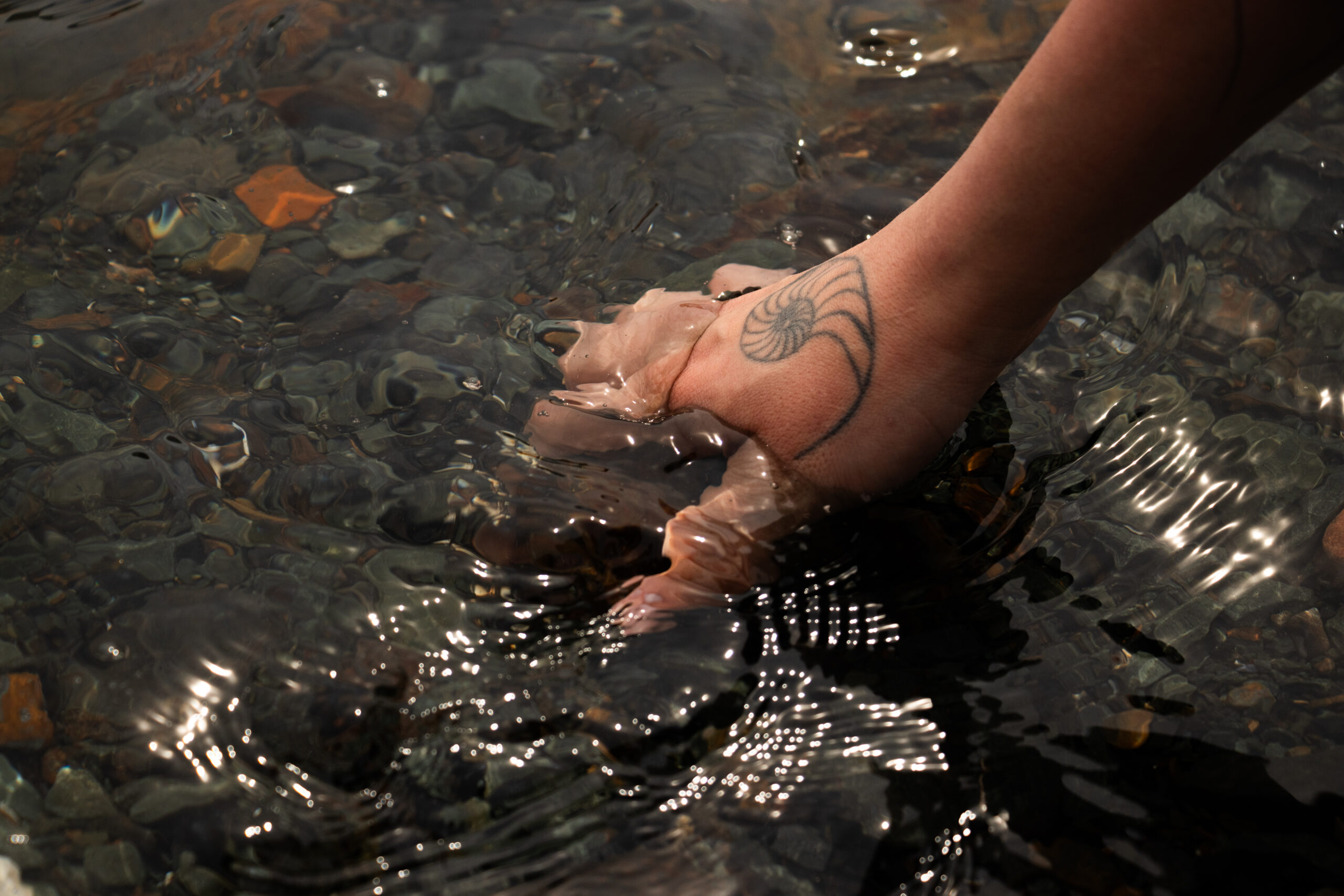
Through their lenses: Showcasing the work of our 2026 ReFocus fellows
Get to know our photojournalism training cohort through a series of portraits shot during a week in Kjipuktuk (Halifax)
-
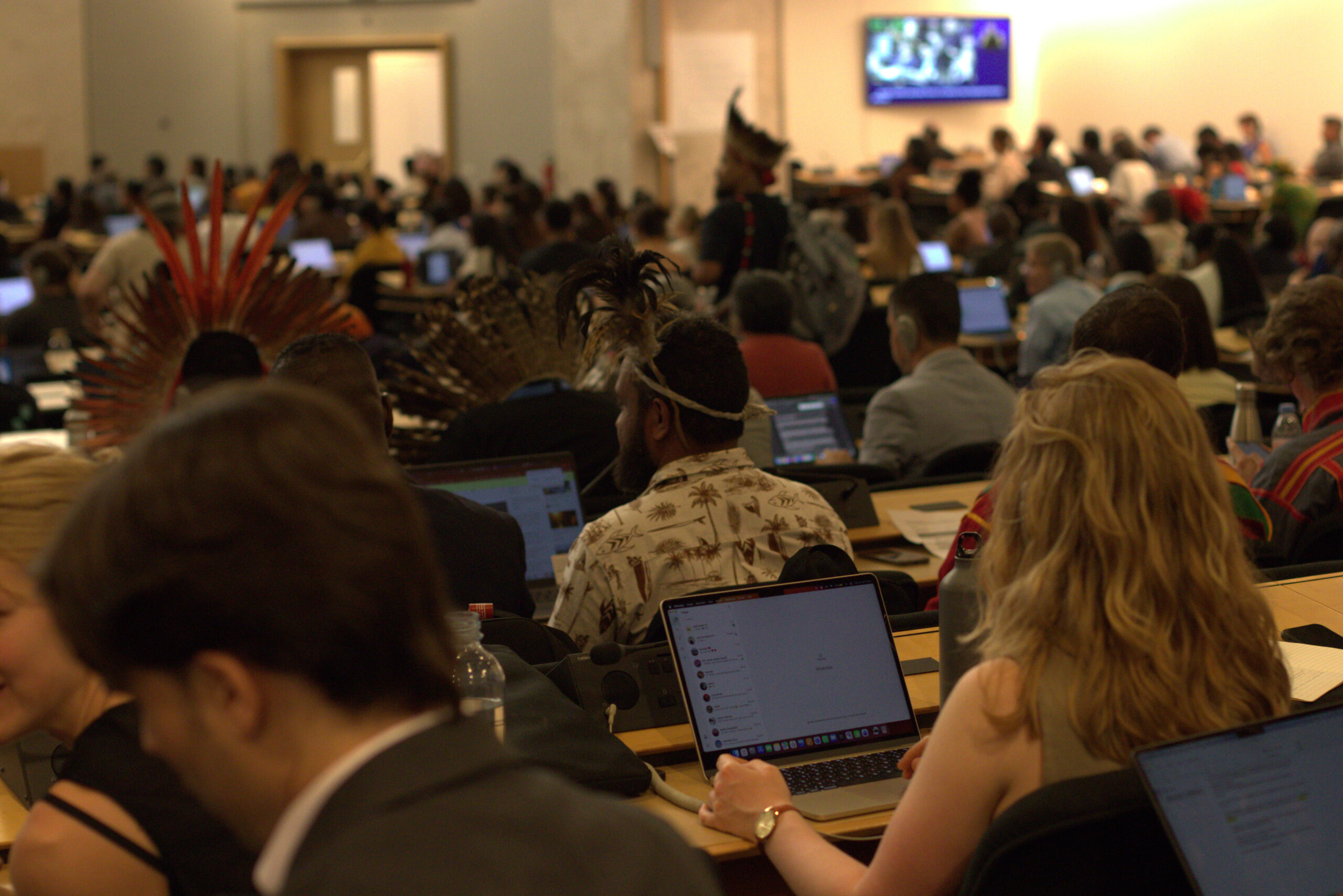
AI data centers are booming. Indigenous People want help protecting their lands and knowledge
Indigenous leaders warn the UN that the rapid growth of artificial intelligence facilities threatens their rights