Province approves massive Nisg̱a’a-led LNG project on the north coast amid opposition
Ministers greenlight Ksi Lisims despite not receiving consent from nearly half of First Nations involved in its assessment, citing ‘economic reconciliation’
This story was originally published in The Narwhal and appears here with permission and minor style edits.
The provincial government has approved the Ksi Lisims liquefied natural gas (LNG) export facility, which is expected to produce up to 12 million tonnes of LNG annually by 2028.
Ksi Lisims LNG — pronounced s’lisims, meaning “from the Nass River” in the Nisg̱a’a language — is a joint venture involving the Nisg̱a’a Lisims Government, “Canadian” natural gas consortium Rockies LNG and Western LNG, a “U.S.”-based LNG project developer.
Located at the north end of Pearse Island, close to the Alaska border, the facility will be the second largest LNG producer in the province, nearly matching the 14-million-tonne production capacity of the first phase of the LNG Canada export terminal, which began shipping LNG to Asia this year.
In their reasons for decision, posted publicly on Sept. 15, “B.C.” ministers of environment and energy, Tamara Davidson and Adrian Dix, said they were approving the new LNG project despite not receiving consent from nearly half of the First Nations who participated in the environmental assessment process.
“We recognize that LNG facilities, along with natural gas pipelines, electrical transmission lines … and other development in the area has deeply affected Indigenous communities and ways of life, and that Ksi Lisims LNG will contribute to the cumulative effects on ecosystems and communities in the region,” they wrote.
However, they concluded the Ksi Lisims project would “constitute economic reconciliation and an exercise of self-determination for Nisg̱a’a Nation” and provide “direct and indirect economic opportunities for First Nations in the region and for British Columbia.”
LNG exported from Ksi Lisims will primarily be sent overseas to countries like Japan and South Korea, where the gas will be burned to produce heat and electricity.
In approving the project, the ministers noted Ksi Lisims will be bound to 23 conditions, including a greenhouse gas emissions plan in line with “B.C.’s” net-zero policy. However, they noted the project is expected to have “significant adverse effects on greenhouse gas (GHG) emissions from the use of natural gas-fired power barges used to electrify the project prior to connection to the BC Hydro electrical grid.” It is unclear how or when the project would be electrified.
Western LNG and the Nisg̱a’a government also own Prince Rupert Gas Transmission (PRGT), an 800-kilometre natural gas pipeline that will cross more than 1,000 waterways on its route to supply Ksi Lisims LNG. The pipeline was greenlit by the province’s environmental assessment office in June, paving the way for construction to continue this summer, more than a decade after the project was first proposed.
“Ksi Lisims LNG represents a transformational opportunity for all participating B.C. nations, and it will be developed in line with our nation’s high environmental standards,” Eva Clayton, president of the Nisg̱a’a government said in a statement. “This is what reconciliation looks like: a modern treaty nation once on the sidelines of our economy, now leading a project that will help write the next chapter of a stronger, more resilient Canada.”
For Nisg̱a’a leadership, Ksi Lisims is a development opportunity that will benefit its communities, the province and the “Canadian” economy — but other First Nations oppose the project.
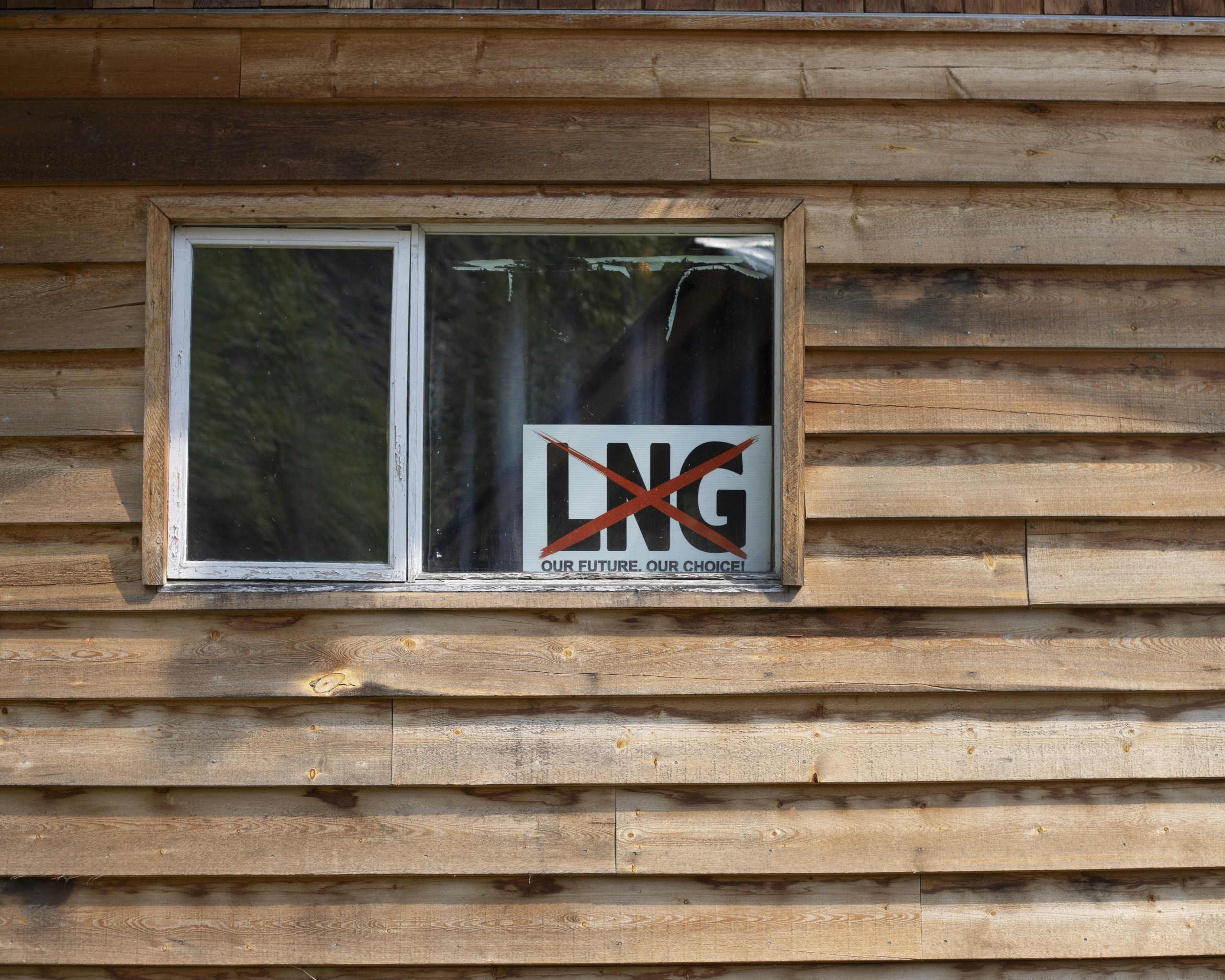
The Lax Kw’alaams band, for example, says the LNG facility would negatively affect its traditional territory and has expressed concerns about the project’s potential impact on “B.C.’s” ability to meet its climate targets. Lax Kw’alaams is southwest of the newly approved LNG facility and tankers filled with the liquefied gas will pass by the village regularly.
The environmental assessment office announced earlier this month that it had concluded dispute resolution processes initiated by Lax Kw’alaams and the Metlakatla First Nation as part of Ksi Lisims’ environmental assessment — despite failing to address the First Nations’ concerns about the project’s potential impacts on their communities.
The project also faced a legal challenge filed by the Gitanyow Hereditary Chiefs in October 2024. The chiefs submitted an application for judicial review to the B.C. Supreme Court, alleging “B.C.’s” environmental assessment office failed in its duty to consult and is negligent in its obligations to protect fish species when it concluded the project does not pose a threat to Nass River salmon populations.
“This project threatens our food security and government has denied Gitanyow a role in decision making,” Simogyet (Hereditary Chief) Malii Glen Williams said in a statement at the time.
The challenge was rejected by the court in early September.
Naxginkw Tara Marsden, Wilp Sustainability director with the Gitanyow Hereditary Chiefs, said the approval puts the province on a dangerous path.
“It’s hard to believe that we’re moving ahead in B.C. with climate-destroying LNG projects in the midst of a climate crisis,” Naxginkw said in a statement. “Greenlighting LNG projects is part of a trend in the wrong direction.”
Author
We live in a media ecosystem that thrives on misinformation. Big Tech and AI companies are consuming the work of real human beings and Canadian news has been banned on Facebook and Instagram.

And yet, I have hope for journalism because of the work we’re doing at IndigiNews.
At IndigiNews, we embody tâpwêwin — the Cree value of integrity and responsibility in truth-telling. We are committed to our independent, Indigenous-led newsroom rooted in community, accountability, and relationality. We believe storytelling is a sacred fire that connects our pasts, presents, and futures through the storytellers in our Storytelling Lodge. IndigiNews creates space for Indigenous journalists, storytellers, Knowledge Keepers, and communities to gather, learn, and share stories that matter.
As a registered charity, we are building a fire that allows our work not just to ignite but to thrive. Rather than relying on advertising or corporate acquisition, IndigiNews is sustained by people like you who believe Indigenous stories are important for the future of our communities.
Your support is making a real difference.
Our community of supporters, our Firekeepers, make it possible to grow our newsroom, publish award-winning journalism, train emerging Indigenous journalists through initiatives like the ReFocus Photojournalism Fellowship, and publish trustworthy stories that serve our communities across the country. Every story we publish helps fill in gaps left by mainstream media and ensures Indigenous perspectives are represented with care, accuracy and respect.
But there is still more work to do.
As the media landscape becomes more and more uncertain, community support is as necessary and essential as it’s ever been. Every new Firekeeper helps protect the independence of our newsroom and strengthens journalism that is accountable to our many and varied communities over corporations.
That’s why we’re inviting you to become a Firekeeper.
Firekeepers tend to and protect the sacred fire. Your monthly contributions directly support IndigiNews’s Storytelling Lodge, helps sustain our independent, Indigenous-led newsroom, and ensures future generations of Indigenous storytellers have the resources they need to do the work.
As a registered Canadian charity, all eligible donations receive a charitable tax receipt.
If you believe Indigenous stories matter, if you value independent journalism, and if you want to help build a strong future for Indigenous media, we invite you to join our circle of Firekeepers today.
Together, we can keep the fire burning.
— Eden Fineday, Publisher, IndigiNews
Support us nowLatest Stories
-

Skateboard parks on reserves are ‘cultural engines’ for Youth: short film
In ‘Paving the Way,’ skateboarding becomes a way for young people to make art, build friendships, and carry grief together
-
Secwépemc stewards preserve culture, history of a 53-million-year-old forest
Community-led trails, tours and a cultural centre are part of Bonaparte First Nation’s vision for the McAbee Fossil Beds in Secwépemcúl’ecw