Osoyoos Indian Band set to restore native plants, species in wildfire-ravaged forests
The First Nation plans to clear out burned spaces and restore trees, berries and medicinal plants to the area, encouraging biodiversity and wildlife to return
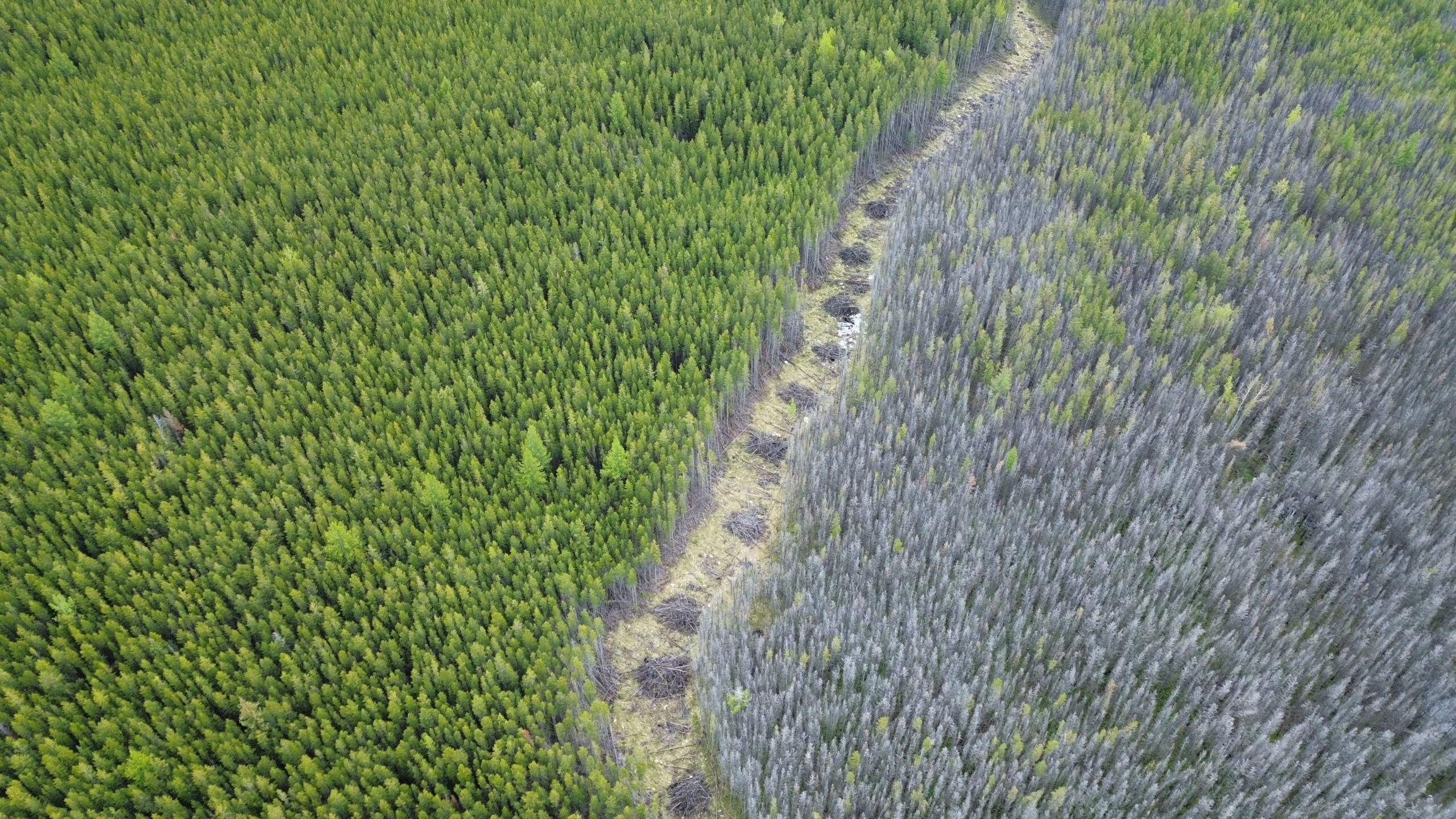
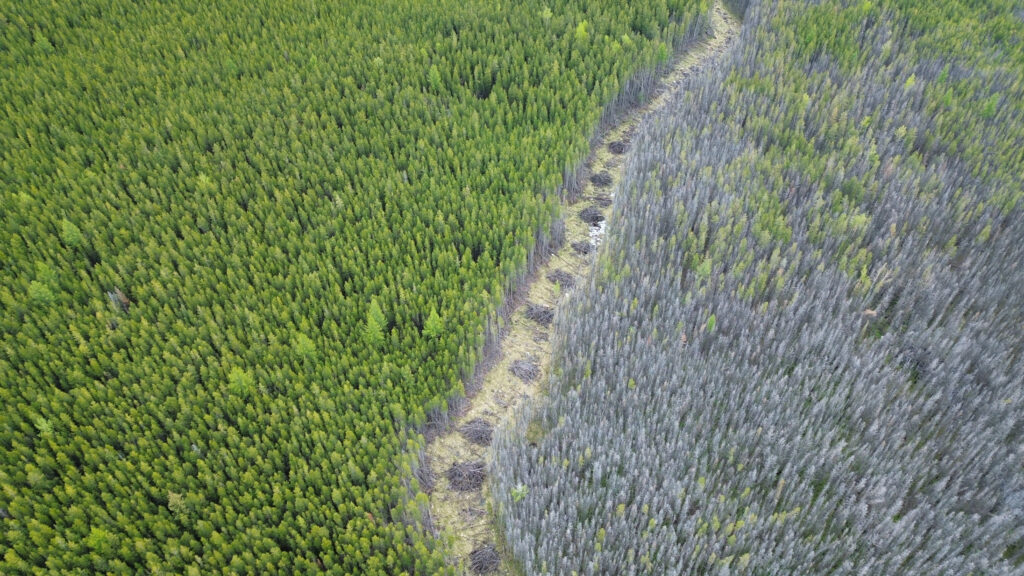
Osoyoos Indian Band is working to revitalize forests in its territories that have been ravaged by wildfires — turning them into fire-resistent zones full of biodiversity, wildlife and medicinal plants for its members.
The band-owned Nk’Mip Forestry is planning to revive two woodlands located above the First Nation’s reservation in the highlands between Oliver and Mount Baldy — making up just over 40 hectares combined. The forest tenure where the project is located is approximately 50,000 hectares in size, and is co-managed between the Osoyoos Indian Band and Gorman Bros.
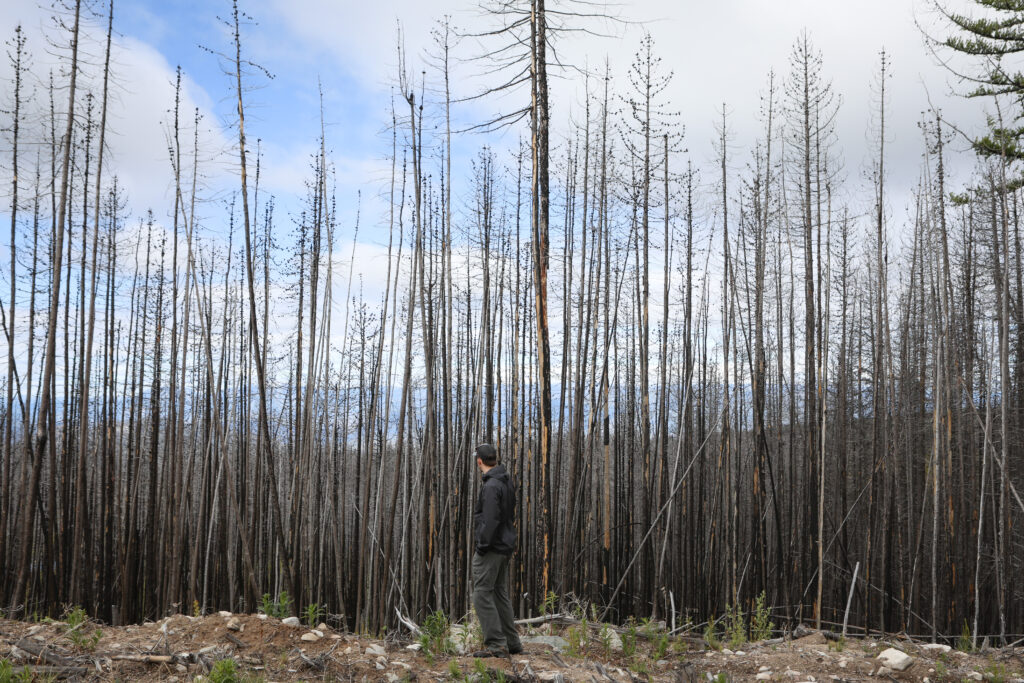
The two forests — a drier douglas fir ecosystem with ponderosa pine, and a montane spruce ecosystem dominated by dense lodgepole pile further up the hill — were both impacted by the 2021 Nk’Mip Creek Wildfire, which is estimated to have burned just over 20,000 hectares.
After the fire, Vernon Louie, an Osoyoos Indian Band (OIB) member and grounds operation manager with Nk’Mip Forestry, said that animals in the area were displaced.
“Tweny-plus years ago, there used to be deer and elk all over. Lots of moose up here, especially up Baldy you’d see them. Almost one every time you’d go up,” Louie told IndigiNews.
“Now, you’d be lucky to see a deer if you go up.”
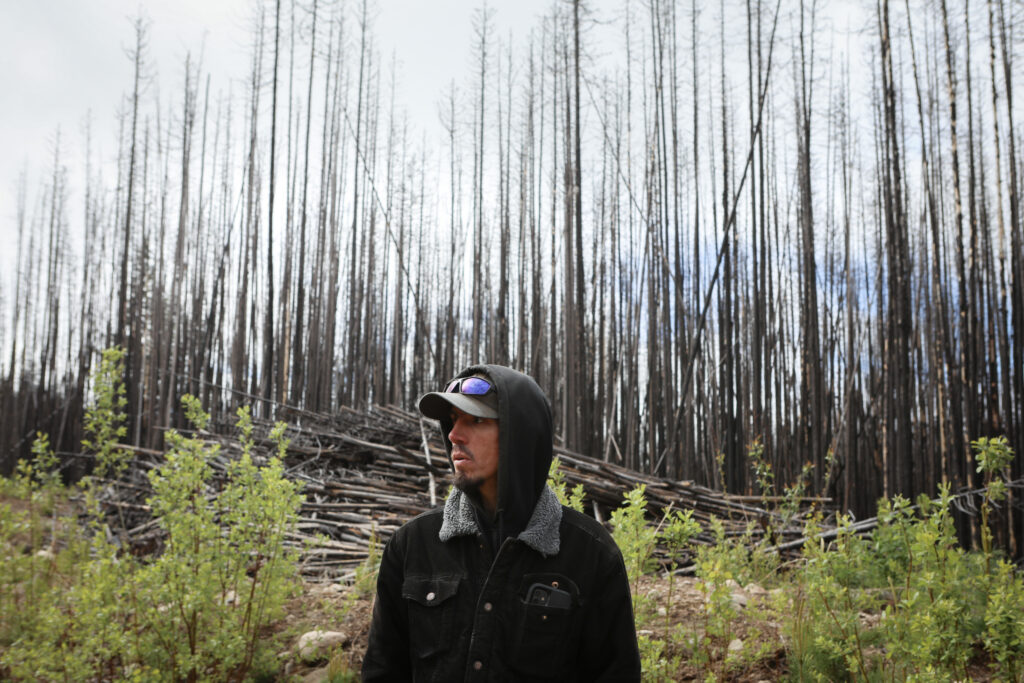
These animals, he said, were forced to look for food sources at the valley bottom. Now, after five years, they’re starting to return to the highlands.
“But they need better ground, and more stuff to eat,” he said. “We want them to actually come back up and settle. But you gotta give them the opportunity to do that by clearing this stuff out.”
The first phase of the project’s operations, scheduled for late summer and into the fall, will see the burned, still-standing dead timber removed from both sites, to help make space for the planting of various berry and shrub plants, as well as deciduous and native trees.
“What we’re really doing here, is trying to influence a bit of a change in this post-wildfire landscape, to encourage wildfire resiliency and ecosystem resiliency in the future,” project lead Eden Hardcastle, a forester-in-training with Nk’Mip Forestry, said to IndigiNews.
“Instead of using the word restoration, I’ve used the term intervention.”
The dead timber will not be salvaged for profit, however. Instead, the trees will be processed into firewood materials for the community.
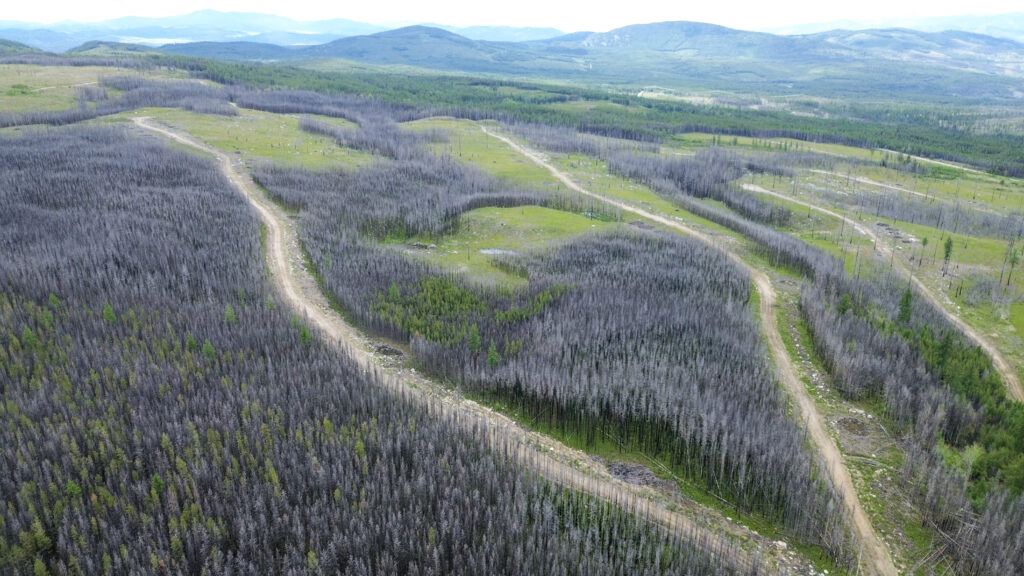
While both sites have unique planting prescriptions based on their ecosystems, there are prioritized shrub and deciduous tree species that will be planted across both areas.
The prioritized shrub species planned for planting includes saskatoon berry , soopolallie (soapberry), huckleberry, thimbleberry and snowberry. Introducing deciduous trees such as birch, cottonwood and trembling aspen to the landscape are also part of the strategy.
“Most deciduous trees and shrubs are going to be really important for a live fire break,” said Hardcastle.
“Not only do they retain more moisture, but they’re significantly less flammable, so it can really help slow down a fire.”
Having a diversity of species is critical for ecosystem adaptability, not just wildfire resilience, she said.
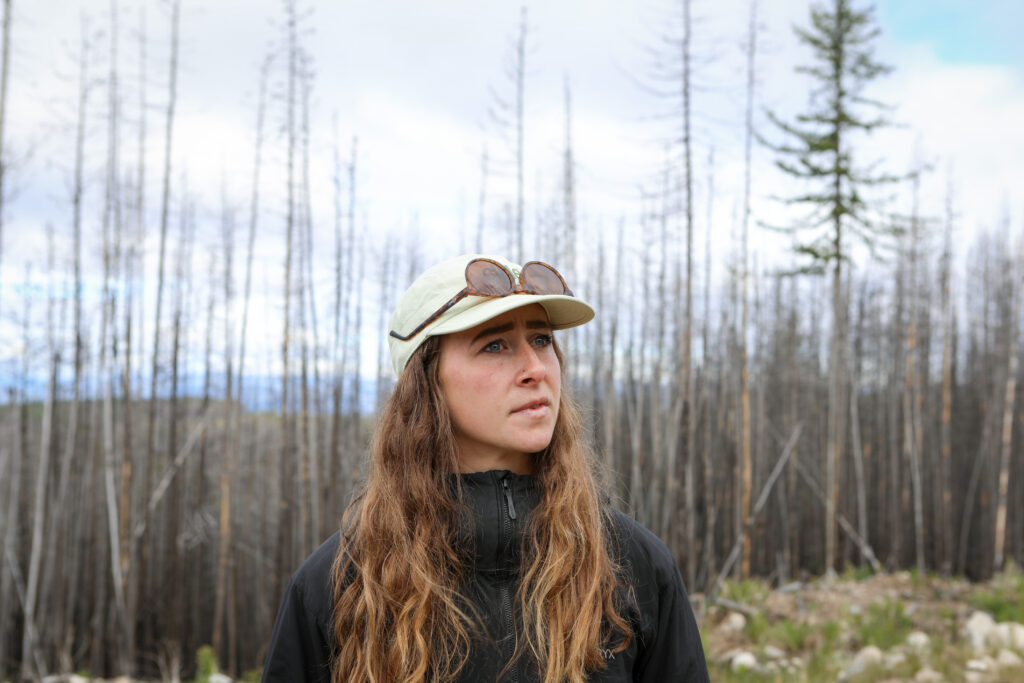
“We’re in a changing climate with changing external stimuli,” she said.
“Different trees — well, different plants, in general — can contribute different things to the ecosystem. Having that diversity is important for not only recovery, but long-term resilience in the area.”
Although lodgepole pine is a native tree, the species has taken over the site of the montane spruce ecosystem site. Hardcastle attributed its overgrowth to the tree’s serotinus pinecones that spread seeds after a fire sweeps through an area.
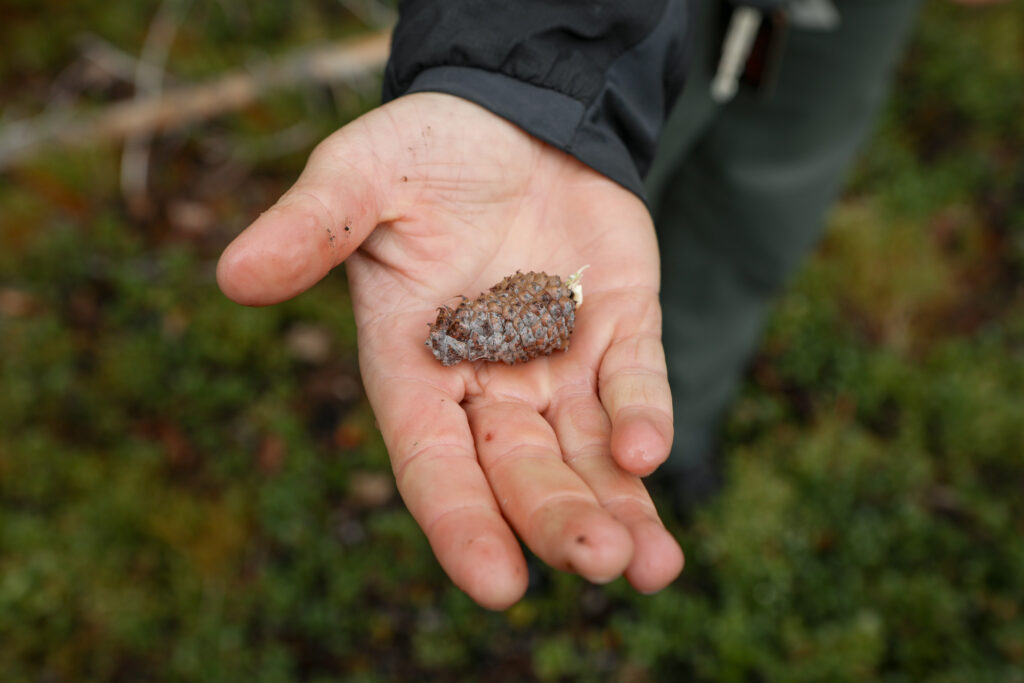
“When a fire comes through, that heat catalyzes to drop its seeds. That means that lodgepole pine comes back really fast and really thick after a fire,” she said.
While it is a natural process, she said that it “also creates a bit of a fire hazard in the future, because that stand is really dense and very flammable.”
That’s why reintroducing biodiversity to the forest “is the key,” she added, for it helps with future climate resiliency.
“It’s not just wildfires that put stress onto our forests. It’s temperature changes; it’s precipitation changes; it’s further human disturbance,” she said.
“Biodiversity helps with all of that. Some species are more resilient to some things than others. It contributes to overall tolerance to change.”
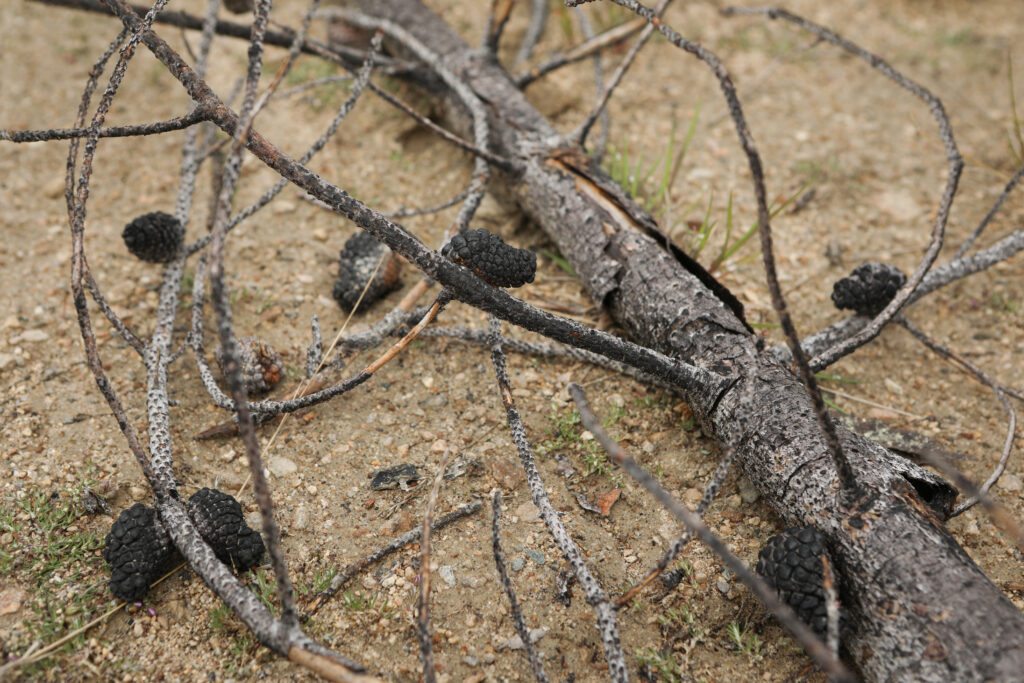
In addition to planting deciduous trees and different shrubs at the montane spruce ecosystem site, larch and douglas fir trees will also be planted there, she said.
“Unfortunately here, we have nothing but lodgepole coming back. That was part of the decision-making there,” she said.
“If we were getting species that we did want to see coming back naturally, we weren’t going to disturb it at all. That’s a process that we’re looking for.”
Once the dead trees have been removed, Hardcastle said that the plan is to invite OIB community members to help plant different trees and shrub species at the sites next spring.
The vision is to remove the dead trees from the forests while retaining the live ones, which will create more space and give shade for different trees and plants to grow, said Peter Flett, the head of forestry operations at Nk’Mip Forestry. It will also help to attract more wildlife back to the area.
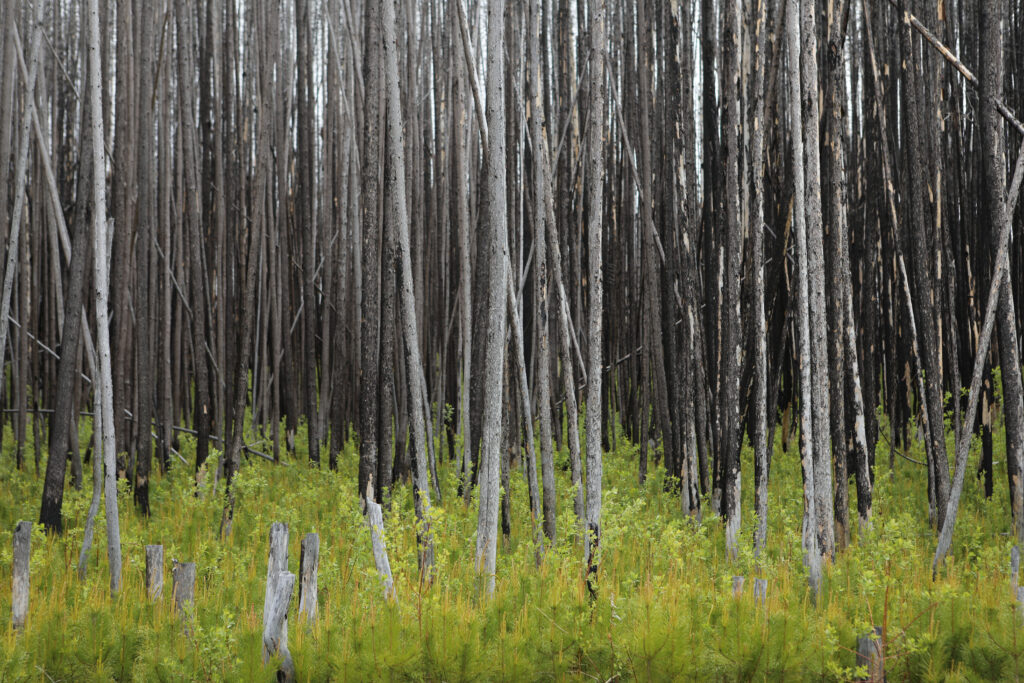
“More shade helps mitigate the heat from climate change. It keeps moisture in the soil. It helps shade-tolerant plants grow,” he said.
The hope is to offer an abundance of food and cultural experiences for community members: more animals to hunt, and a greater selection of berries and medicines to harvest.
Hardcastle said that the project can act as a model for future similar initiatives, and see how it can be applied on a larger scale. The project is being funded by Environment and Climate Change Canada, through their Climate-Smart Forestry grant, which is being administered by the Sustainable Forestry Initiative.
“Hopefully, in doing this, we can determine what that actual cost looks like for the future,” she said.
She emphasized that the purpose of the restoration and intervention work is for the betterment of the OIB community.
“It’s for the environment, but this forested area is part of OIB’s culture,” she said.
“We also wanted to make sure that it was road-accessible, because we want this area to be usable as a foraging site for some of the shrubs that we’re planting. Like, for berries and other culturally significant plants.”
Louie said that Elders in the community have berry picking spots across the two sites, and have given “all thumbs-up” for this project.
“This work is definitely needed. They want to see it restored. To restore it, you gotta take out the old stuff,” said Louie.
“Berry picking, hunting, gathering, is really important. Some of these areas are close to existing roads — the easier access for Elders, the better.”
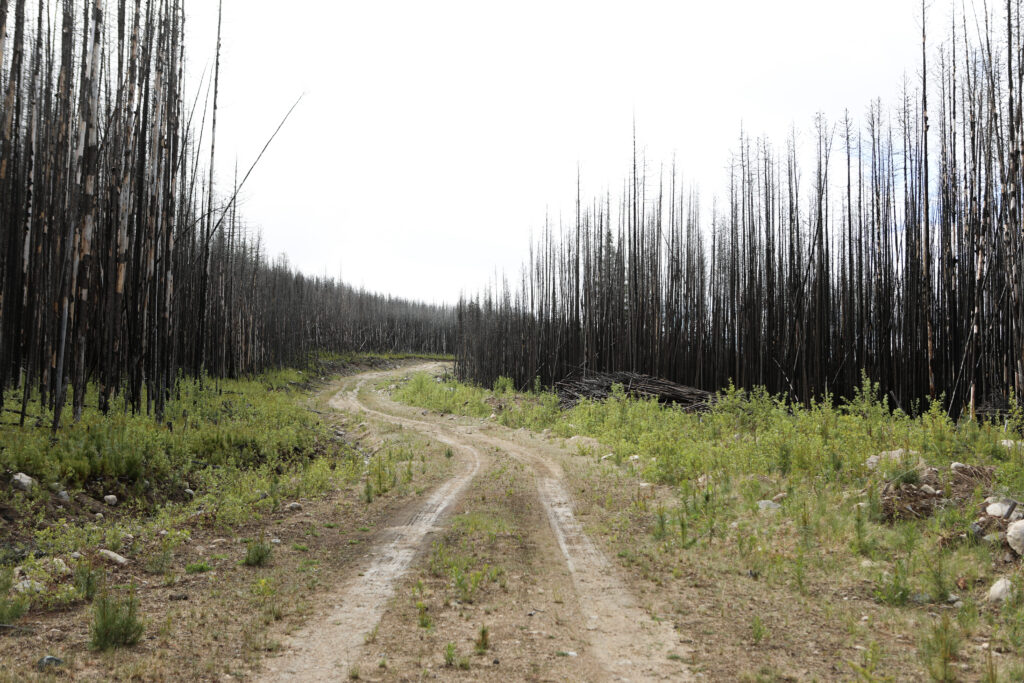
Following the intervention, Hardcastle said she hopes to see an improvement in species composition, to show more biodiversity across the two sites, within the next five years.
“It would be great to see more wildlife up here,” she said.
“That short-term is going to be really telling for what we did right and what we did wrong. Long-term, I just hope it’s beneficial for the environment and the community: create a fire break, and create a pocket of diversity in an area that has very little diversity.”
Author
We live in a media ecosystem that thrives on misinformation. Big Tech and AI companies are consuming the work of real human beings and Canadian news has been banned on Facebook and Instagram.
And yet, I have hope for journalism because of the work we’re doing at IndigiNews.
At IndigiNews, we embody tâpwêwin — the Cree value of integrity and responsibility in truth-telling. We are committed to our independent, Indigenous-led newsroom rooted in community, accountability, and relationality. We believe storytelling is a sacred fire that connects our pasts, presents, and futures through the storytellers in our Storytelling Lodge. IndigiNews creates space for Indigenous journalists, storytellers, Knowledge Keepers, and communities to gather, learn, and share stories that matter.
As a registered charity, we are building a fire that allows our work not just to ignite but to thrive. Rather than relying on advertising or corporate acquisition, IndigiNews is sustained by people like you who believe Indigenous stories are important for the future of our communities.
Your support is making a real difference.
Our community of supporters, our Firekeepers, make it possible to grow our newsroom, publish award-winning journalism, train emerging Indigenous journalists through initiatives like the ReFocus Photojournalism Fellowship, and publish trustworthy stories that serve our communities across the country. Every story we publish helps fill in gaps left by mainstream media and ensures Indigenous perspectives are represented with care, accuracy and respect.
But there is still more work to do.
As the media landscape becomes more and more uncertain, community support is as necessary and essential as it’s ever been. Every new Firekeeper helps protect the independence of our newsroom and strengthens journalism that is accountable to our many and varied communities over corporations.
That’s why we’re inviting you to become a Firekeeper.
Firekeepers tend to and protect the sacred fire. Your monthly contributions directly support IndigiNews’s Storytelling Lodge, helps sustain our independent, Indigenous-led newsroom, and ensures future generations of Indigenous storytellers have the resources they need to do the work.
As a registered Canadian charity, all eligible donations receive a charitable tax receipt.
If you believe Indigenous stories matter, if you value independent journalism, and if you want to help build a strong future for Indigenous media, we invite you to join our circle of Firekeepers today.
Together, we can keep the fire burning.
— Eden Fineday, Publisher, IndigiNews
Support us nowLatest Stories
-
Skateboard parks on reserves are ‘cultural engines’ for Youth: short film
In ‘Paving the Way,’ skateboarding becomes a way for young people to make art, build friendships, and carry grief together
-
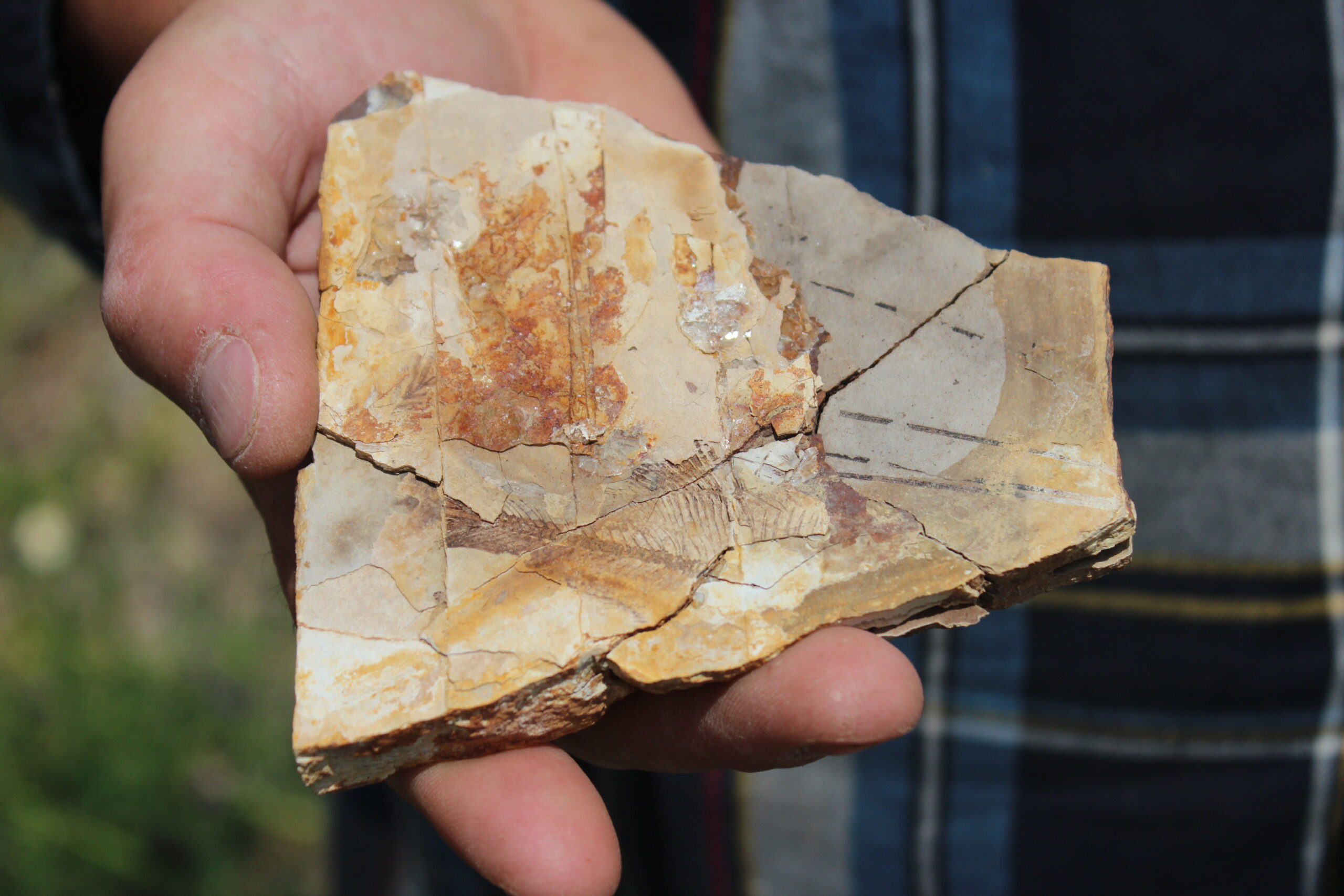
Secwépemc stewards preserve culture, history of a 53-million-year-old forest
Community-led trails, tours and a cultural centre are part of Bonaparte First Nation’s vision for the McAbee Fossil Beds in Secwépemcúl’ecw