Haida basketmaker, 94, releases book about her life and craft: ‘I felt so strongly that the weaving art should continue’
Delores Churchill’s ‘From a Square to a Circle: Haida Basketry’ has been decades in the making and features family stories as well as a how-to guide on weaving


A 94-year-old Haida weaver is releasing a new book that she hopes will help ensure that the threads of her culture continue to bind past and future generations.
Delores Churchill’s From a Square to a Circle: Haida Basketry is a poignant reflection — decades in the making — on the history and revitalization of Haida weaving traditions.
Churchill has long held the knowledge passed down from her mother and Elders while inspiring new weavers to take up the art. In the book, she reflects on her life’s journey and offers a how-to guide for readers about the craft.
“When I first started thinking of writing the book, there were only three Haida people who were weaving in Alaska,” Churchill told IndigiNews in an interview, the creak of her rocking chair audible over the phone.
“I felt so strongly that the weaving art should continue.”
Churchill didn’t know where to begin, but she knew she had to start somewhere.
“I used to write it in a yellow notepad,” she said about starting the book in the late 1980s. After the notepad started getting too thick, she bought an early-model computer and began typing the stories out.
Now, 35 years after she started jotting her knowledge and stories, the book is finally finished and being released through Harbour Publishing. It will officially be available as of its launch date tomorrow, on Oct. 19.

From a Square to a Circle is divided into five sections — focusing first on the key figures who shaped Churchill’s weaving journey, then exploring the role of weaving in Haida culture and lifeways.
Churchill then dives into her childhood harvesting stories and highlights her family’s unique harvesting methods before detailing a series of Haida weaving techniques and basket-making instructions.
“My vision is that with the passing on of the intellectual property with which I have been entrusted, the beautiful Haida weaving arts will support the continued growth of the Haida culture,” Churchill writes in the preface of the book.
“My hope is that the teachings of my mother’s traditional Haida style of harvesting and weaving, and my life’s learning, will carry on through the work of the weavers of today and into the future.
“My dream is that others will find the peace, connection and sheer joy that filled my life with the many gifts the weaving arts have to offer.”
Churchill was born in 1929 in G̱utaawaas (Old Massett), Haida Gwaii, and grew up surrounded by Haida weaving. She would watch her mother, Ilst’ayaa Selina Harris Adams Peratrovich, weave, and would use her mother’s woven baskets for harvesting and collecting potatoes, berries, bird eggs, shellfish, and other foods. Her cedar hat protected her from the sun and weather.
When she was at Massett Indian Day School, Churchill took a basketry class taught by her mother. Her basket was entered into an art show competition in “Victoria,” where she won first place.
Her mother’s strictness and adherence to weaving principles, however, turned her off of the practice and she vowed to never weave again, taking a career as a bookkeeper.
In the 1970s, when Churchill learned the future of Haida weaving was at risk, she retired at age 45 and once again started learning to weave from her mother.
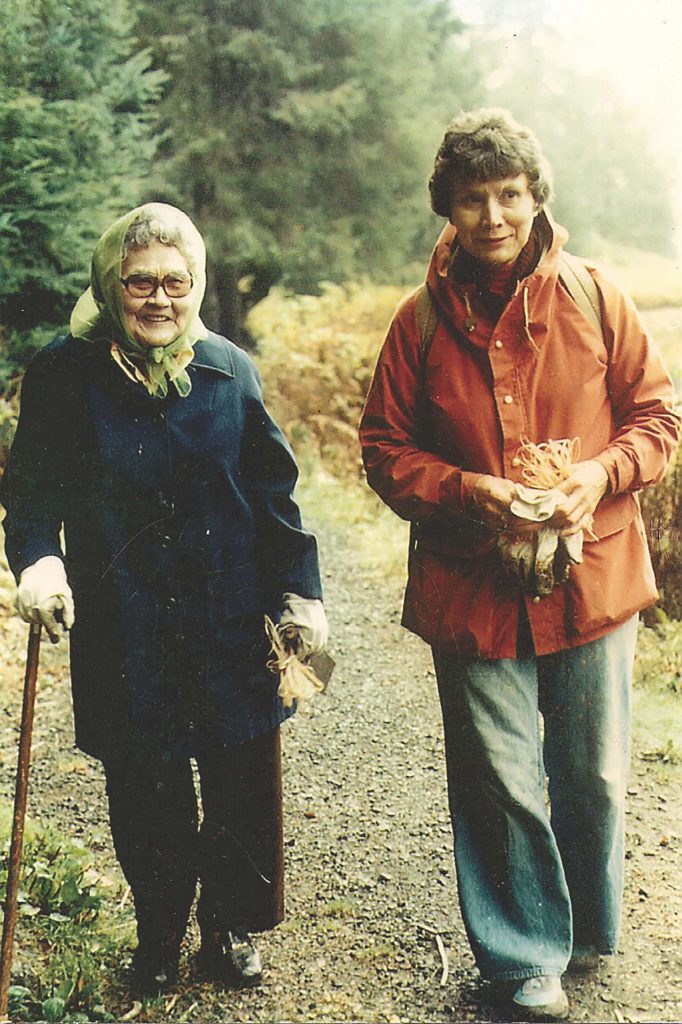
Churchill discovered that the practice helped her mental health as well.
“It’s just mesmerizing when you start weaving,” she said. “It’s so peaceful. You get rid of all your anger. You get rid of all the things that are troubling you. You think of happy things and happy times.”
Churchill’s mother dedicated her life to the continuation of Haida weaving, despite colonial policies aimed at wiping out Haida culture.
“My mother said that when those people who had gone to boarding (and residential) schools came back home, they didn’t want to speak the language anymore; they didn’t want to do anything cultural,” Churchill said.
”Our weaving almost got lost because of that, but there were always people who continued the art.”
Churchill studied under her mother’s instruction until Selina’s passing in 1984, and went on to teach hundreds more to weave. She also learned from other Haida, Tlingit, and Tsimshian weavers whom she writes about in the book.

Among Churchill’s many accomplishments is a cedar bark robe with Ravenstail trim she wove with her daughter Evelyn for Ketchikan High School in 1991. It was the first of its kind to be woven in nearly 200 years.
Churchill and Evelyn also collaborated on a ravenstail robe in G̱utaawaas which is believed to be the first one woven there in more than 150 years.
Since then, Haida weaving in G̱utaawaas has seen a resurgence with the number of weavers multiplying, Churchill said.
“You should see the ravenstail weaving in Massett now. They have headbands, capes, aprons — it’s amazing.”

Many refer to Churchill as a master weaver, but she likens her weavings to those of a child compared to the ones her ancestors made.
“Every time I go to a museum and see those huge, beautifully woven baskets by our ancestors, it really makes me humble because those are the master artists,” she said.
“Go look at those when you think you’re a master artist — you’ll get slapped right down to kindergarten like I am.”
Churchill’s weaving knowledge — which also includes Tsimshian, Tlingit, and Nisga’a techniques — comes from many encounters with knowledge keepers and cultural items.
For instance, she learned a Tlingit basketry technique from Annie Jacobs, who was in the hospital in Sheet’ká (Sitka, Alaska) after a stroke.
Churchill had learned that Jacobs used to be a skilled weaver, so she gave Jacobs some spruce roots to weave with.

Jacobs was despondent and at first refused the weaving materials, explaining she was blind and couldn’t see anymore. Churchill gently insisted and put the spruce roots under Annie’s hospital bed pillow, saying they might help Annie dream about her life of harvesting and weaving.
“A few days later, I went back,” said Churchill. “The nurses came to me and said, ‘Go see Annie, go see Annie!’ So I went to see Annie, and she had nearly woven the base of a basket.”
Jacobs asked Churchill to bring more spruce roots and taught her to weave Tlingit basketry with them, a technique which Churchill has helped pass on to future students.
“Now they’re teaching spruce-root weaving in the schools,” Churchill said. “They learn how to harvest the spruce root, how to prepare it, and they are now helping to keep the art alive, so that really makes me feel so great.”
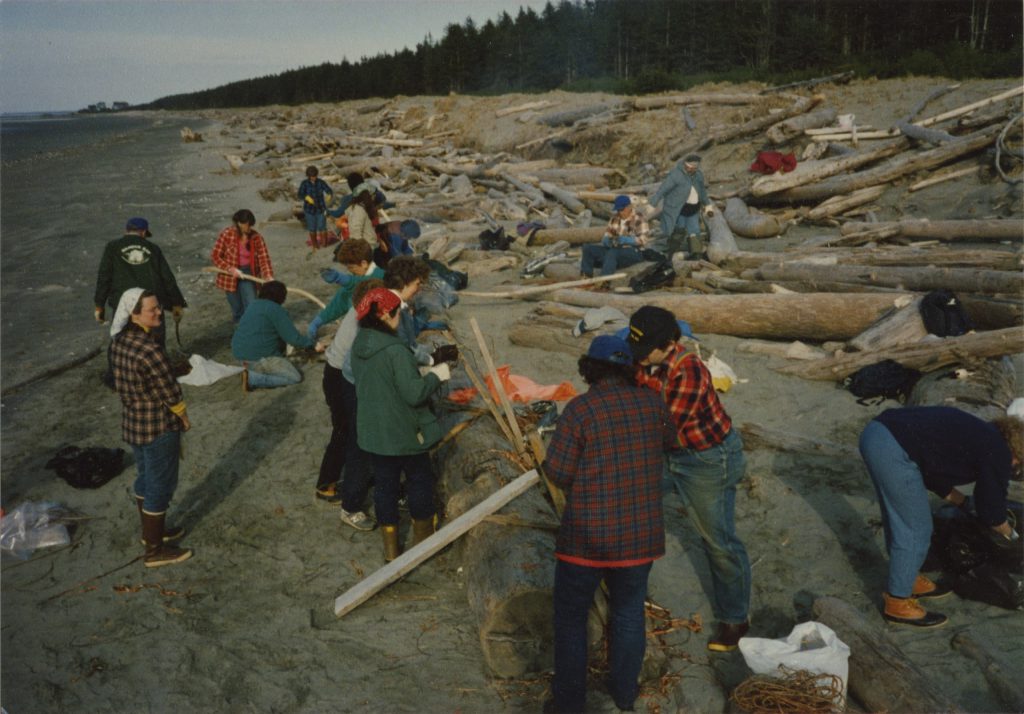
On another occasion, Churchill helped revitalize a discontinued spruce hat weaving technique after a group of hunters stumbled across the centuries-old remains of Kwäday Dän Ts’ìnchi (“Long Ago Person Found”) in a glacial crevasse.
When the archaeologists flew to the site by helicopter, Kwäday Dän Ts’ìnchi’s hat, which had been preserved by the ice and cold climate, flew up into the air.
“Right away, I was so interested in that hat,” said Churchill.
She called the Sealaska Heritage Institute, which made arrangements for her to go to “Whitehorse” to study the hat.
Finding it remarkable that no one possessed the skills to weave Kwäday Dän Ts’ìnchi’s style of hat, Churchill went on to carefully recreate it, later donating the replica to the Bill Reid Gallery.
“You really have this feeling of connecting to your ancestors as you weave,” she said.
After connecting to Kwäday Dän Ts’ìnchi through the hat, Churchill later discovered through a mitochondrial DNA test that she was in fact genetically related to Long Ago Person Found.
One of Churchill’s main sources of hope is the young people who are picking up the weaving practice, ensuring “that all this culture and artwork will continue long after I’m gone.”
She has three daughters who each weave and teach the craft, and all of her grandchildren also weave, according to the book.
With the funds from the book, Churchill plans to establish an endowment fund in her mother’s name that will support people who want to learn to weave using their ancestral practices.
“Weaving connects us to the past, and teaching passes the art of weaving on to the future,” Churchill writes.
“Each generation of weavers will contribute their interpretations and artistic expressions to the growth of this vibrant art form.”
Author
We live in a media ecosystem that thrives on misinformation. Big Tech and AI companies are consuming the work of real human beings and Canadian news has been banned on Facebook and Instagram.
And yet, I have hope for journalism because of the work we’re doing at IndigiNews.
At IndigiNews, we embody tâpwêwin — the Cree value of integrity and responsibility in truth-telling. We are committed to our independent, Indigenous-led newsroom rooted in community, accountability, and relationality. We believe storytelling is a sacred fire that connects our pasts, presents, and futures through the storytellers in our Storytelling Lodge. IndigiNews creates space for Indigenous journalists, storytellers, Knowledge Keepers, and communities to gather, learn, and share stories that matter.
As a registered charity, we are building a fire that allows our work not just to ignite but to thrive. Rather than relying on advertising or corporate acquisition, IndigiNews is sustained by people like you who believe Indigenous stories are important for the future of our communities.
Your support is making a real difference.
Our community of supporters, our Firekeepers, make it possible to grow our newsroom, publish award-winning journalism, train emerging Indigenous journalists through initiatives like the ReFocus Photojournalism Fellowship, and publish trustworthy stories that serve our communities across the country. Every story we publish helps fill in gaps left by mainstream media and ensures Indigenous perspectives are represented with care, accuracy and respect.
But there is still more work to do.
As the media landscape becomes more and more uncertain, community support is as necessary and essential as it’s ever been. Every new Firekeeper helps protect the independence of our newsroom and strengthens journalism that is accountable to our many and varied communities over corporations.
That’s why we’re inviting you to become a Firekeeper.
Firekeepers tend to and protect the sacred fire. Your monthly contributions directly support IndigiNews’s Storytelling Lodge, helps sustain our independent, Indigenous-led newsroom, and ensures future generations of Indigenous storytellers have the resources they need to do the work.
As a registered Canadian charity, all eligible donations receive a charitable tax receipt.
If you believe Indigenous stories matter, if you value independent journalism, and if you want to help build a strong future for Indigenous media, we invite you to join our circle of Firekeepers today.
Together, we can keep the fire burning.
— Eden Fineday, Publisher, IndigiNews
Support us nowLatest Stories
-
Through their lenses: Showcasing the work of our 2026 ReFocus fellows
Get to know our photojournalism training cohort through a series of portraits shot during a week in Kjipuktuk (Halifax)
-
AI data centers are booming. Indigenous People want help protecting their lands and knowledge
Indigenous leaders warn the UN that the rapid growth of artificial intelligence facilities threatens their rights