Federal government wants provinces to act on systemic racism, but won’t enforce it
Federal ministers held an “emergency meeting” on Friday with provinces and service providers to hear lived experiences of racism in healthcare.

The federal Minister of Indigenous Services and the Minister of Health say they won’t be able to force provinces to address racism in their healthcare systems, although they’re desperate for action after an emergency meeting on Friday.
The meeting, which came two weeks after the untimely death of Joyce Echaquan, was intended to hear the lived experiences of racism in healthcare from Indigenous families, medical professionals and leaders.
Meeting attendees included Indigenous healthcare professionals, medical students, and representatives from several provinces.
The ministers said they plan to meet again with provinces, healthcare providers and Indigenous agencies in January to hear their proposals on how to address systemic racism in Canada’s healthcare systems.
Minister Miller said that any recommendations that follow from the meeting, cannot be enforced by the federal government. The feds, he said, would not withhold transfer payments to the provinces and territories as a way to force them to adopt recommendations.
“In the middle of a pandemic, I think it’d be careless to suggest that,” he said.
Health care services are overseen by individual provinces and territories, although they are partly funded by the federal government. As such, Miller said the federal government cannot force provinces to reform their professional colleges or associations to address racism.
“The reality is … we cannot reform the licensing bodies, we do not have the power,” Miller said.
Instead, Miller is hoping for a collaborative approach. The Federal government will need help from the provinces and territories to address issues of systemic racism in Canadian healthcare, he said.
“We need their help and we hold them in good faith.” he said.
Emergency meeting
The ministers plan to reconvene with all provinces and territories in January in order to hear their concrete plans to address the problem, including training, prevention, data collection and accountability measures.
The announcement comes on the heels of the B.C. government’s investigation into Indigenous-specific discrimination in the province’s health system, which is set to conclude by the end of December 2020.
The meeting was closed to the media in order to create a safer setting for participants to share their lived experiences of racism. Amongst attendees was Carol Dubé, the husband of the late Joyce Echaquan.
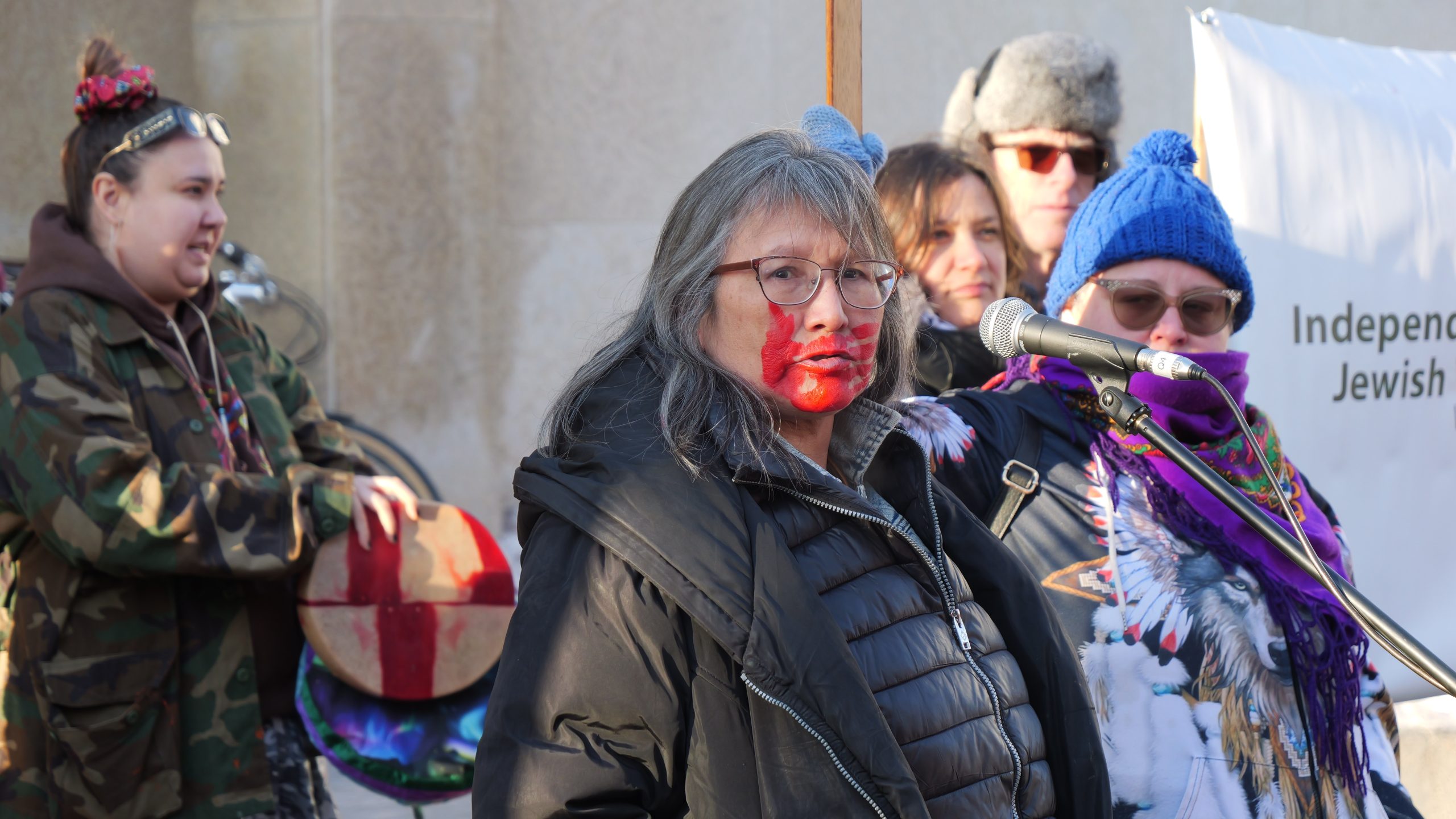
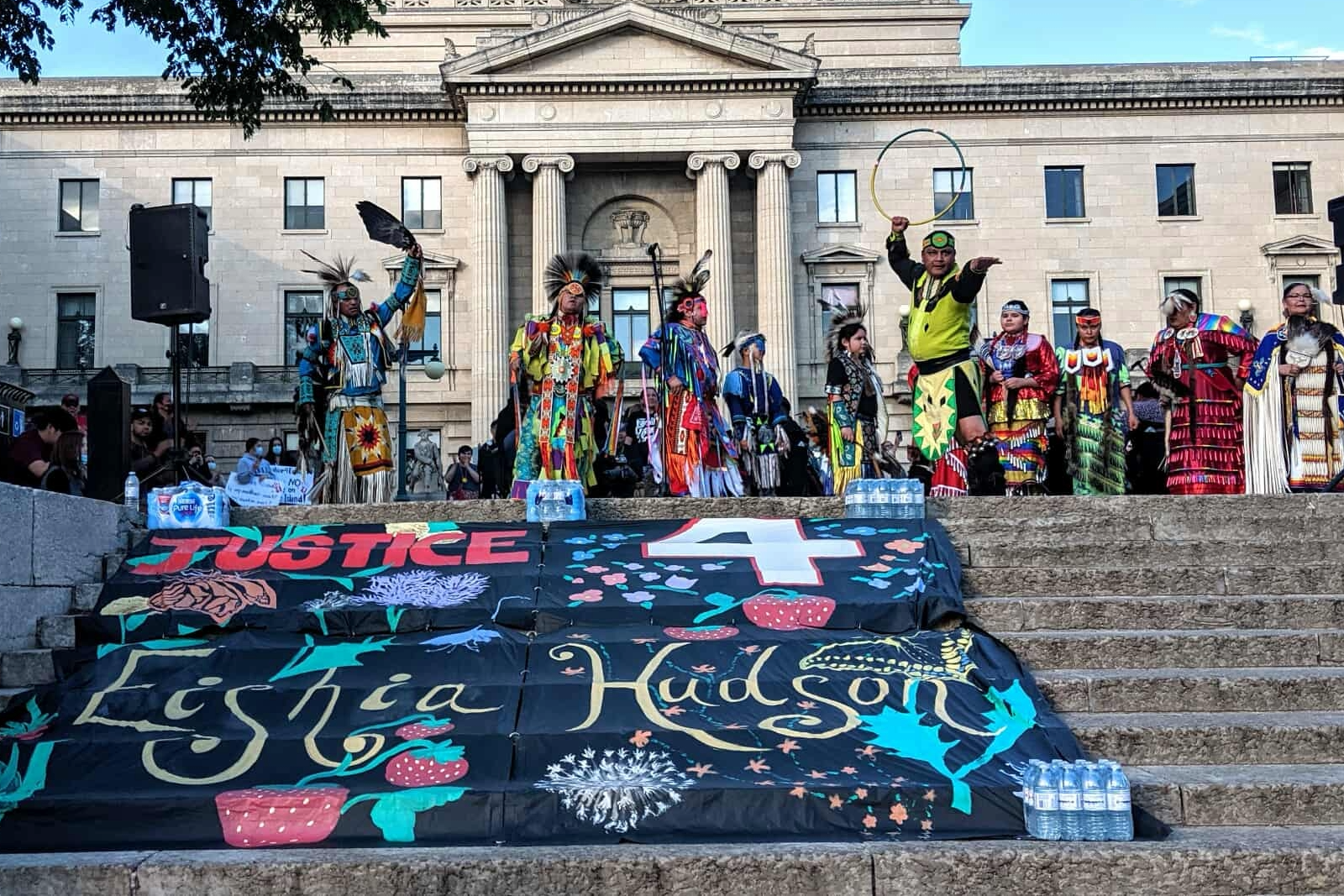
Earlier this month protests were held nationwide, demanding justice for Echaquan. The 37-year old mother of seven live-streamed the final moments of her life in a Quebec hospital in September. The videos show health care professionals berating her and making racist and abusive comments.
After news of Echaquan’s death broke, the Quebec Premier François Legault did not state that her death resulted from a systemic issue. He has continued to deny that there’s systemic racism in the Quebec healthcare system.
However, Miller said he’s confident that all provinces are ‘eager’ to address racism.
“They’re already eager to address racism in the health system. I don’t think you’ll find a single provincial minister that will say the contrary,” said Miller.
“What we need to do is ensure that when federal money is invested… it is done in a fashion that reflects our values and our moral and legal duty to serve Indigenous peoples and to ensure that they have first class health care.”
Systemic change
Minister of Health, Patty Hajdu said during the conference that Echaquan’s experience was not an outlier, echoing what Indigenous activists said during the protests after her death.
“Joyce Echaquan recorded something that many Indigenous people are experiencing right now…It was not an isolated incident, “ said Hajdu.
“It is not a few bad apples. It is a system that not just turns a blind eye but implicitly endorses and reinforces this behaviour many times over.”
Hajdu also said she is focused on encouraging action rather than punishing the provinces for wrongdoing.
“I’m less interested in punishment than I am in a systemic change and systemic change takes more than fear, and actually has to rely on a …deep willingness of participants to share power,” Hadju said.
Author
We live in a media ecosystem that thrives on misinformation. Big Tech and AI companies are consuming the work of real human beings and Canadian news has been banned on Facebook and Instagram.
And yet, I have hope for journalism because of the work we’re doing at IndigiNews.
At IndigiNews, we embody tâpwêwin — the Cree value of integrity and responsibility in truth-telling. We are committed to our independent, Indigenous-led newsroom rooted in community, accountability, and relationality. We believe storytelling is a sacred fire that connects our pasts, presents, and futures through the storytellers in our Storytelling Lodge. IndigiNews creates space for Indigenous journalists, storytellers, Knowledge Keepers, and communities to gather, learn, and share stories that matter.
As a registered charity, we are building a fire that allows our work not just to ignite but to thrive. Rather than relying on advertising or corporate acquisition, IndigiNews is sustained by people like you who believe Indigenous stories are important for the future of our communities.
Your support is making a real difference.
Our community of supporters, our Firekeepers, make it possible to grow our newsroom, publish award-winning journalism, train emerging Indigenous journalists through initiatives like the ReFocus Photojournalism Fellowship, and publish trustworthy stories that serve our communities across the country. Every story we publish helps fill in gaps left by mainstream media and ensures Indigenous perspectives are represented with care, accuracy and respect.
But there is still more work to do.
As the media landscape becomes more and more uncertain, community support is as necessary and essential as it’s ever been. Every new Firekeeper helps protect the independence of our newsroom and strengthens journalism that is accountable to our many and varied communities over corporations.
That’s why we’re inviting you to become a Firekeeper.
Firekeepers tend to and protect the sacred fire. Your monthly contributions directly support IndigiNews’s Storytelling Lodge, helps sustain our independent, Indigenous-led newsroom, and ensures future generations of Indigenous storytellers have the resources they need to do the work.
As a registered Canadian charity, all eligible donations receive a charitable tax receipt.
If you believe Indigenous stories matter, if you value independent journalism, and if you want to help build a strong future for Indigenous media, we invite you to join our circle of Firekeepers today.
Together, we can keep the fire burning.
— Eden Fineday, Publisher, IndigiNews
Support us nowLatest Stories
-
Indigenous leaders give the UN a roadmap for protecting their peoples
Amidst prayers and vows of solidarity, UN Expert Mechanism on the Rights of Indigenous Peoples ends annual meetings with demands for ‘action we’re not seeing globally’
-
Indigenous people demand more say at the UN, as new crises hit their homelands
Indigenous nations live ‘on the frontlines’ of climate, conflict and new tech. But their voices remain sidelined in the global halls of power.