A win for First Nations children as the Canadian Human Rights Tribunal expands funding criteria for Jordan’s Principle
Non-status, off-reserve First Nations children who are recognized by their Nation can now access funding

The Canadian Human Rights Tribunal (CHRT) released a ruling on Nov. 25, which impacts how First Nations children can access funding for services.
The ruling says that First Nations children who live on or off-reserve, who do not have Indian Act Status, but who are recognized by their respective Nations for the purpose of applying for funding through Jordan’s Principle, can now apply for support.
The ruling also opens up funding for children living on or off reserve who “are not eligible for, Indian Act status, but who have a parent or guardian with, or eligible for, Indian Act status.”
The ruling comes after years of pressure from the First Nations Child and Family Caring Society (the Caring Society) and the Assembly of First Nations (AFN) to address health service inequities, including delays or denial of services, that First Nations children experience.
In memory of the late Jordan River Anderson, of Norway House Cree Nation, Jordan’s Principle is a principle that ensures “First Nations children get the services they need when they need them,” according to the Caring Society.
Anderson, who was born with complex medical needs, spent more than two years in hospital while both the federal and provincial governments argued over who should finance his home care. Jordan died at the age of five, never having spent a day at home with his family.
Jordan’s Principle calls on the government to pay for a child’s services and seek reimbursement later, so the child does not get caught in the middle of a similar dispute.
Beginning in 2007, the Caring Society and the AFN filed an official complaint with the Canadian Human Rights Commission (CHRC) saying Canada was “racially discriminating against First Nations children.”
According to a timeline by the Caring Society, the Tribunal case found that the inequitable funding for First Nations child welfare was insufficient and ‘amounts to discrimination.’
In 2016, the Tribunal found that the Government of Canada was “racially discriminating against 165,00 First Nations children and their families,” and that Canada was “failing to implement the full scope of Jordan’s Principle.”
In this recent ruling, the Tribunal emphasized its “commitment to respecting First Nations self government,” saying that recognition of the right to self-determination is consistent with the United Nations Declaration on the Rights of Indigenous Peoples.
For all Jordan’s Principle inquiries, contact 1-855-572-4453 or visit jordansprinciple.ca
Author
We live in a media ecosystem that thrives on misinformation. Big Tech and AI companies are consuming the work of real human beings and Canadian news has been banned on Facebook and Instagram.

And yet, I have hope for journalism because of the work we’re doing at IndigiNews.
At IndigiNews, we embody tâpwêwin — the Cree value of integrity and responsibility in truth-telling. We are committed to our independent, Indigenous-led newsroom rooted in community, accountability, and relationality. We believe storytelling is a sacred fire that connects our pasts, presents, and futures through the storytellers in our Storytelling Lodge. IndigiNews creates space for Indigenous journalists, storytellers, Knowledge Keepers, and communities to gather, learn, and share stories that matter.
As a registered charity, we are building a fire that allows our work not just to ignite but to thrive. Rather than relying on advertising or corporate acquisition, IndigiNews is sustained by people like you who believe Indigenous stories are important for the future of our communities.
Your support is making a real difference.
Our community of supporters, our Firekeepers, make it possible to grow our newsroom, publish award-winning journalism, train emerging Indigenous journalists through initiatives like the ReFocus Photojournalism Fellowship, and publish trustworthy stories that serve our communities across the country. Every story we publish helps fill in gaps left by mainstream media and ensures Indigenous perspectives are represented with care, accuracy and respect.
But there is still more work to do.
As the media landscape becomes more and more uncertain, community support is as necessary and essential as it’s ever been. Every new Firekeeper helps protect the independence of our newsroom and strengthens journalism that is accountable to our many and varied communities over corporations.
That’s why we’re inviting you to become a Firekeeper.
Firekeepers tend to and protect the sacred fire. Your monthly contributions directly support IndigiNews’s Storytelling Lodge, helps sustain our independent, Indigenous-led newsroom, and ensures future generations of Indigenous storytellers have the resources they need to do the work.
As a registered Canadian charity, all eligible donations receive a charitable tax receipt.
If you believe Indigenous stories matter, if you value independent journalism, and if you want to help build a strong future for Indigenous media, we invite you to join our circle of Firekeepers today.
Together, we can keep the fire burning.
— Eden Fineday, Publisher, IndigiNews
Support us nowLatest Stories
-

Skateboard parks on reserves are ‘cultural engines’ for Youth: short film
In ‘Paving the Way,’ skateboarding becomes a way for young people to make art, build friendships, and carry grief together
-
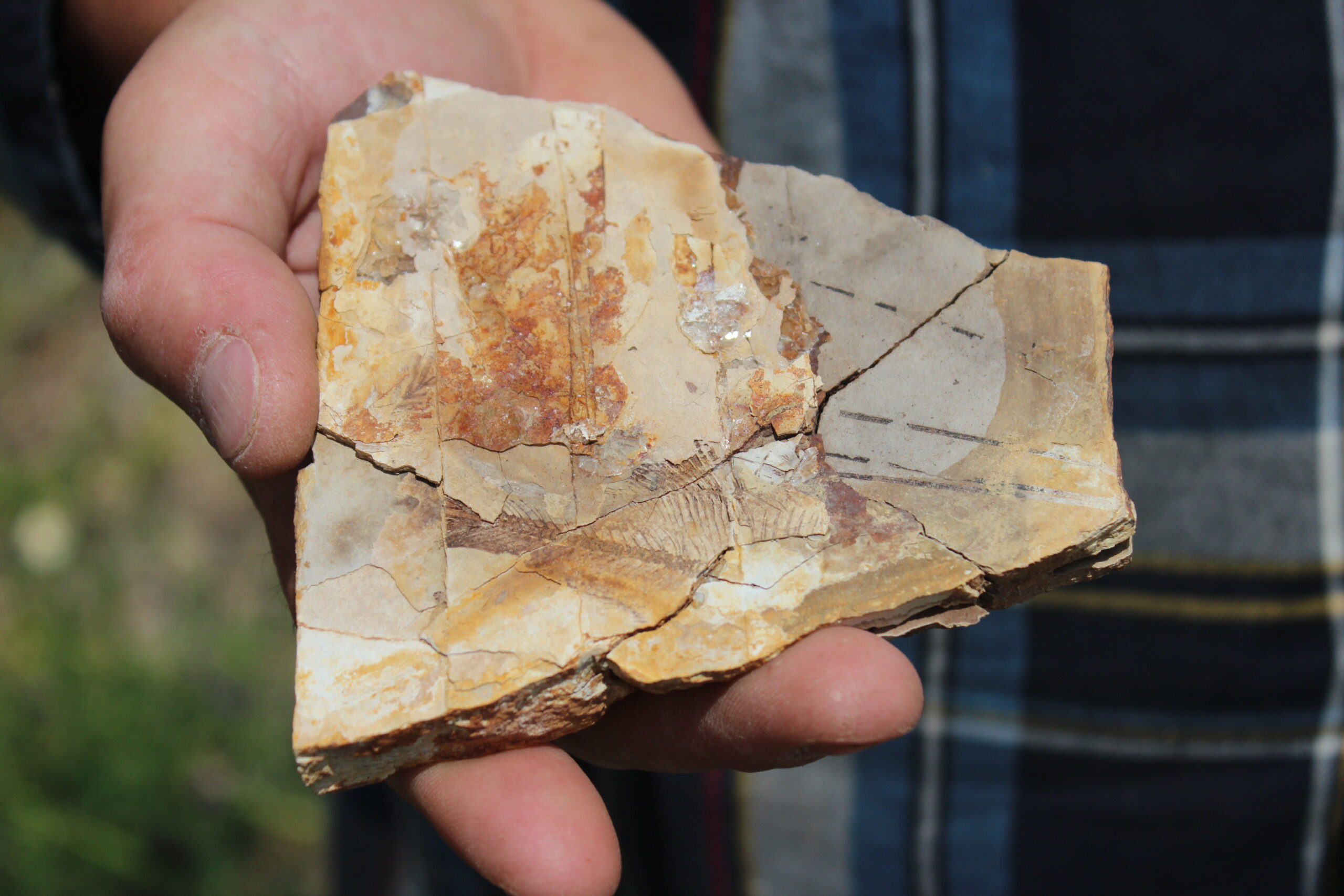
Secwépemc stewards preserve culture, history of a 53-million-year-old forest
Community-led trails, tours and a cultural centre are part of Bonaparte First Nation’s vision for the McAbee Fossil Beds in Secwépemcúl’ecw